First Invasion
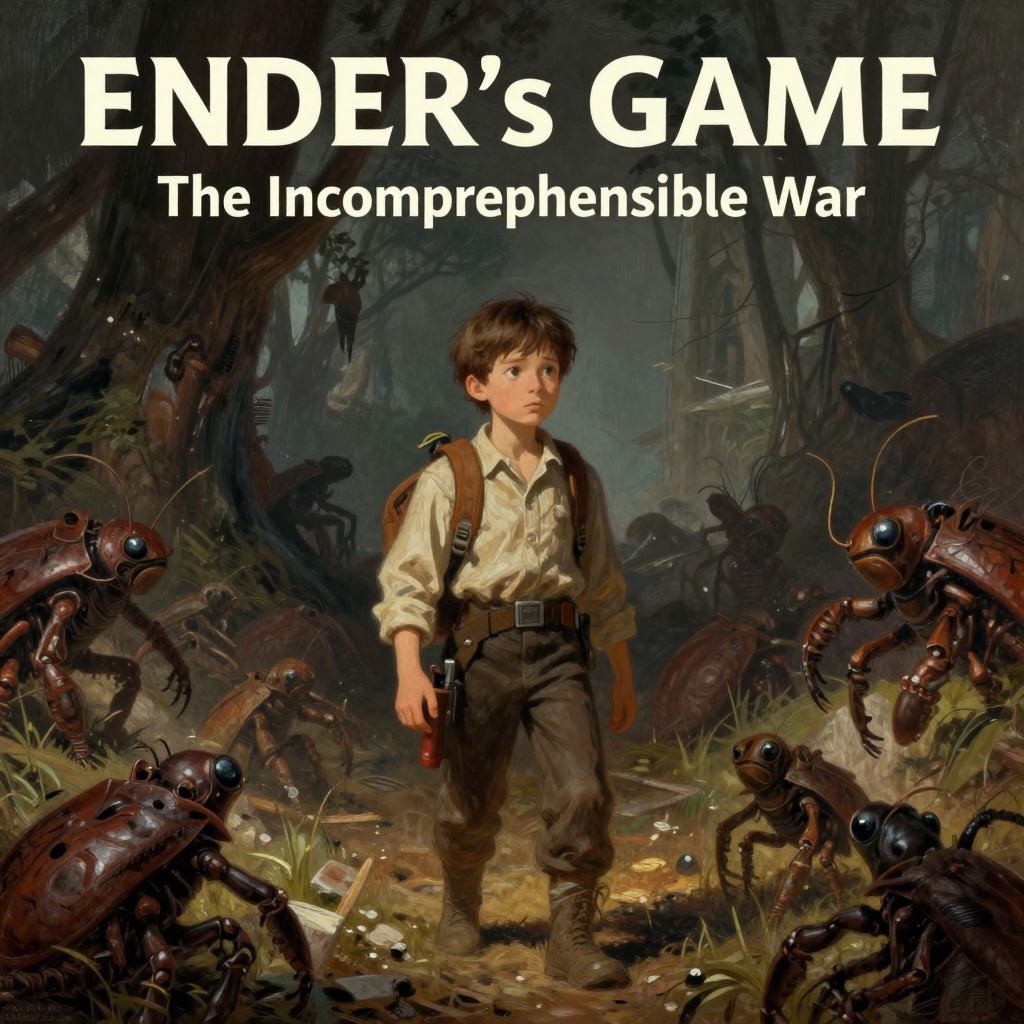
The First Invasion is the first armed conflict between humanity and the Buggers, an insectoid alien species. It is the foundational event that justifies the International Fleet's existence and its extreme measures to prepare for future wars. The invasion is remembered as a time of terror and near-defeat, when humanity was saved only by the brilliant tactics of Mazer Rackham, whose victory became the stuff of legend and propaganda.
Historical Background and the Nature of the Threat
The First Invasion occurred before the events of the novel, and its details are revealed through historical accounts and propaganda videos. The Buggers, who communicate through a hive-mind and lack individual language, attacked humanity without warning. Their ships were swift and deadly, and they overwhelmed human defenses. The invasion was exploratory in nature, as the Buggers had not yet encountered another intelligent species and did not realize humans were sentient beings. This lack of understanding led to the slaughter of human crews, as the Buggers treated them as mere obstacles, akin to "clipping your nails." The invasion ended when Mazer Rackham, a twice-court-martialled half-Maori New Zealander, destroyed the Bugger fleet in a decisive battle near Saturn, using a suicidal plunge into the heart of the enemy formation and destroying their queen ship. This victory was so complete that the Buggers, who communicated instantaneously, ceased all resistance across their fleet, leaving their ships dead and their crews lifeless.
The Aftermath and the Creation of the International Fleet
The First Invasion's aftermath had profound consequences. The International Fleet was formed to defend humanity against future Bugger attacks, and the fear of a Second Invasion became a constant backdrop to human society. The invasion also led to the development of new technologies, including the ansible, a device that allowed instantaneous communication across space, based on the Buggers' own instantaneous communication. The International Fleet, with its vast resources and authority, began a program to identify and train potential military commanders, leading to the creation of the Battle School and the recruitment of child geniuses like Ender Wiggin. The invasion's legacy is thus twofold: it created the existential threat that justified the Fleet's power, and it provided the technological and strategic foundation for humanity's eventual counterattack.
The First Invasion in Ender's World
For Ender Wiggin, the First Invasion is a distant but formative historical event. He grows up watching propaganda videos of the invasion, which depict the Buggers as monstrous and murderous, and Mazer Rackham as a heroic savior. These videos are used to instill fear and hatred of the Buggers, and to justify the sacrifices demanded of children like Ender. The invasion also shapes Ender's understanding of war: he learns that the Buggers are a formidable enemy, but also that they can be defeated through superior strategy and understanding. This knowledge becomes crucial when Ender is later trained to command the fleet in the Third Invasion, and it ultimately leads him to question the morality of the war when he discovers the Buggers' true nature.
The First Invasion's Role in the Narrative
The First Invasion serves as the historical backdrop against which the entire novel unfolds. It is the reason why the International Fleet has such power and why Ender is taken from his family. It is also the source of the propaganda that shapes public opinion and the training of soldiers. The invasion's legacy is felt in every aspect of the story, from the Battle School's curriculum to the final battle against the Bugger homeworld. In the end, the First Invasion is not just a past event but a living force that drives the plot and the characters' motivations, culminating in Ender's own actions as the commander of the Third Invasion, which he believes is a game but is actually real. The First Invasion thus sets the stage for the novel's central themes of war, manipulation, and the ethics of survival.