Peter Wiggin
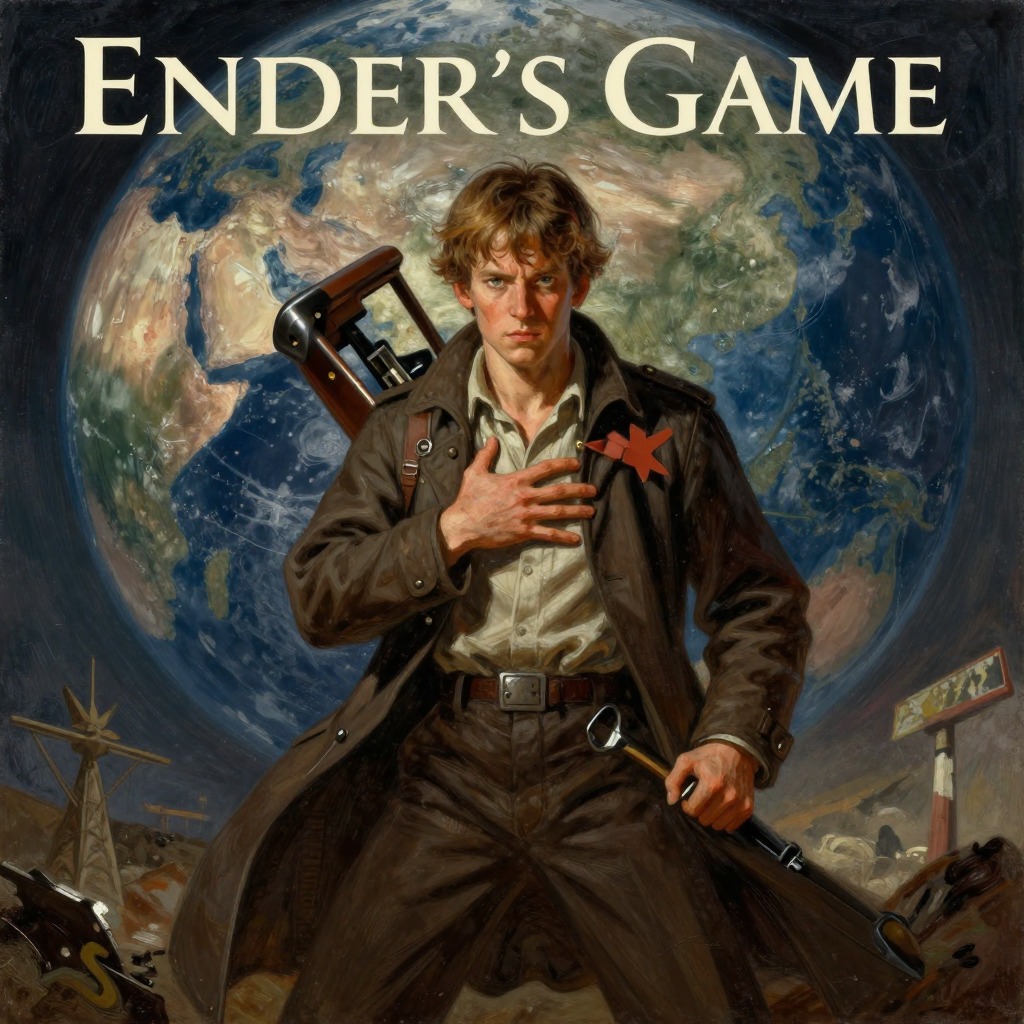
Peter Wiggin is the eldest of the three Wiggin children, a boy of formidable intelligence and a cruelty that marks him as the dark mirror of his younger brother, Ender. Where Ender is compassionate and driven by empathy, Peter is a predator, a "husbandman of pain" who tortures squirrels and terrorizes his siblings. His rejection by the International Fleet—because he is "too dangerous"—sets the stage for his later, more subtle conquest of the world through words and political manipulation. Peter is the shadow that Ender fears he might become, and the measure against which his own humanity is tested.
Identity and Early Cruelty
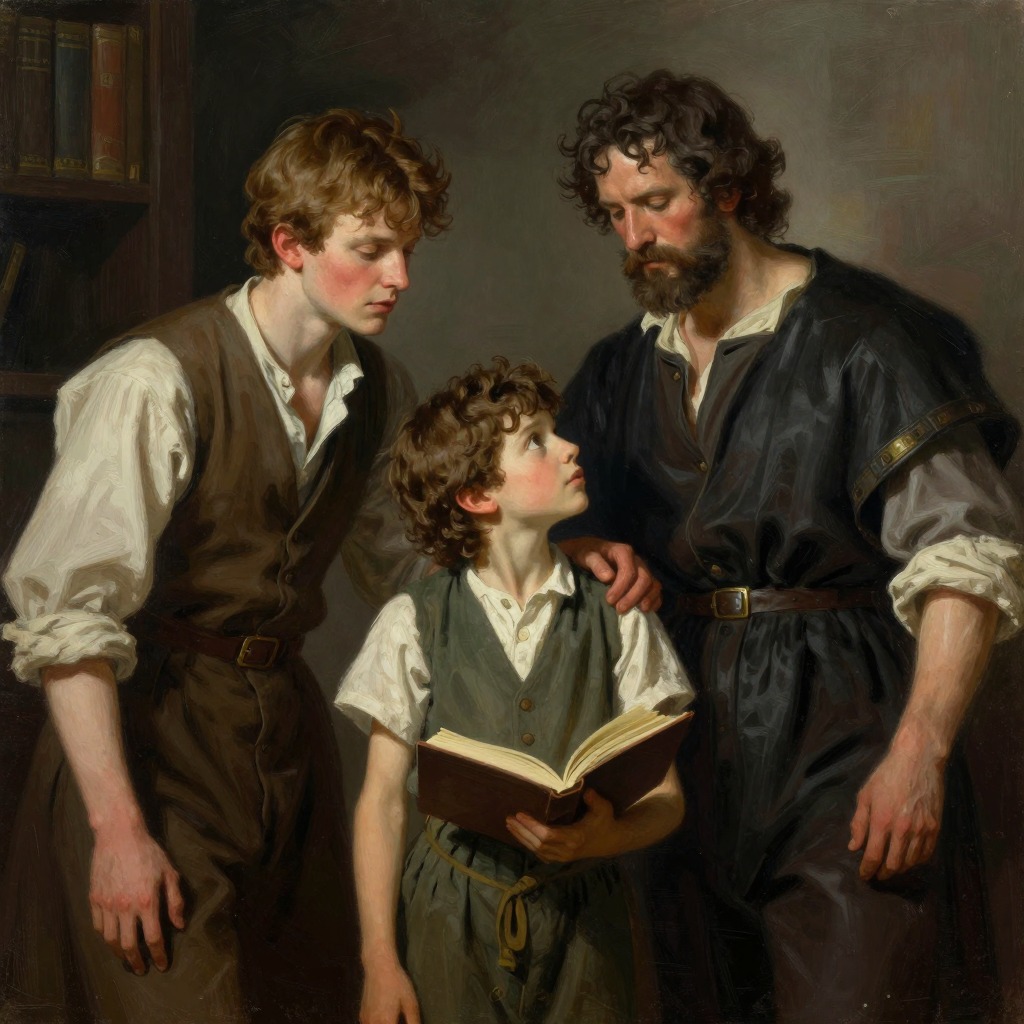
Peter is introduced as a ten-year-old with "dark, thick, tousled hair and a face that could have belonged to Alexander the Great," yet Ender sees only the "telltale flicker of anger" in his eyes. He is a master of psychological torment, finding "what they were most ashamed of and told it to the person whose respect they most wanted." His cruelty toward Ender is relentless: he forces him to play "buggers and astronauts" while wearing a mask that blinds him, then kneels on his chest and whispers, "I could kill you like this... And I could say that I didn't know it would hurt you, that we were just playing, and they'd believe me." This threat is not idle; Peter is capable of murder, and only Valentine's counter-threat—a letter to be opened in the event of her death—stays his hand. Yet even in this darkness, there is a flicker of something else: after Ender's monitor is removed, Peter whispers an apology in the night, "I'm sorry, I'm your brother. I love you," a moment that leaves Ender weeping and uncertain.
Rejection and the Birth of Locke
Peter's intelligence is so great that the International Fleet initially considered him, but he is rejected because his "soul of a jackal" makes him unfit for command. This rejection fuels his resentment of Ender, who is taken instead. As Peter grows, he channels his ambition into a plan to rule the world. He recruits Valentine, his sister, to help him create two pseudonymous political personas: Locke, the moderate and wise voice, and Demosthenes, the paranoid warmonger. Peter chooses Locke for himself, a persona that allows him to "insert ideas into the public mind" and eventually become the architect of the Locke Proposal, a treaty that forestalls a devastating war. His transformation is so complete that by the time he is fourteen, he is already maneuvering for power, and by the time he is an adult, he is the Hegemon of Earth, ruling through influence rather than force.
The Shadow of Peter in Ender's Mind
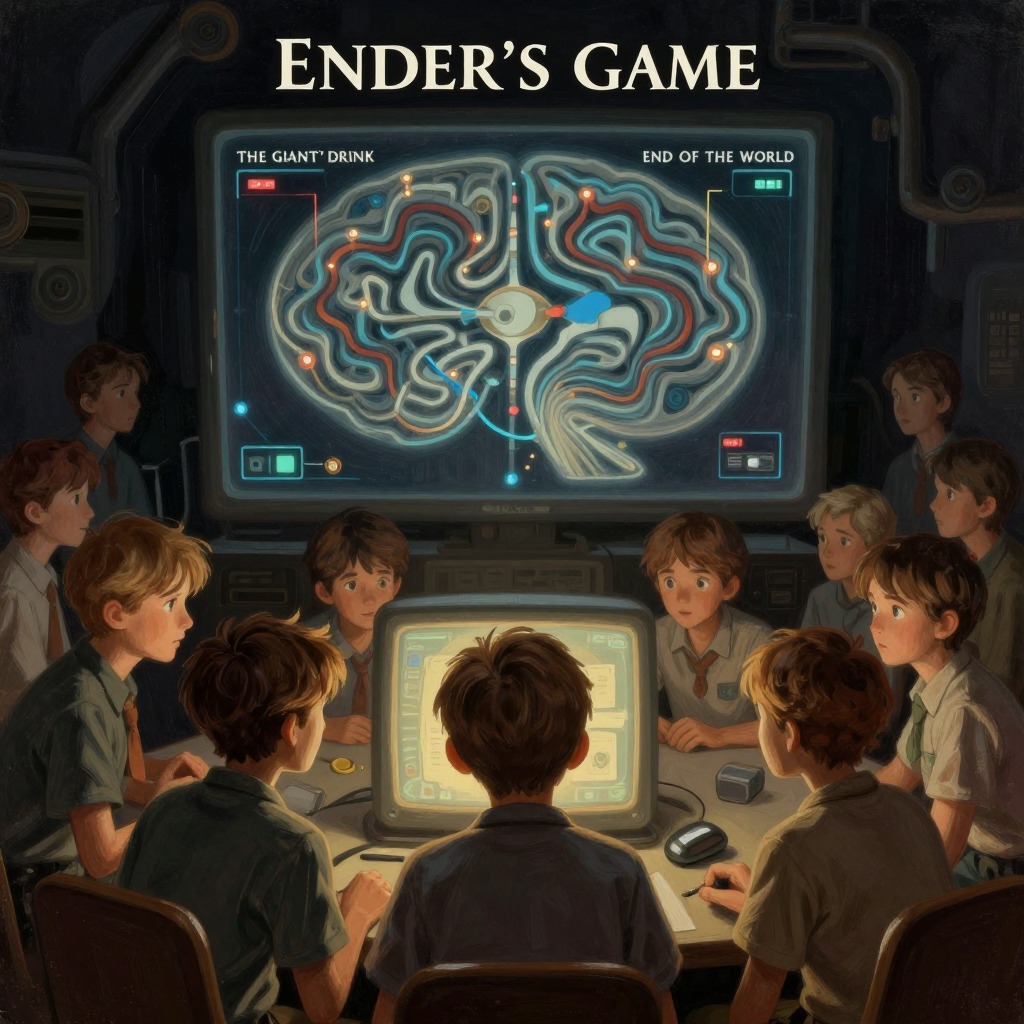
Peter's influence on Ender is profound and pervasive. Ender's greatest fear is that he is "just like Peter," a killer who enjoys inflicting pain. This fear is reinforced by the mind game at Battle School, where the computer projects Peter's face into the mirror at the End of the World, with "blood dripping down his chin and a snake's tail protruding from a corner of his mouth." Ender's nightmares are filled with Peter's image, and he constantly measures his own actions against his brother's cruelty. When Ender defeats Bonzo in the shower, he sees "the empty, dead look in his eyes" and thinks of Stilson, and he wonders if he is becoming Peter. This internal struggle is central to Ender's character, and it is only through Valentine's reassurance—"You are not like Peter in any way"—that he can find any peace.
The Statesman and the Final Reconciliation
As Peter rises to power, he becomes a figure of immense historical significance. He is the Hegemon who unites humanity after the bugger war, and his Locke Proposal is a testament to his political genius. Yet his ambition remains: he plans to use Ender's fame to consolidate his own power, intending to publicly reveal himself as Ender's brother and "stand next to him" to appear mature. Valentine, however, sees through this scheme and uses her knowledge of Peter's past crimes to force him to let Ender go. In the end, Peter's relationship with Ender is one of distant, unspoken rivalry. When Ender writes the Speaker for the Dead, Peter, now an old man with a failing heart, asks him to speak for him as well, and Ender does, writing a second volume that, together with the first, becomes holy writ. This final act of speaking for the dead is a reconciliation of sorts, a recognition that even Peter, for all his cruelty, was a human being worthy of understanding.
Thematic Significance
Peter Wiggin embodies the novel's exploration of power and its corrupting influence. He is the "destroyer" who learns to become a "builder," but his transformation is never complete; he remains a man who "could be cruel, but he knows the getting and keeping of power." His arc mirrors Ender's in reverse: Ender, the compassionate killer, must learn to live with his violence, while Peter, the cruel manipulator, must learn to use his power for good. Together, they represent the two faces of humanity's potential—the capacity for destruction and the capacity for creation—and the novel suggests that both are necessary for survival. Peter's legacy, like Ender's, is ambiguous, but his role in shaping the world after the bugger war is undeniable.