Population Limitation Laws
The Population Limitation Laws are a foundational element of the future society depicted in Ender's Game, a set of international regulations that restrict families to two children. Any child born beyond this limit is designated a 'Third,' a legal category that carries profound social stigma and governmental oversight. The laws are enforced through a system of waivers and sanctions, and they directly shape the lives of the Wiggin family, particularly Ender, whose very existence as a Third is a constant source of tension and shame.
Legal Framework and Social Stigma
The laws are presented as a response to overpopulation, with severe consequences for noncompliance. As Colonel Graff explains to Ender, the sanctions were once less harsh but still difficult: only the first two children had a free education, and taxes rose steadily with each additional child. The laws are so entrenched that having a Third is considered 'criminal' and 'unthinkable' by Ender himself, reflecting the internalization of this social norm. The stigma is so powerful that Ender's father, John Paul Wieczorek, renounced his religion and changed his name to escape the persecution of his own noncompliant family, vowing never to have more than the allotted two children. His parents' shame is compounded by the fact that Ender was born under the government's direct instructions, yet they still feel the weight of public judgment, as Graff notes: 'They look at you and see you as a badge of pride, because they were able to circumvent the law and have a Third. But you're also a badge of cowardice, because they dare not go further and practice the noncompliance they still feel is right.'
Impact on Ender's Identity and Family
Ender's status as a Third is a defining aspect of his identity from the very beginning. His brother Peter taunts him with the epithet 'Third,' and even his mother's grief is tinged with the social implications: 'Must you call him that stupid nickname?' she cries, revealing her own discomfort with the label. Ender himself feels the weight of his existence, thinking, 'It was not his fault he was a Third. It was the government's idea, they were the ones who authorized it—how else could a Third like Ender have got into school?' This awareness of being a legal anomaly contributes to his sense of isolation and his desperate need to prove his worth. The laws also create a rift within the Wiggin family, as Peter resents Ender for being the 'better' child, and their parents struggle with the conflicting emotions of pride and shame.
Political and Social Consequences
The Population Limitation Laws are not merely a background detail; they become a political issue that reflects the novel's broader themes of state control and individual rights. Valentine, writing as Demosthenes, publishes a scathing denunciation of the laws, arguing that people should be allowed to have as many children as they like, and that the surplus population should be sent to other worlds. She writes, 'The most noble title any child can have is Third,' a radical reclamation of the stigmatized term. This column is a turning point in her and Peter's political manipulation, and it resonates with the novel's critique of a society that sacrifices individual lives for the perceived greater good. The laws also serve as a backdrop for the novel's exploration of childhood itself: the children of Battle School are 'not children' in the conventional sense, as Dink Meeker observes, because they are denied the normal protections and freedoms of childhood, just as Thirds are denied the normal status of citizens.
The Laws as a Tool of State Power
The Population Limitation Laws exemplify the novel's depiction of a state that wields power over the most intimate aspects of human life. The government's ability to authorize a Third, to monitor children through the Monitor, and to conscript them into military service is a stark illustration of biopolitical control. Ender's own birth is a product of state intervention: 'They only authorized you because I was so promising,' Peter tells him, revealing that Ender's existence was contingent on his potential utility to the state. This theme is reinforced by the fact that the laws are enforced through a system of waivers and sanctions, and that the government can override parental consent, as Graff reminds Ender's parents: 'Your son has been cleared by the I.F. Selective Service. Of course we already have your consent, granted in writing at the time conception was confirmed, or he could not have been born.' The laws thus represent a form of 'bare life,' in which certain individuals are stripped of full legal protection and subjected to the state's arbitrary will.
The Laws in the Context of the Novel's Ending
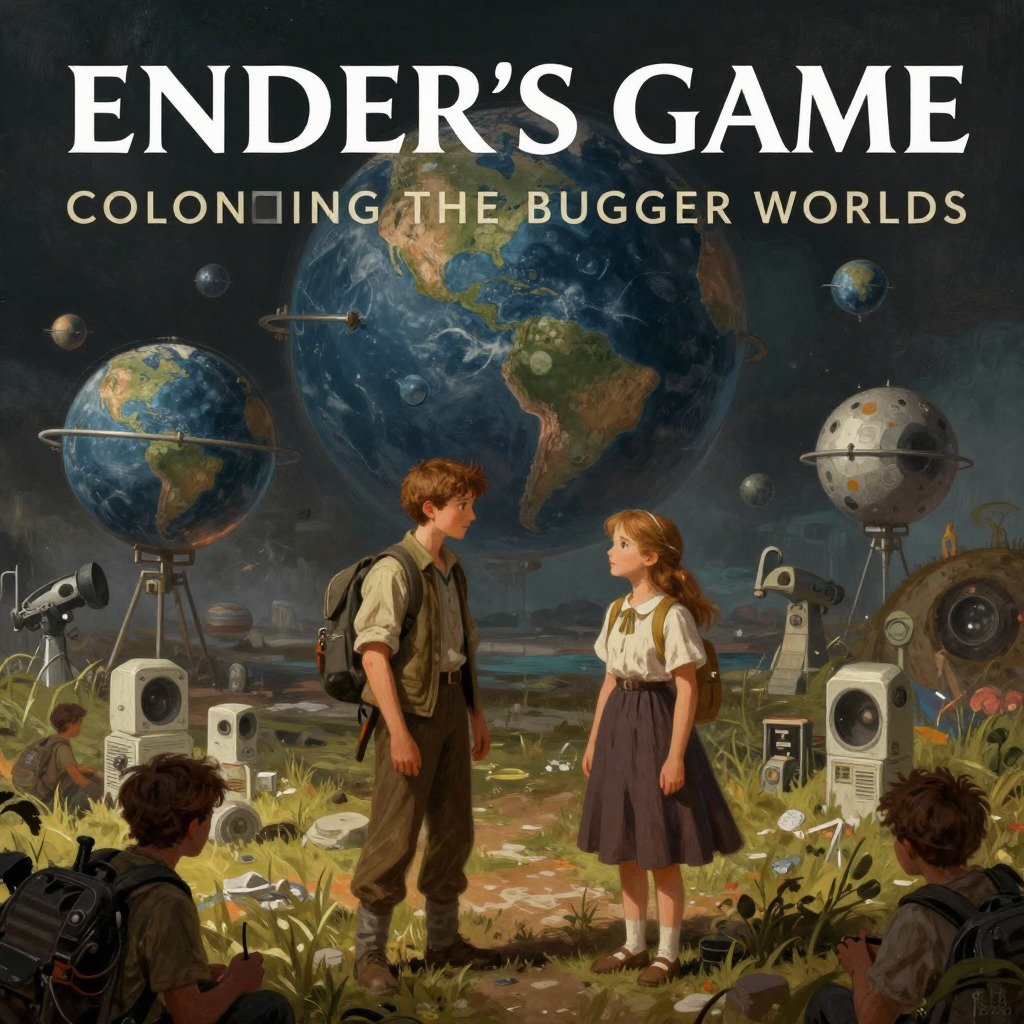
The Population Limitation Laws are ultimately repealed in the aftermath of the bugger war, as humanity expands into the empty bugger worlds. Graff, now the Minister of Colonization, announces the repeal, saying, 'We'll repeal the population limitation laws—which everybody hates—and all those thirds and fourths and fifths get on starships and head out for worlds known and unknown.' This repeal is a sign of hope and renewal, but it also underscores the novel's ambivalence about the state's power: the same government that once restricted human life now encourages its proliferation, using the dead buggers' worlds as a new frontier. The laws thus serve as a reminder of the arbitrary and shifting nature of political authority, and of the human cost of such policies.