Second Invasion
The Second Invasion is the historical catastrophe that frames the entire world of Ender's Game. Occurring roughly eighty years before the novel's present, it was the second, far more devastating attack by the alien Buggers on humanity. Unlike the exploratory First Invasion, the Second Invasion was a full-scale colonial expedition, a determined attempt to establish a new hive on Earth. The war culminated in the near-total destruction of the human fleet, leaving humanity's survival hanging by a thread until the unorthodox commander Mazer Rackham, with a tiny reserve force, managed to destroy the Bugger fleet in a single, decisive action near Saturn. This victory, however, was not a clean triumph; it left humanity with a deep-seated, institutionalized fear of the Buggers and a desperate need to prepare for a potential Third Invasion, a need that justifies the creation of the Battle School and the brutal training of child commanders like Ender Wiggin.
The Nature of the Threat and the Human Response
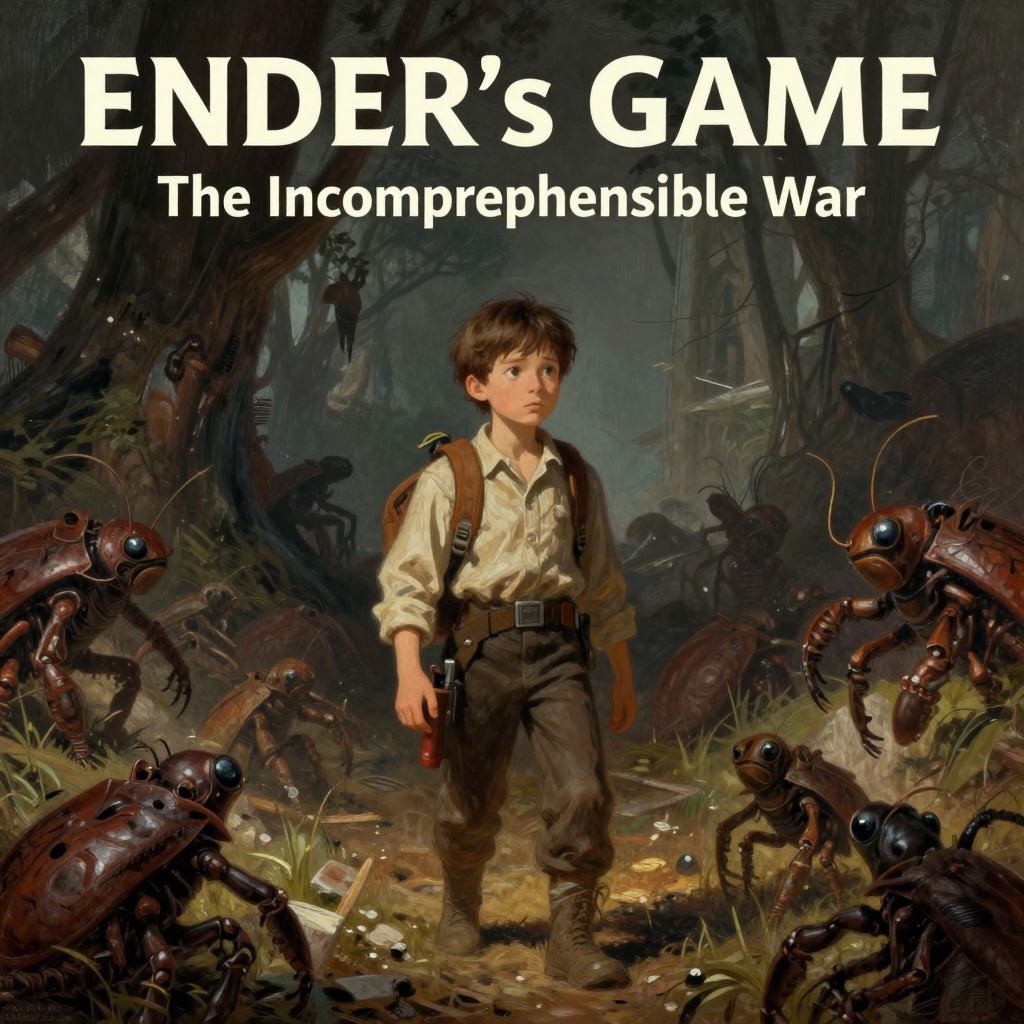
The Second Invasion is defined by the overwhelming and alien nature of the Bugger threat. The Buggers, as described by Colonel Graff, are a hive-minded species that communicates instantaneously, mind to mind, with no need for language or technology. This fundamental difference is the root of the conflict. As Graff explains to Ender, "If the other fellow can't tell you his story, you can never be sure he isn't trying to kill you." The human inability to communicate with the Buggers, to understand their intentions, made the war seem inevitable. The invasion itself was a brutal demonstration of Bugger power, with their fleets acting in perfect, terrifying unity, responding to challenges instantly, a stark contrast to the sluggish, individualistic human ships. The human response was to create a massive International Fleet and, more importantly, to develop a training system designed to produce a commander who could think like the enemy, a commander who could match the Buggers' speed and unity of purpose.
The Legacy of Mazer Rackham's Victory
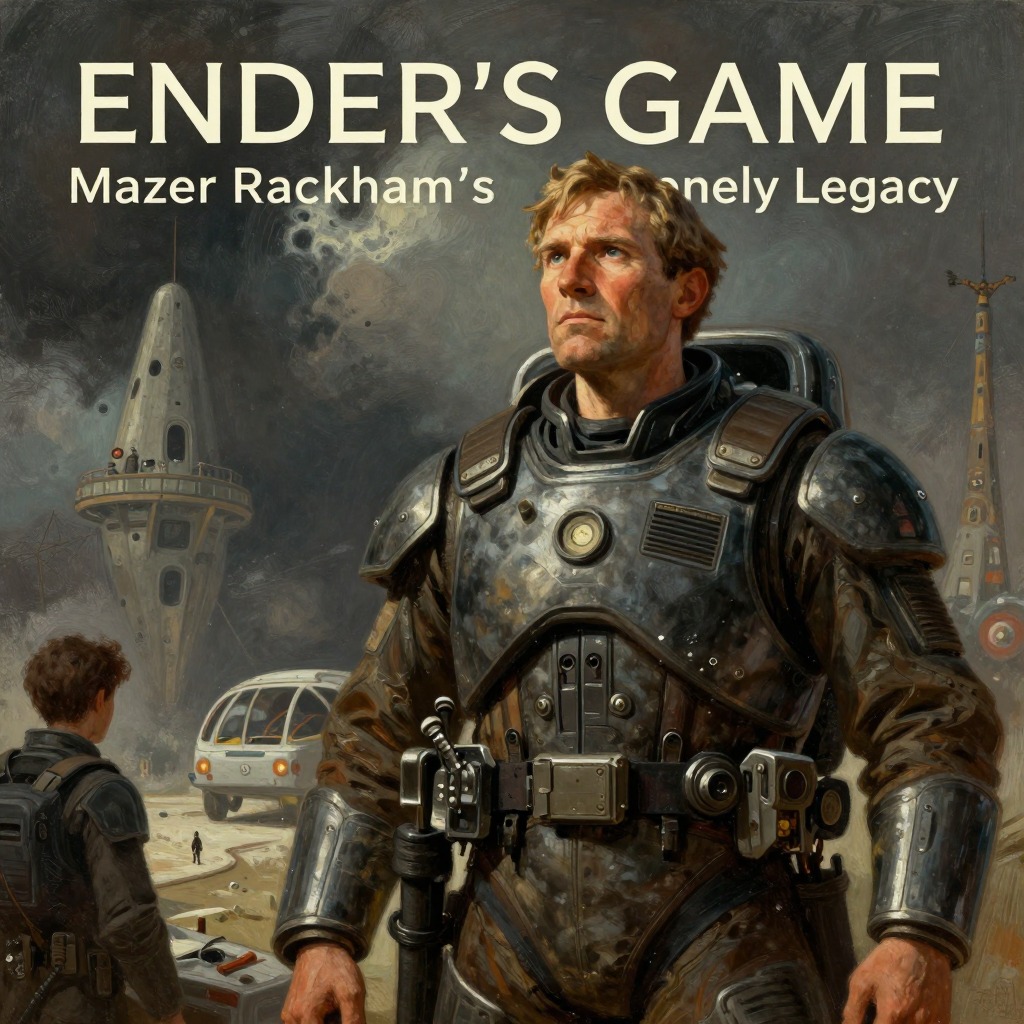
The Second Invasion's most significant legacy is the figure of Mazer Rackham, the man who saved humanity. His victory, however, was shrouded in secrecy and misunderstanding. The official propaganda videos showed only a single shot from his cruiser and one enemy ship exploding, with the rest of the battle censored. This secrecy frustrated Ender, who, as a student at Battle School, studied the old war videos obsessively, trying to learn strategy from the Buggers' tactics. He noticed that the Buggers' movements, while seemingly random, were actually focused on a single point, a discovery that would later prove crucial. Rackham himself, kept alive through relativistic travel, reveals the deeper truth: he did not defeat the Buggers through superior firepower but by understanding their psychology. He realized that the Bugger fleet was a single organism, controlled by a queen, and that killing the queen would cause the entire fleet to lose its will to live. This insight, that the Buggers were not individual soldiers but extensions of a single mind, was the key to victory, but it also raised profound questions about the morality of the war that would haunt Ender.
The Second Invasion as a Justification for Ender's Training
The Second Invasion is the engine that drives the plot of Ender's Game. The fear it instilled is the justification for the International Fleet's extreme measures. Colonel Graff, the director of the Battle School, uses the threat of a Third Invasion to manipulate Ender, telling him, "The buggers may seem like a game to you now, Ender, but they damn near wiped us out last time." This fear is the foundation of the entire training program, which isolates children, pits them against each other in the Battle Room, and pushes them to the brink of mental and physical collapse. The Second Invasion is not just a historical event; it is a present and constant pressure, a reason for every hardship Ender endures. It is the reason he is taken from his family, the reason he is forced to become a killer, and the reason he is ultimately tricked into committing genocide. The war's legacy is so powerful that it even shapes the political landscape, with the International Fleet maintaining its power on the premise that the Bugger threat is still imminent, a premise that Dink Meeker, a cynical older student, openly questions.
The Unanswered Questions and the Path to the Third Invasion
The Second Invasion left humanity with more than just fear; it left them with a profound ignorance about their enemy. The Buggers' instantaneous, hive-mind communication was a mystery, and the fact that they had no communication devices on their ships was a key piece of evidence for Mazer Rackham's theory. The invasion also raised the question of why the Buggers attacked in the first place. Graff offers several possibilities—overcrowding, a belief that humans were not intelligent, or a simple inability to understand them—but no one knows the answer. This ignorance is a direct threat, as it means humanity cannot predict the Buggers' future actions. The Second Invasion, therefore, is not a closed chapter but an open wound. It is the reason the International Fleet launches the Third Invasion, a preemptive strike against the Bugger homeworlds, and it is the reason Ender, the product of this fear-driven training, is placed in command. The Second Invasion's legacy is not peace but a cycle of violence, a cycle that Ender, in his final battle, unknowingly brings to a horrific conclusion by destroying the Bugger homeworld and all its queens, an act that he will spend the rest of his life trying to understand and atone for.