Stilson
Stilson is the schoolyard bully whose confrontation with six-year-old Ender Wiggin on the day his monitor is removed becomes the pivotal event that launches Ender into the International Fleet's Battle School. Though he appears in only a few scenes, his beating and subsequent death cast a long shadow over the entire novel, serving as the first and most personal instance of Ender's capacity for thorough, preemptive violence—a capacity the military seeks to cultivate even as it torments Ender himself. Stilson's fate, hidden from Ender for years, becomes a central moral burden, symbolizing the ethical cost of the war against the Buggers and the way Ender's greatest strength is also his deepest wound.
Identity and the Schoolyard Confrontation
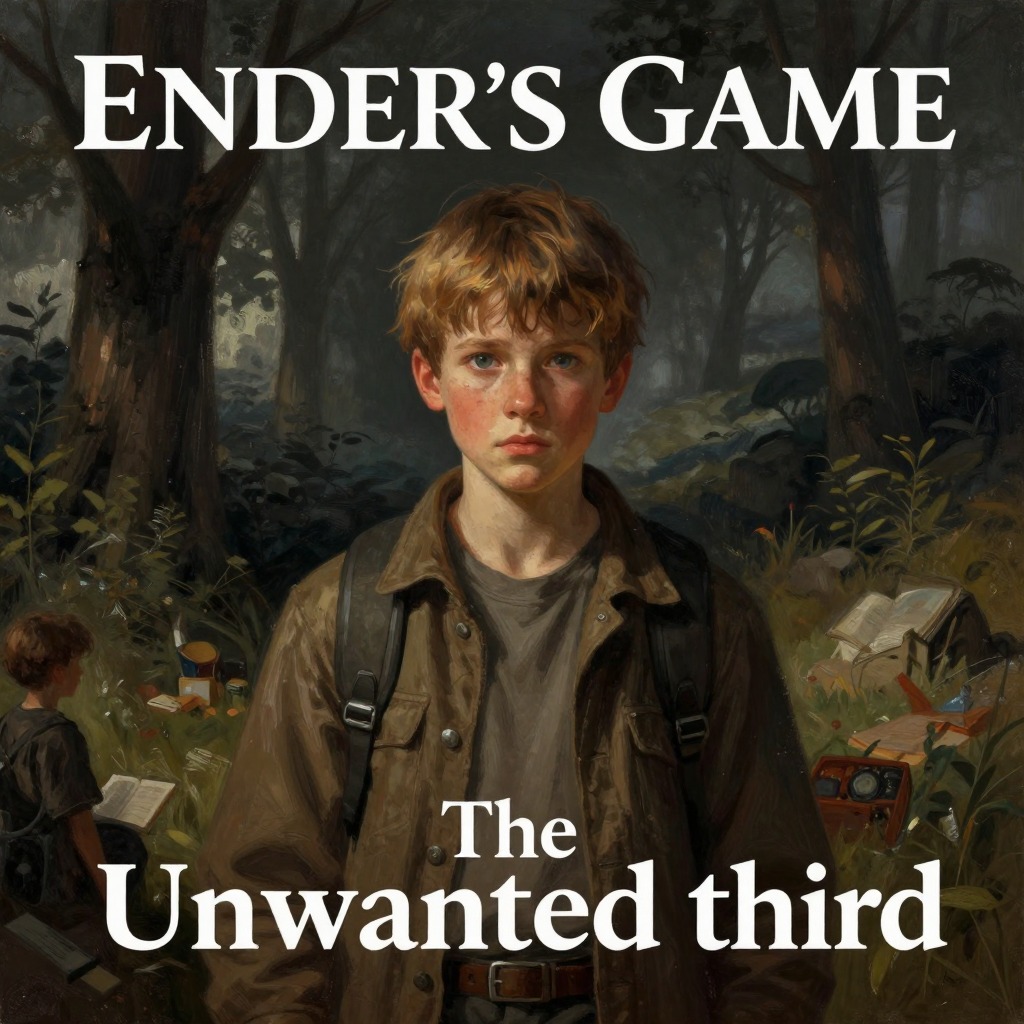
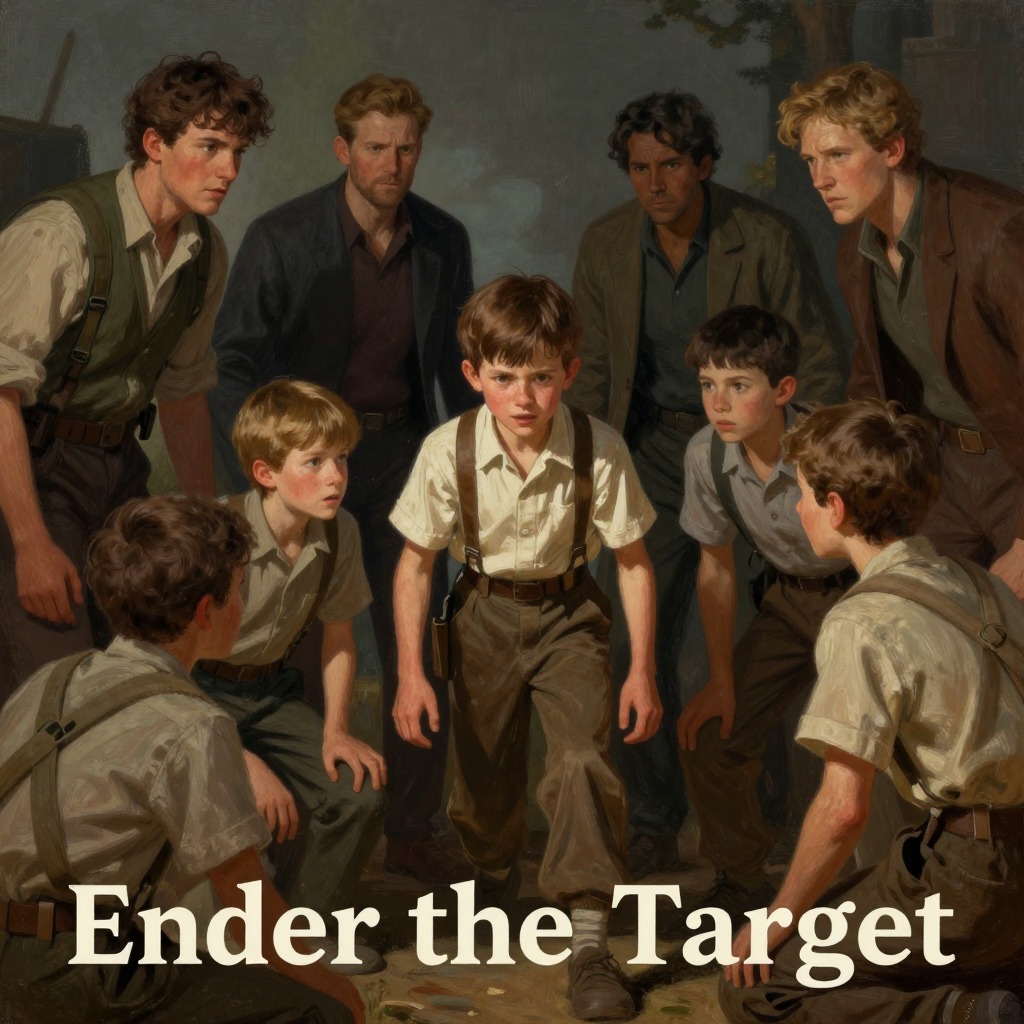
Stilson is introduced as the boy who sits across the aisle from Ender in Miss Pumphrey's class, smirking when the teacher calls him "Mr. Stilson" after Ender's monitor is removed. He is not bigger than most other kids, but he is bigger than Ender, and he always has others with him. On the day the monitor comes out, Stilson and his gang ambush Ender on the way to the bus, taunting him with the words "Hey, Third" and "bugger-lover," and mocking his lost "birdie"—the monitor. The confrontation escalates when Stilson pushes Ender and the others join in, chanting "Lost your birdie, Thirdie." Ender, realizing the fight will not end happily, decides he would rather not be the unhappiest at the end. When Stilson's arm comes out to push him again, Ender grabs at it, misses, and then, after a taunt about needing so many to fight one Third, kicks Stilson square in the breastbone, dropping him. The kick takes Ender by surprise; he hadn't thought to put Stilson on the ground with one blow, and it didn't occur to him that Stilson didn't take the fight seriously.
The Beating and Its Aftermath
Knowing the unspoken rules of manly warfare—that it is forbidden to strike an opponent who lies helpless on the ground—Ender nevertheless walks to Stilson's supine body and kicks him again, viciously, in the ribs. He then kicks him in the crotch, and when Stilson doubles up with tears streaming from his eyes, Ender kicks him in the face, spattering blood on the ground. He tells the others, "You might be having some idea of ganging up on me... But just remember what I do to people who try to hurt me. From then on you'd be wondering when I'd get you, and how bad it would be. It wouldn't be this bad. It would be worse." He turns and walks away, nobody following, and leans his head against the wall of the corridor and cries until the bus comes, thinking, "I am just like Peter." The beating is so severe that Stilson is hospitalized, and Ender's parents are told he "really did a number on him." The International Fleet officer, Colonel Hyrum Graff, uses the incident as the final test of Ender's character, explaining to Ender's parents that the beating was not what mattered but why Ender did it—to win all the next fights at once so they'd leave him alone. Stilson's hospitalization is thus the immediate cause of Ender's recruitment into Battle School.
Death and the Hidden Burden
Stilson dies from his injuries, a fact that is kept from Ender. The novel reveals this obliquely: during the court martial of Colonel Graff, videos of the fight with Stilson are shown, along with photographs of the corpse, and psychologists and lawyers argue whether murder had been committed or the killing was in self-defense. Ender watches impassively, but the burden of Stilson's death weighs on him. In his dreams, he relives the fight, seeing how small Stilson was, only six years old, and how ridiculous his tough-guy posturing was; in the dream, Stilson and his friends tie Ender so he can't fight back, and everything Ender did to Stilson in life, they do to Ender in the dream. Ender also dreams of Bonzo Madrid, another victim of his violence, and remembers the way Stilson looked when he finished with him—the dead, stupid look in his eyes. The novel explicitly notes that Ender was not told about Stilson's death, just as he was not told about Bonzo's, and that this was the second time. Stilson's death, like Bonzo's, becomes part of Ender's profound guilt, contributing to his sense that he is a killer at heart, no better than his brother Peter.
Thematic Significance: The Cost of Victory
Stilson's fate embodies the novel's central moral paradox: Ender's ability to win thoroughly—to "beat him deep," as Graff puts it—is precisely what makes him valuable to the military, yet it is also what makes him hate himself. The beating of Stilson is the first instance of Ender's pattern of preemptive, overwhelming violence, a pattern that recurs with Bernard, with Bonzo, and finally with the entire Bugger race. Stilson's death, hidden from Ender, represents the way the adults manipulate Ender, using his empathy and his strategic brilliance without allowing him to know the full consequences of his actions. The novel suggests that Ender's compassion—his ability to understand his enemy so well that he loves them—is inseparable from his capacity for destruction, and Stilson is the first casualty of that tragic union. In the end, Ender's guilt over Stilson and Bonzo is part of what drives him to become the Speaker for the Dead, to tell the stories of the dead with full candor, and to seek redemption by carrying the Hive-Queen's cocoon to a world where she can awaken in peace. Stilson, the schoolyard bully, thus becomes an unlikely but essential figure in Ender's moral and spiritual journey.