The ansible
The ansible is a fictional device in Orson Scott Card's Ender's Game that allows instantaneous communication across interstellar distances, a breakthrough that transforms the nature of space warfare and command. Officially named the Philotic Parallax Instantaneous Communicator, the device is colloquially called the ansible, a term "dredged out of an old book somewhere" that nevertheless catches on. Its existence is a closely guarded secret, known only to a select few within the International Fleet, and it is the linchpin of humanity's strategy in the Third Invasion, enabling a single commander to direct a fleet scattered across the galaxy as if it were a single, unified force.
Origins and Development
The ansible's creation is a direct consequence of humanity's study of the buggers, the alien species that twice invaded Earth. During the Second Invasion, Mazer Rackham's victory over the bugger fleet revealed a startling fact: the buggers communicated not through any physical means, but mind to mind, instantaneously, with no regard for the speed of light. When Rackham destroyed their queen, the entire fleet ceased to function, demonstrating that their communication was not a language but a shared consciousness. This observation, made seventy years before the novel's present, proved that faster-than-light communication was possible. As Colonel Graff explains to Ender, "We knew then that it was possible to communicate faster than light. That was seventy years ago, and once we knew it could be done, we did it." The result was the ansible, a machine that replicates this instantaneous connection, allowing ships to talk to each other "even when they're across the galaxy." The buggers, however, achieve this without any machines, a fact that underscores their alien nature and the threat they pose.
Function and Use
The ansible operates on principles of "philotic physics," a field that Graff admits "half of nobody understands anyway." Its practical function is simple: it provides a real-time link between the master ansible at I.F. Command and every starship in the invasion fleet. This allows the battle commander to issue orders and receive reports from across the vast distances of space, as if the fleet were operating in a single solar system. In the novel, the ansible is first introduced to Ender during his voyage to Eros, where Graff reveals its existence and its role in the Third Invasion. The device is so crucial that the entire war effort depends on it: "The master ansible is there, in contact with all our invasion fleet; the ships are all working, ready to fight. All we lack, Ender, is the battle commander." The ansible is also used for administrative purposes, such as when Valentine, as Demosthenes, transmits her history of the bugger wars back to Earth, and when Ender and Peter communicate across the stars in their final years.
The Ansible and the Third Invasion
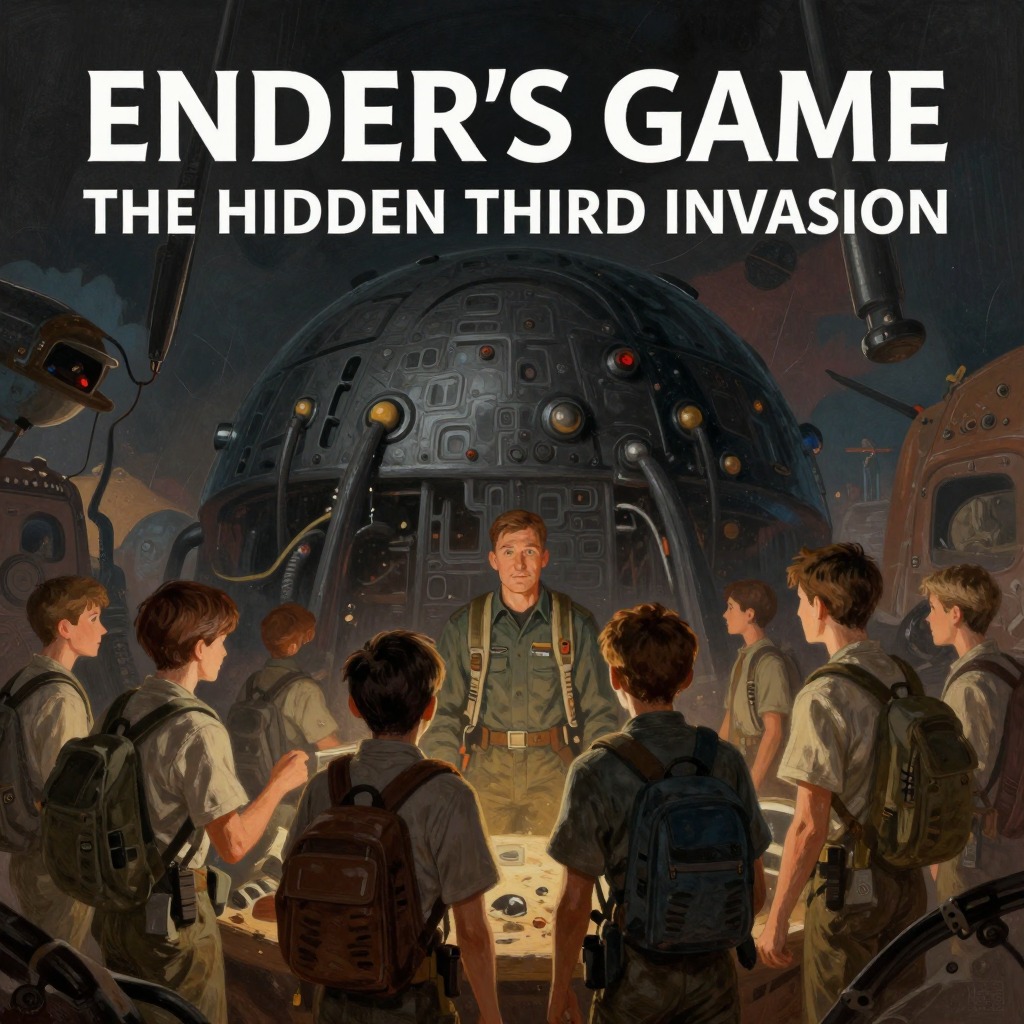
The ansible is the technological foundation of the Third Invasion, which is not a defensive war but a preemptive strike against the bugger homeworlds. The International Fleet has launched its starships over decades, each carrying an ansible, so that when they arrive at their targets, they can be coordinated by a single commander. Ender Wiggin, trained at Command School, is that commander. Unbeknownst to him, the simulator he uses is not a game but a real-time interface with the actual fleet, and his orders are transmitted via ansible to the ships. This deception is essential: Ender must believe he is playing a game to unleash his full strategic genius without the moral burden of real warfare. The ansible makes this possible, as it allows the fleet to be controlled from a safe distance, with Ender's commands relayed instantaneously. The final battle, in which Ender destroys the bugger homeworld, is conducted entirely through the ansible, and the observers in the room with him see the results in real time, their cheers and tears marking the victory.
The Ansible and the Hive-Queen
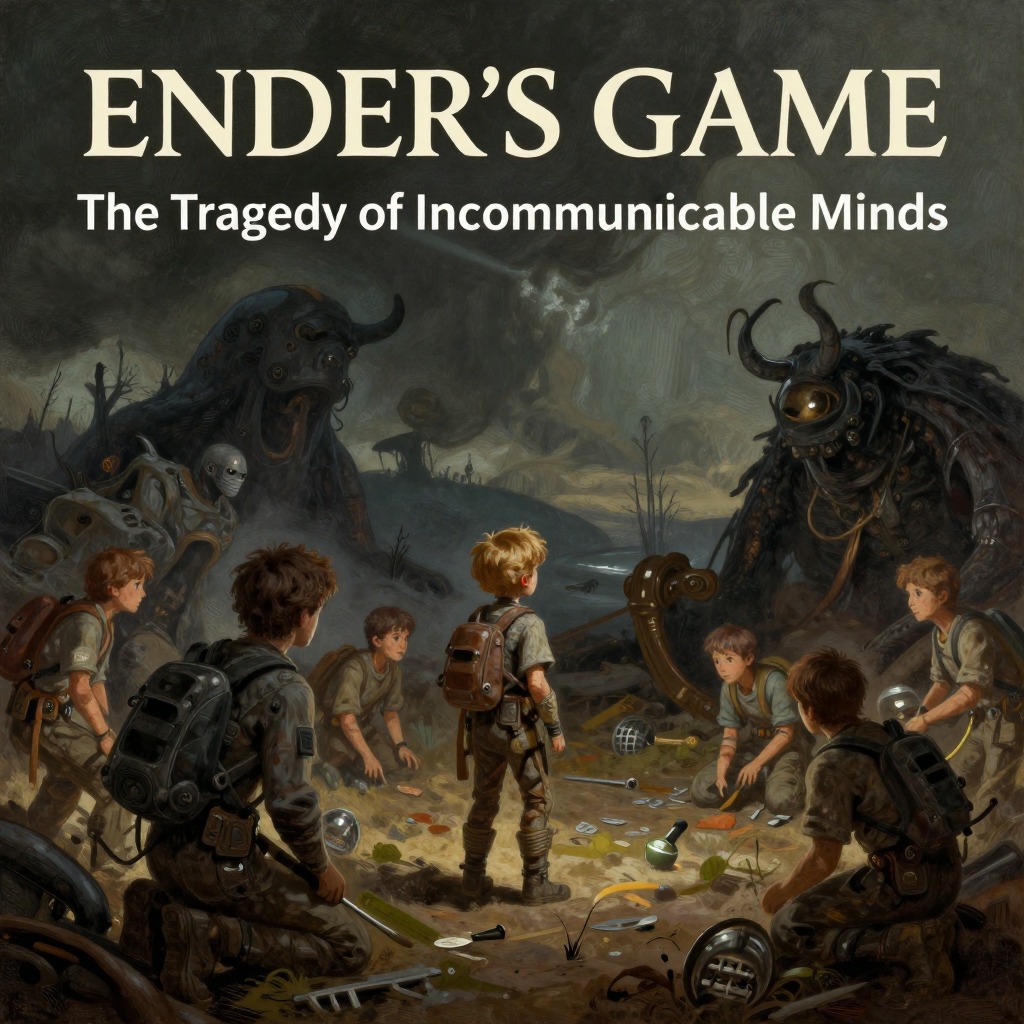
The ansible also plays a crucial role in the novel's denouement, as it becomes the medium through which Ender discovers the truth about the buggers. After the war, Ender learns that the buggers, in their final moments, used the ansible to reach into his mind, following its signal to find him. They built a replica of his childhood fantasy game on their world, a message meant for him alone. When Ender finds the Hive-Queen's cocoon, he experiences a vision of the buggers' history, and he realizes that they "found me through the ansible, followed it and dwelt in my mind." This connection, made possible by the ansible, allows Ender to understand the buggers' perspective and to become their Speaker for the Dead, carrying their story to humanity. The ansible, a tool of war, thus becomes a bridge to reconciliation, as Ender uses it to communicate with Peter, the Hegemon, and to transmit his book, Speaker for the Dead, across the stars.
Significance
The ansible is more than a plot device; it is a symbol of the novel's central themes of communication, understanding, and the consequences of war. It represents humanity's ability to overcome the limitations of space and time, but also the dangers of using such power without full knowledge. The ansible's instantaneous nature mirrors the buggers' hive mind, suggesting that true understanding requires a connection that transcends physical distance. In the end, the ansible is the instrument of both destruction and redemption: it enables the genocide of the buggers, but also allows Ender to hear their story and to speak for them. The device thus embodies the novel's moral complexity, where the same technology that wins a war can also lead to a deeper, more compassionate understanding of the enemy.