the border
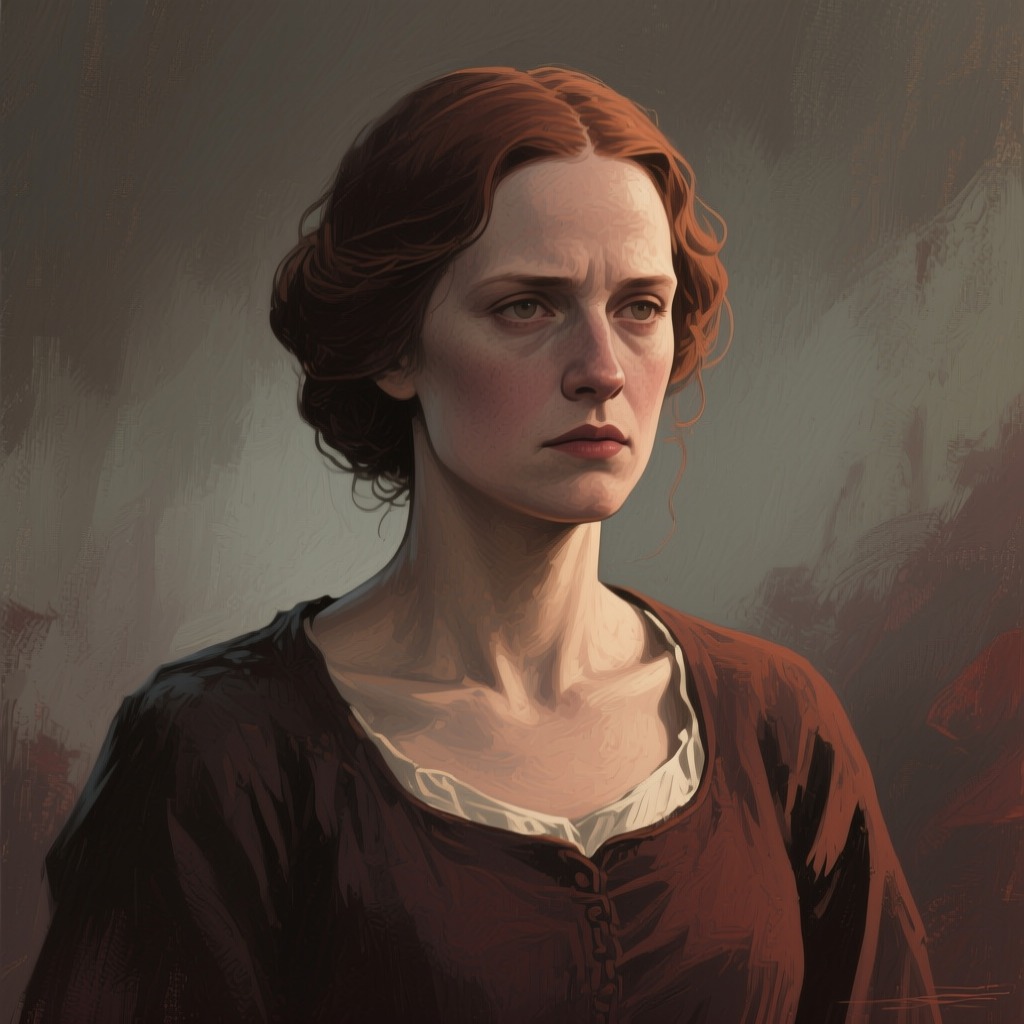
The border is the most charged geographical line in Offred's world, the razor-thin seam between the totalitarian Republic of Gilead and the freedom that lies beyond it. For Offred, the border is not merely a political boundary but the site of her greatest loss and her most persistent fantasy of escape. It is the place where her family's bid for freedom was crushed, and it remains the destination toward which all resistance networks—the Underground Femaleroad and the Mayday organization—direct their efforts. The border's presence haunts the narrative as both a memory of failure and a horizon of possibility, a line that Gilead polices with increasing brutality and that the regime itself uses to project its power outward through forced resettlement and propaganda.
The Failed Escape
The border is first and most devastatingly encountered through Offred's memory of the family's attempt to flee Gilead. On a Saturday morning in September, Offred, Luke, and their daughter set out in their car, carrying forged passports and a picnic basket as cover. Offred wears hiking boots; her daughter wears sneakers with a design of hearts on the laces. The plan is to cross the border on a day trip, with the child given a sleeping pill so she will not betray them. They have traded jewelry and a stamp collection for the forged documents. At the first checkpoint, Luke's license matches the passport, and they pass through. But at the border itself, the man takes their passports inside, and Luke returns too fast, reverses the car, and drives away. The border crossing becomes a desperate flight into the woods, where shots ring out and Offred pulls her daughter to the ground, rolling on top of her to shield her. The border, in this memory, is the place where hope was extinguished and where Offred last saw her family whole.
The Border as a Site of Resistance and Rumor
Within Gilead, the border remains a persistent subject of whispered news and underground activity. Ofglen tells Offred that the Mayday network can get people out if they are in immediate danger, though the border has become increasingly difficult to cross. Moira, after her escape from the Red Center, almost makes it across through the Underground Femaleroad, traveling from safe house to safe house, hidden in a mail sack, reaching as far as Salem and then Maine, where she is to be taken by boat up the coast. But the Eyes pick her up just as she is coming out the back door to go down to the dock. The border, for Moira, is the tantalizing near-miss that ends in capture and consignment to Jezebel's. The border also appears in the regime's propaganda: the television news announces that "Resettlement of the Children of Ham is continuing on schedule," with thousands arriving weekly in National Homeland One in North Dakota, though no pictures are shown. The border, in this context, is a one-way valve through which Gilead expels those it deems undesirable.
The Border as a Symbol of Lost Freedom
The border also functions as a symbol of the freedoms that existed before Gilead. Offred remembers a time when she could walk freely, when women wore shorts and jeans and jogging pants, when she had her own money and her own soap. The border, in this sense, is not just a geographical line but the boundary between a world of choice and a world of compulsion. Offred's longing for the border is a longing for the life she once had, a life in which crossing a line was a simple act of travel rather than a matter of life and death. The border, finally, is the place where Offred's story ends in uncertainty: when the black van comes for her, Nick tells her it is Mayday and to go with the men, and she steps up into the darkness within—or else the light. Whether she crosses the border to freedom or is taken to her death remains unknown, making the border the ultimate unresolved threshold of her tale.