Guardians
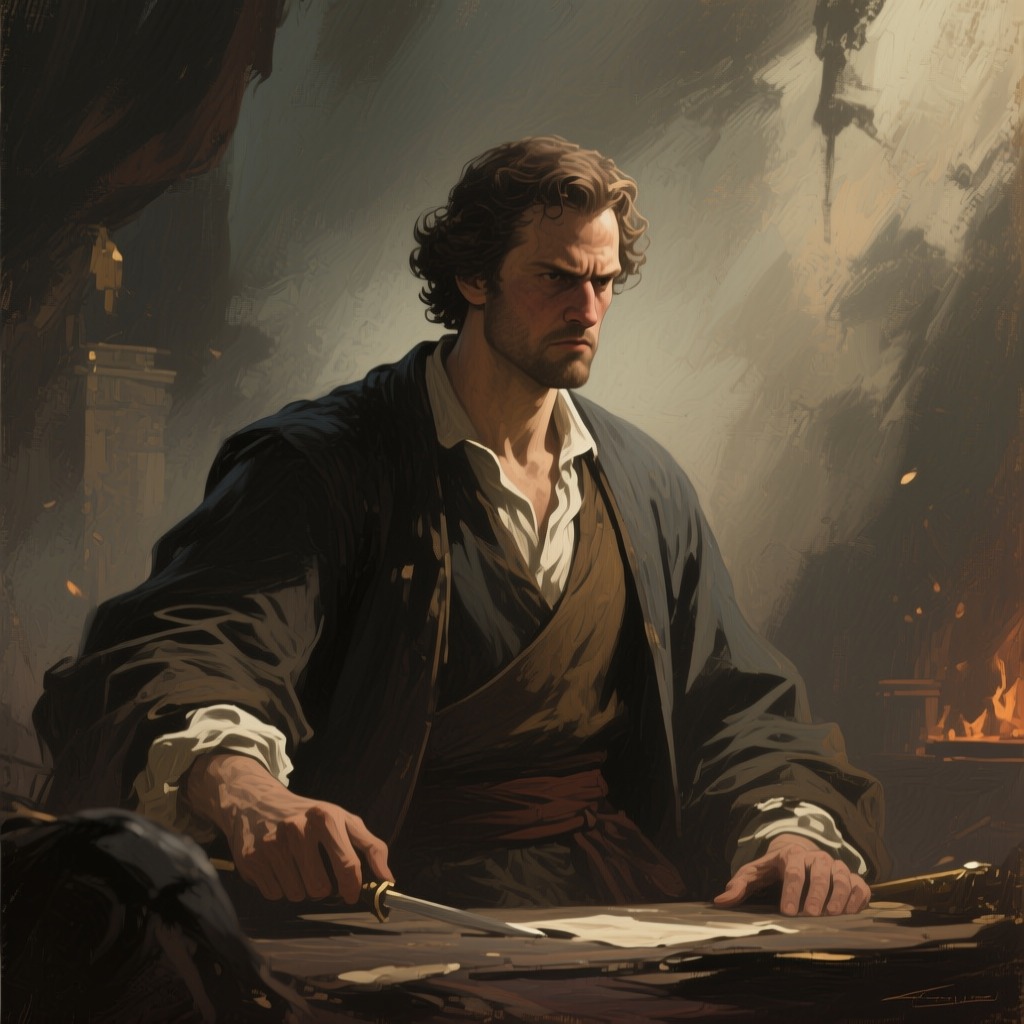
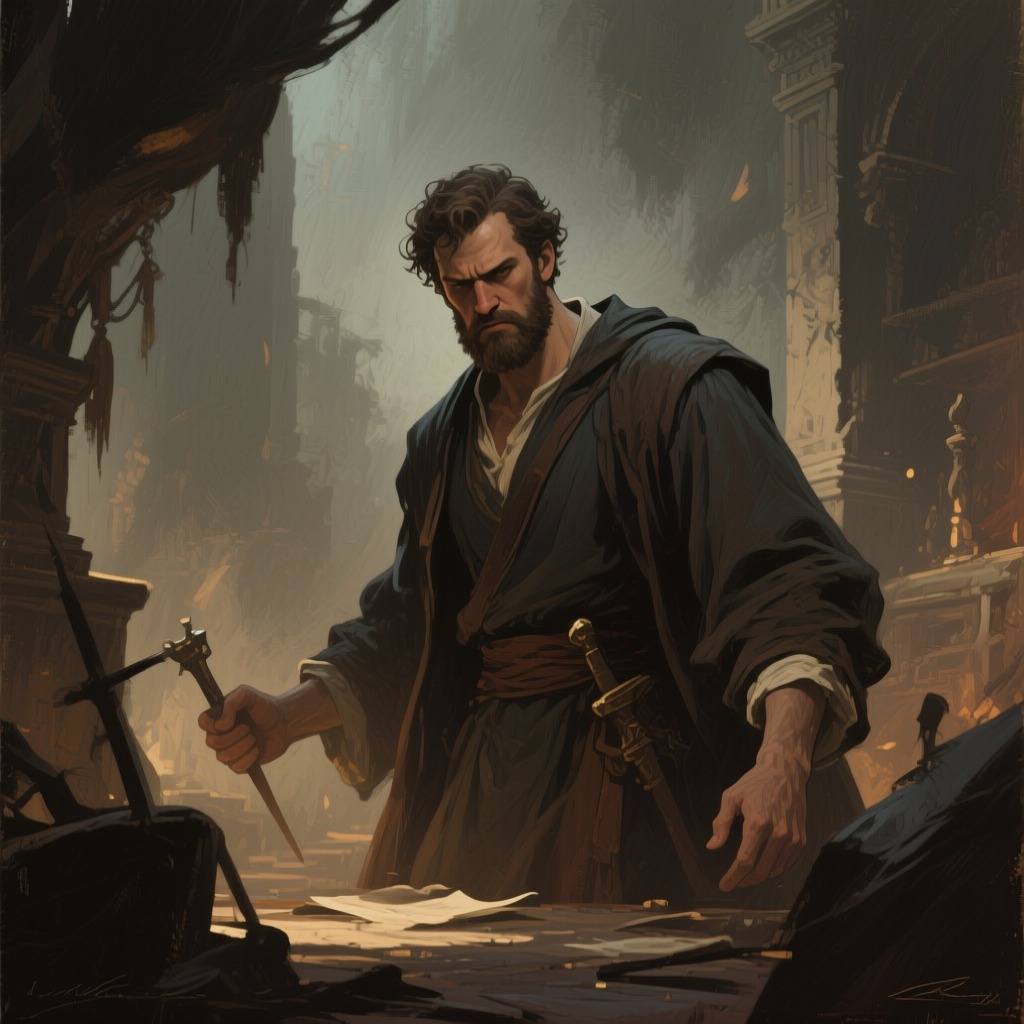
The Guardians of the Faith form the lowest tier of Gilead's armed forces, distinct from the elite Angels who fight at the front lines. They are used for routine policing, manning checkpoints, digging gardens, and other menial functions. Their uniform is green, with a crest on the shoulder and beret bearing two crossed swords above a white triangle. They are not real soldiers; the regime assigns to this role those who are either stupid, older, disabled, or very young, apart from the ones that are Eyes incognito. Their youth is often touching, but the narrator knows she cannot be deceived by it: the young ones are frequently the most dangerous, the most fanatical, the jumpiest with their guns, as they have not yet learned about existence through time. The Guardians are not permitted inside the buildings where the Handmaids are kept except when called, and they are not allowed inside the house of a Commander except on specific duty. They stand outside the chain-link fence topped with barbed wire that encloses the football field where the Handmaids take their twice-daily walks, with their backs to the women. They are objects of fear to the Handmaids, but of something else as well; the women fantasize that if only they would look, if only they could talk to them, something could be exchanged, some deal made, some tradeoff, because they still have their bodies.
Duties and Daily Presence
Guardians perform a wide range of routine tasks that keep the regime's infrastructure running. They wash and polish the Commanders' expensive cars, such as the Whirlwind, with loving care. They mow the tidy lawns of the Commanders' compound. They stand at the barriers and checkpoints that control all movement in and out of the city center, inspecting the passes of Handmaids and other women, stamping them, and punching the numbers into the Compuchek. They stand guard at the narrow gateway, saluting the Handmaids with three fingers raised to the rims of their berets, a token of respect accorded to them because of the nature of their service. They are stationed outside the doors of stores like Milk and Honey, and they stand behind the counters there, entering the numbers from the tokens into the Compubite and handing over purchases. They are also present at Prayvaganzas, standing like store mannequins with their neat hair and pressed uniforms and plaster-hard young faces, each with a submachine gun slung ready. At Salvagings, a heavy contingent of special-detail Angels with riot gear forms a cordon around the outside of the Wall, but Guardians also move forward to coil up the thick rope and to drag the condemned man forward for the Particicution.
Checkpoint Encounters and the Threat of Violence
The most frequent interaction between Handmaids and Guardians occurs at the checkpoints. The Guardians inspect the women's passes and stamp them, and one man goes into the pillbox to punch their numbers into the Compuchek. The narrator notes that the Guardians would not want to take the risk of looking inside the black vans that pass through without a pause, searching, or doubting their authority. The threat of violence from these young men is ever-present. The narrator recalls that last week they shot a woman, a Martha, right about here; she was fumbling in her robe for her pass, and they thought she was hunting for a bomb. They thought she was a man in disguise. The narrator knows that the young ones are often the most dangerous, the most fanatical, the jumpiest with their guns. They think instead of doing their duty and of promotion to the Angels, and of being allowed possibly to marry, and then, if they are able to gain enough power and live to be old enough, of being allotted a Handmaid of their own.
Social Position and Ambiguity
The Guardians occupy an ambiguous social position. They are not permitted to touch women, and they have no outlets now except themselves, which is a sacrilege. The narrator observes that one Guardian, with a peach-colored mustache, bends his head to try to get a look at her face, and she raises her head a little to help him; he sees her eyes and she sees his, and he blushes. She thinks of placing her hand on his exposed face, and he is the one who turns away. This small defiance of rule is an event, a tiny peephole. The narrator also notes that some Guardians have something they can trade on the black market, as evidenced by a cigarette stuck in the corner of a mouth. One Guardian, Nick, who lives over the garage, is too casual, not servile enough, and the narrator suspects he may be an Eye. The Guardians are not all stupid or older or disabled; some are Eyes incognito, and the narrator knows that the ones with the red arm bands are in charge of taking Handmaids to the doctor. The Guardians who are not Eyes are often very young, and their youth is touching, but the narrator knows she cannot be deceived by it.
Narrative Significance
The Guardians function as the most visible and immediate representatives of Gilead's power structure for the Handmaids. They are the ones who enforce the rules of movement and public behavior on a daily basis, and their presence is a constant reminder of the regime's control. Their youth and potential for fanaticism make them unpredictable and dangerous, while their own restricted lives and desires create a complex dynamic of fear, fantasy, and potential risk for the women they guard. The narrator's interactions with them, from the blushing young man at the checkpoint to the knowing wink from Nick, provide some of the few moments of human connection and small defiance within the otherwise rigid and oppressive routine of her life.