Kamala and her son's relationship
Kamala, the beautiful courtesan of the city, is the mother of Siddhartha's son, a boy she raises alone after Siddhartha's abrupt departure from worldly life. Their relationship is marked by a profound maternal devotion that contrasts sharply with the boy's pampered upbringing and his eventual rebellion against the ascetic life his father later embraces.
Identity and Background
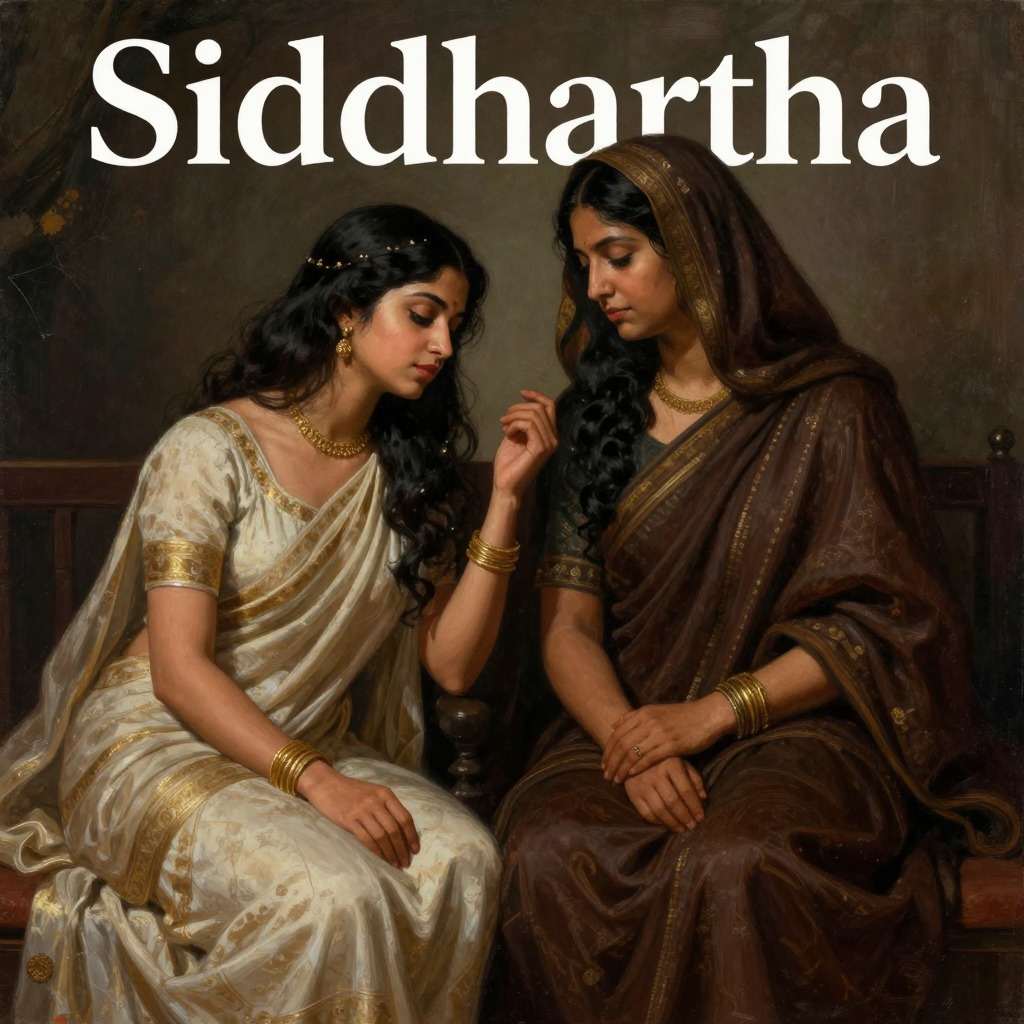
Kamala is introduced as a woman of immense beauty and sophistication, a courtesan who has mastered the art of love and pleasure. She is the mistress of a pleasure-garden and a house in the city, and she is deeply perceptive, recognizing that Siddhartha, despite his passionate lovemaking, remains a Samana at heart who cannot truly love. She once told him, "You are the best lover I ever saw... but you do not love me, you love nobody." After Siddhartha's disappearance, Kamala discovers she is pregnant from their last time together. She retires from her former life, gives her garden to the monks of Gotama as a gift, and takes refuge in the Buddha's teachings, becoming a friend and benefactor to pilgrims. She raises her son alone, and the boy grows up accustomed to the habits of rich people: finer food, a soft bed, and giving orders to servants.
The Pilgrimage and Kamala's Death
Years later, upon hearing of the impending death of Gotama the Buddha, Kamala decides to make a pilgrimage to see him, taking her young son with her. They travel in simple clothes, on foot, but the journey is difficult. The boy, who does not understand why he must go on this exhausting pilgrimage to see a dying stranger, soon grows tired, becomes disobedient, and whines, forcing his mother to rest frequently. Near the ferry of Vasudeva, while resting, Kamala is bitten by a small black snake. She collapses, and her son cries miserably, kissing and hugging her. Vasudeva carries her to his hut, where Siddhartha, now a ferryman, recognizes her. As she lies dying on Siddhartha's bed, she looks at him and says, "You've become old, my dear... you've become gray. But you are like the young Samana, who at one time came without clothes, with dusty feet, to me into the garden." She points to her boy and tells Siddhartha, "He is your son." In her final moments, she looks into Siddhartha's eyes and asks, "You have achieved it? You have found peace?" He smiles and places his hand on hers. She whispers, "I too will find peace," and Siddhartha replies, "You have found it." She dies, and Siddhartha closes her eyelids.
The Son's Rebellion and Departure
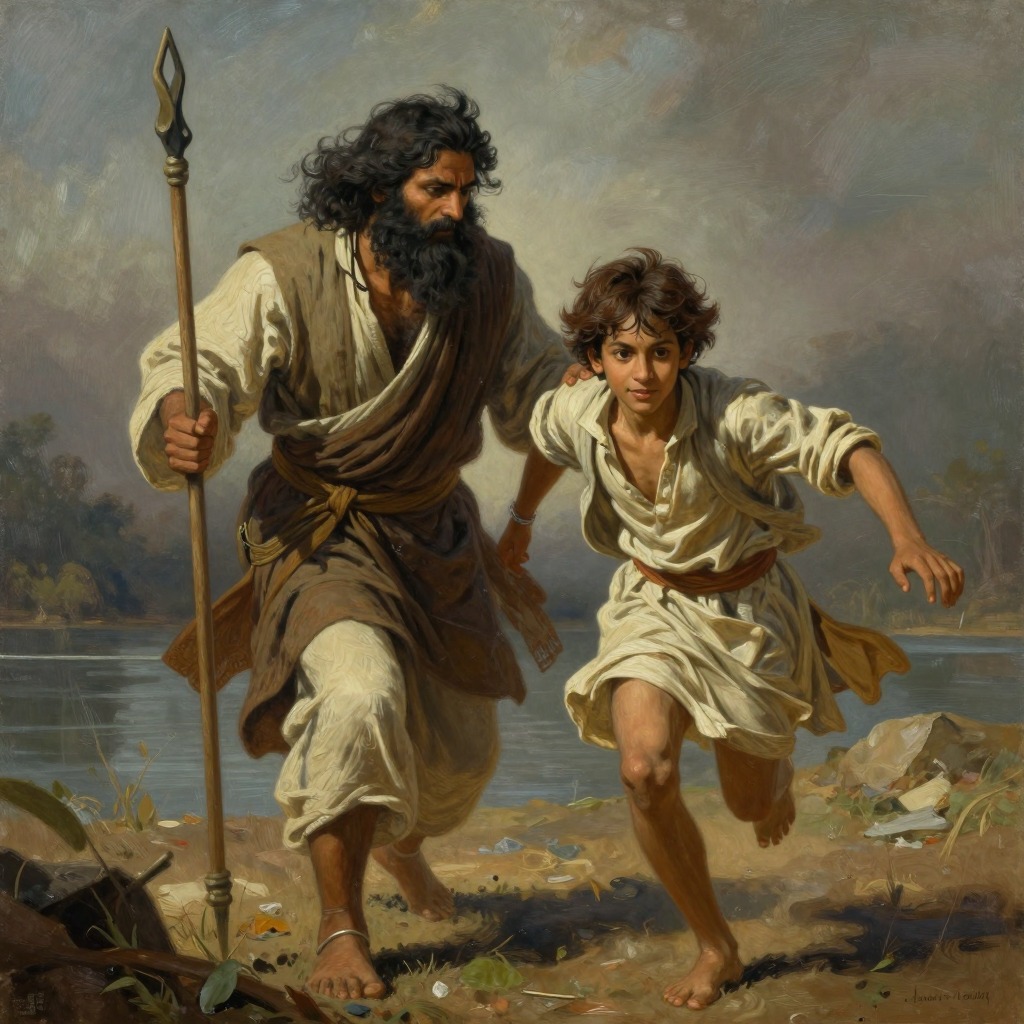
After Kamala's death, her son, young Siddhartha, is left in the care of his father. The boy is timid and weeping, gloomy and shy, and he meets his fate with resistance and denial. He is a pampered mother's boy, accustomed to a life of comfort, and he cannot willingly accept the poverty of the ferryman's hut. He remains a stranger, displaying a proud and stubbornly disobedient heart, refusing to work, stealing fruit, and tormenting his father. Siddhartha, in his love for the boy, suffers the pain of this rejection, a pain that Kamala had once foreseen when she told him he could not love. Now, Siddhartha has become a "childlike person" himself, suffering for the sake of another. The boy eventually runs away, stealing the ferrymen's boat and their coins, and returns to the city. Siddhartha's attempt to follow him is futile, and he realizes that his love for his son is a wound that must blossom and shine, a final lesson in the oneness of all life.
Thematic Significance
Kamala and her son's relationship serves as the catalyst for Siddhartha's final transformation. Through his love for his son, Siddhartha experiences the blind, passionate, and suffering love of a parent, a love he had previously observed in the "childlike people" with a sense of superiority. This love, which Kamala had embodied as a mother, forces Siddhartha to confront his own inability to love and to finally understand the nature of attachment and the pain of the world. The boy's rebellion and departure mirror Siddhartha's own youthful departure from his father, completing a cycle of suffering and understanding. Kamala's role as a mother, her death, and the subsequent relationship between father and son are essential to Siddhartha's final realization that wisdom cannot be taught, that love is the most important thing, and that the world is perfect in every moment, including its suffering.