early in the story
Siddhartha's Early Life
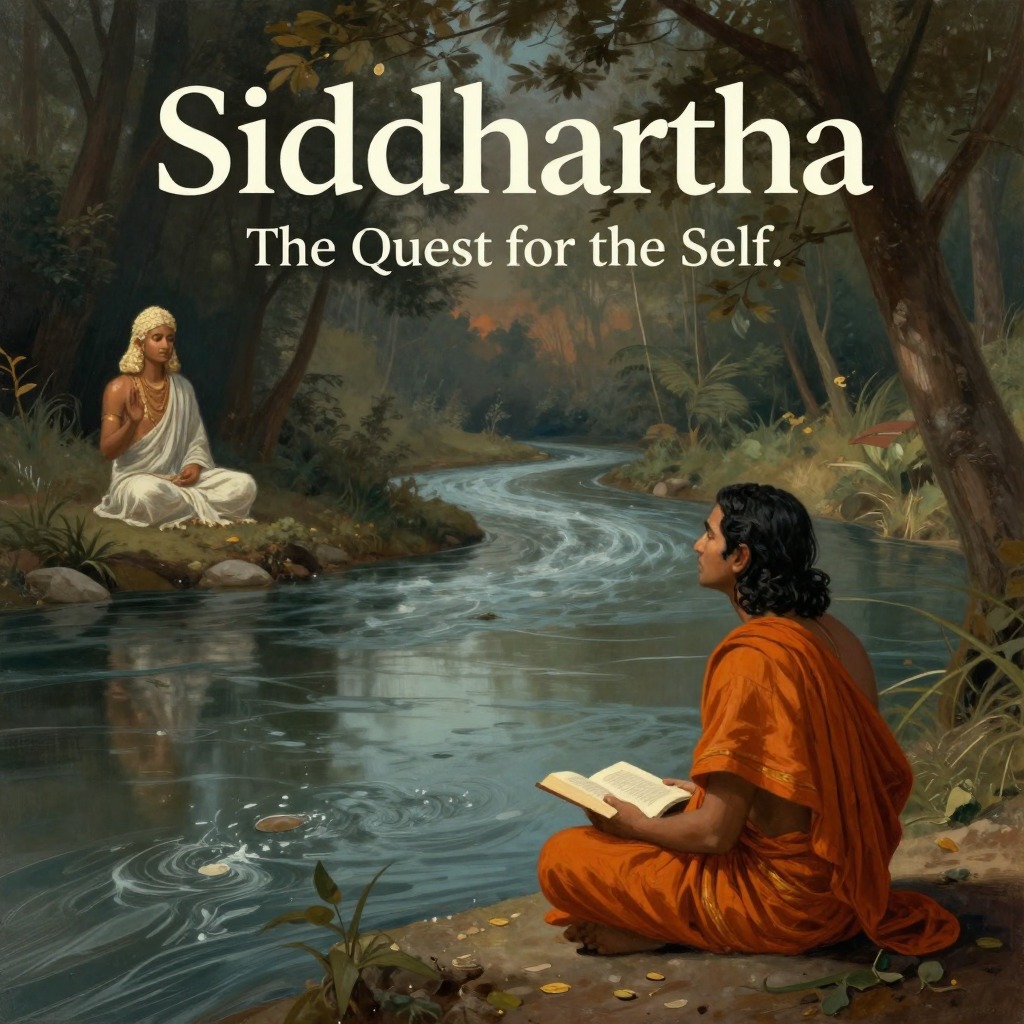
In the shade of the house, by the riverbank, and in the mango grove, Siddhartha, the handsome son of a Brahman, grows up with his friend Govinda. He excels in the sacred rituals, debates, and meditation, already feeling the presence of Atman within himself. Despite being loved by all, he harbors a deep discontent, sensing that his father's teachings and the holy scriptures have not satisfied his spiritual thirst. He begins to question the value of the rituals and the existence of the gods, seeking a path to true enlightenment.
early in the story
Siddhartha's Discontent
Siddhartha feels that the love of his parents and friend cannot bring him lasting joy. He suspects that the wise Brahmans have revealed all their knowledge, yet his soul remains unfulfilled. He contemplates the nature of Atman and wonders where it resides, feeling that the path to the self is not taught by anyone. His restlessness grows as he realizes that even his venerable father, despite his wisdom, is still a seeker, not a finder of peace.
early in the story
The Samanas Arrive
Three skinny, ascetic Samanas pass through Siddhartha's town, their presence stirring a deep longing in him. They are strangers to the world, devoted to self-denial, and their appearance ignites a passion in Siddhartha. He decides to leave his home and follow the Samanas, seeking a path of renunciation to find the truth.
early in the story
Siddhartha's Decision to Become a Samana
Siddhartha tells Govinda of his intention to join the Samanas the next morning. Govinda is shocked and tries to dissuade him, but Siddhartha is resolute. He confronts his father, standing silently for hours until his father finally gives his blessing, recognizing that his son has already left him in spirit. Siddhartha bids farewell to his mother and leaves the town at dawn, with Govinda joining him as his shadow.
after joining the Samanas
Life with the Samanas
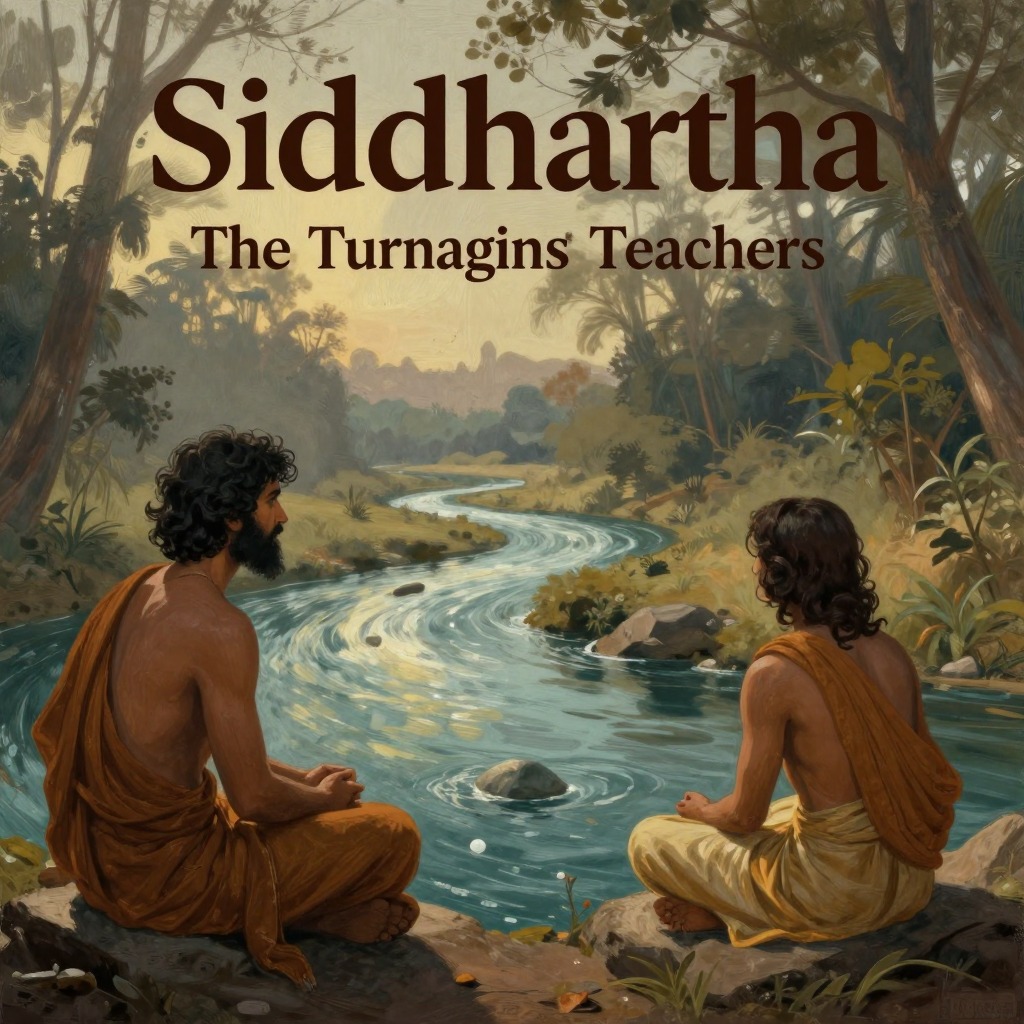
Siddhartha and Govinda are accepted by the Samanas and adopt their austere lifestyle. They give away their garments, fast for long periods, and practice self-denial through pain and meditation. Siddhartha learns to empty his mind and escape his self, but he realizes that these practices only offer temporary numbness, not true enlightenment. He becomes disillusioned with the Samanas' methods, feeling that they are no better than the escapes of a drunkard.
after years with the Samanas
Siddhartha's Doubts About the Samanas
Siddhartha confides in Govinda that their path has not led to wisdom. He argues that the Samanas' exercises are merely a flight from the self, akin to the numbing effects of alcohol. He questions whether anyone among them has ever reached Nirvana, and he begins to believe that true knowledge cannot be learned from teachers. Govinda is troubled by these words, but Siddhartha's thirst for truth remains unquenched.
after about three years with the Samanas
Rumors of Gotama the Buddha
News spreads of a man named Gotama, the Buddha, who has overcome suffering and teaches a path to salvation. The rumor reaches the Samanas, and Govinda is eager to hear the Buddha's teachings. Siddhartha, though skeptical of teachings, agrees to go with Govinda to listen, seeing it as an opportunity to leave the Samanas.
after hearing of Gotama
Leaving the Samanas
Siddhartha informs the oldest Samana of their departure, but the old man becomes angry. Siddhartha uses his mental powers to subdue the Samana, forcing him to bless their journey. Govinda is amazed at Siddhartha's ability, but Siddhartha dismisses such feats, saying he does not seek to walk on water. They leave the Samanas and set out to find Gotama.
after leaving the Samanas
Arrival at Savathi
Siddhartha and Govinda arrive in Savathi, where they learn that the Buddha resides in the grove of Jetavana. They are directed to the grove and spend the night there. The next morning, they see the Buddha walking with his monks, and Siddhartha immediately recognizes him by his serene and perfect demeanor. They follow him and later hear him teach the Four Noble Truths and the Eightfold Path.
after hearing the Buddha's teaching
Govinda Takes Refuge
After the Buddha's sermon, Govinda steps forward and asks to be accepted into the community. He takes refuge in the teachings and becomes a monk. Siddhartha, however, does not join, and Govinda urges him to do so, but Siddhartha declines, saying he must find his own path. Govinda weeps, realizing that his friend has left him.
after Govinda's ordination
Siddhartha's Conversation with Gotama
Siddhartha meets Gotama and respectfully challenges his teachings, pointing out a gap in the doctrine of salvation. He argues that the Buddha's enlightenment cannot be conveyed through teachings, and that he must seek his own path. Gotama listens calmly and warns him against the thicket of opinions, but Siddhartha remains firm. He leaves, feeling that he has gained a new understanding of himself.
after leaving the grove
Siddhartha's Awakening
As Siddhartha walks away from Jetavana, he realizes that he has left behind his past life and all teachers. He feels a profound awakening, understanding that he must learn from himself and the world around him. He sees the beauty of the world for the first time, no longer dismissing it as illusion. He decides not to return home but to start a new life, alone and free.
during his journey
Siddhartha's Dream of Govinda and a Woman
Siddhartha sleeps in a ferryman's hut and dreams that Govinda, now a monk, asks why he was forsaken. In the dream, Govinda transforms into a woman, and Siddhartha drinks milk from her breast, tasting all the joys of the world. The dream intoxicates him, and he wakes with a sense of longing and transformation.
during his journey
Encounter with the Ferryman
Siddhartha crosses a river with a ferryman, who tells him that the river has much to teach and that everything comes back. Siddhartha is struck by the ferryman's wisdom and kindness, and they part as friends. The ferryman's words stay with him, hinting at the river's significance in his future.
after crossing the river
Meeting Kamala
Siddhartha arrives near a city and sees a beautiful woman, Kamala, in a sedan-chair. He is captivated by her beauty and decides to learn the art of love from her. He approaches her, and she agrees to teach him, but only if he obtains fine clothes, shoes, and money. She advises him to seek employment with Kamaswami, the richest merchant in the city.
after meeting Kamala
Siddhartha Becomes a Merchant
Siddhartha goes to Kamaswami and impresses him with his abilities to think, wait, and fast. He is taken into the merchant's service and quickly learns the trade. He lives in Kamaswami's house, wears fine clothes, and visits Kamala daily, learning the art of love. He becomes wealthy but remains detached, treating business as a game.
over several years
Siddhartha's Life of Pleasure
Siddhartha indulges in the pleasures of the world: love, wealth, and gambling. He learns many things from Kamala, but his heart remains untouched. He envies the childlike people for their passion and attachment, yet he cannot feel it himself. Slowly, he becomes tired and discontent, and the voice of his inner self grows silent.
after years of worldly life
Siddhartha's Dream of the Dead Bird
Siddhartha dreams that Kamala's rare singing bird in a golden cage has died. He takes it out and throws it away, feeling a deep shock and sadness, as if he had thrown away all that was valuable. The dream fills him with a sense of worthlessness and despair, prompting him to reflect on his life.
after the dream
Siddhartha's Departure from the City
Overwhelmed by disgust and despair, Siddhartha leaves his garden and the city in the middle of the night, never to return. He wanders through the forest, feeling that his life is over. He reaches the river where he had once crossed with the ferryman and contemplates suicide, but the sound of Om brings him back to himself.
by the river
Siddhartha's Suicide Attempt and the Sound of Om
Siddhartha stands by the river, ready to drown himself, but as he leans toward the water, he hears the sacred syllable Om. The sound awakens his spirit, and he realizes the foolishness of his despair. He collapses under a coconut tree, exhausted, and falls into a deep, dreamless sleep.
after waking from sleep
Siddhartha's Reunion with Govinda
When Siddhartha wakes, he finds a monk sitting nearby, who turns out to be Govinda. Govinda does not recognize him at first, but Siddhartha reveals his identity. They talk, and Govinda is surprised to see Siddhartha in rich clothes. Siddhartha explains that he has lost his riches and is now a pilgrim. They part, with Govinda continuing on his way.
after meeting Govinda
Meeting Vasudeva and Becoming a Ferryman
Siddhartha returns to the river and finds the same ferryman, Vasudeva, who had once carried him across. He asks to stay and learn from him, offering his clothes as payment. Vasudeva accepts him, and Siddhartha becomes his assistant, learning to operate the boat and work in the fields. He begins to learn from the river, which teaches him to listen and understand the oneness of life.
during his time with Vasudeva
Learning from the River
Siddhartha learns many secrets from the river, including the idea that time does not exist and that the river is everywhere at once. He and Vasudeva often sit together listening to the river, and they come to understand each other deeply. Siddhartha's smile becomes like Vasudeva's, full of peace and wisdom.
years later
Kamala's Pilgrimage and Snakebite
Kamala, now a follower of the Buddha, travels with her son to see the dying Gotama. On the way, she is bitten by a snake and collapses near the ferry. Vasudeva carries her to the hut, where Siddhartha recognizes her and learns that the boy is his son. Kamala dies peacefully, and Siddhartha is filled with a sense of eternity.
after Kamala's death
Siddhartha's Son's Arrival
Siddhartha takes in his son, who is grieving and resentful. The boy is used to a life of luxury and does not adapt to the simple life of the ferrymen. Siddhartha tries to win his love with patience and kindness, but the boy remains distant and disobedient.
after months with the son
Vasudeva's Advice
Vasudeva advises Siddhartha to let his son go back to the city, as the boy cannot thrive in their simple life. He warns that Siddhartha's love is a form of force and that the boy must find his own path. Siddhartha struggles with this advice, unable to part with his son.
after months of conflict
Siddhartha's Son's Rebellion and Departure
The boy, Siddhartha, rebels against his father, screaming that he hates him and would rather become a robber than be like him. He runs away, stealing the boat and some coins. Siddhartha follows him but realizes he cannot bring him back. He returns to the ferry, wounded by the loss.
after his son's departure
Siddhartha's Wound
Siddhartha suffers from the pain of losing his son. He envies other fathers and feels a deep loneliness. He learns to understand the childlike people better, seeing their passions and attachments as worthy of love. He realizes that his wound must blossom into understanding.
after years of suffering
Siddhartha's Final Realization (Om)
Siddhartha listens to the river and hears all its voices as one, the sound of Om. He achieves a state of oneness, where all suffering and joy are united. His wound blossoms, and he is filled with peace and understanding. He realizes that wisdom cannot be taught, but must be lived.
after Siddhartha's realization
Vasudeva's Departure
Vasudeva, seeing that Siddhartha has achieved enlightenment, decides to leave. He tells Siddhartha that he has been waiting for this hour and that he will go into the forest to become one with the oneness. Siddhartha watches him leave with deep joy and reverence.
after Vasudeva's departure
Siddhartha's Final Meeting with Govinda
Govinda, now an old monk, hears of a wise ferryman and comes to see him. He meets Siddhartha, who shares his insights about wisdom, love, and the oneness of all things. Govinda is troubled by Siddhartha's words but is deeply moved by his presence. Siddhartha asks Govinda to kiss his forehead, and in that moment, Govinda sees the smile of the perfected ones and experiences a vision of the unity of all life.