
Introduction
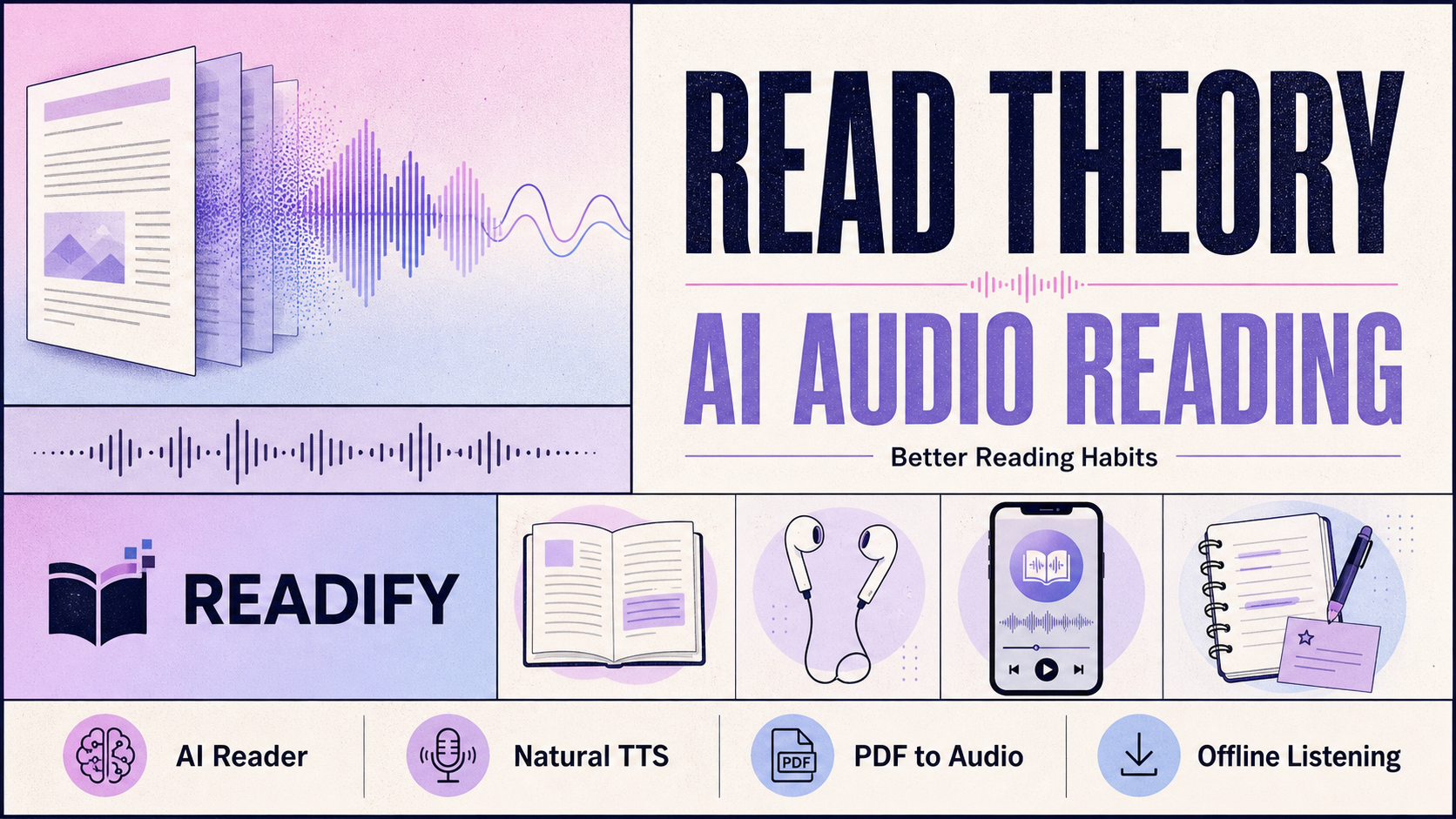
People search for read theory because they want reading to work better, and Readify can help turn that intent into a more flexible study routine. Some are students trying to improve comprehension. Some are parents helping a child build confidence. Some are teachers looking for better classroom reading support. Others are independent learners who know they should read more, but struggle to find enough quiet screen time.
That search often starts with a simple need: practice reading, understand more, and stay consistent.
But reading is no longer limited to sitting still with a screen or printed page. With Readify, learners can use an AI Reader to listen to text, turn study materials into audio, and continue reading during moments that would otherwise be lost: commuting, walking, resting, review sessions, bedtime reading, or preparing for class.
This article is not a replacement for any specific reading platform or school assignment. Instead, it looks at the broader intent behind read theory searches and shows how Readify can support real reading habits. When used responsibly, Readify tools like natural sounding TTS, PDF to audio, EPUB to audio, and DOCX to audio can make study reading more flexible, more accessible, and easier to repeat.
What People Really Want When They Search read theory
A search for read theory usually signals one of three intentions.
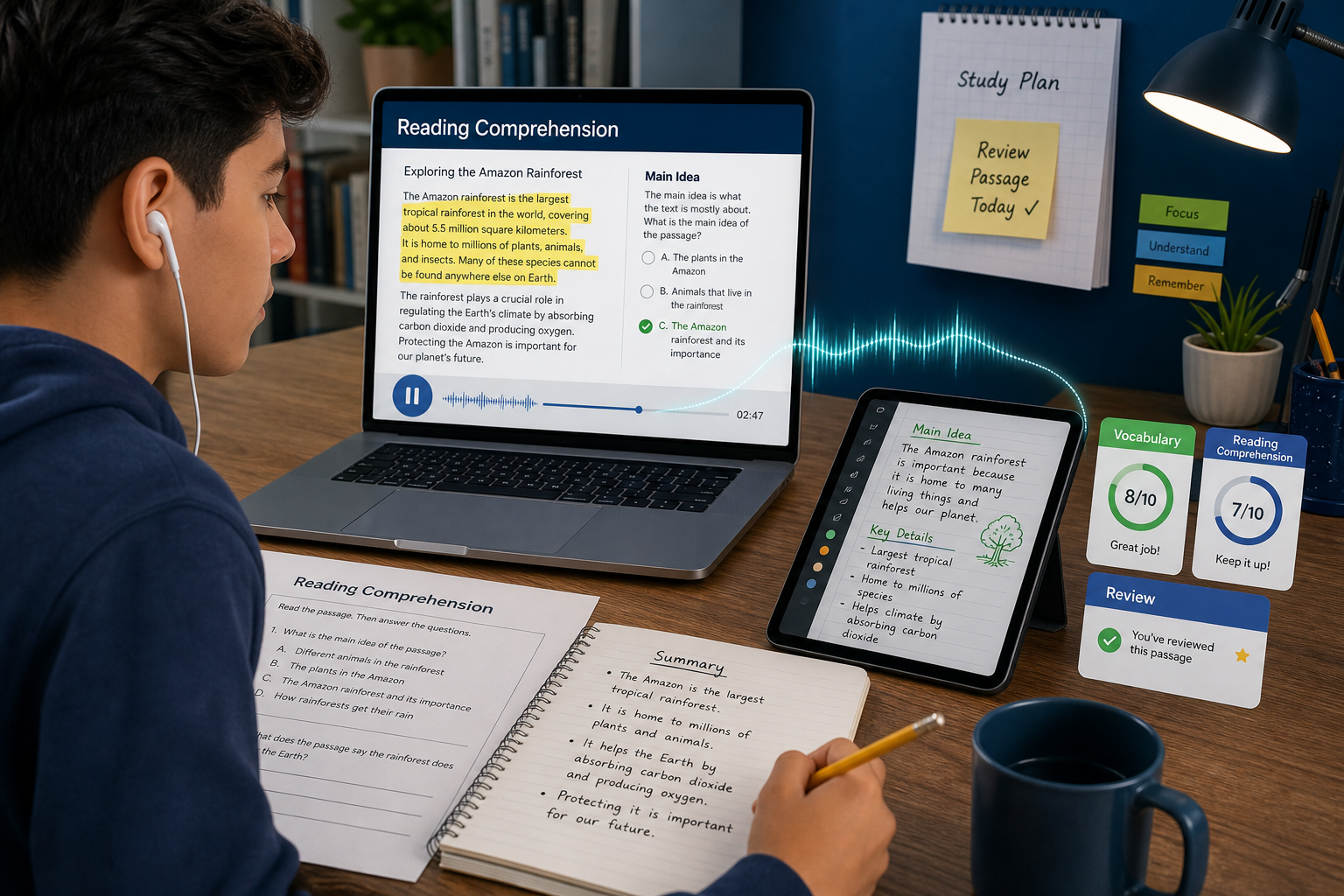
First, the user may want reading comprehension practice. They may be looking for passages, questions, vocabulary work, or a structured reading routine. This is the learning intent behind the keyword.
Second, the user may be trying to access an existing account. That is why terms like read theory login and read theory student login appear as related searches. These are navigation keywords. They should be handled honestly: if someone needs a specific school login, they should use the official login path given by their teacher, school, or platform.
Third, some users type variations such as reading theory or read org theory because they are not sure of the exact phrase. These searches still point toward the same larger problem: how do I read better, understand more, and make reading practice less frustrating?
That is where Readify fits naturally. Readify does not need to pretend to be a classroom reading platform. Its role is different. Readify helps people turn their own readable materials into audio, so they can study with their eyes, ears, or both.
For more reading and study ideas, users can visit Readify blog.
From reading theory to Real Reading Habits
The phrase reading theory sounds academic, but the daily problem is practical. Good reading depends on repeated exposure, attention, vocabulary, background knowledge, and the ability to return to difficult passages without giving up.
A student might understand a short paragraph in class, then forget the details later. A busy professional may save reports and articles but never finish them. An English learner may need to hear sentence rhythm before the meaning feels natural. A reader with visual fatigue or a print disability may need another way to access the same content.
Research and literacy organizations often emphasize that reading support should be varied, accessible, and matched to the learner. The University of Florida Literacy Institute collects literacy and dyslexia resources for educators and families through its evidence-based literacy resource hub. Accessibility-focused groups also highlight the importance of readable content, assistive technology, and alternative access to text. The American Library Association provides guidance on accessible reading and readability.
This is why audio matters. Audio does not make reading passive by default. Used well, it can support active reading. A learner can listen once for the general idea, read visually for details, then listen again while reviewing notes. That repeated contact can make hard material feel less locked away.
Readify supports that habit by helping users listen to text with natural sounding TTS and AI audiobook narration. For classroom reading, independent reading, commuting, and review sessions, the goal is the same: make the next reading session easier to start.
How Readify Helps You listen to text While Studying
Readify is useful when you already have material you are allowed to use and want a more flexible way to read it. Instead of forcing every reading session to happen at a desk, Readify lets you turn text into audio and keep learning in more places.
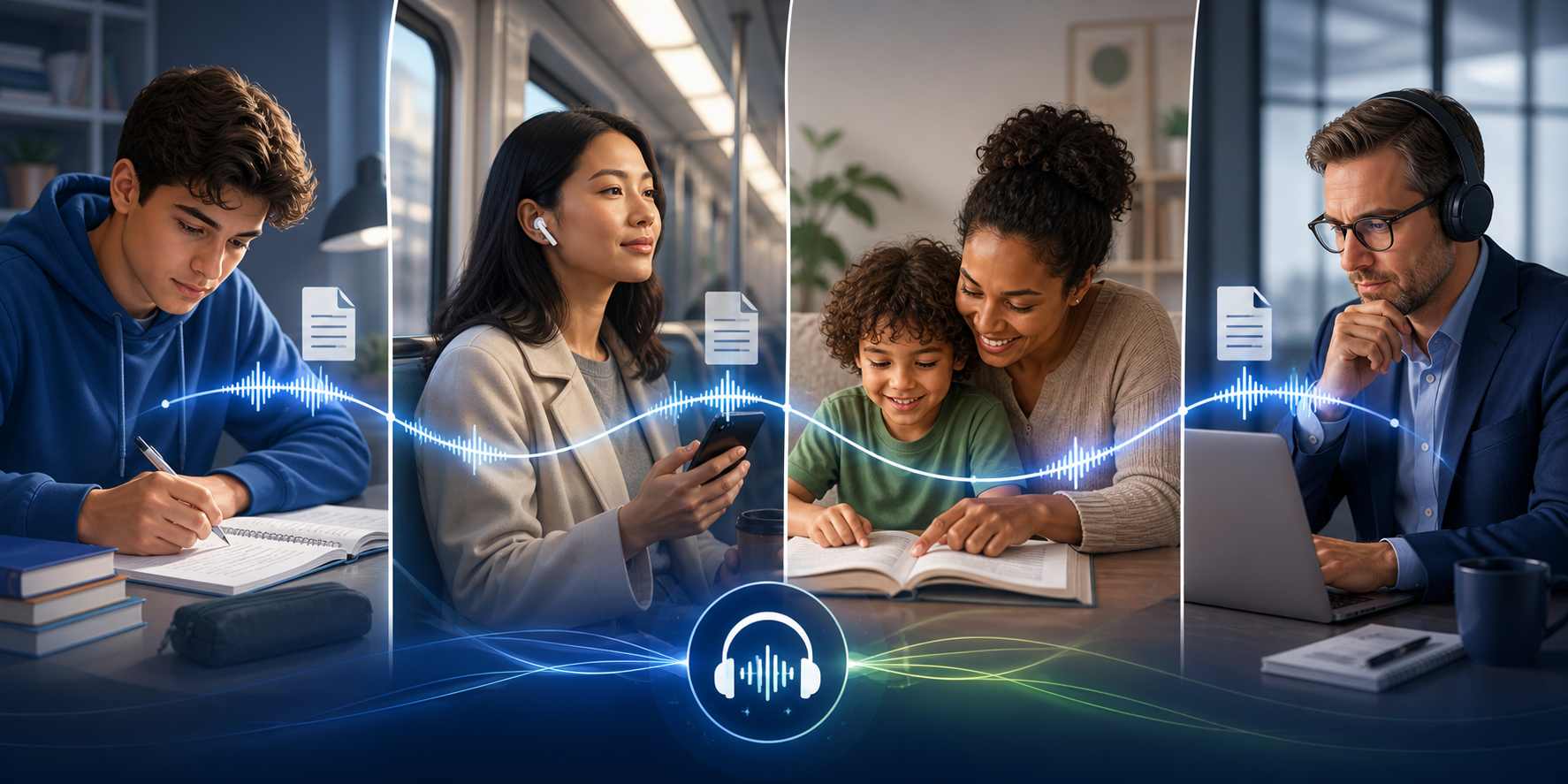
For a student, that might mean listening to a chapter summary while walking to school. For a parent, it might mean helping a child hear a passage before discussing it together. For a teacher, it might mean recommending an audio-supported routine for students who benefit from hearing text. For a busy learner, it might mean turning saved articles into audio for a commute, a quiet lunch break, or bedtime reading.
The key Readify value is simple: the AI Reader helps transform reading from a single fixed activity into a more adaptable routine.
With natural sounding TTS, the listening experience can feel smoother than robotic screen reading. With AI audiobook narration, longer documents can become easier to revisit. With hands-free reading, users can keep up with material while cooking, stretching, walking, or resting their eyes.
That makes Readify especially relevant to people who discovered this topic through read theory but need more than one way to build reading consistency. The brand fit is direct: Readify is about making text listenable, repeatable, and easier to return to.
Explore the main tool here: Readify AI Reader.
Turn Study Materials into Audio
Many learners do not struggle because they lack material. They struggle because their material is trapped in formats that require uninterrupted screen attention. Readify gives those materials another path: audio.
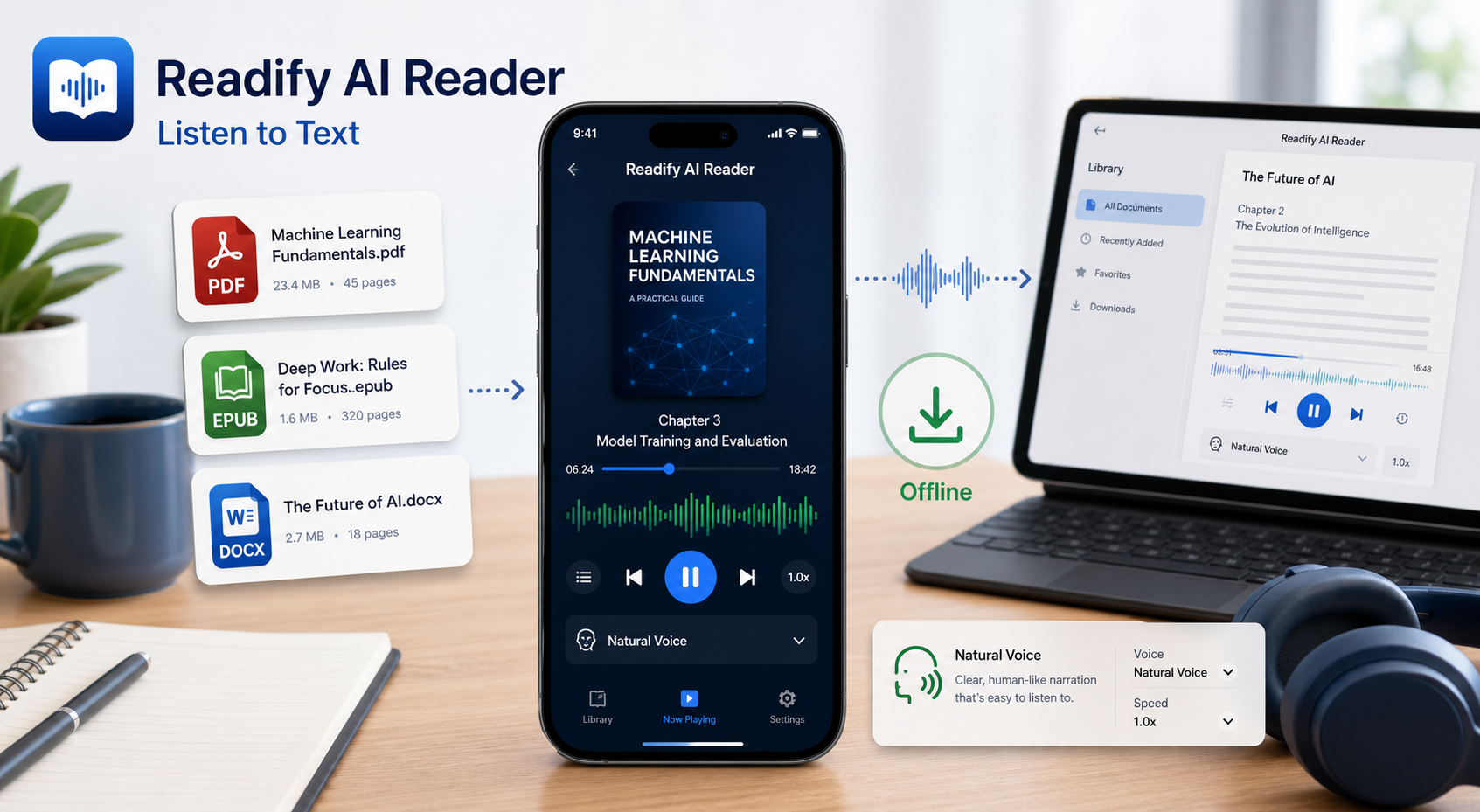
Readify can help with common document workflows:
PDF to audio: Useful for lecture notes, handouts, reports, worksheets, and long-form study files.
EPUB to audio: Helpful for ebooks, public domain texts, and structured digital books. The W3C explains EPUB as a standard format for digital publications in its EPUB format overview.
DOCX to audio: Useful for drafts, class notes, essays, study guides, and shared documents.
This is where the AI audiobook generator idea becomes practical. A learner can take a document they have the right to use and turn it into a listening experience. That does not mean every file on the internet should be converted. Copyright still matters. Users should only process content they own, created, are authorized to use, hold appropriate permission for, or that is in the public domain.
For public domain reading, Project Gutenberg explains its approach to works not restricted by U.S. copyright on its public domain ebook license page. Readers outside the United States should check the rules that apply in their own country.
Used this way, Readify gives read theory searchers a practical next step: do the reading, but make the format easier to live with. Readify becomes the bridge between saved text and actual study time.
Practical Workflows for Students, Parents, and Busy Learners
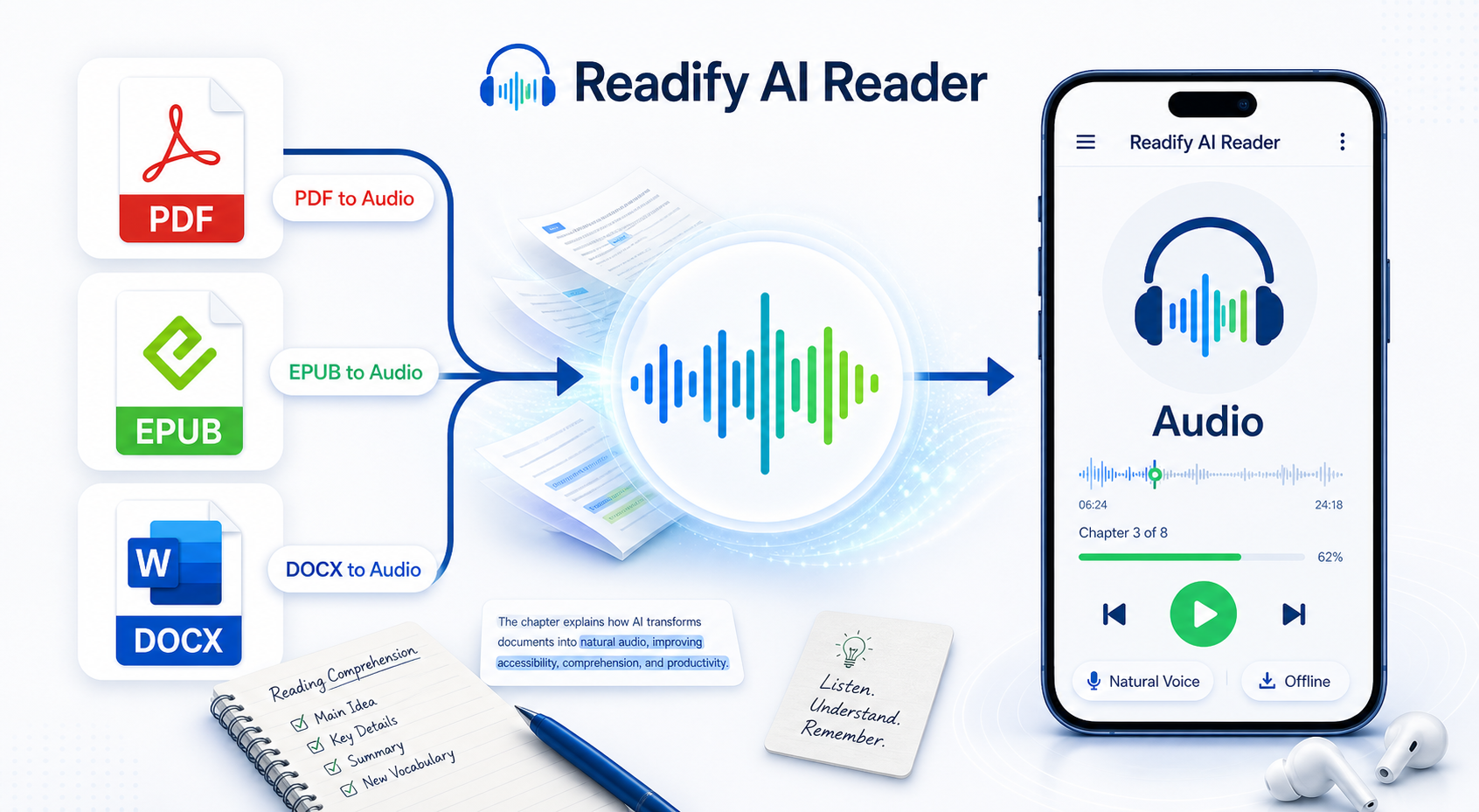
A good read theory routine is not just about finding a passage. It is about creating a repeatable way to understand and remember what you read, whether the session happens at a desk, on a commute, during independent reading, or in a short review session.
For students: read the passage visually first, then use Readify to listen to text a second time. Pause after each section and summarize the main idea. If the material is a PDF, use PDF to audio to review it before a quiz.
For parents: choose a short, appropriate text and let the child listen once before reading aloud. Then ask simple questions: Who is this about? What changed? What sentence tells you that? Audio should support attention, not replace conversation.
For teachers: recommend audio-supported review for students who need repeated exposure. Organizations such as the International Dyslexia Association maintain dyslexia and reading resources, including materials for families and educators.
For busy professionals: convert long documents with DOCX to audio or EPUB to audio and listen during low-friction moments. Save visual reading time for annotation, decision-making, and close review.
For accessibility: accessible reading is not a bonus feature. It is often the difference between having access to information and being blocked by format. Readify's AI Reader, offline listening, and hands-free reading can support people who need more flexible access to text during study reading, classroom reading, and everyday learning.
This is the real bridge between reading theory and everyday learning: reduce friction, repeat important material, and make reading possible in more moments.
FAQ
Is Readify the same as read theory?
No. read theory is the main keyword people use when searching for reading practice or related login pages. Readify is different. Readify helps users turn their own text and documents into audio with an AI Reader, natural sounding TTS, and AI audiobook narration.
Can Readify help if I searched for read theory login?
If you need a specific read theory login, use the official login instructions from your school, teacher, or platform. Readify does not replace that login. It can help with a different task: turning your own study materials into audio so you can review them more flexibly.
What about read theory student login?
A read theory student login search usually means a student is trying to access an assigned reading account. Readify is not a student account portal for that platform. However, students can use Readify for permitted materials such as notes, essays, study guides, PDFs, EPUB files, or DOCX documents.
Why do people search read org theory?
read org theory may be a mistaken or partial search phrase. It likely comes from users trying to remember a reading-related website or login path. In this article, the phrase is treated as a weak related keyword, not as the main topic.
Can I use Readify for copyrighted books or school materials?
Only if you have the right to do so. Use Readify with content you own, created, are authorized to use, hold appropriate permission for, or that is in the public domain. Do not upload or convert content in ways that violate copyright, school rules, publisher terms, or local law.
What formats can support an audio reading workflow?
Readify can be positioned around PDF to audio, EPUB to audio, and DOCX to audio workflows. These formats cover many study situations, from worksheets and notes to ebooks and long documents.
Is listening as useful as reading?
Listening and visual reading are different, but they can support each other. For comprehension, many learners benefit from combining both: read once, listen once, summarize, and revisit difficult sections. Readify makes that repeated exposure easier.
Conclusion
A search for read theory is really a search for better reading outcomes. People want to understand more, keep up with assignments, remember what they read, and make reading less stressful.
Readify supports that goal from a different angle. With an AI Reader, natural sounding TTS, AI audiobook generator, AI audiobook narration, PDF to audio, EPUB to audio, DOCX to audio, offline listening, hands-free reading, and accessible reading, Readify helps users build a reading routine that fits real life.
For students, parents, teachers, and busy learners, the next step is not only to read more. It is to make reading easier to return to.
Start with listen to text with Readify, or explore more ideas on the Readify text to speech tools blog.
