
Dune
Dune is a landmark science fiction novel by American author Frank Herbert, first published in 1965 after being serialized in Analog Science Fiction and Fact magazine. It won both the Hugo Award and the Nebula Award for Best Novel in 1966, cementing its reputation as a masterpiece. The story is set in a distant future where humanity has colonized countless star systems and is ruled by a feudal empire under the Padishah Emperor. The most valuable substance in the universe is melange, the spice, found only on the desert planet Arrakis, also known as Dune. The spice extends life, enhances mental abilities, and makes space navigation possible. Control of Arrakis means control of the universe. The plot follows Paul Atreides, the young heir of House Atreides, a noble family that is ordered by the Emperor to take over the spice-mining operations on Arrakis from their sworn enemies, House Harkonnen. This is actually a trap: the Emperor and the Harkonnens conspire to destroy House Atreides. Paul's father, Duke Leto, is killed, and Paul and his mother Jessica, a member of the Bene Gesserit sisterhood, flee into the desert. They join the native Fremen, a hardy people who have adapted to the harsh desert environment and have developed a culture centered on the giant sandworms and the harvesting of spice. Paul undergoes a transformation, becoming a messianic figure known as Muad'Dib, and leads the Fremen in a revolt that topples the Emperor. The novel explores deep themes: ecology, as Herbert meticulously details the interconnectedness of the desert ecosystem; politics, with the complex machinations of the empire and the Great Houses; religion, showing how prophecies can be manufactured and manipulated; and human evolution, as Paul's prescient abilities and his genetic heritage raise questions about fate and free will. The writing background is equally fascinating. Herbert, a journalist, was assigned in 1957 to write about an Oregon Department of Agriculture project to stabilize coastal sand dunes. He became fascinated by the dunes and the struggle to control them, and began researching desert ecology, politics, and Middle Eastern culture. He spent six years developing the novel, drawing on his observations of oil politics, environmentalism, and the Cold War. Dune's influence is immense. It redefined science fiction, moving it away from pure technological speculation toward a more literary and philosophical approach. It has spawned five sequels written by Herbert, and numerous prequels and sequels by his son Brian Herbert and Kevin J. Anderson. The novel has been adapted into multiple films, including David Lynch's 1984 version and Denis Villeneuve's 2021 and 2024 films, as well as a television miniseries. It also inspired the first real-time strategy video game, Dune II, which shaped the entire genre. Dune remains a towering achievement, a rich and complex work that continues to captivate readers with its timeless themes of power, environment, and the human condition.
About the Author
Frank Herbert (October 8, 1920 – February 11, 1986) was an American science fiction writer best known for his Dune series, one of the most acclaimed and influential works in the genre. He was born Franklin Patrick Herbert Jr. in Tacoma, Washington, to a poor family. He developed a love for reading and writing early on, and after graduating from high school in Salem, Oregon, he worked for various newspapers as a photographer and reporter. During World War II, he served briefly in the U.S. Navy as a Seabee photographer but was discharged due to medical reasons. After the war, he attended the University of Washington, though he did not earn a degree. There he met Beverly Ann Stuart in a writing class; they married in 1946, and she became his lifelong editor and supporter. Herbert's career as a journalist spanned many years, working on the West Coast, and this experience honed his ability to research and write about complex topics. He began publishing science fiction stories in 1952, with "Looking for Something?" in Startling Stories. His first novel, The Dragon in the Sea (1960), was a psychological thriller set in a submarine, exploring themes of paranoia and group consciousness. But his masterpiece was Dune, published in 1965 after being rejected by numerous publishers. The novel won both the Hugo and Nebula Awards, and Herbert went on to write five sequels: Dune Messiah (1969), Children of Dune (1976), God Emperor of Dune (1981), Heretics of Dune (1984), and Chapterhouse: Dune (1985). He also wrote other notable novels such as The Godmakers (1972) and The Dosadi Experiment (1977), as well as co-authoring books with his son Brian Herbert. Herbert's work is characterized by deep ecological themes, political intrigue, religious mysticism, and explorations of human potential and consciousness. He was influenced by his reporting on the Oregon sand dunes, which inspired the desert planet Arrakis, and by his interest in Eastern philosophy, psychology, and the environmental movement. He was also a keen observer of the oil politics of the Middle East, which he allegorized in the spice melange. Herbert married three times: first to Flora Parkinson (1941–1943), with whom he had a daughter; then to Beverly Stuart (1946–1984, her death), with whom he had three sons, including Brian Herbert; and finally to Theresa Shackelford (1985 until his death). He died in Madison, Wisconsin, from a pulmonary embolism at age 65. Frank Herbert's legacy is immense. He is credited with elevating science fiction to a more literary and philosophical level, influencing countless authors, filmmakers, and game designers. The Dune series has sold tens of millions of copies worldwide and continues to find new audiences through film adaptations. Herbert's vision of a fragile ecosystem, the dangers of messianic figures, and the complexities of power remains strikingly relevant today.
StoryFlow
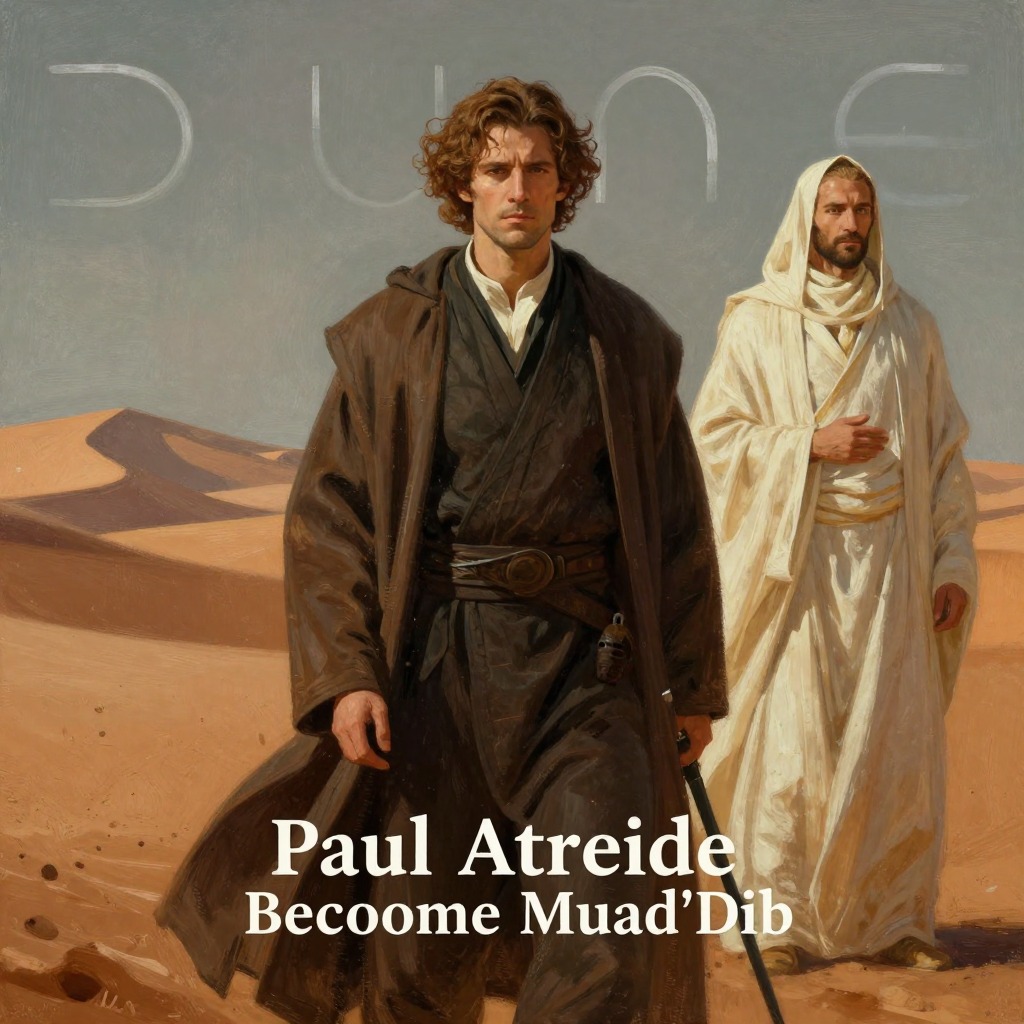
Paul Atreides Becomes Muad'Dib
Traces the duke's heir from his ordeal on Caladan to his transformation into the Fremen prophet and emperor of Arrakis.

The Fall and Rise of House Atreides
Follows the Atreides family from political triumph on Caladan to destruction on Arrakis and final restoration at the imperial throne.
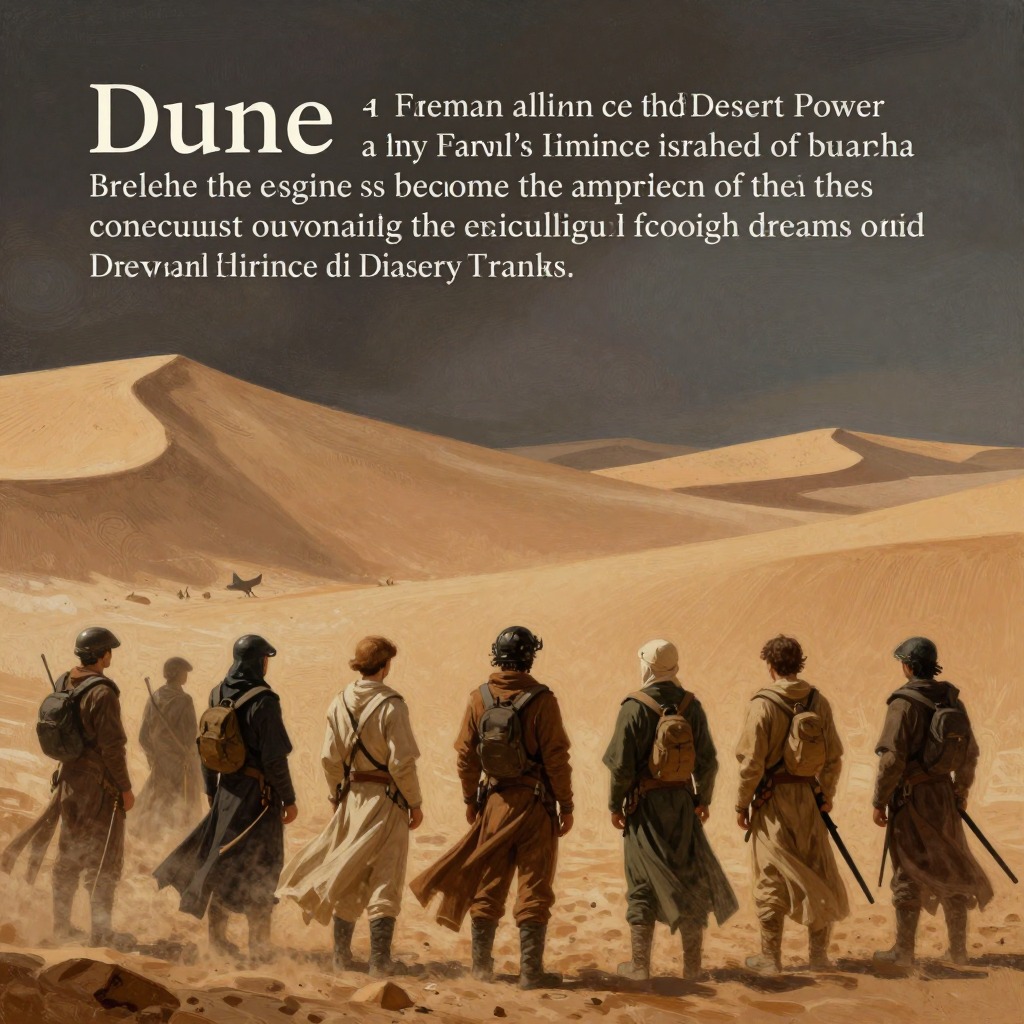
Fremen Alliance and Desert Power
Tracks how the isolated Fremen become the engine of Paul's conquest through ecological dreams and military training.
