the school
A Christmas CarolThe school is a place of profound emotional significance in Ebenezer Scrooge's past, serving as the primary setting for the Ghost of Christmas Past's first and most poignant revelations. It is here that Scrooge is confronted with the origins of his isolation and the emotional wounds that shaped his adult character. The school is not merely a building but a repository of memory, a space where the neglected child he once was still exists in the shadows of time.
Identity and Description
The school is a large, decaying mansion of dull red brick, located in a rural setting near a little market-town with a bridge, church, and winding river. It is a house of broken fortunes, with damp and mossy walls, broken windows, and decayed gates. The stables are overrun with fowl and grass, and the interior is cold, vast, and poorly furnished. The air carries an earthly savour, and the place is associated with getting up by candle-light and not having enough to eat. Within, a long, bare, melancholy room is made barer still by lines of plain deal forms and desks, where a solitary boy reads near a feeble fire.
Scrooge's Childhood Experience
It is at this school that Scrooge was left alone, a solitary child neglected by his friends, during the Christmas holidays. The Ghost of Christmas Past shows Scrooge his former self, a lonely boy reading near a meagre fire, and Scrooge weeps to see his poor forgotten self. The scene is filled with sensory details that evoke deep emotion: the squeak and scuffle of mice, the drip from a half-thawed water-spout, the sigh of leafless boughs, and the idle swinging of an empty storehouse door. These sounds fall upon Scrooge's heart with a softening influence, giving freer passage to his tears. In this state of abandonment, the boy finds solace in the stories of Ali Baba, Robin Crusoe, and other characters from his books, which he recalls with ecstatic joy, speaking in a voice between laughing and crying.
The Arrival of Fan and the End of Isolation
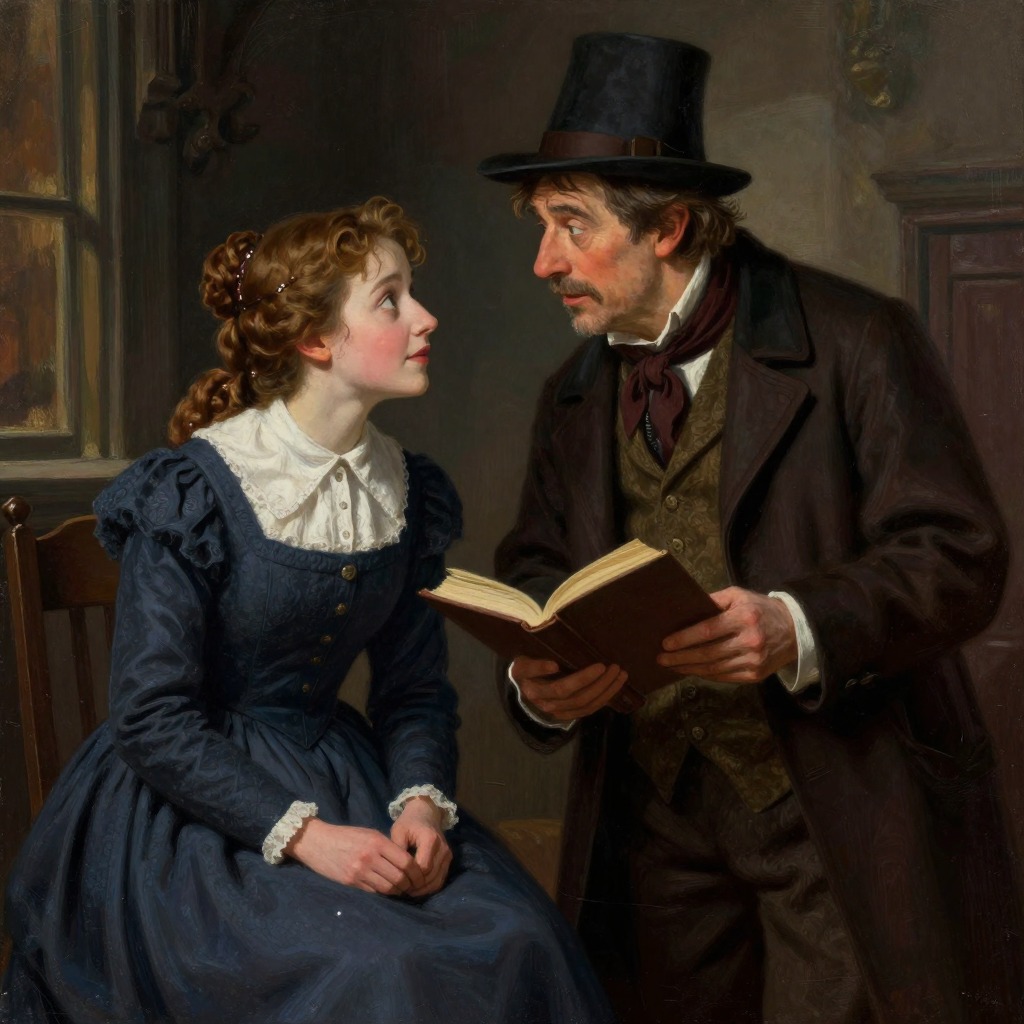
The school is also the scene of a pivotal moment of rescue and familial love. Scrooge's younger sister, Fan, arrives in a coach to bring him home for good. She tells him that their father has become much kinder, and that home is now like Heaven. She is brimful of glee, clapping her hands and laughing, and she drags him towards the door, eager to leave the school behind. The schoolmaster appears, a terrible voice in the hall, and throws Master Scrooge into a dreadful state of mind by shaking hands with him. The children then depart in a chaise, dashing the hoar frost and snow from the evergreens. The Ghost of Christmas Past notes that Fan was always a delicate creature, but had a large heart. She died a woman, leaving one child: Scrooge's nephew, Fred.
Thematic Significance
The school represents the formative trauma of Scrooge's childhood: the experience of being unwanted, forgotten, and left to fend for himself emotionally. It is the place where his heart first hardened, and where the seeds of his later miserliness and misanthropy were sown. The Ghost's visit to the school is the first step in Scrooge's reclamation, forcing him to confront the pain he has long suppressed. The memory of his own loneliness also leads him to a moment of nascent compassion: he wishes he had given something to the boy singing a Christmas Carol at his door the previous night. The school, therefore, is not just a location from the past but a key to understanding Scrooge's transformation, as it reveals the vulnerability and humanity that he has buried beneath layers of avarice and coldness.