Havnor
A Wizard of EarthseaHavnor, often called the Great Island, is the central landmass of the Archipelago, the heart and hearth of the world of Earthsea. It is the site of Havnor Great Port, whose white towers are a symbol of civilization, power, and the heroic age, a place Ged yearns to see but does not reach during the events of his early life. The island functions as a distant, magnetic center of the known world, a point of reference for trade, culture, and the legendary deeds of heroes like Erreth-Akbe, whose sword still burns red atop the highest tower of Havnor at sunset above the Inmost Sea.
Geography and Significance
Havnor is the largest island in the Archipelago, located at the center of the world. It is the seat of Havnor Great Port, the greatest city of Earthsea, whose white towers are a recurring image of civilization and hope. The island is a hub for trade and travel; ships from the Outer Reaches and the Inmost Sea pass through the Ebavnor Straits near its coast, and it is a common destination for merchants and travelers. Ged first sights the green hills of Havnor on his voyage to Roke, working along its eastern coast for three days, but he does not set foot on that land or see the white towers of its great port for many years. This early glimpse establishes Havnor as a place of promise and achievement, a goal that remains out of reach during his formative years.
Havnor in Legend and History
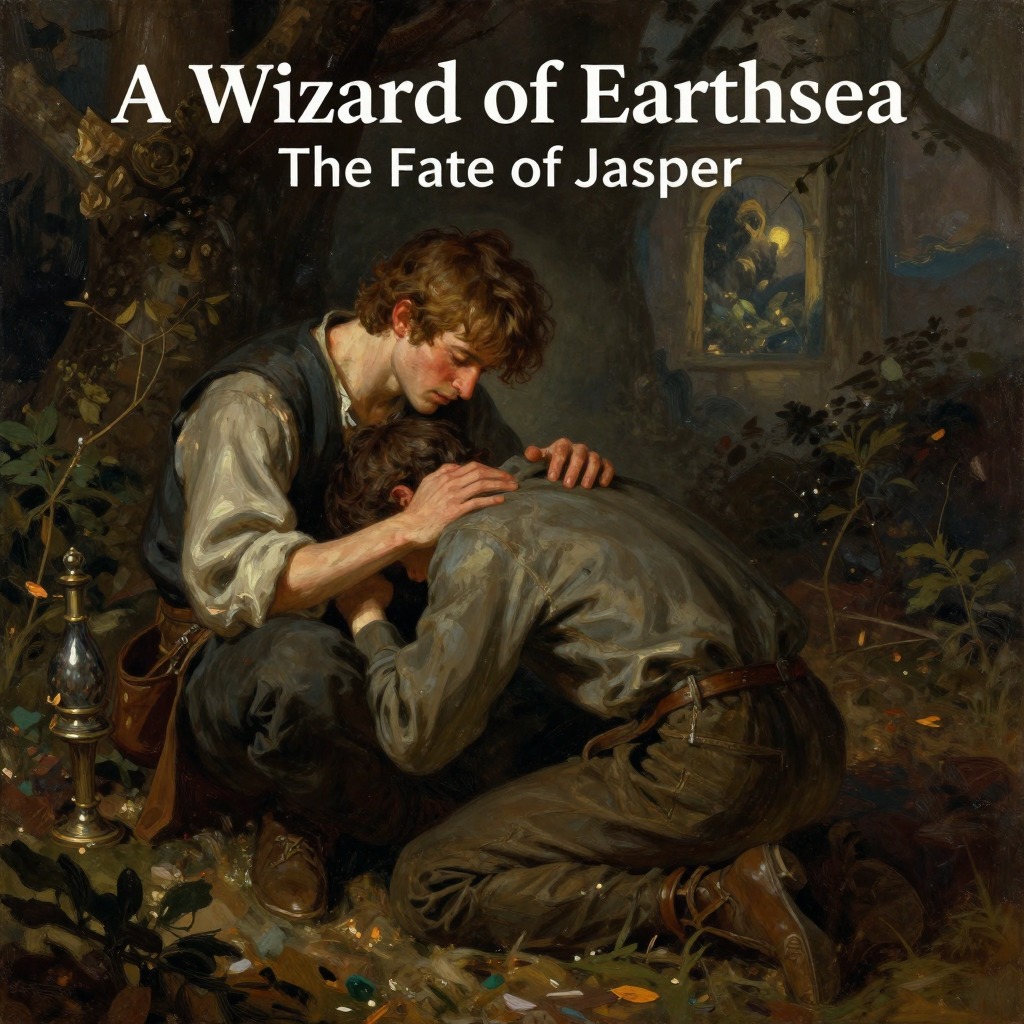
Havnor is deeply woven into the legendary history of Earthsea. The Deed of Erreth-Akbe tells how the white towers of Havnor were built, and how the hero's sword was set atop the highest tower, where it still burns red in the sunset above the Inmost Sea. This image connects Havnor to the heroic age and the great deeds of the past. The island is also the home of the Domain of Eolg, from which Jasper, Ged's rival at the School for Wizards on Roke, hails. Jasper's pride in his Havnorian origin is a constant source of tension with Ged, who comes from the remote mountain village of Ten Alders on Gont. Havnor thus represents the established, aristocratic center of power and culture, in contrast to Ged's humble, peripheral origins.
Havnor as a Symbol and Goal
Throughout A Wizard of Earthsea, Havnor functions as a symbol of the world Ged has not yet seen and the fame he has not yet achieved. When Ged and Vetch sail into the Open Sea, Ged laments that he traded "all the sunlight and the cities and the distant lands for a handful of power, for a shadow, for the dark," and Vetch replies with the hero's words from the Deed of Erreth-Akbe: "O may I see the earth's bright hearth once more, the white towers of Havnor." This exchange frames Havnor as the ultimate symbol of home, light, and the civilized world that Ged has turned his back on. The island is not a place he visits but a destination he hopes to earn the right to see, a reward for completing his quest. It remains a distant, idealized goal, a measure of the world he has sacrificed and the one he seeks to protect.
Narrative Role and Thematic Significance
Havnor's role in the narrative is primarily symbolic and geographical. It is the center of the Archipelago, the point from which power and culture radiate, and the place where the great deeds of the past are memorialized. Ged's inability to reach it during his early adventures underscores his isolation and the magnitude of his quest. The island represents the wholeness and integration he must achieve by confronting and naming his shadow. In the broader context of Earthsea, Havnor is the heart of the world, a place of light and civilization that stands in contrast to the dark, formless realms Ged must traverse. Its white towers are a beacon of hope and a reminder of the world he is fighting to preserve.