Pendor
A Wizard of EarthseaPendor is a desolate, dragon-haunted island in the far west of the Archipelago, once the stronghold of pirate lords and later the lair of the ancient dragon Yevaud and his brood. Its ruined towers and ashen shores mark the site of Ged's first great independent feat of wizardry, where he forced the dragon to swear never to attack the Archipelago, and it remains a symbol of the perilous frontier between the known world and the untamed West Reach.
Geography and History
Pendor lies in the lonely corner of the Archipelago west of Low Torning, the westernmost township of the Ninety Isles, looking not on the Inmost Sea but outward to the empty ocean and the waters of the West Reach. For four generations of men, all ships had set their course to keep far from its shores, and no mage had ever come to do combat with the dragon there. The island had been the seat of the Sealords of Pendor, pirates, slavetakers, and war-makers hated by all that dwelt in the southwest parts of Earthsea. When the dragon came suddenly out of the west upon the Lord of Pendor and his men where they sat feasting in the tower, it smothered them with the flames of its mouth and drove all the townsfolk screaming into the sea. Unavenged, Pendor was left to the dragon, with all its bones, towers, and jewels stolen from long-dead princes of the coasts of Paln and Hosk.
The Dragon's Lair
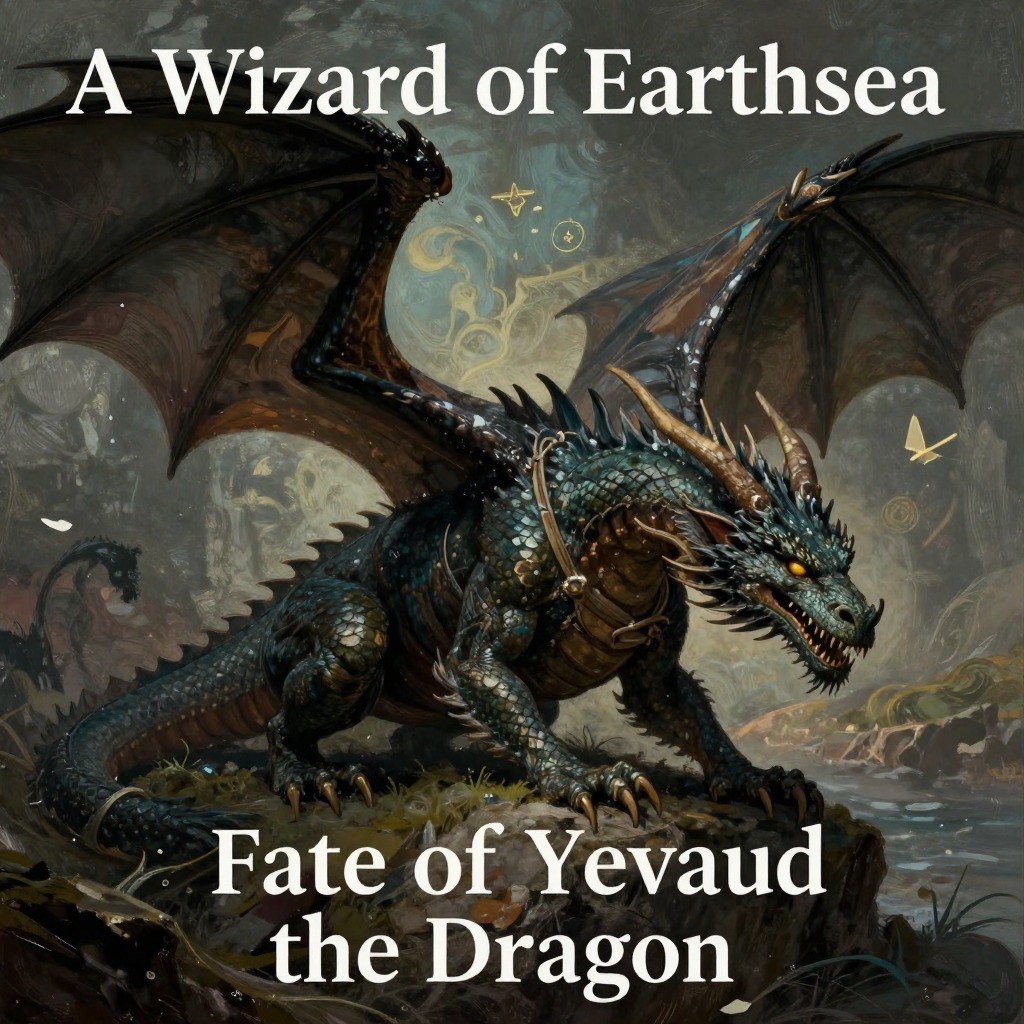
By the time of Ged's arrival, the old Dragon of Pendor had spawned: nine dragons, it was said, now laired in the ruined towers, dragging their scaled bellies up and down the marble stairs and through the broken doorways. The highest tower slowly changed its shape, bulging out on one side as if it grew an arm—an illusion caused by the sheer bulk of Yevaud as he uncurled himself. When he was all afoot, his scaled head, spike-crowned and triple-tongued, rose higher than the broken tower's height, and his taloned forefeet rested on the rubble of the town below. His scales were grey-black, catching the daylight like broken stone; lean as a hound he was and huge as a hill. The streets of the town were still, the towers gutted and falling, and golden breastplates and emeralds lay scattered among dust and bricks and bones.
Ged's Confrontation
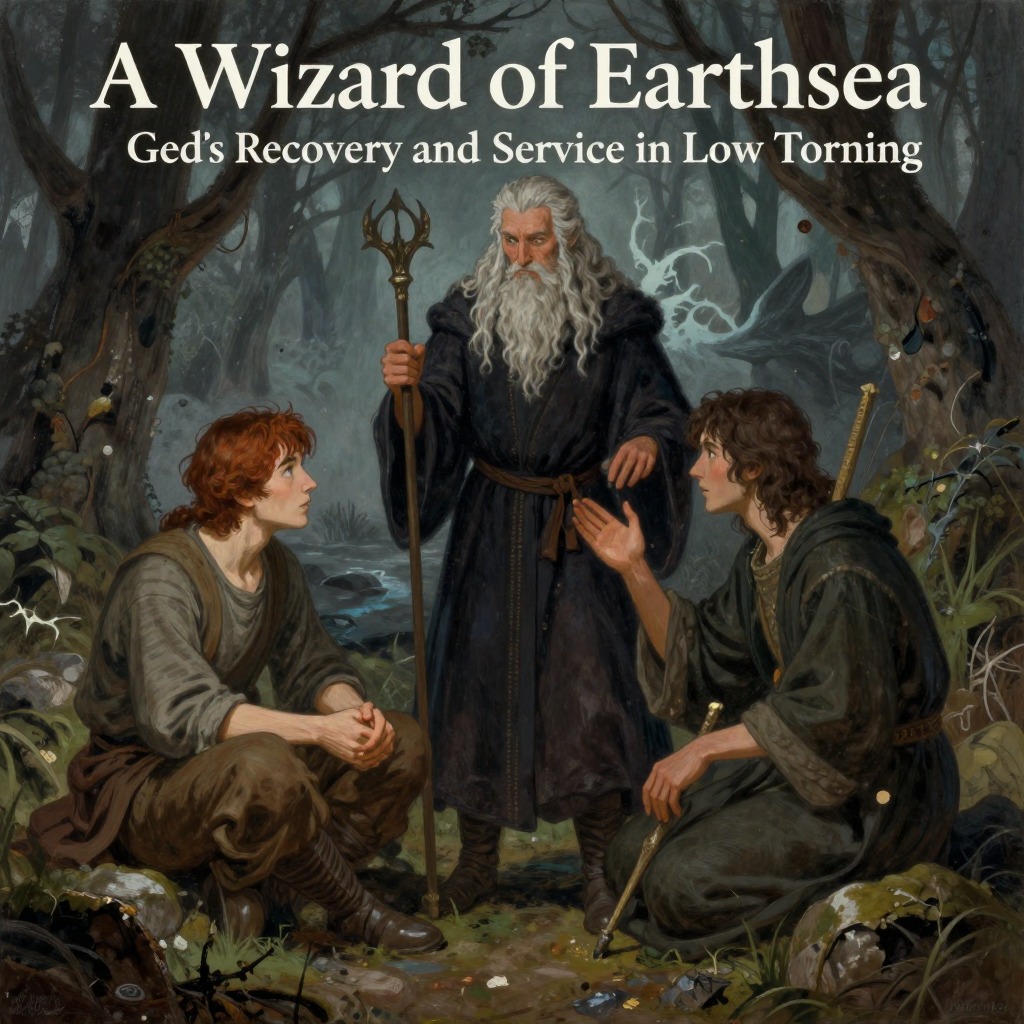
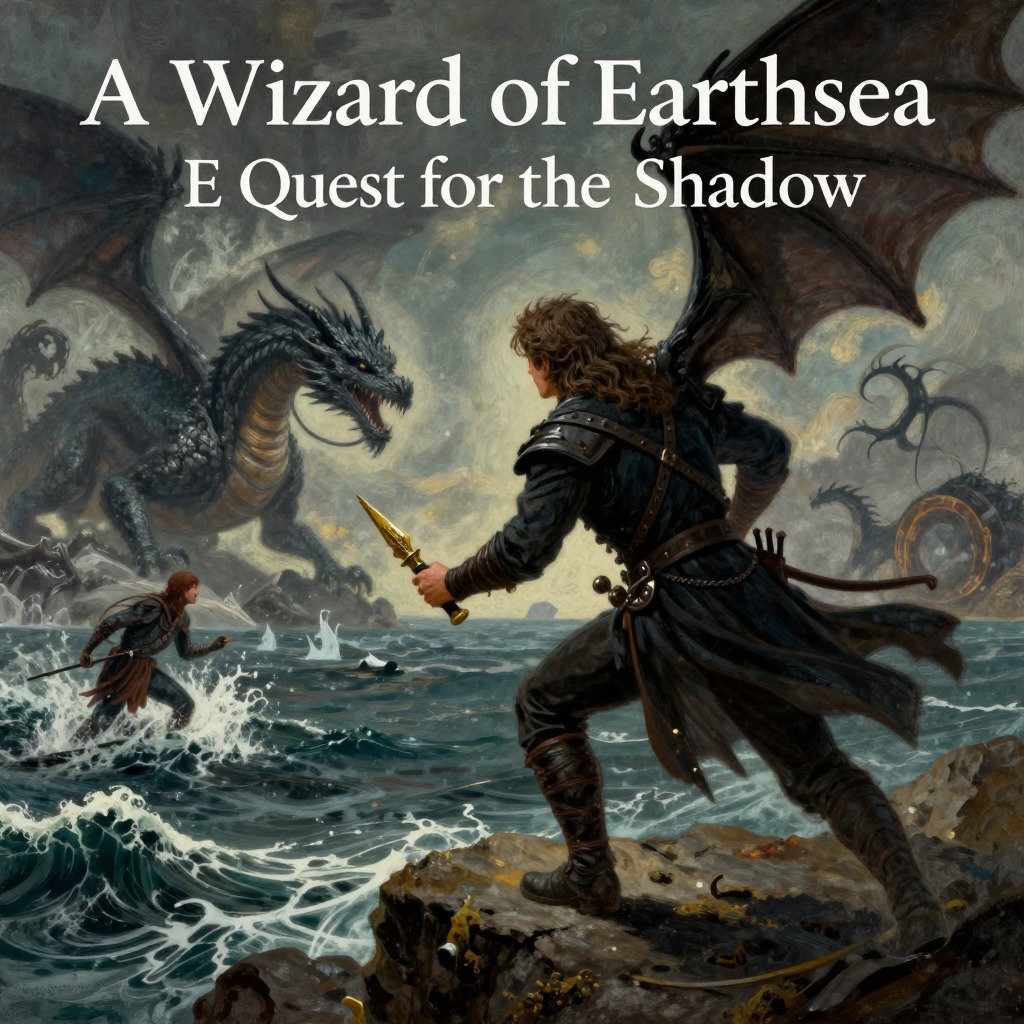
Ged sailed to Pendor of his own will, seeking to rid Low Torning of the dragon-peril so that he might leave freely, pursued as he was by the shadow he had loosed. He summoned the dragon with a challenge: "Usurper of Pendor, come defend your hoard!" Five of Yevaud's young sons were slain in the ensuing battle—one drowned, two hurled into the sea, and two more defeated in aerial combat when Ged took dragon-form himself, his hands blackened with scalding wormblood and his head scorched with fire. The sixth young dragon fled, hiding in some well or cavern in the ruined town. When Yevaud himself rose, Ged faced him in the Old Speech, the tongue of dragons, and staked his venture on a guess drawn from old histories of dragon-lore learned on Roke: that this Dragon of Pendor was the same that had spoiled the west of Osskil in the days of Elfarran and Morred, and had been driven from Osskil by a wizard, Elt, wise in names. The guess held. Ged spoke the dragon's true name, Yevaud, and forced him to swear by that name that he and his sons would never come to the Archipelago. The dragon, bound by his oath, did not fly, then or ever, to the Archipelago.
Aftermath and Significance
When word went out that Ged had returned from Pendor, bonfires burned not only on the isles of Low Torning but in townships to the south and east, and the village chanters fitted the tale to an old tune, singing the Song of the Sparrowhawk. The island itself remained a dead isle, its ruins and scattered jewels left to the dragon and the years. Ged's deed at Pendor established his reputation as a dragonlord and marked a turning point in his life, but it also deepened his understanding of the shadow that hunted him: the dragon had offered to tell him the shadow's name in exchange for his own, a temptation Ged refused. Pendor thus stands as the place where Ged first proved his mastery over a great power through knowledge and courage, yet also where he learned that the greatest dangers are not always those with scales and fire.