Serpent
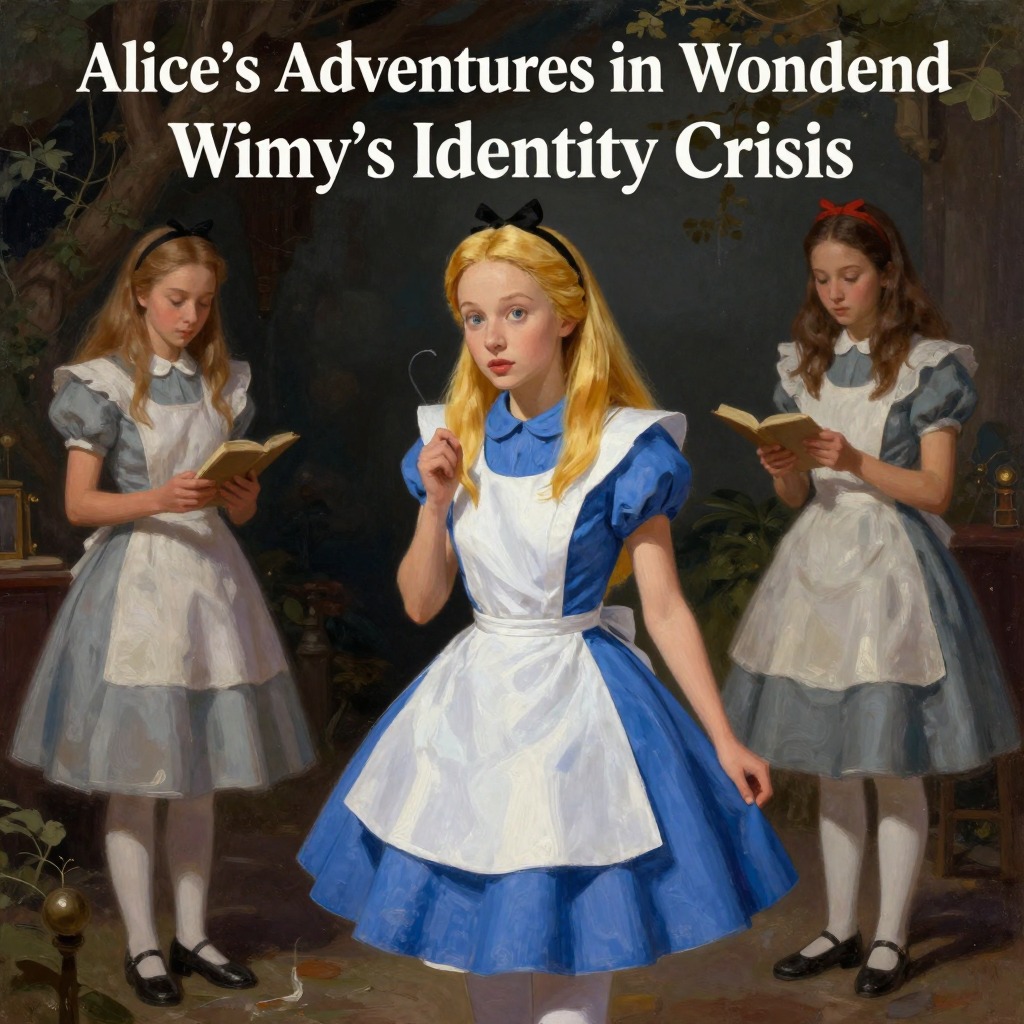
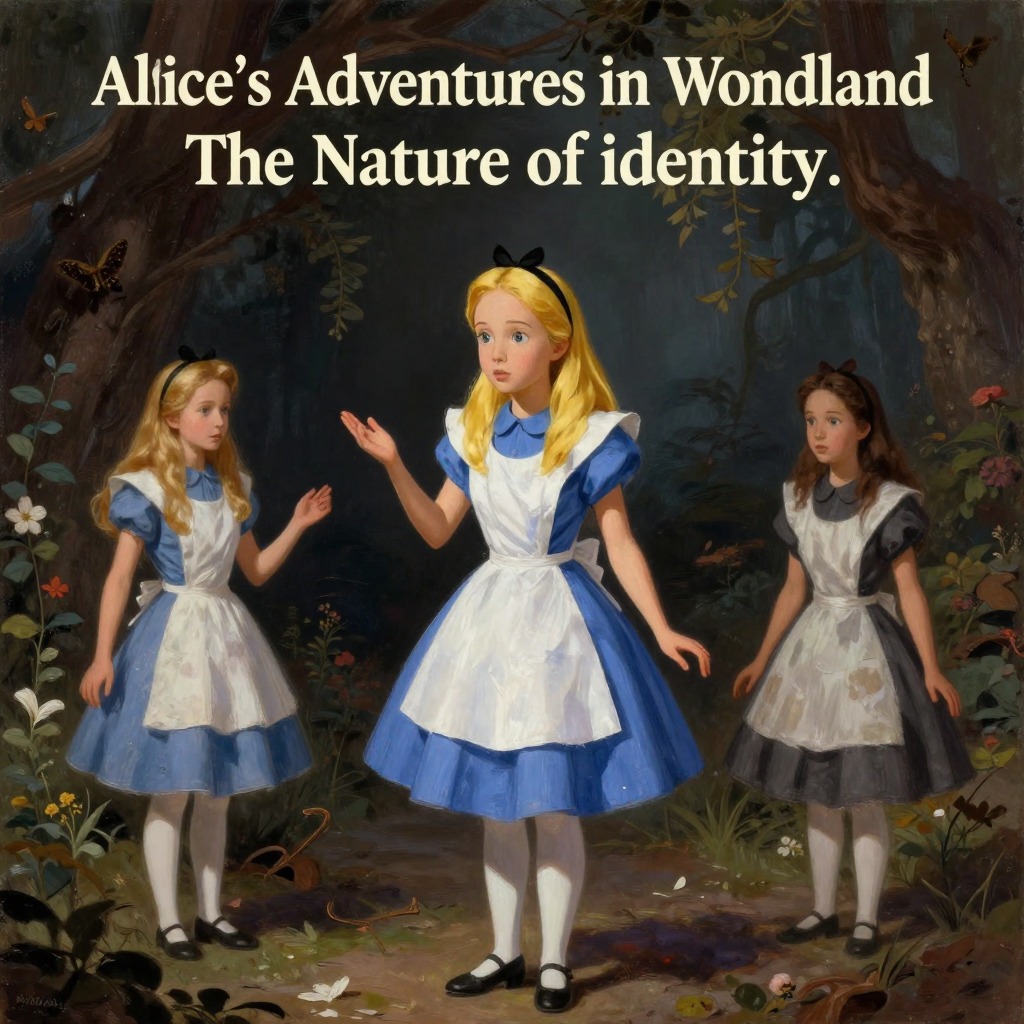
Alice's Adventures in WonderlandThe Serpent is a phantom presence in Alice's Adventures in Wonderland, a label that attaches itself to Alice at a moment of extreme physical transformation and that reverberates through the book's preoccupation with predation, misrecognition, and the instability of categories. Though no actual serpent appears as a character, the word surfaces at critical junctures—first as a terrified accusation, then as a half-remembered element in a children's rhyme, and finally as a submerged association in the chaos of the Duchess's kitchen—to mark the points where Wonderland's logic of identity and danger becomes most acute.
The Pigeon's Accusation
The Serpent enters the narrative when Alice, having nibbled the left-hand piece of the magic mushroom, finds her neck stretching to an immense height, rising "like a stalk out of a sea of green leaves." As she bends her serpentine neck down toward the treetops, a large Pigeon flies into her face, beating her violently with its wings and screaming "Serpent!" The Pigeon, exhausted from guarding its eggs, explains that it has tried every nesting place—roots of trees, banks, hedges—but "those serpents! There's no pleasing them!" It has not slept for three weeks, and now, just as it thought itself safe in the highest tree, a creature comes "wriggling down from the sky." Alice protests that she is a little girl, but the Pigeon retorts that it has seen many little girls and never one with such a neck. When Alice admits she has tasted eggs, the Pigeon concludes that little girls who eat eggs are "a kind of serpent." The accusation is not corrected by logic; it is resolved only when Alice nibbles the mushroom pieces to return to her usual height, and the Pigeon, satisfied, settles back into its nest.
The Serpent in the Kitchen
The word "Serpent" does not appear in the Duchess's kitchen scene, but the atmosphere of that chapter—titled "Pig and Pepper"—is saturated with the same anxieties of misidentification and threat that the Pigeon's Serpent embodies. The kitchen is full of pepper that makes everyone sneeze, the Duchess nurses a baby that turns into a pig, and the Cook throws everything within reach at the Duchess and the child. Alice, trying to make conversation, asks why the Cheshire Cat grins, and the Duchess replies "It's a Cheshire cat" before shouting "Pig!" at the baby. The chaos of flying saucepans, the baby's metamorphosis, and the Duchess's violent lullaby all create a world where boundaries between species and between safe and dangerous are constantly dissolving—the same dissolution that made Alice a Serpent in the Pigeon's eyes.
Alice's Own Thoughts on Predation
Before she ever encounters the Pigeon, Alice herself contemplates the relationship between cats and bats in a way that prefigures the Serpent's logic of predatory categories. Falling down the rabbit-hole, she wonders aloud whether cats eat bats, and then whether bats eat cats, concluding that since she cannot answer either question, "it didn't much matter which way she put it." This casual inversion of predator and prey anticipates the Pigeon's refusal to distinguish between a little girl and a serpent: both are creatures that might eat eggs. Later, in the pool of tears, Alice tells the Mouse about Dinah, her cat, who is "such a capital one for catching mice" and who "eats a little bird as soon as look at it," causing the assembled birds and animals to flee in terror. The Serpent, though never named in these scenes, is the shadow that falls across every encounter where eating and being eaten define identity.
The Serpent as a Category Error
The Serpent functions in Wonderland as a category error made visible. The Pigeon does not see Alice's actual form; it sees a neck and a potential egg-thief, and that is enough to classify her as a serpent. The same logic governs the Queen of Hearts' constant cry of "Off with his head!"—a sentence passed without regard to actual guilt or innocence. Alice herself, when she grows too large for the courtroom, is told to leave by Rule Forty-Two, a rule the King has just invented. The Serpent, like the rule, is a label that creates the reality it names. Alice's final act of defiance—declaring the court "nothing but a pack of cards"—is her rejection of this arbitrary power of naming, and it is the moment she wakes from the dream in which she was, for a time, a serpent.
The Serpent's Narrative Significance
The Serpent is never a character with agency or dialogue; it is a specter that appears only through the misrecognition of others. Yet this spectral quality makes it a powerful figure for the book's central concern: the failure of language and perception to fix identity. Alice is called a serpent, a pig, a bad child, a mad creature, and a giant, but she is none of these things stably. The Serpent, like the Cheshire Cat's grin, is a shape that persists after the substance has vanished—a label that outlasts the thing it was meant to describe. In a world where everyone is mad and nothing is what it seems, the Serpent is the name for the fear that identity itself might be nothing more than a mistake.