
The Conflict with the Enemy
All Quiet on the Western FrontThe evolving relationship with the enemy, from abstract hatred to the personal encounter with Gérard Duval, leading to remorse and understanding.
increasing Bearing strength in each event
 decreasing
Bearing strength in each eventdecreasingThe Abstract Enemy
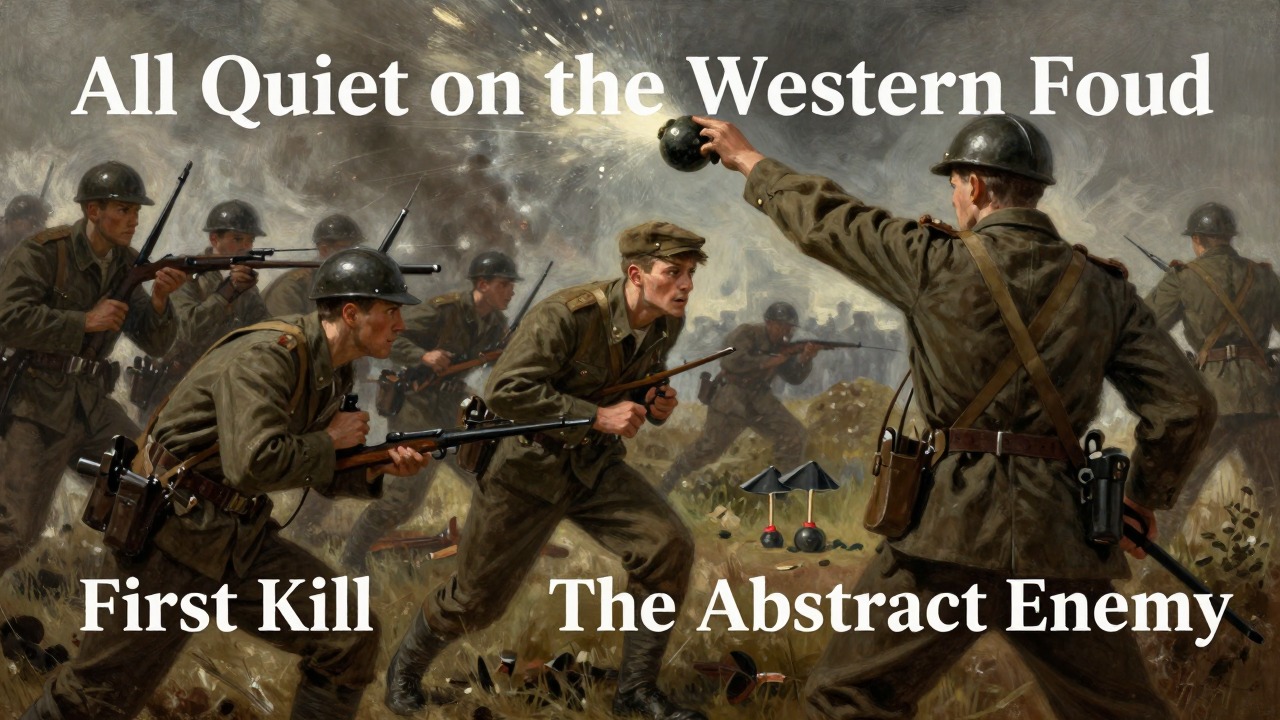
The Abstract Enemy
The Dehumanization
The soldiers are trained to see the enemy as targets. They shoot without thinking. The French are just voices on the other side.
The First Kill
During the attack, Paul throws a hand-grenade at a French soldier. He does not see his face. The killing is impersonal.
The Routine
Killing becomes a routine. The enemy is a force to be destroyed, not people. The war has stripped away their humanity.
The Killing of Gérard Duval
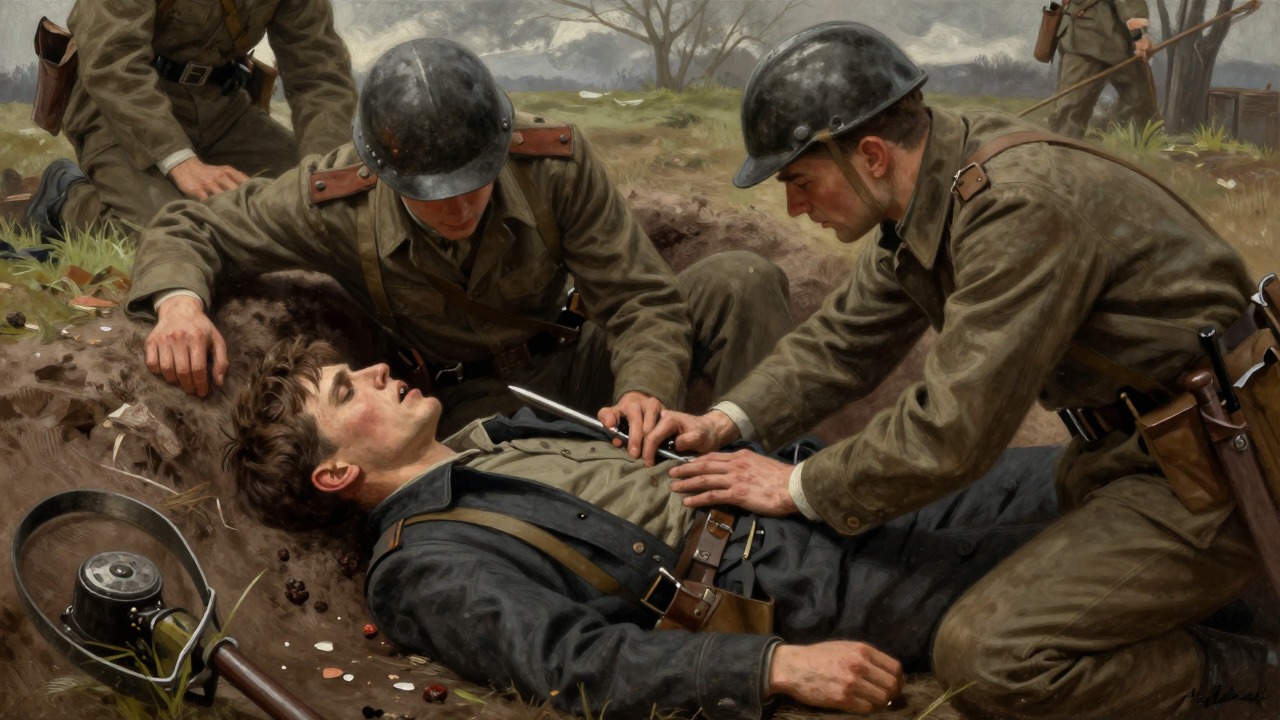
The Killing of Gérard Duval
The Trapped Soldier
Paul is trapped in a shell-hole during a patrol. A French soldier falls in beside him. In a panic, Paul stabs him repeatedly.
The Long Wait
Paul must stay with the dying man for hours. He sees his face, hears his groans, and tries to help him. The man is a printer named Gérard Duval, a father and husband.
The Remorse
Paul is overwhelmed by guilt. He talks to the dead man, asking for forgiveness. He promises to write to his family and to fight against the war. The personal encounter breaks down the abstraction.
The Aftermath
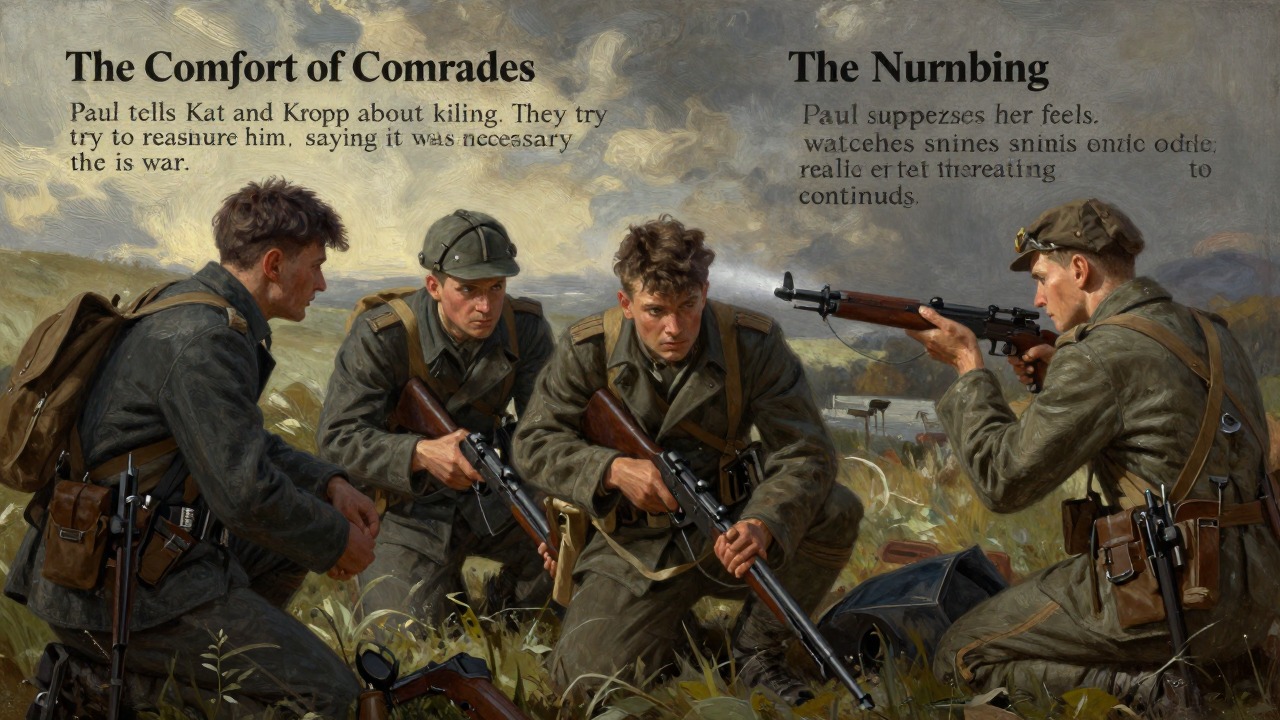
The Aftermath
The Comfort of Comrades
Paul tells Kat and Kropp about the killing. They try to reassure him, saying it was necessary. The war is war.
The Numbing
Paul suppresses his feelings. He watches the snipers shoot and realizes that the killing continues. The conflict with the enemy is endless.
The Resolution
Eventually, Paul hardens again. The memory of Duval fades, but it never disappears. The experience has changed him, but he must continue to fight.
Throughout the first part of the novel
During a patrol, night
The next day, after Paul returns to the trench
