U.N. Owen's letters
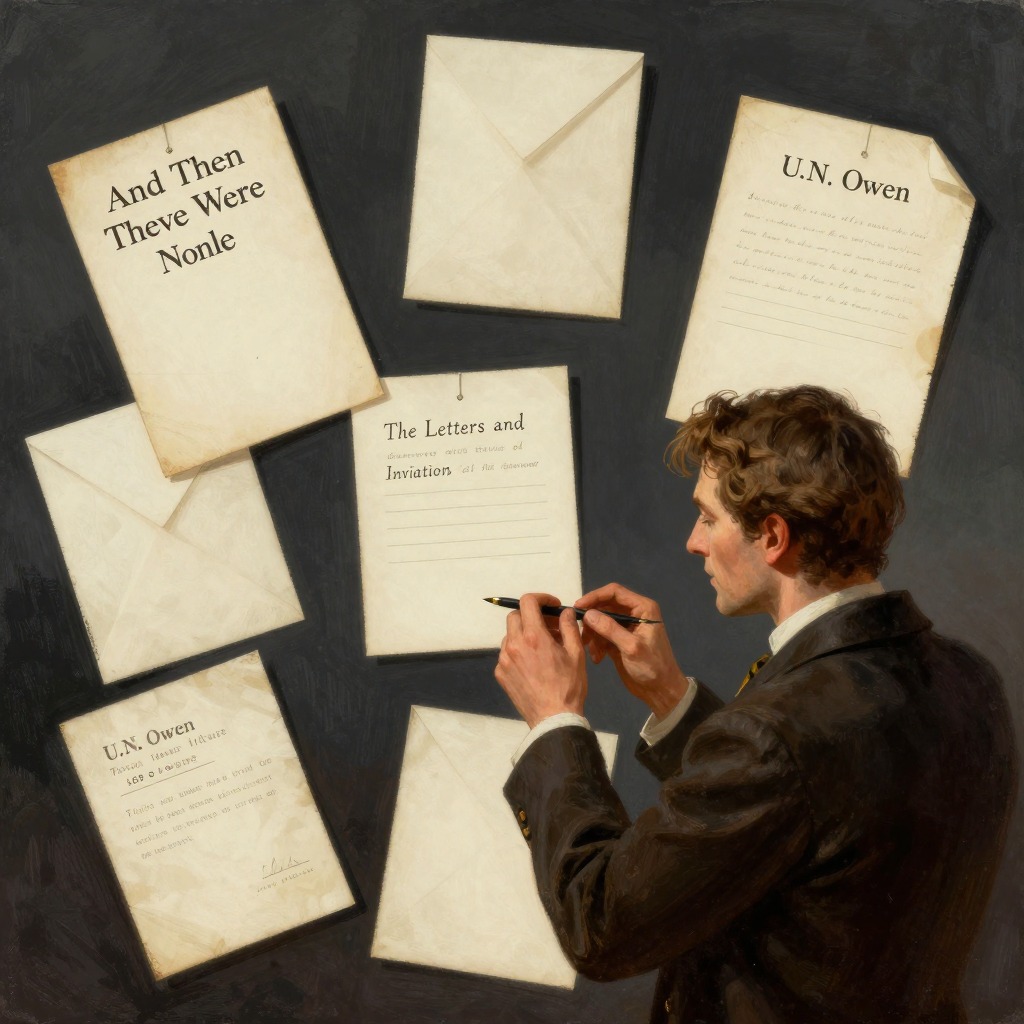
And Then There Were NoneThe letters of U.N. Owen are the invisible engine of the entire Indian Island conspiracy. No guest ever meets the host; every invitation, instruction, and arrangement arrives on paper, typed or handwritten, each one a carefully forged key designed to unlock a specific person's hopes, fears, or professional obligations. Together they create the illusion of a wealthy, reclusive couple—Ulick Norman Owen and Una Nancy Owen—whose initials, as Justice Wargrave later points out, resolve to "U. N. Owen," or "Unknown." The letters are the only direct contact the victims have with their executioner, and they are the first and most essential layer of the trap.
Design and Deception
Each letter is a masterpiece of tailored deception. Justice Wargrave receives a rambling, nearly illegible note purportedly from his old friend Lady Constance Culmington, whose vague, enthusiastic style—"communion with Nature . . . bask in sunshine"—he recognizes as authentic, though he has not seen her in eight years. Vera Claythorne is sent a businesslike offer from the Skilled Women's Agency, signed "Una Nancy Owen," enclosing five pounds for expenses and instructing her to take up secretarial duties on August 8th. Emily Brent receives a letter from a woman she believes she met at the Bellhaven Guest House, offering a free holiday on Indian Island with the promise of "good plain cooking and a nice old-fashioned type of person." General Macarthur is told that old cronies will be present for a talk over old times. Dr. Armstrong is summoned professionally with a vague medical concern and a "whacking fee." Anthony Marston gets a telegram from a friend named Badger Berkeley, whom he thought was in Norway. Philip Lombard is approached through an intermediary, Isaac Morris, with a hundred-guinea offer to hold himself at the disposal of a client. Even the butler, Rogers, receives typed orders from the Ritz Hotel directing him to prepare the house and, on the first evening, to play a gramophone record titled "Swan Song." The letters share a common technique: they reference real people, places, and circumstances—Lady Constance's epistolary style, the Bellhaven guest house, a colleague of Armstrong's, Badger Berkeley's nickname—to create verisimilitude. As Wargrave observes, the writer "knows or has taken the trouble to find out a good deal about us all."
Revelation and Collapse
The letters' power to deceive is shattered on the first evening, when a recorded voice accuses each guest by name of murder. In the ensuing panic, the guests compare their invitations and realize that no two stories match. Wargrave, examining the letters, notes that the signatures are illegible scrawls but the Christian names are clear: Una Nancy in Vera's letter, Ulick Norman in Rogers' instructions. He announces that the initials spell "U. N. Owen"—"Unknown"—and concludes that they have been lured by a madman. The letters, once the source of hope and opportunity, become evidence of a calculated plot. From that moment, the guests' trust in the written word evaporates, and the letters themselves are no longer needed; the trap has already closed.
The Author's Confession
The true origin of the letters is revealed only in the manuscript confession of Justice Wargrave, which he seals in a bottle and casts into the sea. He describes how he spent years secretly collecting victims, using a routine conversational gambit to extract information from acquaintances, fellow club members, and even a drunken young man named Hugo Hamilton on an Atlantic crossing. From these fragments he constructed the letters, each bait tailored to its target. He employed Isaac Morris to handle the financial transactions and to cover his tracks, and he ensured that Morris—the only living person who could connect the letters to their author—died by a poisoned capsule on the night of August 8th, before the first murder on the island. The letters, then, are not merely invitations; they are the written record of a methodical, artistic, and utterly remorseless plan, the first stroke of a crime that Wargrave himself describes as "fantastical" and "stupendous."