Animal Rebellion
Animal FarmOn Midsummer's Eve, Mr. Jones's drunkenness and neglect pushed the animals past endurance. After a day without food, a cow broke into the store-shed, and when Jones and his men arrived with whips, the animals—though nothing had been planned—flung themselves upon their tormentors. The sudden, ferocious uprising, which the humans had never seen before, sent Jones and his four men fleeing down the cart-track, pursued by the animals in triumph. Mrs. Jones slipped out with a carpet bag, the raven Moses flapped after her, and the five-barred gate was slammed shut. The Rebellion was achieved almost before the animals knew what was happening: Jones was expelled, and the Manor Farm was theirs.
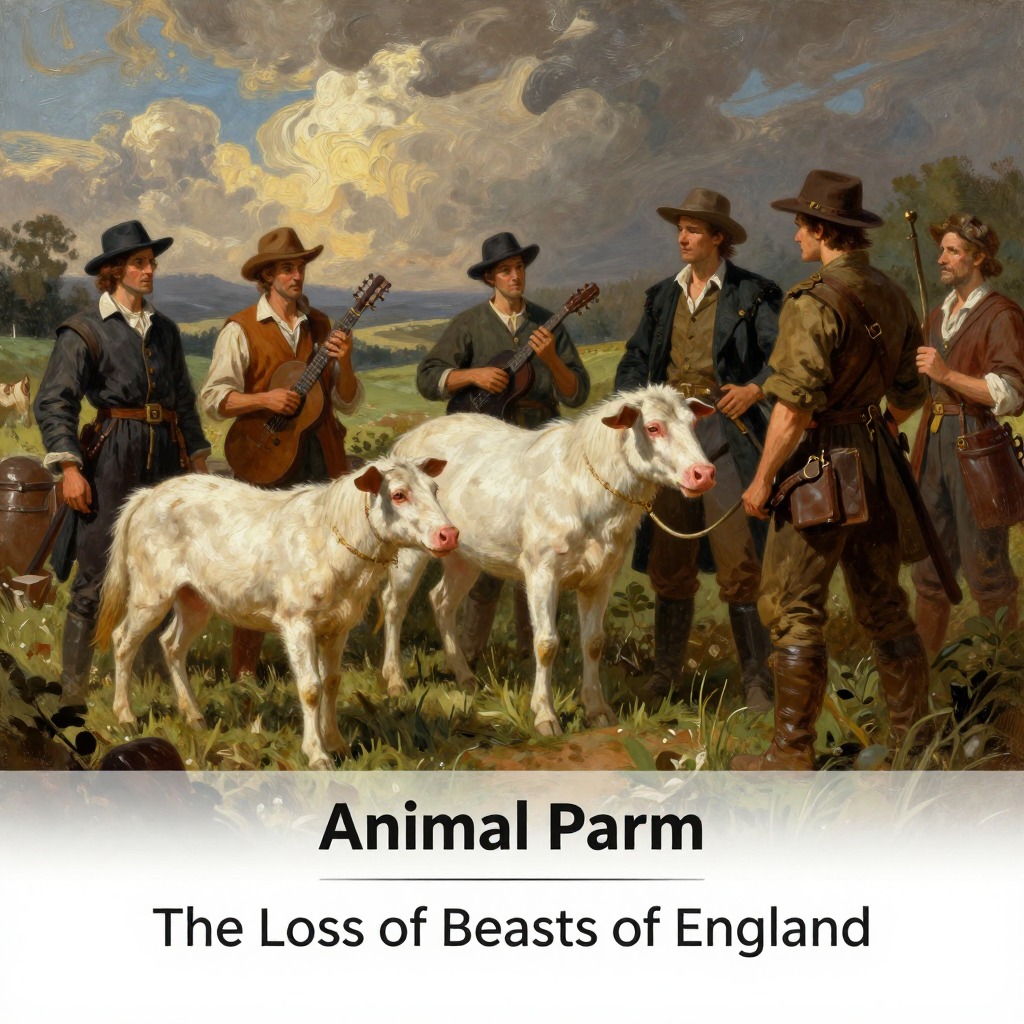
In the first ecstasy of freedom, the animals raced around the boundaries, then destroyed every trace of Jones's reign. The harness-room was broken open; bits, nose-rings, dog-chains, and the cruel knives used for castration were flung down the well. Reins, halters, blinkers, nosebags, and whips were thrown onto a rubbish fire. Snowball threw on the ribbons that had decorated the horses' manes and tails, declaring ribbons should be considered clothes, the mark of a human being. The animals capered with joy as the whips went up in flames. They renamed the farm Animal Farm, inscribed the Seven Commandments on the barn wall, and sang Beasts of England seven times running. But even in these first hours, the pigs began to consolidate power: Napoleon served out double rations of corn and two biscuits per dog, and the milk from the cows—milked by the pigs—disappeared, mixed into the pigs' mash. The principles Old Major had laid down—no animal must live in a house, sleep in a bed, wear clothes, drink alcohol, or engage in trade—were already being tested.
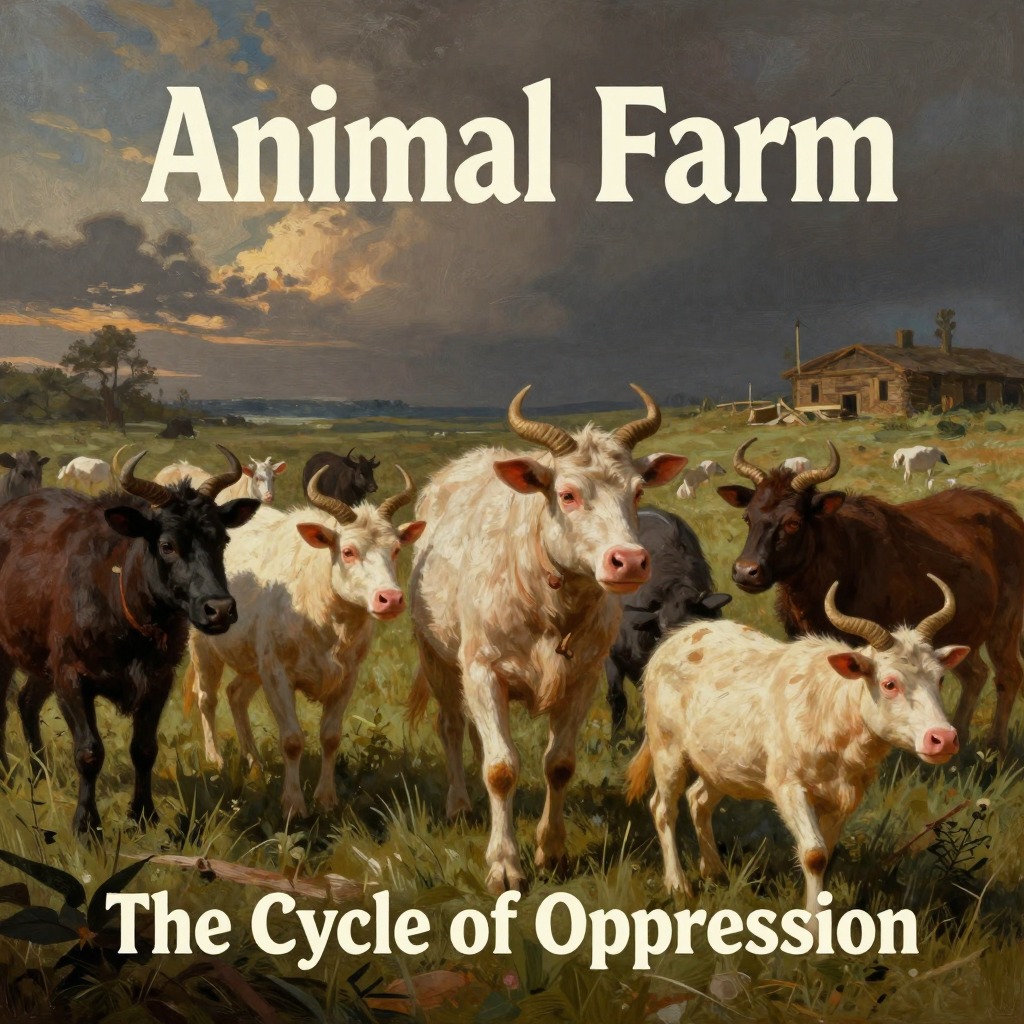
Over the years that followed, the rebellion's promise of liberation was systematically betrayed. The pigs, who had led the uprising, moved into the farmhouse, slept in beds, altered the Commandments to allow killing and drinking, and engaged in trade with humans. The farm grew richer, but the ordinary animals worked longer hours for less food, while pigs and dogs prospered. The maxim "Four legs good, two legs bad" was eventually replaced by the sheep's chant "Four legs good, two legs better" as the pigs began walking on their hind legs. Napoleon appeared with a whip in his trotter, wearing Mr. Jones's clothes, and finally the pigs and the human farmers became indistinguishable—the rebellion had come full circle, returning to the very tyranny it had been meant to abolish.
The rebellion was driven by the desire to end the exploitation of animal labour by humans. In the old days, the animals' lives were miserable, laborious, and short; they were forced to work to the last atom of their strength and then slaughtered. After the rebellion, the pigs became a new ruling class that extracted surplus from the others. They claimed that their brainwork required the milk and apples, and later beer and whisky, while the other animals' rations were reduced and their work hours increased. Squealer's lists of figures proved that production had increased, but the animals were often hungry and cold. The farm's prosperity was concentrated among the pigs and dogs, who produced no food themselves. The economic structure of exploitation had been recreated, with the pigs in the role of the humans.
The rebellion had been founded on a clear classification: "Whatever goes upon two legs is an enemy. Whatever goes upon four legs, or has wings, is a friend." This was reduced to the simple maxim "Four legs good, two legs bad." The boundary between animal and human was absolute. Yet the pigs steadily crossed that boundary—first by adopting human habits like sleeping in beds and drinking alcohol, then by physically walking on two legs, and finally by wearing human clothes and carrying whips. The sheep were taught to chant "Four legs good, two legs better" to drown out any protest. In the final scene, the creatures outside the farmhouse window looked from pig to man and from man to pig, but already it was impossible to tell which was which. The binary that had justified the rebellion had been obliterated, revealing that the classification was never a moral truth but a political instrument that the pigs manipulated to secure their power.