AD 168–189
The Yellow Headband Revolt
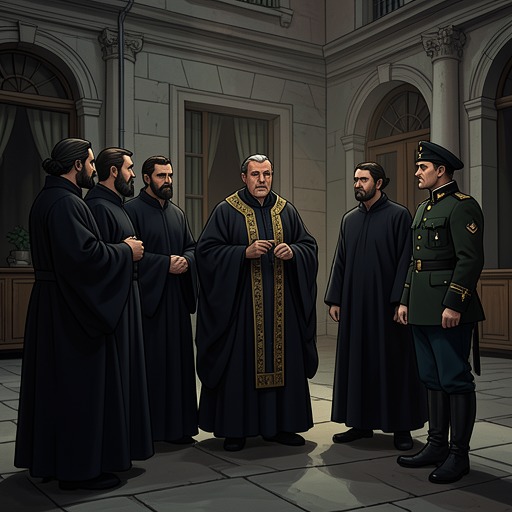
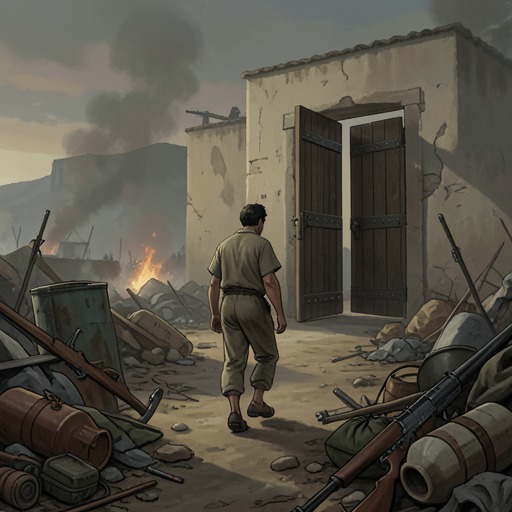
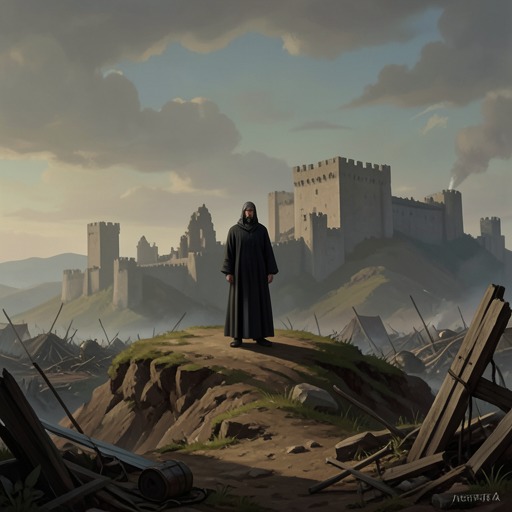
The court was repeatedly troubled by strange celestial omens. Emperor Ling of Han retreated to the palace, and the ten eunuchs gradually gained power. The heavy taxation and unrest across the empire fostered rebellion. Zhang Jiao received a divine book from a mysterious old man and gathered followers through his teachings
AD 184, during the opening revolt
The Peach Orchard Oath
The edict for recruiting loyal soldiers reached [Zhuo County](entity:location-recall-location-zhuo-county-fbab7ad7c863). Liu Xiyuan read it and sighed, feeling powerless to help. [Zhang Fei](entity:character-recall-character-zhang-fei-c1ad9cf1cd08) invited him to join in defending the country. Soon after, they met [Guan Yu](entity:character-recall-character-guan-yu-728c0ca77761), who had been defeated and captured, refusing to surrender. Guan
Soon after the Peach Orchard Oath
The Brothers Defeat Rebels
The three brothers of the new alliance gathered a small force of to participate in the campaign against the Yellow Turban Rebellion. [Zhang Fei](entity:character-recall-character-zhang-fei-c1ad9cf1cd08) fought alongside [Guan Yu](entity:character-recall-character-guan-yu-728c0ca77761), who had been defeated and captured but refused to surrender. Liu Xiande led troops in battle, including a successful ambush that
During the suppression of the Yellow Headband revolt
Cao Cao Joins the Campaign
Cao Mengde appears as a general leading the pursuit of the. Stories about his youth, his quick thinking and strategic mind, as well as a old fortune teller's warning that he is capable of governing the world or bringing it to chaos, show his ambitious and formidable nature
After the first victories over the rebels
Xuande Resigns in Disgust
Liu Xunde and his brothers encountered [Lu Zhi](entity:character-recall-character-lu-zhi-586751021678), who was imprisoned. They learned that a corrupt official had caused Lu Zhi to be arrested. After returning to [Zhuo County](entity:location-recall-location-zhuo-county-fbab7ad7c863), Liu Xunde was appointed as the county magistrate for his integrity. However, a supervisor soon threatened to
AD 189
He Jin Summons the Warlords
When Han Lingdi was dying, the succession to the throne became a struggle between the son of the [Empress He](entity:character-recall-character-empress-he-60b2729019c3) and the young Liu Xie, who was raised by the Dong. Cao Mengde suggested quietly and specifically eliminating the eunuchs, while Yuan Shuo advocated a full
AD 189, after Dong Zhuo’s arrival
He Jin’s Assassination
The eunuch [He Jin](entity:character-recall-character-he-jin-0d55bd92229b) lured the emperor into the palace and killed him. [Yuan Shao](entity:character-recall-character-yuan-shao-0622e66b5929) and [Cao Cao](entity:character-recall-character-cao-cao-830a06605f92) attacked the palace in revenge. The palace was set on fire during the chaos. Zhang Lian and other eunuchs took the young Han Shao and Liu Xie
AD 189, after Dong Zhuo’s coup
Lü Bu Kills Ding Yuan
[Dong Zhuo](entity:character-recall-character-dong-zhuo-061dc318de37) proposed to depose the Han Shao Emperor and instead establish Liu Xie as emperor. [Ding Yuan](entity:character-recall-character-ding-yuan-ee4a2c9d3a24) opposed this, and when the two armies clashed outside the city, the young general Lu Bu under Ding Yuan became a formidable opponent. Dong Zhuo's subordinate [Li Su](entity:character-recall-character-li-su-22ef6f401cda) presented a red
AD 189
Dong Zhuo Deposes the Emperor
Lu Bu stood on the side of [Dong Zhuo](entity:character-recall-character-dong-zhuo-061dc318de37). Dong Zhuo then forced the court to depose the Han Shao and established the young Liu Xie as emperor, known as the Han Xian Emperor. Dong Zhuo was promoted to the position of Chancellor and no longer showed respect for
AD 189, after the deposition of Emperor Shao
Cao Cao’s Failed Assassination
When the army of [Dong Zhuo](entity:character-recall-character-dong-zhuo-061dc318de37) was terrorizing the people in the capital and the countryside, [Wang Yun](entity:character-recall-character-wang-yun-e4ca3e0497f3) gathered a group of officials who hoped to eliminate this tyrant. Cao Mengde took the seven precious swords given by Wang Yun and went to Dong Zhuo's residence to attempt assassination. When
During Cao Cao’s flight from the capital
The Lü Boshe Incident
Cao Mengde was captured by [Chen Gong](entity:character-recall-character-chen-gong-ea40741a496d), the magistrate of Zhongmu County, but he convinced Chen Gong to join the campaign against [Dong Zhuo](entity:character-recall-character-dong-zhuo-061dc318de37). The two disguised themselves and went to seek refuge with Lü Boshē, a friend of Cao Mengde's father. After hearing
After Cao Cao reaches Qiao
The Anti-Dong Zhuo Coalition
Cao Mengde pretended to be authorized by the imperial decree, gathered the, and called on the leaders of the world to jointly attack [Dong Zhuo](entity:character-recall-character-dong-zhuo-061dc318de37). [Yuan Shao](entity:character-recall-character-yuan-shao-0622e66b5929) joined and became the leader of the coalition, while Gong Sun Zan led Liu Xiande and his brothers to
During the coalition’s advance on Luoyang
Guan Yu Slays Hua Xiong
[Dong Zhuo](entity:character-recall-character-dong-zhuo-061dc318de37) sent [Hua Xiong](entity:character-recall-character-hua-xiong-4073da99c836) to Shangkou to block the coalition. After defeating several challengers, everyone doubted that no one could defeat him. When [Guan Yu](entity:character-recall-character-guan-yu-728c0ca77761), who had been defeated, captured, and refused to surrender, volunteered for battle, the other leaders treated
At Tiger Cage Pass, during the coalition’s campaign
The Three Brothers Fight Lü Bu
Before the Tiger Pass, Lu Bu challenged the allied troops, defeating his opponents in succession. When Lu Bu pursued Gong Sun Cang, [Zhang Fei](entity:character-recall-character-zhang-fei-c1ad9cf1cd08) intervened. The two fought for many rounds without a decisive outcome. Even when [Guan Yu](entity:character-recall-character-guan-yu-728c0ca77761), who had been captured and refused to surrender, joined the
AD 190
Dong Zhuo Burns Luoyang
[Dong Zhuo](entity:character-recall-character-dong-zhuo-061dc318de37) decided to move the imperial court from [Luoyang](entity:location-recall-location-luoyang-eb6d783bb27a) to Chang'an and used an old children's rhyme to claim that this was a divine arrangement. Dong Zhuo's soldiers looted the capital, killed civilians, and drove the people to the new capital. Subsequently, Dong Zhu
After Sun Jian leaves the coalition
Sun Jian’s Campaign Against Liu Biao
[Yuan Shao](entity:character-recall-character-yuan-shao-0622e66b5929) tries to stop [Sun Jian](entity:character-recall-character-sun-jian-26e86a795e53) from taking the [Jade Seal](entity:object-recall-object-d0e2bc4178ce) south, and [Liu Biao](entity:character-recall-character-liu-biao-a83c97bdaef1) blocks his passage. Sun Jian fights through the opposition but loses many commanders and soldiers. He later attacks Liu Biao’s territory to avenge the conflict, accompanied by his son [Sun Ce](entity:character-recall-character-sun-ce-9ed05a100844).
During the siege of [Xiangyang](entity:location-recall-location-xiangyang-d04015d6be5c), Sun Jian pursues a messenger into an ambush and is killed by a falling stone. His death ends the first phase of his family’s rise, leaving the young Sun Ce to inherit both an unsettled domain and the burden of his father’s legacy.
After Dong Zhuo’s move to Chang’an
Wang Yun’s Plot With Diao Chan
[Dong Zhuo](entity:character-recall-character-dong-zhuo-061dc318de37)’s cruelty grows ever more grotesque, and [Wang Yun](entity:character-recall-character-wang-yun-e4ca3e0497f3) despairs for the court and the people. [Diao Chan](entity:character-recall-character-diao-chan-d516fb2275f8), a talented young woman in Wang Yun’s household, offers to help. Wang Yun proposes a dangerous scheme: promise her to [Lü Bu](entity:character-recall-character-l-bu-63c8de1a5609), then place her before Dong Zhuo, using their competing desires to turn father against adopted son.
Diao Chan accepts despite the risk. Wang Yun first flatters Lü Bu and offers him Diao Chan, then presents her to Dong Zhuo. Through carefully staged glances and claims of distress, Diao Chan deepens the rivalry between the two men and persuades Lü Bu that Dong Zhuo has stolen the woman promised to him.
AD 192
The Assassination of Dong Zhuo
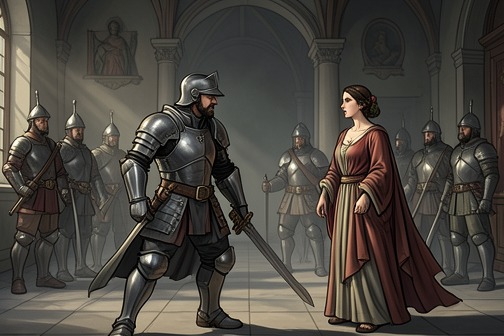
After [Dong Zhuo](entity:character-recall-character-dong-zhuo-061dc318de37) catches [Lü Bu](entity:character-recall-character-l-bu-63c8de1a5609) with [Diao Chan](entity:character-recall-character-diao-chan-d516fb2275f8), [Li Ru](entity:character-recall-character-li-ru-cceea5b678fd) urges him to reconcile with his adopted son, but Dong Zhuo refuses to relinquish her. [Wang Yun](entity:character-recall-character-wang-yun-e4ca3e0497f3) exploits the breach and persuades Lü Bu to help restore the Han. A forged imperial summons brings Dong Zhuo back to the palace, where the conspirators have prepared an ambush.
Lü Bu kills Dong Zhuo, and the court briefly celebrates the tyrant’s death. But Wang Yun rejects the pleas of Dong Zhuo’s former followers, and [Li Jue](entity:character-recall-character-li-jue-66593aeb4f1e) and [Guo Si](entity:character-recall-character-guo-si-dc03357e99ee) rally them against the capital. Their invasion kills Wang Yun and overturns the fragile restoration, leaving the emperor once more at the mercy of armed factions.
After Li Jue and Guo Si seize Chang’an
The Emperor Escapes the Rebels
[Li Jue](entity:character-recall-character-li-jue-66593aeb4f1e) and [Guo Si](entity:character-recall-character-guo-si-dc03357e99ee) quarrel over power and capture [Emperor Xian](entity:character-recall-character-emperor-xian-84d3de675b35) and the empress amid the violence. With support from [Yang Feng](entity:character-recall-character-yang-feng-7185cce32a54) and later [Dong Cheng](entity:character-recall-character-dong-cheng-16eb296976c4), the emperor escapes their control, but the journey is marked by poverty, famine, and repeated danger. The returning court reaches the ruins of [Luoyang](entity:location-recall-location-luoyang-eb6d783bb27a), where it lacks food and even a proper palace.
The emperor’s physical return to the old capital does not restore his authority. The court must summon [Cao Cao](entity:character-recall-character-cao-cao-830a06605f92) for protection, and the emperor’s dependence on military patrons becomes increasingly complete.
After Emperor Xian returns to Luoyang
Cao Cao Moves the Court to Xuchang
[Cao Cao](entity:character-recall-character-cao-cao-830a06605f92) arrives with an army and drives [Li Jue](entity:character-recall-character-li-jue-66593aeb4f1e) and [Guo Si](entity:character-recall-character-guo-si-dc03357e99ee) away from the capital. His adviser [Dong Zhao](entity:character-recall-character-dong-zhao-c199cfeba512) proposes moving the emperor to [Xuchang](entity:location-recall-location-xuchang-47c9d6442fb0), where Cao Cao can control access to him and ensure a steady supply of food. Cao Cao secures the emperor’s agreement and brings him away from the ruined, starving city.
The move gives Cao Cao imperial authority to issue commands while making the emperor a political captive. Regional leaders can now be presented as rebels against the throne, even as Cao Cao himself steadily appropriates the court’s power.
After the emperor’s relocation
Cao Cao and Lü Bu Contest Yanzhou
While [Cao Cao](entity:character-recall-character-cao-cao-830a06605f92) is away, [Lü Bu](entity:character-recall-character-l-bu-63c8de1a5609) seizes much of his base in [Yanzhou](entity:location-recall-location-yanzhou-e72f670a2600). Cao Cao returns to confront him, and the two sides trade attacks and deception around [Puyang](entity:location-recall-location-puyang-f354d65d704d). Lü Bu repeatedly threatens Cao Cao’s position, while [Dian Wei](entity:character-recall-character-dian-wei-7474ba50dd19) and [Xiahou Dun](entity:character-recall-character-8829572e2539) help save him from capture.
Neither commander secures a lasting victory at first, but the struggle establishes Lü Bu as a dangerous rival and shows how vulnerable every warlord’s territory remains. [Xuande](entity:character-recall-character-xuande-65aa739cb0b7) later offers Lü Bu refuge, setting up a temporary alliance that will soon collapse under mistrust.
During Cao Cao’s campaign against Xuzhou
Tao Qian Entrusts Xuzhou to Xuande
[Cao Cao](entity:character-recall-character-cao-cao-830a06605f92)’s father and extended family are massacred while travelling through [Tao Qian](entity:character-recall-character-tao-qian-b1e14bc90882)’s territory. Believing Tao Qian responsible, Cao Cao launches a brutal attack on [Xuzhou](entity:location-recall-location-xuzhou-299674d38627), and his soldiers terrorize the province. [Xuande](entity:character-recall-character-xuande-65aa739cb0b7) responds to appeals for help, though he has no personal quarrel with Cao Cao.
Tao Qian twice offers Xuande the governorship of Xuzhou, and Xuande refuses, fearing that accepting it would make his intervention look self-serving. Only after Tao Qian dies and the people themselves plead with him does Xuande take temporary charge. The episode reflects his reluctance to turn public crisis into personal gain.
During Cao Cao’s attack on Xuzhou
Xuande Relieves Beihai
A Yellow Headband force besieges [Beihai](entity:location-recall-location-beihai-1bb9350cc412), where [Kong Rong](entity:character-recall-character-kong-rong-3b50918f7b62) is trapped. [Taishi Ci](entity:character-recall-character-taishi-ci-ce1d8d4462d1) breaks through the besiegers and carries Kong Rong’s appeal to [Xuande](entity:character-recall-character-xuande-65aa739cb0b7), who marches to the city with [Guan Yu](entity:character-recall-character-guan-yu-728c0ca77761) and [Zhang Fei](entity:character-recall-character-zhang-fei-c1ad9cf1cd08). Their arrival breaks the siege and drives off the rebels.
Kong Rong then persuades Xuande to help [Tao Qian](entity:character-recall-character-tao-qian-b1e14bc90882) resist [Cao Cao](entity:character-recall-character-cao-cao-830a06605f92). The relief effort grows Xuande’s reputation as a protector of vulnerable communities, while drawing him into a direct confrontation with the most powerful northern warlord.
During Xuande’s campaign against Yuan Shu
Lü Bu Takes Xuzhou
[Cao Cao](entity:character-recall-character-cao-cao-830a06605f92) attempts to set [Xuande](entity:character-recall-character-xuande-65aa739cb0b7) against [Lü Bu](entity:character-recall-character-l-bu-63c8de1a5609) and [Yuan Shu](entity:character-recall-character-yuan-shu-46e0525f7e4b), using secret instructions and competing promises. Xuande leaves [Zhang Fei](entity:character-recall-character-zhang-fei-c1ad9cf1cd08) in charge of [Xuzhou](entity:location-recall-location-xuzhou-299674d38627), but Zhang Fei breaks his promise to abstain from drinking and beats Cao Bao after an argument. Cao Bao informs Lü Bu that the city is vulnerable.
Lü Bu rides through the night and seizes Xuzhou. Zhang Fei flees without securing Xuande’s family, then nearly kills himself from shame. Xuande stops him and insists that the sworn brothers remain together, even after this devastating personal and political failure.
After Sun Jian’s death
Sun Ce Builds a Southern Base
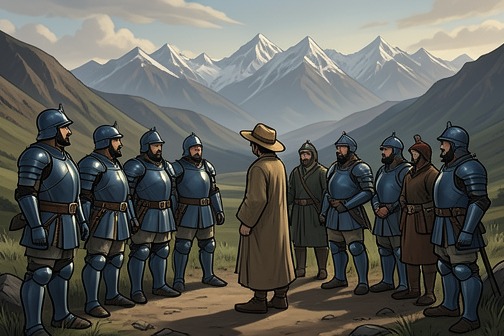
[Sun Ce](entity:character-recall-character-sun-ce-9ed05a100844) secures troops from [Yuan Shu](entity:character-recall-character-yuan-shu-46e0525f7e4b) by leaving the [Imperial Seal](entity:object-recall-object-imperial-seal-354d393d8c13) as collateral, then marches south with the help of his friend [Zhou Yu](entity:character-recall-character-zhou-yu-771100df6c57). He defeats [Liu Yao](entity:character-recall-character-liu-yao-0d3e2e321071)’s forces, fights [Taishi Ci](entity:character-recall-character-taishi-ci-ce1d8d4462d1) to a standstill, and eventually wins Taishi Ci’s admiration and allegiance. Sun Ce’s victories establish his control over much of Jiangdong.
His army gains support because it avoids harming ordinary people, while Sun Ce’s decisiveness attracts capable followers. Yet his ambition and temper remain dangerous; a later encounter with the Daoist [Yu Ji](entity:character-recall-character-8a78aa4836a7) will expose how little control he has over his own impulses.
During the conflict between Yuan Shu and Xuande
Lü Bu’s Bow Resolves a Standoff
[Yuan Shu](entity:character-recall-character-yuan-shu-46e0525f7e4b) sends Ji Ling against [Xuande](entity:character-recall-character-xuande-65aa739cb0b7), while [Lü Bu](entity:character-recall-character-l-bu-63c8de1a5609) intervenes to prevent the two armies from fighting. He invites both commanders to a banquet and announces that he will shoot the small blade of his halberd from a great distance. If he succeeds, both must stop the war; if he fails, they may resume it.
Lü Bu hits the target, forcing a temporary peace. His dramatic archery demonstrates his skill and his ability to arbitrate between stronger powers, but the settlement does not last. Yuan Shu later tries to bind Lü Bu through a marriage alliance, and suspicion returns to the region.
During Cao Cao’s campaign against Zhang Xiu
Dian Wei Dies at Wancheng
[Cao Cao](entity:character-recall-character-cao-cao-830a06605f92) becomes distracted by Lady Zou, the widow of [Zhang Ji](entity:character-recall-character-zhang-ji-5c25a5c31fef), while his army is near [Nanyang](entity:location-recall-location-nanyang-436e6bd2ad2c). Zhang Xiu, angered by the liaison, launches a surprise night attack. [Dian Wei](entity:character-recall-character-dian-wei-7474ba50dd19) holds the attackers off with desperate courage, using whatever weapons he can find until he is overwhelmed and killed.
Cao Cao escapes with help from his son [Cao Ang](entity:character-recall-character-eef607ec1687), who gives him his horse and dies in the retreat. The defeat exposes the cost of Cao Cao’s personal appetites, while Dian Wei’s death becomes a defining image of loyalty and self-sacrifice.
After Yuan Shu declares imperial ambitions
Yuan Shu’s Seven-Route Invasion
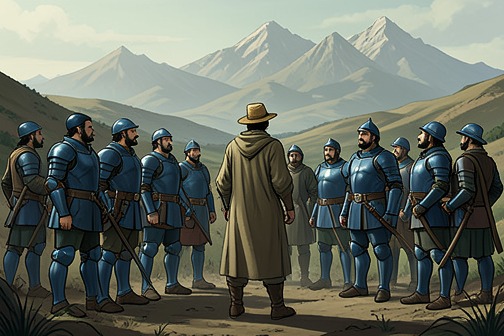
Holding the [Imperial Seal](entity:object-recall-object-imperial-seal-354d393d8c13), [Yuan Shu](entity:character-recall-character-yuan-shu-46e0525f7e4b) declares himself emperor and launches seven armies against [Lü Bu](entity:character-recall-character-l-bu-63c8de1a5609). Lü Bu persuades two commanders, Han Xian and [Yang Feng](entity:character-recall-character-yang-feng-7185cce32a54), to defect, and Yuan Shu’s campaign collapses. [Cao Cao](entity:character-recall-character-cao-cao-830a06605f92) then coordinates with [Xuande](entity:character-recall-character-xuande-65aa739cb0b7), [Sun Ce](entity:character-recall-character-sun-ce-9ed05a100844), and Lü Bu against Yuan Shu.
Cao Cao captures [Shouchun](entity:location-recall-location-shouchun-8493fe3c65aa), destroys Yuan Shu’s newly built palace, and executes members of his court. Yuan Shu is abandoned by his followers, loses the Seal, and dies in poverty after asking for honeyed water that is unavailable. His fate becomes a cautionary example of ambition detached from political ability.
On the eve of the conflict with Yuan Shao
Cao Cao’s Ten Victories
As [Cao Cao](entity:character-recall-character-cao-cao-830a06605f92) prepares for a decisive struggle with [Yuan Shao](entity:character-recall-character-yuan-shao-0622e66b5929), his adviser [Guo Jia](entity:character-recall-character-bb6424caf289) lays out ten reasons why Cao Cao is better suited to victory. He contrasts Yuan Shao’s indecision and favoritism with Cao Cao’s authority, judgment, discipline, and strategic skill.
The argument steadies Cao Cao and helps persuade him to focus on the northern rival. Yet the praise also captures the political logic of the era: a commander’s ability to select and deploy capable people may matter more than the size of his army.
AD 199
The Sash Edict Conspiracy
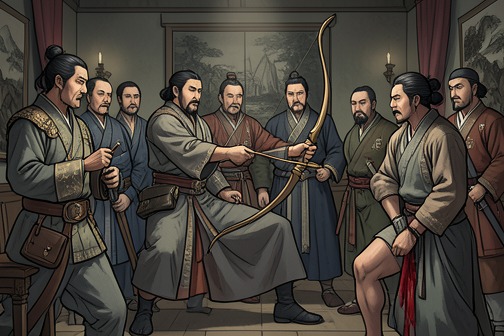
[Cao Cao](entity:character-recall-character-cao-cao-830a06605f92)’s dominance of the court is laid bare during an imperial hunt. He takes the emperor’s bow and receives praise meant for the emperor, while [Guan Yu](entity:character-recall-character-guan-yu-728c0ca77761) nearly attacks him and is restrained by [Xuande](entity:character-recall-character-xuande-65aa739cb0b7). The humiliation prompts [Emperor Xian](entity:character-recall-character-emperor-xian-84d3de675b35) and his allies to plan Cao Cao’s assassination through a blood-written edict hidden in [Dong Cheng](entity:character-recall-character-dong-cheng-16eb296976c4)’s belt.
Xuande joins the conspiracy but hides his commitment while living quietly at court. The plot is exposed when a beaten household slave betrays the conspirators and [Ji Ping](entity:character-recall-character-6eb57d6e52ad)’s attempted poisoning fails. Cao Cao executes Dong Cheng and many members of the conspirators’ families, then kills the pregnant Consort Dong. The failure leaves Xuande as the last major plotter still beyond Cao Cao’s reach.
After Xuande leaves Xuchang to fight Yuan Shu
Cao Cao and Xuande Discuss Heroes
[Cao Cao](entity:character-recall-character-cao-cao-830a06605f92) invites [Xuande](entity:character-recall-character-xuande-65aa739cb0b7) to drink in his garden and asks who the greatest heroes of the age are. Xuande names several powerful leaders, but Cao Cao dismisses them one by one and finally declares that only he and Xuande qualify. Xuande is so startled that he drops his chopsticks.
The exchange reveals that Cao Cao recognizes Xuande as a political rival even when Xuande has little territory. Xuande escapes the court soon afterward, comparing his departure to a bird leaving a cage, and takes command of a force sent against [Yuan Shu](entity:character-recall-character-yuan-shu-46e0525f7e4b).
During Cao Cao and Yuan Shao’s struggle
Gongsun Zan Falls
[Yuan Shao](entity:character-recall-character-yuan-shao-0622e66b5929) defeats [Gongsun Zan](entity:character-recall-character-gongsun-zan-81d3300bf96b) at Yijing by tunnelling beneath his defensive tower and setting it on fire. Gongsun Zan kills his family and himself as the stronghold collapses. [Xuande](entity:character-recall-character-xuande-65aa739cb0b7) mourns the death of his friend, while [Cao Cao](entity:character-recall-character-cao-cao-830a06605f92) recognizes that Yuan Shao has grown more formidable.
The defeat removes one of the northern powers and further consolidates Yuan Shao’s influence. It also deepens Xuande’s sense of instability: the people and leaders who once supported him are continually swept away by stronger forces.
AD 200
The Battle of Guandu
[Yuan Shao](entity:character-recall-character-yuan-shao-0622e66b5929) brings a much larger army against [Cao Cao](entity:character-recall-character-cao-cao-830a06605f92) at [Guandu](entity:location-recall-location-guandu-3147c1c7352f). The two forces settle into a prolonged standoff, with both sides short of supplies. [Xu You](entity:character-recall-character-be8fd987ecf9) defects after Yuan Shao rejects his advice to attack Cao Cao’s exposed capital. He tells Cao Cao where Yuan Shao’s grain is stored and how poorly it is guarded.
Cao Cao raids [Wuchao](entity:location-recall-location-wuchao-3312a1c40f58), burns the grain, and then defeats Yuan Shao’s army through deception and a sudden assault. Yuan Shao flees with his son, and Cao Cao later destroys letters that reveal his own officers had secretly corresponded with the enemy. The victory makes Cao Cao the dominant power in the north.
AD 202–204
Cao Cao Crushes the Yuan Heirs
After [Yuan Shao](entity:character-recall-character-yuan-shao-0622e66b5929)’s defeat, [Cao Cao](entity:character-recall-character-cao-cao-830a06605f92) renews his campaign against the Yuan family. Yuan Shao dies after learning of his son’s defeat, and his heirs fight one another for control. Cao Cao encourages the rivalry, eventually takes [Jizhou](entity:location-recall-location-jizhou-ab759c02fed5), and captures [Nanpi](entity:location-recall-location-nanpi-be0c55622113), where [Yuan Tan](entity:character-recall-character-6c97c8ae1de4) is killed.
[Yuan Shang](entity:character-recall-character-e4b13e76c47c) and [Yuan Xi](entity:character-recall-character-3e6873ce03d2) flee north but are later murdered by the ruler of [Liaodong](entity:location-recall-location-liaodong-41f7027166de), who sends their heads to Cao Cao. With the Yuan line broken, Cao Cao controls the north and begins turning his attention toward the south and west.
After Xuande takes refuge with Liu Biao
Xuande Escapes Across Tan Creek
At [Jingzhou](entity:location-recall-location-jingzhou-8cb3070f60f7), [Xuande](entity:character-recall-character-xuande-65aa739cb0b7) is sent to govern [Xinye](entity:location-recall-location-xinye-954fc2ef0539), where he helps [Liu Biao](entity:character-recall-character-liu-biao-a83c97bdaef1) suppress unrest. [Lady Cai](entity:character-recall-character-bdf5a8086d8e) and [Cai Mao](entity:character-recall-character-a021c1fcc099) resent his influence and conspire against him. After an invitation to a harvest banquet proves to be a trap, Xuande flees on horseback and finds his way blocked by the swollen [Tan River](entity:location-recall-location-tan-river-21231414c461).
His horse leaps across the water and carries him to safety, giving rise to a celebrated story of a narrow escape. The incident confirms Xuande’s vulnerability within Liu Biao’s household and introduces the search for a strategist who can help him build a durable position.
Before Cao Cao’s southern invasion
Three Visits to the Thatched Cottage
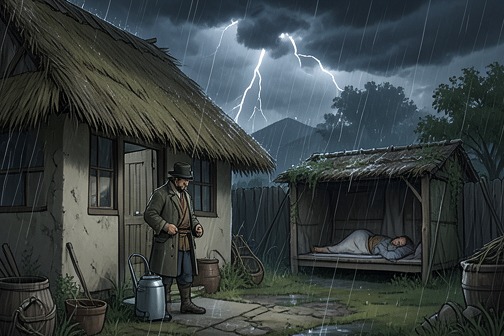
After the hermit [Sima Hui](entity:character-recall-character-120f26493f4b) and the adviser [Xu Shu](entity:character-recall-character-94039ce8aa3b) direct [Xuande](entity:character-recall-character-xuande-65aa739cb0b7) toward [Kong Ming](entity:character-recall-character-kong-ming-8c46db85e103), Xuande visits the Sleeping [Dragon](entity:creature-recall-creature-dragon-02f141a6fc03)’s rural home. He arrives twice without meeting Kong Ming, enduring [Zhang Fei](entity:character-recall-character-zhang-fei-c1ad9cf1cd08)’s impatience and the harsh weather. On the third visit, Xuande waits respectfully while Kong Ming sleeps and finally gains an audience.
Kong Ming outlines a strategy for balancing the northern power of [Cao Cao](entity:character-recall-character-cao-cao-830a06605f92), the southern strength of [Sun Quan](entity:character-recall-character-sun-quan-c05815dcfd46), and the territories of [Jingzhou](entity:location-recall-location-jingzhou-8cb3070f60f7) and [Yizhou](entity:location-recall-location-yizhou-4e84ff92e253). Xuande’s sincerity persuades him to leave his quiet life and become an adviser. Their partnership gives Xuande a strategic vision capable of turning survival into the creation of a kingdom.
Soon after the Three Visits
Xu Shu Returns to Cao Cao
[Xu Shu](entity:character-recall-character-94039ce8aa3b) helps [Xuande](entity:character-recall-character-xuande-65aa739cb0b7) defeat [Cao Ren](entity:character-recall-character-cao-ren-f96e514a9ca1)’s forces at [Xinye](entity:location-recall-location-xinye-954fc2ef0539), demonstrating his value as a military adviser. [Cao Cao](entity:character-recall-character-cao-cao-830a06605f92) discovers his identity and uses a forged letter, made from his mother’s handwriting, to lure him away. Xu Shu leaves despite his loyalty to Xuande, believing his mother is in danger.
His mother recognizes the deception and condemns him for abandoning a worthy lord without verifying the message. Overcome with shame, she takes her own life. Before leaving, Xu Shu has recommended [Kong Ming](entity:character-recall-character-kong-ming-8c46db85e103) to Xuande, so his coerced departure leads directly to the recruitment of the strategist who will shape Shu’s future.
After Kong Ming joins Xuande
Kong Ming Wins at Bowang
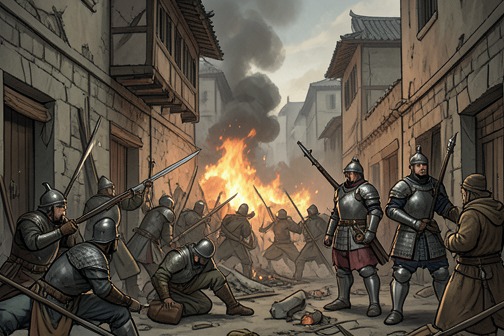
[Cao Ren](entity:character-recall-character-cao-ren-f96e514a9ca1) advances against [Xinye](entity:location-recall-location-xinye-954fc2ef0539) with a large force. [Kong Ming](entity:character-recall-character-kong-ming-8c46db85e103) takes command for the first time and assigns precise roles to [Guan Yu](entity:character-recall-character-guan-yu-728c0ca77761), [Zhang Fei](entity:character-recall-character-zhang-fei-c1ad9cf1cd08), [Zhao Zilong](entity:character-recall-character-zhao-zilong-f0c7ab938f6e), and other officers. He draws the [Wei](entity:organization-recall-organization-wei-c1fd480f445c) vanguard under [Xiahou Dun](entity:character-recall-character-8829572e2539) into a narrow pass, where fires and ambushes destroy its formation.
Guan Yu and Zhang Fei, initially skeptical of the new adviser, acknowledge Kong Ming’s skill after the victory. The defeat establishes his authority among [Xuande](entity:character-recall-character-xuande-65aa739cb0b7)’s commanders, while provoking [Cao Cao](entity:character-recall-character-cao-cao-830a06605f92) to prepare a much larger invasion of the south.
During Cao Cao’s march south
Liu Biao Dies and Jingzhou Splits

[Liu Biao](entity:character-recall-character-liu-biao-a83c97bdaef1) dies after [Lady Cai](entity:character-recall-character-bdf5a8086d8e) and [Cai Mao](entity:character-recall-character-a021c1fcc099) prevent his elder son [Liu Qi](entity:character-recall-character-e503bb173bcc) from reaching him. Lady Cai and Cai Mao forge a will naming [Liu Zong](entity:character-recall-character-5dba79d9146b) as successor. Faced with [Cao Cao](entity:character-recall-character-cao-cao-830a06605f92)’s advancing army, Liu Zong’s advisers urge surrender, and he offers [Jingzhou](entity:location-recall-location-jingzhou-8cb3070f60f7) to Cao Cao.
[Xuande](entity:character-recall-character-xuande-65aa739cb0b7) learns of the surrender and refuses to abandon the people who rely on him for protection. He plans to move them out of [Xinye](entity:location-recall-location-xinye-954fc2ef0539) and toward safety, even though the enormous column slows his escape and puts his own army at risk.
As Cao Cao’s army advances south
The Burning of Xinye
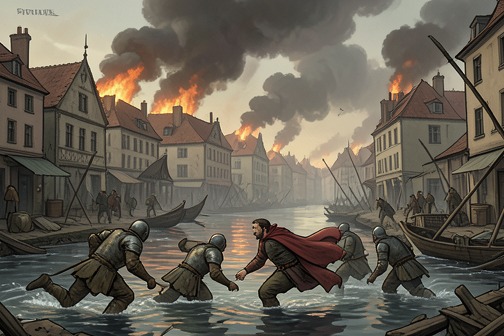
[Kong Ming](entity:character-recall-character-kong-ming-8c46db85e103) arranges a series of coordinated attacks as [Cao Cao](entity:character-recall-character-cao-cao-830a06605f92)’s forces approach [Xinye](entity:location-recall-location-xinye-954fc2ef0539). The city is left apparently empty, then set ablaze after the [Wei](entity:organization-recall-organization-wei-c1fd480f445c) troops enter. A flood released from an upstream dam sweeps away many of the soldiers who escape the flames, while [Zhao Zilong](entity:character-recall-character-zhao-zilong-f0c7ab938f6e), [Zhang Fei](entity:character-recall-character-zhang-fei-c1ad9cf1cd08), and other commanders strike the fleeing force.
The plan buys time for [Xuande](entity:character-recall-character-xuande-65aa739cb0b7)’s people to cross the river, but it cannot halt Cao Cao’s larger advance. The burning of Xinye shows Kong Ming’s command turning geography, fire, and flood into weapons, while the refugees remain exposed to pursuit.
During Xuande’s retreat from Xinye
Cao Cao Seizes Jingzhou
[Liu Zong](entity:character-recall-character-5dba79d9146b) formally surrenders to [Cao Cao](entity:character-recall-character-cao-cao-830a06605f92) and travels to meet him with [Lady Cai](entity:character-recall-character-bdf5a8086d8e). Cao Cao accepts the surrender but soon sends Liu Zong and his mother away, then orders their execution. The officials who handed over [Jingzhou](entity:location-recall-location-jingzhou-8cb3070f60f7) discover that their reward is insecure and that Cao Cao intends to use them only while convenient.
[Xuande](entity:character-recall-character-xuande-65aa739cb0b7) continues south with a vast following of civilians. Even as his men urge him to move faster, he refuses to leave the people behind. His insistence on bearing their suffering becomes a visible distinction between his rule and the conduct of the warlords around him.
During the retreat from Xinye
Zhao Zilong Rescues the Heir
As [Cao Cao](entity:character-recall-character-cao-cao-830a06605f92)’s forces attack the fleeing population, [Zhao Zilong](entity:character-recall-character-zhao-zilong-f0c7ab938f6e) searches the battlefield for [Xuande](entity:character-recall-character-xuande-65aa739cb0b7)’s family and infant son. He finds [Lady Mi](entity:character-recall-character-c7e49b4fb9d5) wounded in a ruined house, where she refuses to take a horse and leave the child unprotected. She places the boy in Zhao Zilong’s arms and throws herself into a dry well.
Zhao Zilong rides through the enemy ranks with the child inside his armor, fighting off repeated attacks. He returns him to Xuande, who throws the child to the ground in anger that Zhao Zilong nearly died to save him. The gesture is a fierce acknowledgment of the commander’s loyalty and becomes one of the campaign’s most memorable acts of devotion.
During the same retreat
Zhang Fei Holds the Bridge
[Zhang Fei](entity:character-recall-character-zhang-fei-c1ad9cf1cd08) takes position alone at a bridge as [Cao Cao](entity:character-recall-character-cao-cao-830a06605f92)’s pursuing army approaches. He has his men raise dust by dragging branches behind their horses, making his small force appear much larger. His defiant challenge and imposing presence persuade the enemy that another ambush may be waiting.
Cao Cao turns away, allowing [Xuande](entity:character-recall-character-xuande-65aa739cb0b7)’s survivors to escape. Zhang Fei then destroys the bridge, but Xuande warns him that the act may signal weakness and invite pursuit. The episode shows Zhang Fei’s courage and improvisation while also exposing the limits of his strategic judgment.
After the retreat to Jiangxia
The Sun–Xuande Alliance

With [Xuande](entity:character-recall-character-xuande-65aa739cb0b7)’s forces weakened and [Cao Cao](entity:character-recall-character-cao-cao-830a06605f92) approaching the south, [Kong Ming](entity:character-recall-character-kong-ming-8c46db85e103) travels to [Wu](entity:organization-recall-organization-wu-68b510d2e7f9) to persuade [Sun Quan](entity:character-recall-character-sun-quan-c05815dcfd46) to resist. Sun Quan’s advisers argue for surrender, but Kong Ming answers their objections and explains that Cao Cao’s army is tired, unfamiliar with naval warfare, and politically fragile.
[Zhou Yu](entity:character-recall-character-zhou-yu-771100df6c57) supports resistance after Kong Ming exploits Cao Cao’s alleged desire for the [Qiao](entity:location-recall-location-qiao-ed55e4b19286) sisters to provoke him. Sun Quan finally commits his forces to an alliance with Xuande. The partnership creates the balance of power that will make the coming battle possible, though distrust between the allied leaders remains.
During the preparations for the river battle
Jiang Gan’s Forged Letter
[Cao Cao](entity:character-recall-character-cao-cao-830a06605f92) sends his former schoolmate [Jiang Gan](entity:character-recall-character-8cb6efa67de6) to persuade [Zhou Yu](entity:character-recall-character-zhou-yu-771100df6c57) to defect. Zhou Yu instead parades his military strength and plants a false letter suggesting that [Cai Mao](entity:character-recall-character-a021c1fcc099) and [Zhang Yun](entity:character-recall-character-9b630cb52c32) are secretly willing to betray Cao Cao. Jiang Gan steals it and returns to the northern camp.
Cao Cao believes the letter and executes the two commanders who understand naval warfare. Zhou Yu has thus removed the most capable leaders of Cao Cao’s fleet without a battle, while Jiang Gan’s mission has been turned into an instrument of deception.
Three days before the river battle
Kong Ming Borrows the Arrows
[Zhou Yu](entity:character-recall-character-zhou-yu-771100df6c57) demands that [Kong Ming](entity:character-recall-character-kong-ming-8c46db85e103) provide one hundred thousand arrows in three days, expecting failure to expose him to military punishment. Kong Ming agrees and asks [Lu Su](entity:character-recall-character-ea394d9ce618) to supply boats, straw bales, and crews. On a foggy night, he sails toward [Cao Cao](entity:character-recall-character-cao-cao-830a06605f92)’s camp and has his men beat drums and shout.
Cao Cao orders thousands of archers to fire blindly into the fog. The arrows lodge in the straw barriers, and Kong Ming returns with more than enough for Zhou Yu. The feat demonstrates his ability to read weather and turn an enemy’s caution into a resource.
During the final preparations for the river battle
Huang Gai’s Feigned Defection
[Zhou Yu](entity:character-recall-character-zhou-yu-771100df6c57) and [Huang Gai](entity:character-recall-character-c8841df15f78) stage a public dispute that ends with Huang Gai being flogged. The punishment makes his planned defection appear genuine. [Kan Ze](entity:character-recall-character-c8c86030c2af) carries a letter offering Huang Gai’s services to [Cao Cao](entity:character-recall-character-cao-cao-830a06605f92) and persuades him that the proposal is real despite Cao Cao’s suspicion.
[Pang Tong](entity:character-recall-character-568fd34f5d43) then advises Cao Cao to chain his ships together, supposedly to steady them and reduce seasickness among northern soldiers. The chained fleet will later make it possible for fire to spread uncontrollably from ship to ship.
Winter AD 208
The Battle of Red Cliffs
[Kong Ming](entity:character-recall-character-kong-ming-8c46db85e103) builds the [Altar of the Seven Stars](entity:location-recall-location-8c5d65248ce4) and calls for a southeasterly wind. Once the wind rises, [Huang Gai](entity:character-recall-character-c8841df15f78) sails fire ships toward [Cao Cao](entity:character-recall-character-cao-cao-830a06605f92)’s chained fleet. The flames leap from vessel to vessel, destroying the northern navy and throwing the army into panic.
Cao Cao escapes by land with a small band of survivors, while the allied armies pursue and attack along the river. The defeat checks Cao Cao’s drive south and secures the conditions under which the three regional powers can harden into distinct kingdoms.
During Cao Cao’s retreat after Red Cliffs
Guan Yu Releases Cao Cao
[Cao Cao](entity:character-recall-character-cao-cao-830a06605f92)’s retreat through the countryside is marked by repeated ambushes. He reaches [Huarong Road](entity:location-recall-location-9874e7d05800) with only a few hundred men and finds [Guan Yu](entity:character-recall-character-guan-yu-728c0ca77761) waiting with an armed force. Guan Yu recalls the kindness Cao Cao showed him when he was a captive and listens to Cao Cao’s appeal to their past relationship.
He orders his men to open the road and lets Cao Cao escape, despite having been given a military order to capture him. [Kong Ming](entity:character-recall-character-kong-ming-8c46db85e103) later calls for Guan Yu’s execution, but [Xuande](entity:character-recall-character-xuande-65aa739cb0b7) invokes their sworn brotherhood and spares him. Guan Yu’s compassion preserves his honor but allows Cao Cao to survive and regroup.
After the victory at Red Cliffs
Xuande Takes the Southern Commanderies
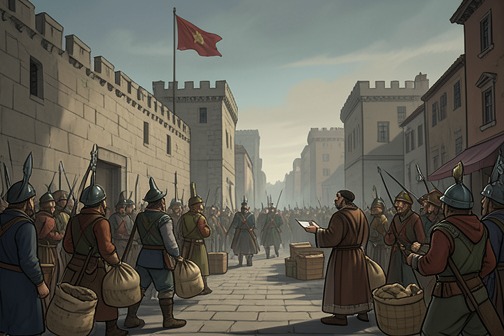
As [Zhou Yu](entity:character-recall-character-zhou-yu-771100df6c57) fights to capture [Nanjun](entity:location-recall-location-53897f902659), [Kong Ming](entity:character-recall-character-kong-ming-8c46db85e103) sends [Zhao Zilong](entity:character-recall-character-zhao-zilong-f0c7ab938f6e) to take the city first. [Zhang Fei](entity:character-recall-character-zhang-fei-c1ad9cf1cd08) and [Guan Yu](entity:character-recall-character-guan-yu-728c0ca77761) then seize other strategic cities while Zhou Yu is occupied. The maneuver gives [Xuande](entity:character-recall-character-xuande-65aa739cb0b7) control of important parts of [Jingzhou](entity:location-recall-location-jingzhou-8cb3070f60f7) and creates a prolonged dispute with [Sun Quan](entity:character-recall-character-sun-quan-c05815dcfd46) over who has the stronger claim.
Xuande’s position grows further when his commanders capture the southern commanderies. He treats local populations generously and recruits skilled men, building the territorial base that Kong Ming’s strategic plan required. Sun Quan regards the gains as borrowed land that should eventually be returned.
After the Red Cliffs campaign
Sun Quan’s Attack on Hefei
[Sun Quan](entity:character-recall-character-sun-quan-c05815dcfd46) attacks [Hefei](entity:location-recall-location-bc8ceb93fbec), where [Zhang Liao](entity:character-recall-character-c60dbb583a54)’s disciplined defense nearly captures him. Sun Quan escapes across a destroyed bridge by urging his horse to leap the gap, while his commander Zhou Tai repeatedly returns to the battlefield to rescue him and other officers.
The assault fails and teaches Sun Quan the cost of attacking a well-prepared position. Zhang Liao’s name becomes a source of fear in [Wu](entity:organization-recall-organization-wu-68b510d2e7f9), while Zhou Tai’s loyalty strengthens his standing with the ruler.
AD 209
Xuande Marries Sun Shangxiang
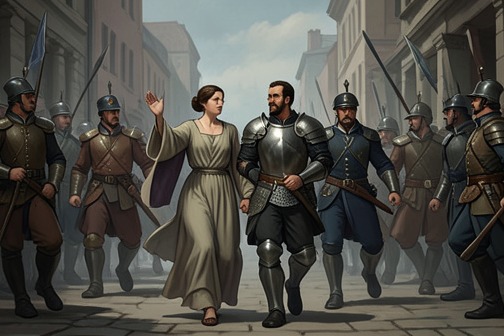
[Zhou Yu](entity:character-recall-character-zhou-yu-771100df6c57) proposes a marriage between [Xuande](entity:character-recall-character-xuande-65aa739cb0b7) and [Sun Quan](entity:character-recall-character-sun-quan-c05815dcfd46)’s sister, intending to lure Xuande into [Wu](entity:organization-recall-organization-wu-68b510d2e7f9) and hold him as a hostage for [Jingzhou](entity:location-recall-location-jingzhou-8cb3070f60f7). The plan goes awry when [Lady Wu](entity:character-recall-character-b2f81d9baca3) approves the match, and Xuande marries [Sun Shangxiang](entity:character-recall-character-ee0feed303e5). [Kong Ming](entity:character-recall-character-kong-ming-8c46db85e103) gives [Zhao Zilong](entity:character-recall-character-zhao-zilong-f0c7ab938f6e) three embroidered bags of instructions to protect the couple.
After Xuande hears that he is needed back in Jingzhou, Sun Shangxiang chooses to flee with him. Sun Quan’s officers pursue them, but she uses her authority as the ruler’s sister to pass through their blockade. Kong Ming has arranged boats for their escape, and [Guan Yu](entity:character-recall-character-guan-yu-728c0ca77761) helps repel Zhou Yu’s final pursuit.
After the failed attempt to reclaim Jingzhou
Zhou Yu Dies
[Zhou Yu](entity:character-recall-character-zhou-yu-771100df6c57) repeatedly plots to recover [Jingzhou](entity:location-recall-location-jingzhou-8cb3070f60f7), but [Kong Ming](entity:character-recall-character-kong-ming-8c46db85e103) anticipates and frustrates his plans. After Zhou Yu’s scheme to take [Xuande](entity:character-recall-character-xuande-65aa739cb0b7) fails, his wound worsens. He writes to [Sun Quan](entity:character-recall-character-sun-quan-c05815dcfd46) recommending [Lu Su](entity:character-recall-character-ea394d9ce618) as his successor, then dies at thirty-six, lamenting that Heaven made Kong Ming as well as himself.
Kong Ming travels to mourn him and delivers a moving eulogy, even as others suspect the visit is meant to taunt [Wu](entity:organization-recall-organization-wu-68b510d2e7f9). Zhou Yu’s death removes the principal strategist behind Wu’s resistance to Xuande, but the territorial dispute over Jingzhou remains unresolved.
AD 211–214
Xuande Conquers Yi Province
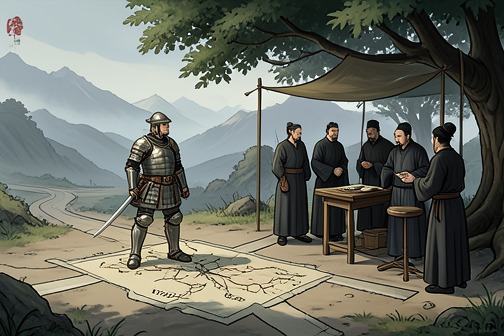
[Zhang Song](entity:character-recall-character-b6bdbeb0161e) persuades [Xuande](entity:character-recall-character-xuande-65aa739cb0b7) that [Liu Zhang](entity:character-recall-character-d61859b707d8) is too weak to govern [Yizhou](entity:location-recall-location-yizhou-4e84ff92e253) and provides maps of the region. Xuande initially resists attacking a member of the imperial family, but [Pang Tong](entity:character-recall-character-568fd34f5d43) argues that the opportunity will otherwise be seized by someone less benevolent. Xuande enters the province under the pretext of helping Liu Zhang resist [Zhang Lu](entity:character-recall-character-89f719d2a1ee).
After Zhang Song’s plan is exposed and he is executed, Xuande captures the Fu Pass and advances on Luocheng. Pang Tong dies in an ambush at Fallen [Phoenix](entity:creature-recall-creature-phoenix-1bf5db8bbe8f) Valley, and [Kong Ming](entity:character-recall-character-kong-ming-8c46db85e103) joins the campaign. Xuande eventually accepts Liu Zhang’s surrender at [Chengdu](entity:location-recall-location-chengdu-d64febd83198), gaining a wealthy western base and fulfilling the territorial part of the [Longzhong Plan](entity:event-recall-event-31c1138a9490).
During Xuande’s conquest of Yi Province
Ma Chao Joins Xuande
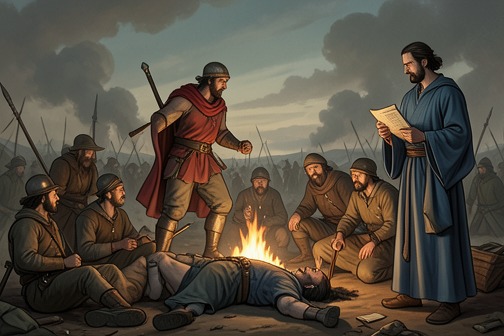
After [Cao Cao](entity:character-recall-character-cao-cao-830a06605f92) executes [Ma Teng](entity:character-recall-character-bb2faede430c), [Ma Chao](entity:character-recall-character-32810e24d2ba) raises an army against [Wei](entity:organization-recall-organization-wei-c1fd480f445c) and briefly captures [Chang’an](entity:location-recall-location-chang-an-768ee9b242a2). Cao Cao defeats him through a combination of force and deception, including efforts to divide Ma Chao from [Han Sui](entity:character-recall-character-aac1f2176d84). Ma Chao’s family is killed during the fighting, and he eventually seeks refuge with [Zhang Lu](entity:character-recall-character-89f719d2a1ee).
[Kong Ming](entity:character-recall-character-kong-ming-8c46db85e103) uses a bribe to turn Zhang Lu’s adviser [Yang Song](entity:character-recall-character-da5e544528d7) against Ma Chao, leaving him isolated. [Xuande](entity:character-recall-character-xuande-65aa739cb0b7) offers him a place in his service, and Ma Chao joins the campaign against [Liu Zhang](entity:character-recall-character-d61859b707d8). His arrival helps break the final resistance around [Chengdu](entity:location-recall-location-chengdu-d64febd83198).
AD 219
Guan Yu’s Northern Expedition
After [Xuande](entity:character-recall-character-xuande-65aa739cb0b7) secures [Hanzhong](entity:location-recall-location-hanzhong-98f469177cc5) and is proclaimed king, [Guan Yu](entity:character-recall-character-guan-yu-728c0ca77761) advances against [Fancheng](entity:location-recall-location-fancheng-cfc933bdaaa0). He defeats [Pang De](entity:character-recall-character-86e1fc346193) in battle and releases floodwaters that overwhelm [Yu Jin](entity:character-recall-character-yu-jin-0654abd5b3ab)’s seven armies. Pang De refuses to surrender and is executed, while Yu Jin is captured.
Guan Yu’s victories bring him great fame but leave [Jingzhou](entity:location-recall-location-jingzhou-8cb3070f60f7) exposed. He has established a [line of beacons](entity:object-recall-object-57180ee8d44a) to warn of attack, yet the campaign’s success and his confidence draw troops away from the territory he must defend.
AD 219, while Guan Yu besieges Fancheng
Lü Meng Takes Jingzhou
[Sun Quan](entity:character-recall-character-sun-quan-c05815dcfd46) and [Lü Meng](entity:character-recall-character-l-meng-eee621b575ff) exploit [Guan Yu](entity:character-recall-character-guan-yu-728c0ca77761)’s absence. Lü Meng disguises soldiers as merchants, passes the [line of beacons](entity:object-recall-object-57180ee8d44a) without raising an alarm, and captures the posts guarding the river. His troops then enter Jiangling at night and take the city. Lü Meng imposes strict discipline on his men, even executing a soldier for taking a stolen cloak.
The fall of Jiangling is followed by Fu Shiren’s defection and [Mi Fang](entity:character-recall-character-552beabbf964)’s surrender of [Nanjun](entity:location-recall-location-53897f902659). Their resentment toward Guan Yu makes them willing to abandon him, and the loss of his bases turns his successful expedition into a retreat between hostile armies.
Winter AD 219
Guan Yu Is Captured and Executed
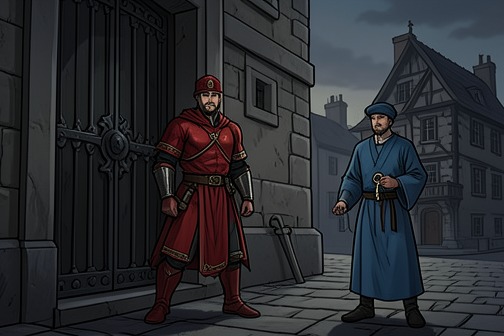
After [Xu Huang](entity:character-recall-character-xu-huang-7df5e27d574e) defeats [Guan Yu](entity:character-recall-character-guan-yu-728c0ca77761) near [Fancheng](entity:location-recall-location-fancheng-cfc933bdaaa0), Guan Yu learns that [Jingzhou](entity:location-recall-location-jingzhou-8cb3070f60f7) has fallen and that his family is in [Lü Meng](entity:character-recall-character-l-meng-eee621b575ff)’s custody. His troops desert as letters from their families reach them, leaving him with only a small force at [Maicheng](entity:location-recall-location-44a4e34306c1). He refuses to surrender, and a breakout attempt through the northern road ends in ambush.
Guan Yu and his son [Guan Ping](entity:character-recall-character-guan-ping-1576a4a7bd30) are captured and brought before [Sun Quan](entity:character-recall-character-sun-quan-c05815dcfd46). Guan Yu rejects an offer to serve [Wu](entity:organization-recall-organization-wu-68b510d2e7f9), insisting that he will not betray his sworn brothers. Sun Quan orders father and son executed. [Wang Fu](entity:character-recall-character-wang-fu-32937e9d8874) throws himself from the walls, and [Zhou Cang](entity:character-recall-character-zhou-cang-0aba332994cf) takes his own life when their heads are displayed.
After Guan Yu’s execution
Guan Yu’s Ghostly Vengeance
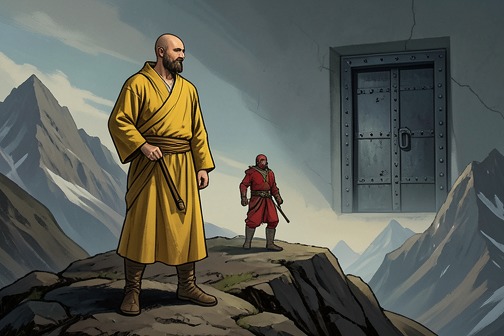
[Guan Yu](entity:character-recall-character-guan-yu-728c0ca77761)’s spirit appears at [Jade Spring Mountain](entity:location-recall-location-069857142844), where the monk [Pujing](entity:character-recall-character-pujing-e220c5f1a8cf) reminds him that he cannot demand his own head without accounting for the many people he killed. The spirit accepts the lesson and later becomes associated with protecting local people. [Sun Quan](entity:character-recall-character-sun-quan-c05815dcfd46)’s celebration of the victory is interrupted when [Lü Meng](entity:character-recall-character-l-meng-eee621b575ff) appears to be possessed by Guan Yu’s ghost and collapses dead.
Sun Quan sends Guan Yu’s head to [Cao Cao](entity:character-recall-character-cao-cao-830a06605f92) in an effort to turn [Xuande](entity:character-recall-character-xuande-65aa739cb0b7)’s anger against [Wei](entity:organization-recall-organization-wei-c1fd480f445c). [Sima Yi](entity:character-recall-character-sima-yi-51d89f035795) sees through the maneuver, and Cao Cao gives the head an elaborate burial. He is then troubled by Guan Yu’s apparition and other supernatural visitations, which contribute to his fear and failing health.
AD 220
Cao Cao Dies
[Cao Cao](entity:character-recall-character-cao-cao-830a06605f92)’s headaches worsen after the death of [Hua Tuo](entity:character-recall-character-hua-tuo-3b9b93a0f7ac), whom he has imprisoned because he suspects the doctor of avenging [Guan Yu](entity:character-recall-character-guan-yu-728c0ca77761). Haunted by ghosts and omens, Cao Cao refuses to believe that any ritual can save him. He names [Cao Pi](entity:character-recall-character-cao-pi-2869caa61a42) as his successor and gives instructions for the women of his household to support themselves after his death.
Cao Cao dies at sixty-six, leaving the Han emperor under the control of his son. The end of his life closes the career of the northern warlord who dominated the court without formally becoming emperor, but the power he accumulated passes directly into the hands of the Cao family.
AD 220
Cao Pi Takes the Throne
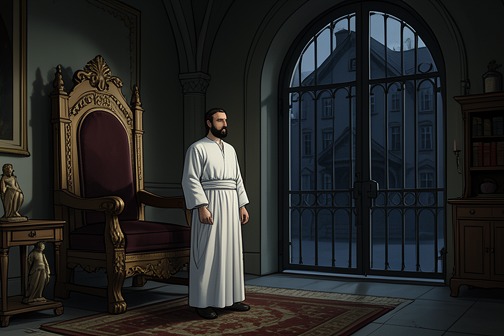
After [Cao Cao](entity:character-recall-character-cao-cao-830a06605f92)’s death, [Cao Pi](entity:character-recall-character-cao-pi-2869caa61a42) faces challenges from his brothers, including [Cao Zhang](entity:character-recall-character-cao-zhang-7ae2704f803a) and [Cao Zhi](entity:character-recall-character-cao-zhi-57790f61c7f7). He uses [Jia Kui](entity:character-recall-character-jia-kui-8a1fe427146e) to persuade Cao Zhang to enter the capital without his army, then tests Cao Zhi by demanding poems under threat of death. Cao Zhi’s [Seven-Step Poem](entity:expression-recall-expression-seven-step-poem-daf81bdf6dd2) moves him, and Cao Pi spares him while reducing his rank.
Cao Pi then forces [Emperor Xian](entity:character-recall-character-emperor-xian-84d3de675b35) to abdicate, presenting the transfer as a ceremonial act modeled on ancient precedents. The Han ends and the [Kingdom of Wei](entity:organization-recall-organization-kingdom-of-wei-988f06ee4980) is established. [Xuande](entity:character-recall-character-xuande-65aa739cb0b7) refuses to accept the change as legitimate, insisting that the Han’s authority has been usurped.
AD 221
Xuande Becomes Emperor
After [Cao Pi](entity:character-recall-character-cao-pi-2869caa61a42)’s accession, [Kong Ming](entity:character-recall-character-kong-ming-8c46db85e103) and the Shu officials urge [Xuande](entity:character-recall-character-xuande-65aa739cb0b7) to claim the Han throne. Xuande initially rejects the proposal as rebellion, but Kong Ming warns that refusing the responsibility will undermine the kingdom and disappoint the people. Xuande finally agrees and is proclaimed emperor in [Chengdu](entity:location-recall-location-chengdu-d64febd83198), continuing the Han line through Shu.
He names [Liu Shan](entity:character-recall-character-liu-shan-68e55bf8ee43) heir and appoints the leading commanders to high offices. Though the ceremony presents his accession as a defense of the Han, it also formalizes the division of the empire into rival courts.
AD 221, before the invasion of Wu
Zhang Fei Is Murdered
[Xuande](entity:character-recall-character-xuande-65aa739cb0b7) commits himself to avenging [Guan Yu](entity:character-recall-character-guan-yu-728c0ca77761) and orders [Zhang Fei](entity:character-recall-character-zhang-fei-c1ad9cf1cd08) to prepare for the campaign. Zhang Fei’s grief and rage make him brutal toward his men. When Fan Jiang and Zhang Da say they cannot prepare the troops and mourning banners in the time allowed, he beats them and threatens to execute them.
The two officers murder him while he is drunk and carry his head south. Xuande, already preparing to march, learns of Zhang Fei’s death and is overcome with grief. [Zhang Bao](entity:character-recall-character-zhang-bao-6741ffd3fc14) and [Guan Xing](entity:character-recall-character-guan-xing-44ec41ba69d4) arrive to join him, and the campaign against [Wu](entity:organization-recall-organization-wu-68b510d2e7f9) becomes a war of vengeance for both sworn brothers.
Before Xuande’s invasion of Wu
Sun Quan Submits to Wei
[Sun Quan](entity:character-recall-character-sun-quan-c05815dcfd46) fears [Xuande](entity:character-recall-character-xuande-65aa739cb0b7)’s approaching army and sends an envoy to submit to [Cao Pi](entity:character-recall-character-cao-pi-2869caa61a42). Cao Pi accepts the submission and grants Sun Quan the title of king of the south, intending to use [Wu](entity:organization-recall-organization-wu-68b510d2e7f9) against Shu while keeping both kingdoms weak.
The arrangement does not prevent Xuande’s invasion. Instead, it shows how the former allies maneuver among the three powers, seeking immediate survival even when their agreements are unstable.
AD 222
The Battle of Yiling
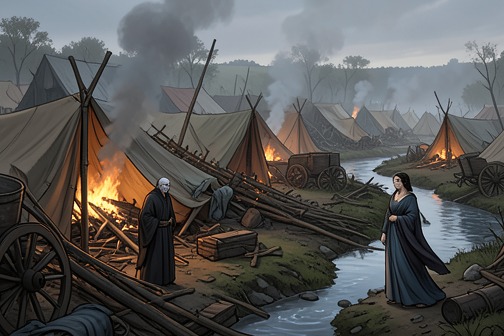
[Xuande](entity:character-recall-character-xuande-65aa739cb0b7) leads a vast army into [Wu](entity:organization-recall-organization-wu-68b510d2e7f9) to avenge [Guan Yu](entity:character-recall-character-guan-yu-728c0ca77761) and [Zhang Fei](entity:character-recall-character-zhang-fei-c1ad9cf1cd08). Early victories by [Zhang Bao](entity:character-recall-character-zhang-bao-6741ffd3fc14) and [Guan Xing](entity:character-recall-character-guan-xing-44ec41ba69d4) encourage him, but [Lu Xun](entity:character-recall-character-lu-xun-33f5000ac46f) refuses to be drawn into battle while the Shu army grows tired and overextended. Xuande’s forces establish a long line of camps among woods and hills, giving Lu Xun the opportunity to use fire.
Lu Xun’s coordinated attack burns the camps and breaks the Shu army. [Zhao Zilong](entity:character-recall-character-zhao-zilong-f0c7ab938f6e) rescues Xuande, but many commanders die, and [Lady Sun](entity:character-recall-character-lady-sun-6e325c001d64), hearing that her husband has fallen, throws herself into the river. The defeat ends Xuande’s campaign and leaves the kingdom of Shu gravely weakened.
During the retreat after Yiling
The Eight Maze Puzzle
As [Lu Xun](entity:character-recall-character-lu-xun-33f5000ac46f) pursues the retreating Shu forces toward [Baidi](entity:location-recall-location-3e590b798688), he encounters a field of stones that produces an unnatural mist and seems to shift into a maze. [Kong Ming](entity:character-recall-character-kong-ming-8c46db85e103)’s father-in-law appears and guides Lu Xun and his men out. Lu Xun realizes the stones formed an elaborate military trap and withdraws rather than risk entering deeper.
The incident reinforces the idea that Kong Ming’s influence persists beyond his physical presence. Lu Xun’s caution also prevents him from exploiting the Shu defeat fully, while the imminent threat from [Wei](entity:organization-recall-organization-wei-c1fd480f445c) makes him turn back to defend [Wu](entity:organization-recall-organization-wu-68b510d2e7f9).
AD 223
Xuande Entrusts Liu Shan to Kong Ming
After the defeat at [Yiling](entity:location-recall-location-512291eb183c), [Xuande](entity:character-recall-character-xuande-65aa739cb0b7) remains at [Baidi](entity:location-recall-location-3e590b798688) and refuses to return to [Chengdu](entity:location-recall-location-chengdu-d64febd83198). His health declines, and he summons [Kong Ming](entity:character-recall-character-kong-ming-8c46db85e103) to entrust the young [Liu Shan](entity:character-recall-character-liu-shan-68e55bf8ee43) to him. Xuande warns him against promoting [Ma Su](entity:character-recall-character-ma-su-d74dfa308ea1) without caution and tells him that, if Liu Shan proves incapable, Kong Ming may take the throne himself.
Xuande dies at sixty-three, having failed to avenge his sworn brothers or restore the Han. Liu Shan succeeds him as the second ruler of Shu, with Kong Ming as the central force holding the state together.
Soon after Xuande’s death
Kong Ming Foils the Five Armies
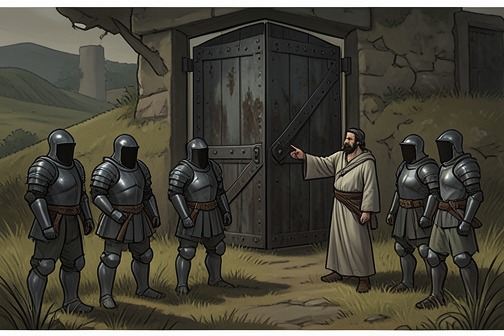
[Cao Pi](entity:character-recall-character-cao-pi-2869caa61a42) plans a five-pronged attack on Shu, hoping to exploit the transition to [Liu Shan](entity:character-recall-character-liu-shan-68e55bf8ee43). [Kong Ming](entity:character-recall-character-kong-ming-8c46db85e103) has already arranged defenses: [Ma Chao](entity:character-recall-character-32810e24d2ba) deters the [Qiang tribes](entity:organization-recall-organization-qiang-tribes-9f9bb2ea109a), local movements confuse the Man forces, [Meng Da](entity:character-recall-character-meng-da-6fbe629e86c7) is deceived, [Zhao Zilong](entity:character-recall-character-zhao-zilong-f0c7ab938f6e) guards the key pass, and the [Wu](entity:organization-recall-organization-wu-68b510d2e7f9) threat is blunted through diplomacy.
[Deng Zhi](entity:character-recall-character-deng-zhi-fa1d06d62d24) is sent to Wu and persuades [Sun Quan](entity:character-recall-character-sun-quan-c05815dcfd46) to renew the alliance with Shu. The projected assault collapses before it can become a coordinated invasion, demonstrating Kong Ming’s ability to defend a vulnerable kingdom through intelligence and political maneuver as much as force.
AD 225
Kong Ming’s Southern Campaign
A rebellion breaks out in the southern borderlands under [Yong Kai](entity:character-recall-character-yong-kai-d3f75bf4fafd), Zhu Bao, [Gao Ding](entity:character-recall-character-gao-ding-a434e4583a3a), and [Meng Huo](entity:character-recall-character-meng-huo-23f4c27a0fea). [Kong Ming](entity:character-recall-character-kong-ming-8c46db85e103) personally leads an expedition, using persuasion and carefully staged releases to divide the rebels. He pardons captured leaders and men, encourages rivalries among the governors, and wins Gao Ding’s submission.
When Meng Huo takes command of the [Man tribes](entity:organization-recall-organization-man-tribes-bcf630c34658), Kong Ming captures him but releases him, saying the tribes must be won over in spirit rather than merely subdued. The campaign becomes a sustained test of Kong Ming’s political ethic: he seeks to pacify the south without leaving a permanent cycle of resentment.
During Kong Ming’s southern campaign
Seven Captures of Meng Huo
[Kong Ming](entity:character-recall-character-kong-ming-8c46db85e103) captures and releases [Meng Huo](entity:character-recall-character-meng-huo-23f4c27a0fea) repeatedly, each time challenging him to honor his promise to submit if defeated again. Meng Huo repeatedly claims that he was trapped by betrayal or trickery and returns to raise another force. Kong Ming uses these failures to expose the weakness of Meng Huo’s alliances and to encourage the tribes to abandon him.
After the fifth and sixth captures, Meng Huo still refuses to surrender. The final confrontation uses the [Wugu tribe](entity:organization-recall-organization-wugu-tribe-a1322376a715)’s supposedly invulnerable rattan armor: Kong Ming lures the soldiers into a narrow valley and sets it ablaze. Horrified by the deaths, he acknowledges the moral cost of the victory. Meng Huo at last submits, pledging that the tribes will not rebel again.
AD 226
Cao Pi Dies
[Cao Pi](entity:character-recall-character-cao-pi-2869caa61a42) falls seriously ill and entrusts the young [Cao Rui](entity:character-recall-character-cao-rui-01105ecde087) to senior officials, including [Sima Yi](entity:character-recall-character-sima-yi-51d89f035795). He dies at forty after seven years on the throne. Cao Rui succeeds him, while Sima Yi’s influence continues to grow.
The transition gives [Wei](entity:organization-recall-organization-wei-c1fd480f445c) a young ruler but leaves the state in the hands of powerful regents and commanders. This pattern of court instability will become an opening for the Sima family to displace the [House of Cao](entity:organization-recall-organization-0a96c2b31430).
AD 227–228
Kong Ming’s First Northern Expedition
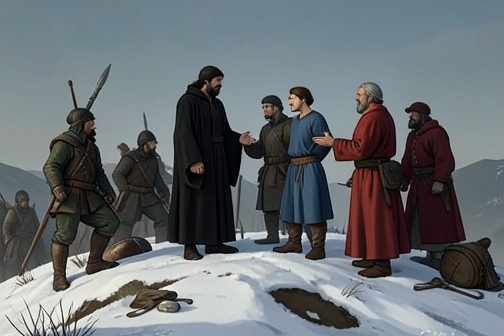
[Kong Ming](entity:character-recall-character-kong-ming-8c46db85e103) begins a northern campaign, while [Sima Yi](entity:character-recall-character-sima-yi-51d89f035795) is temporarily removed from command after false rumors accuse him of rebellion. The Shu army advances through the [Qishan](entity:location-recall-location-7c9d19512e7e) region, and [Ma Su](entity:character-recall-character-ma-su-d74dfa308ea1) volunteers to defend [Jieting](entity:location-recall-location-46283def5c96). Kong Ming pairs him with [Wang Ping](entity:character-recall-character-wang-ping-eeda464a8ccf), but Ma Su rejects Wang Ping’s practical advice and camps on a hill without a reliable water supply.
[Zhang He](entity:character-recall-character-zhang-he-1dbcdfe0bf31) surrounds the position, and Ma Su’s men disperse. Kong Ming orders [Ma Su’s execution](entity:action-recall-action-ac2a6644755f) for the failure, though he mourns him and admits that he should have heeded [Xuande](entity:character-recall-character-xuande-65aa739cb0b7)’s earlier warning. The loss forces a retreat, but Kong Ming’s empty-city stratagem at [Xicheng](entity:location-recall-location-xicheng-d952af300bd8) persuades Sima Yi to withdraw rather than attack.
During Kong Ming’s later northern campaigns
The Qiang Iron Wagons Are Defeated
A [Wei](entity:organization-recall-organization-wei-c1fd480f445c) army uses iron-plated wagons and an alliance with the [Qiang tribes](entity:organization-recall-organization-qiang-tribes-9f9bb2ea109a) to confront the Shu. [Guan Xing](entity:character-recall-character-guan-xing-44ec41ba69d4) and [Zhang Bao](entity:character-recall-character-zhang-bao-6741ffd3fc14) are nearly overwhelmed, and the sight of the mobile fortifications demoralizes their troops. [Kong Ming](entity:character-recall-character-kong-ming-8c46db85e103) studies the conditions, waits for snow, and draws the enemy wagons into pits concealed beneath it.
Arrows and ambushes then destroy the trapped force. The victory defeats the Qiang coalition and restores confidence among the Shu troops, though Kong Ming’s repeated northern campaigns continue to consume men and supplies.
During the struggles between Wei and Wu
The Battle of Shiting
[Cao Xiu](entity:character-recall-character-cao-xiu-48678f652cbc) trusts [Zhou Fang](entity:character-recall-character-zhou-fang-180e8aa00d60)’s apparent defection from [Wu](entity:organization-recall-organization-wu-68b510d2e7f9) and advances into enemy territory. Zhou Fang cuts off his hair to make his surrender seem genuine, while [Lu Xun](entity:character-recall-character-lu-xun-33f5000ac46f) prepares a series of feigned retreats and ambushes. [Jia Kui](entity:character-recall-character-jia-kui-8a1fe427146e) warns that Zhou Fang may be setting a trap, but Cao Xiu dismisses the concern.
Lu Xun’s plan succeeds, and the [Wei](entity:organization-recall-organization-wei-c1fd480f445c) army is badly defeated. Jia Kui saves Cao Xiu from total disaster, but Cao Xiu dies soon afterward. The battle strengthens Wu and shows how badly Wei’s command structure has been weakened by court favoritism.
AD 229
The Fall of Chencang
After a period of renewed campaigning, [Kong Ming](entity:character-recall-character-kong-ming-8c46db85e103) moves against [Chencang](entity:location-recall-location-7c1a4a6ae9db), where [Hao Zhao](entity:character-recall-character-hao-zhao-ee8520ccc545) has a small but determined garrison. Kong Ming tries siege towers, battering rams, and tunneling, but Hao Zhao counters each measure. The standoff ends when Kong Ming exploits the defenders’ low morale and Hao Zhao’s illness, entering the city after a fire opens the gates.
Kong Ming then takes the [San Pass](entity:location-recall-location-89bf1111f16f) and sends forces to seize [Wudu](entity:location-recall-location-5a5c2d04027b) and [Yinping](entity:location-recall-location-1ae1278f7990). The gains extend Shu’s reach into [Wei](entity:organization-recall-organization-wei-c1fd480f445c) territory, though Kong Ming’s supplies remain a constant limitation.
AD 229
Sun Quan Becomes Emperor
[Sun Quan](entity:character-recall-character-sun-quan-c05815dcfd46)’s advisers interpret celestial signs as proof that he should assume the imperial title. After initially hesitating, Sun Quan accepts the Mandate of Heaven and is enthroned as emperor of [Wu](entity:organization-recall-organization-wu-68b510d2e7f9). He then decides to delay an immediate war and build the state’s resources.
His accession confirms the formal division of the empire into three courts. The novel presents the ceremony as both an assertion of political legitimacy and a further step away from the old Han order.
After Meng Da plans to change sides
Sima Yi Defeats Meng Da
[Meng Da](entity:character-recall-character-meng-da-6fbe629e86c7) considers rebelling against [Wei](entity:organization-recall-organization-wei-c1fd480f445c) and joining Shu, but he delays strengthening his defenses, believing [Sima Yi](entity:character-recall-character-sima-yi-51d89f035795) is too far away to respond quickly. Sima Yi ignores the usual wait for imperial permission and marches immediately. He deceives Meng Da with a message that suggests he is still on the way to [Chang’an](entity:location-recall-location-chang-an-768ee9b242a2).
Sima Yi reaches Meng Da’s city before its defenses are ready. The neighboring commanders whom Meng Da expected to support him instead join the Wei attack. Meng Da is killed, and Sima Yi’s swift victory restores his standing at court.
During the first northern campaigns
Kong Ming’s Verbal Defeat of Wang Lang
[Wang Lang](entity:character-recall-character-wang-lang-7bc38e6b142b) confronts [Kong Ming](entity:character-recall-character-kong-ming-8c46db85e103) and argues that the [Wei](entity:organization-recall-organization-wei-c1fd480f445c) dynasty has Heaven’s mandate, while the Han cause is already lost. Kong Ming answers that the Cao family betrayed the Han and that those who served the dynasty now aid its usurpers. He mocks Wang Lang’s attempt to justify the transfer of power.
Wang Lang is so overwhelmed by the exchange that he collapses and dies. The scene turns political argument into a dramatic contest over legitimacy, with Kong Ming presenting the northern campaign as an obligation rather than a bid for personal power.
AD 234, at Wuzhang Plains
Kong Ming’s Death
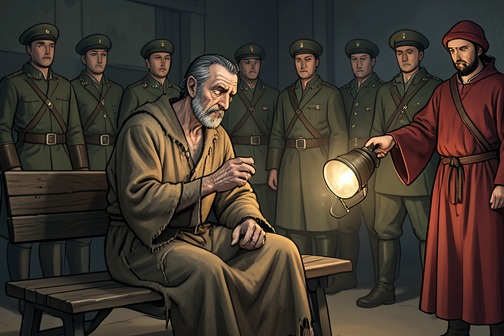
During a later campaign, [Kong Ming](entity:character-recall-character-kong-ming-8c46db85e103)’s health deteriorates as he continues to manage every detail of the army. He attempts a ritual to prolong his life, but [Wei Yan](entity:character-recall-character-wei-yan-111cde2d427f) rushes in during the ceremony and knocks over the life-prolonging lamp. Kong Ming recognizes that his time has come and gives [Jiang Wei](entity:character-recall-character-jiang-wei-fbfe0e69ffeb) his strategic writings, while assigning [Ma Dai](entity:character-recall-character-ma-dai-e590454007cb) and [Yang Yi](entity:character-recall-character-yang-yi-98559f77efc3) secret instructions for the succession and retreat.
Kong Ming dies at fifty-four, having failed to reunify the empire. Yang Yi conceals the death and withdraws the army as if the commander were still alive. A [wooden statue of Kong Ming](entity:object-recall-object-dfac31c751dc) frightens [Sima Yi](entity:character-recall-character-sima-yi-51d89f035795) into retreat, preserving the Shu force long enough to return safely.
During the retreat after Kong Ming’s death
Wei Yan’s Rebellion
[Wei Yan](entity:character-recall-character-wei-yan-111cde2d427f) resents [Yang Yi](entity:character-recall-character-yang-yi-98559f77efc3)’s authority and blocks the Shu army’s route, claiming that he will continue the campaign. He loses the support of his troops when He Ping denounces him for rebelling while [Kong Ming](entity:character-recall-character-kong-ming-8c46db85e103)’s body is barely cold. [Jiang Wei](entity:character-recall-character-jiang-wei-fbfe0e69ffeb) and Yang Yi consult a silk bag Kong Ming left behind.
When Wei Yan boasts that no one can kill him, [Ma Dai](entity:character-recall-character-ma-dai-e590454007cb) strikes him from behind, following Kong Ming’s instructions. The rebellion ends before it can divide the Shu army, and Wei Yan is buried with honors for his earlier service despite his final treachery.
After Kong Ming’s death
Cao Rui’s Extravagance
In [Wei](entity:organization-recall-organization-wei-c1fd480f445c), [Cao Rui](entity:character-recall-character-cao-rui-01105ecde087) embarks on extravagant building projects, exhausting labor and resources despite officials’ warnings. He orders the ancient [Dew Collection Bronze Bowl](entity:object-recall-object-c86576b1157e) removed from its monument for his own palace and ignores the disasters said to accompany its removal. His household life is equally violent: he replaces his empress and drives her to suicide.
The court’s deterioration coincides with renewed instability at the borders. Gongsun Yuan declares himself king in [Liaodong](entity:location-recall-location-liaodong-41f7027166de), and the resulting revolt draws [Sima Yi](entity:character-recall-character-sima-yi-51d89f035795) away from the capital, further strengthening the Sima family’s role in Wei’s survival.
AD 249
Sima Yi Seizes Power
[Cao Shuang](entity:character-recall-character-cao-shuang-3b067460c347)’s regency has marginalized [Sima Yi](entity:character-recall-character-sima-yi-51d89f035795), who pretends to be gravely ill for years. When Cao Shuang leaves the capital for a royal tomb ceremony, Sima Yi launches a coup and takes control of the palace, military, and administration. He persuades Cao Shuang to surrender by promising to spare his life.
Once Cao Shuang and his brothers are disarmed, Sima Yi executes them and their clan. The coup makes the Sima family the real rulers of [Wei](entity:organization-recall-organization-wei-c1fd480f445c), while leaving the Cao emperors increasingly powerless.
After Sima Yi’s coup
Jiang Wei’s Campaign With Xiahou Ba
[Xiahou Ba](entity:character-recall-character-xiahou-ba-bbfd46ba7daa) defects from [Wei](entity:organization-recall-organization-wei-c1fd480f445c) to Shu, and [Jiang Wei](entity:character-recall-character-jiang-wei-fbfe0e69ffeb) sees an opportunity to attack while [Sima Yi](entity:character-recall-character-sima-yi-51d89f035795) is consolidating power. The campaign begins with a clash at [Yangping Pass](entity:location-recall-location-b42f5929d2c4), where Jiang Wei’s forces use [Kong Ming](entity:character-recall-character-kong-ming-8c46db85e103)’s [ten-arrow bow machine](entity:object-recall-object-65fc3caf7bea). But Wei’s defenses and command structure prove stronger than Jiang Wei expects.
Jiang Wei’s invasion fails and he retreats to [Hanzhong](entity:location-recall-location-hanzhong-98f469177cc5). His repeated campaigns will later become an obsession, consuming Shu’s resources while the political leadership at home grows less capable.
AD 251
Sima Yi Dies
[Sima Yi](entity:character-recall-character-sima-yi-51d89f035795) falls ill and entrusts power to his sons, [Sima Shi](entity:character-recall-character-sima-shi-d05789e58110) and [Sima Zhao](entity:character-recall-character-sima-zhao-0602c4decc04). He dies after warning them to trust no one, leaving the Sima family firmly positioned to control [Wei](entity:organization-recall-organization-wei-c1fd480f445c). In [Wu](entity:organization-recall-organization-wu-68b510d2e7f9), [Sun Quan](entity:character-recall-character-sun-quan-c05815dcfd46) also dies the following year, ending the reign of the state’s founding ruler.
The two deaths reshape the balance among the kingdoms. The next generation inherits not only the territories but also the rivalries and institutional weaknesses that will bring the Three Kingdoms closer to collapse.
AD 253
Zhuge Ke Is Killed
After [Sun Quan](entity:character-recall-character-sun-quan-c05815dcfd46)’s death, [Zhuge Ke](entity:character-recall-character-zhuge-ke-7937813d458b) dominates the [Wu](entity:organization-recall-organization-wu-68b510d2e7f9) court and launches an unsuccessful campaign against [Wei](entity:organization-recall-organization-wei-c1fd480f445c). The failure, heavy casualties, and his oppressive rule turn officials against him. [Sun Jun](entity:character-recall-character-sun-jun-c70ebe4fa018) plots to kill him at a banquet, while omens and disturbances make Zhuge Ke increasingly anxious.
At the banquet, Sun Jun announces that the emperor has ordered a traitor’s execution and kills Zhuge Ke. His family is then slaughtered, and Sun Jun takes control. The episode repeats the pattern of court violence that has defined all three kingdoms.
AD 254
Sima Shi Deposes Cao Fang
[Cao Fang](entity:character-recall-character-cao-fang-da46c8fe0ca7) and his allies plot against [Sima Shi](entity:character-recall-character-sima-shi-d05789e58110), writing a secret appeal in the emperor’s blood on a [dragon-phoenix shirt](entity:object-recall-object-bbeaad6fabfa). Sima Shi discovers the plan, executes the conspirators and forces the empress to commit suicide. He then accuses Cao Fang of being unfit to rule.
Cao Fang is deposed, and [Cao Mao](entity:character-recall-character-cao-mao-ef38e0498383) is installed as a puppet emperor. Sima Shi’s control over the throne becomes explicit, while the Cao family’s remaining authority shrinks to ceremony.
AD 255
The Rebellions Against Sima Shi
[Wen Qin](entity:character-recall-character-wen-qin-f8a9debb900d) and [Guanqiu Jian](entity:character-recall-character-guanqiu-jian-6977f9e0fd07) rebel against the Sima brothers, condemning their usurpation of power. [Sima Shi](entity:character-recall-character-sima-shi-d05789e58110) leads the campaign despite suffering from a painful eye condition. [Wen Yang](entity:character-recall-character-wen-yang-95dd3a420b38)’s daring attack briefly throws the [Wei](entity:organization-recall-organization-wei-c1fd480f445c) camp into confusion, but the rebellion is eventually crushed.
Sima Shi dies soon afterward, and [Sima Zhao](entity:character-recall-character-sima-zhao-0602c4decc04) inherits his authority. The transfer keeps the Sima family in control but deepens the instability of Wei, where rebellion and succession crises repeatedly threaten the regime.
After Sima Shi’s death
Jiang Wei’s Victory at the Tao River
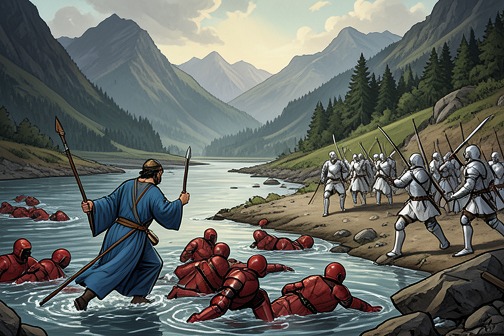
[Jiang Wei](entity:character-recall-character-jiang-wei-fbfe0e69ffeb) again invades [Wei](entity:organization-recall-organization-wei-c1fd480f445c), hoping to exploit the confusion after [Sima Shi](entity:character-recall-character-sima-shi-d05789e58110)’s death. He defeats Wang Jing’s forces at the [River Tao](entity:location-recall-location-3d34fd898fa4) and advances toward [Didao](entity:location-recall-location-e3bf5285e83b). [Deng Ai](entity:character-recall-character-deng-ai-2bf80191c151) and [Chen Tai](entity:character-recall-character-chen-tai-c54cc0110b30) organize a counterattack, lure Jiang Wei into an ambush, and force him to retreat to [Hanzhong](entity:location-recall-location-hanzhong-98f469177cc5).
The Shu court celebrates the initial victory but has little to show for the campaign after the retreat. Jiang Wei’s ambition to complete [Kong Ming](entity:character-recall-character-kong-ming-8c46db85e103)’s work increasingly exposes the kingdom to losses it cannot easily replace.
AD 257–258
Zhuge Dan’s Rebellion
When [Jia Chong](entity:character-recall-character-jia-chong-14f1c3cea825) tests [Zhuge Dan](entity:character-recall-character-zhuge-dan-2fbfbe1aaeb5)’s loyalty to the Sima regime, Zhuge Dan declares that he would fight to defend the [Wei](entity:organization-recall-organization-wei-c1fd480f445c) throne. [Sima Zhao](entity:character-recall-character-sima-zhao-0602c4decc04) orders his arrest, prompting Zhuge Dan to seize the provincial capital and rebel. [Wu](entity:organization-recall-organization-wu-68b510d2e7f9) sends troops to support him, but they prove unreliable.
Sima Zhao besieges [Shouchun](entity:location-recall-location-shouchun-8493fe3c65aa), where starvation and defections weaken the defenders. Zhuge Dan kills those who complain, further alienating his men. The city falls, Zhuge Dan is killed, and Sima Zhao consolidates his hold over Wei.
AD 258
Sun Chen Is Killed
[Sun Chen](entity:character-recall-character-sun-chen-95c778c62c0d) dominates [Wu](entity:organization-recall-organization-wu-68b510d2e7f9) after [Sun Jun](entity:character-recall-character-sun-jun-c70ebe4fa018)’s death, and his arbitrary executions and failed military ventures provoke resentment. Emperor [Sun Liang](entity:character-recall-character-sun-liang-83410aade848) tries to overthrow him, but Sun Chen discovers the plot, deposes Sun Liang, and installs [Sun Xiu](entity:character-recall-character-sun-xiu-f48d1c56cbde) as ruler.
Sun Xiu later conspires with [Ding Feng](entity:character-recall-character-ding-feng-4eeddeeaaf23) and [Zhang Bu](entity:character-recall-character-zhang-bu-7037c55e5604) to kill Sun Chen at a palace banquet. When a fire provides the signal, Sun Chen is seized and executed. Sun Xiu takes control, but the disorder in Wu leaves the kingdom vulnerable to the pressure of [Wei](entity:organization-recall-organization-wei-c1fd480f445c) and Shu.
After Deng Ai’s defeat of Jiang Wei
Jiang Wei Is Recalled Again
[Jiang Wei](entity:character-recall-character-jiang-wei-fbfe0e69ffeb) wins an engagement against [Deng Ai](entity:character-recall-character-deng-ai-2bf80191c151) and Sima Wang through tactics learned from [Kong Ming](entity:character-recall-character-kong-ming-8c46db85e103), but the court’s eunuch [Huang Hao](entity:character-recall-character-huang-hao-a290a8ae0df0) spreads rumors that Jiang Wei intends to defect. The second ruler recalls him from the campaign just as he is gaining an advantage.
Jiang Wei confronts the ruler and demands that Huang Hao be executed, but the ruler refuses, calling the eunuch a personal servant. Jiang Wei withdraws to establish military colonies at [Tazhong](entity:location-recall-location-824a741a0388), hoping to preserve the army and prepare for another campaign away from the corrupt court.
AD 260
Cao Mao Is Killed
[Cao Mao](entity:character-recall-character-cao-mao-ef38e0498383) resents [Sima Zhao](entity:character-recall-character-sima-zhao-0602c4decc04)’s domination and consults loyal officials about overthrowing him. When they warn that the plan is unlikely to succeed, Cao Mao nevertheless rides from the palace with a small group of attendants and confronts [Jia Chong](entity:character-recall-character-jia-chong-14f1c3cea825)’s forces.
Jia Chong directs [Cheng Ji](entity:character-recall-character-cheng-ji-2850ad3e6ed7) to kill the emperor, and Cheng Ji strikes Cao Mao down beside his carriage. Sima Zhao pretends to grieve and executes Cheng Ji and his clan, but the murder makes clear that the Sima family now rules by force rather than by even the appearance of imperial consent.
After Cao Mao’s death
Jiang Wei Sees Through a False Defection
[Jiang Wei](entity:character-recall-character-jiang-wei-fbfe0e69ffeb) resumes the campaign against [Wei](entity:organization-recall-organization-wei-c1fd480f445c), and Wang Guan pretends to defect in order to infiltrate the Shu forces. Jiang Wei recognizes the scheme and feeds [Deng Ai](entity:character-recall-character-deng-ai-2bf80191c151) false information, drawing him into an ambush. Deng Ai is defeated, but the Shu army suffers heavy losses and again withdraws to [Hanzhong](entity:location-recall-location-hanzhong-98f469177cc5).
[Sima Zhao](entity:character-recall-character-sima-zhao-0602c4decc04) rewards Deng Ai rather than punishing him, while Jiang Wei’s victory cannot reverse the broader weakening of Shu. The repeated campaigns leave the kingdom increasingly exposed to the invasion that will eventually destroy it.
AD 263
Deng Ai Crosses the Mountains
The second ruler ignores reports of [Wei](entity:organization-recall-organization-wei-c1fd480f445c)’s advance, trusting the assurances of [Huang Hao](entity:character-recall-character-huang-hao-a290a8ae0df0) and a shaman. [Sima Zhao](entity:character-recall-character-sima-zhao-0602c4decc04) sends [Zhong Hui](entity:character-recall-character-zhong-hui-51f313b5c5a0) and [Deng Ai](entity:character-recall-character-deng-ai-2bf80191c151) against Shu. Zhong Hui attacks the main defenses, while Deng Ai takes a perilous mountain route through [Heaven-Scraping Mountain](entity:location-recall-location-0aca5334eb6b), crossing cliffs that the Shu believe impassable.
Deng Ai’s force emerges behind the defenses and captures [Jiangyou](entity:location-recall-location-3a375ce59d98). The surprise route breaks the strategic barrier protecting the heart of Shu and gives the Wei army a path toward [Chengdu](entity:location-recall-location-chengdu-d64febd83198).
During the fall of Shu
Liu Chen’s Martyrdom
After the defeat at [Mianzhu](entity:location-recall-location-e289777ee8c2), [Liu Shan](entity:character-recall-character-liu-shan-68e55bf8ee43)’s court debates whether to flee, seek [Wu](entity:organization-recall-organization-wu-68b510d2e7f9)’s help, or surrender. [Qiao Zhou](entity:character-recall-character-qiao-zhou-7b10ac965b7f) argues that surrender is the least disastrous course. [Liu Chen](entity:character-recall-character-liu-chen-6db120639ed3) denounces the decision, calling surrender a disgrace to the dynasty and insisting that the family should die rather than abandon the ancestral line.
When Liu Shan orders him out, Liu Chen returns to the ancestral shrine, kills his wife and sons, and then takes his own life before the image of [Xuande](entity:character-recall-character-xuande-65aa739cb0b7). His act of defiance stands in stark contrast to the court’s capitulation.
AD 263
Shu Surrenders to Wei
[Liu Shan](entity:character-recall-character-liu-shan-68e55bf8ee43) sends the surrender document and seal to [Deng Ai](entity:character-recall-character-deng-ai-2bf80191c151). [Chengdu](entity:location-recall-location-chengdu-d64febd83198) opens its gates, and Deng Ai’s troops enter under orders to protect the people. [Jiang Wei](entity:character-recall-character-jiang-wei-fbfe0e69ffeb) receives the order to surrender as well but privately encourages [Zhong Hui](entity:character-recall-character-zhong-hui-51f313b5c5a0) to consider restoring the Han and turns the [Wei](entity:organization-recall-organization-wei-c1fd480f445c) commanders against one another.
Shu’s political independence ends, though Jiang Wei continues plotting against the victors. The collapse follows years of corruption, exhausted campaigns, and the second ruler’s failure to heed warnings about [Huang Hao](entity:character-recall-character-huang-hao-a290a8ae0df0) and the approaching Wei armies.
After the fall of Shu, AD 264
Zhong Hui’s Revolt
[Sima Zhao](entity:character-recall-character-sima-zhao-0602c4decc04) arrests [Deng Ai](entity:character-recall-character-deng-ai-2bf80191c151), using suspicions of rebellion to remove the victorious commander. [Zhong Hui](entity:character-recall-character-zhong-hui-51f313b5c5a0) takes command of Shu and, encouraged by [Jiang Wei](entity:character-recall-character-jiang-wei-fbfe0e69ffeb), begins plotting against Sima Zhao. He invokes a supposed last letter from the queen mother and pressures his officers to support a revolt.
The plan is exposed when one of the officers warns the imprisoned commanders. They break free during the ensuing disorder and attack Zhong Hui’s men. Zhong Hui is killed, and Jiang Wei, seeing the restoration of the Han has failed, takes his own life. Deng Ai is also murdered by his enemies while being transported as a prisoner.
AD 265
Sima Yan Founds Jin
[Sima Zhao](entity:character-recall-character-sima-zhao-0602c4decc04) dies after receiving the title of king of [Jin](entity:organization-recall-organization-eb6418983da1), and his son [Sima Yan](entity:character-recall-character-sima-yan-b4945ac2155d) inherits his power. Sima Yan concludes that the precedents of [Cao Pi](entity:character-recall-character-cao-pi-2869caa61a42)’s abdication allow him to replace the Cao family. He confronts [Cao Huan](entity:character-recall-character-cao-huan-137243231d6f) and pressures him to surrender the throne.
Cao Huan abdicates, and Sima Yan becomes emperor of the [Jin dynasty](entity:time-recall-time-jin-dynasty-1f32b0419465). The [Wei](entity:organization-recall-organization-wei-c1fd480f445c) dynasty ends, leaving [Wu](entity:organization-recall-organization-wu-68b510d2e7f9) as the last independent kingdom. The cycle of dynastic replacement has continued, but the empire is not yet reunified.
AD 278
Yang Hu Recommends Du Yu
In [Wu](entity:organization-recall-organization-wu-68b510d2e7f9), [Sun Hao](entity:character-recall-character-sun-hao-b3258ad6ac5b)’s tyranny deepens, while [Yang Hu](entity:character-recall-character-yang-hu-883c2fe38b41) and the Wu commander [Lu Kang](entity:character-recall-character-lu-kang-156ff7234623) maintain a respectful personal relationship across the frontier. Yang Hu urges the [Jin](entity:organization-recall-organization-eb6418983da1) court to wait until internal discontent makes an invasion possible. When he falls ill, he recommends [Du Yu](entity:character-recall-character-du-yu-1db1ca9c0622) as the commander who should lead the eventual campaign.
Yang Hu dies before the invasion begins, mourned by people on both sides of the border. His reputation for restraint and humane government contrasts with Sun Hao’s brutality and helps shape the policy that will bring Wu to surrender.
AD 280
Jin Conquers Wu
[Du Yu](entity:character-recall-character-du-yu-1db1ca9c0622) and other [Jin](entity:organization-recall-organization-eb6418983da1) commanders advance against [Wu](entity:organization-recall-organization-wu-68b510d2e7f9) as [Sun Hao](entity:character-recall-character-sun-hao-b3258ad6ac5b)’s oppressive rule leaves the kingdom politically brittle. Sun Hao attempts to block the Jin fleet with iron chains and spikes across the river, but [Wang Jun](entity:character-recall-character-wang-jun-51ede3381188)’s fire ships melt the chains and clear the passage. Cities fall rapidly, and the Wu army disintegrates.
Sun Hao surrenders and is treated with courtesy by [Sima Yan](entity:character-recall-character-sima-yan-b4945ac2155d). The fall of Wu reunites the empire under Jin and brings the [Three Kingdoms period](entity:time-recall-time-three-kingdoms-period-c2a9f333c9b8) to an end. The novel closes by returning to its governing pattern: dynasties rise from disorder, but power and prosperity can decay into another cycle of collapse.