Skull of Old Major
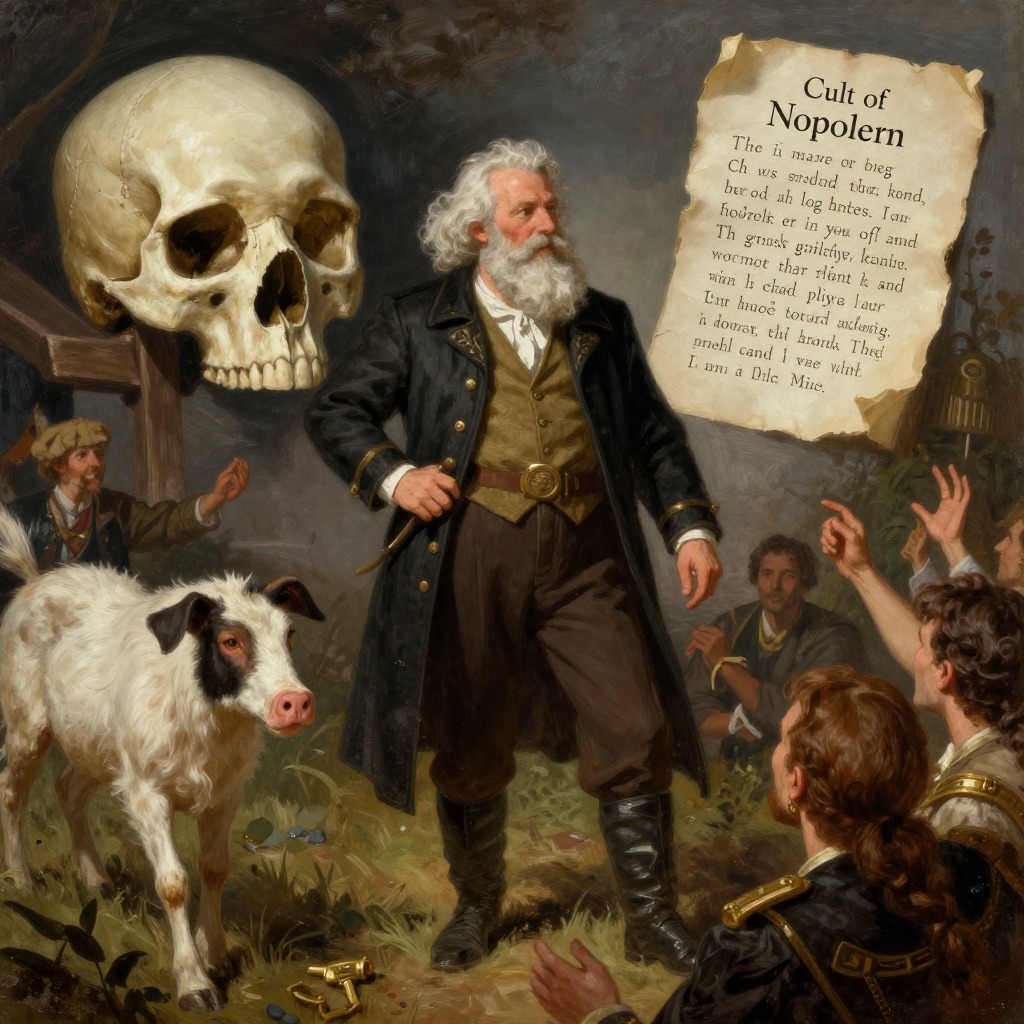
Animal FarmAfter the expulsion of Snowball, the pigs instituted a new Sunday ritual. The skull of Old Major, now clean of flesh, was disinterred from the orchard and set up on a stump at the foot of the flagstaff, beside the gun. Every Sunday morning, after the flag was hoisted, the animals were required to file past the skull in a reverent manner before entering the big barn to receive their orders for the week. The skull, once the head of the founder of Animalism, was transformed into a ceremonial object that enforced reverence for the new order. Its placement next to the gun, a relic of the Battle of the Cowshed, linked the memory of the Rebellion to the authority of the pigs.
Years later, as Napoleon sought to normalize relations with human farmers, the skull was buried again. During a visit from neighboring farmers, Napoleon announced the suppression of what he called a "very strange custom, whose origin was unknown" — the Sunday morning march past a boar's skull nailed to a post in the garden. The skull had already been buried. This act was part of a broader rebranding: the green flag lost its white hoof and horn, the term "Comrade" was suppressed, and the farm's name was changed back to the Manor Farm. The erasure of the skull was a deliberate step in rewriting history, removing a physical reminder of the revolutionary origins that the pigs now found inconvenient.
The skull's journey from burial to display to reburial mirrors the larger pattern of historical revisionism on Animal Farm. Originally a symbol of Old Major's dream of a free animal society, it was co-opted into a ritual of obedience. Its eventual removal from sight completed the cycle: the memory of the Rebellion was no longer needed. The animals, many of whom had been born after the Rebellion and knew it only as a dim tradition, accepted the change without protest. The skull, like the Seven Commandments whose text had been quietly altered, became a physical trace of a truth that the pigs preferred to bury.