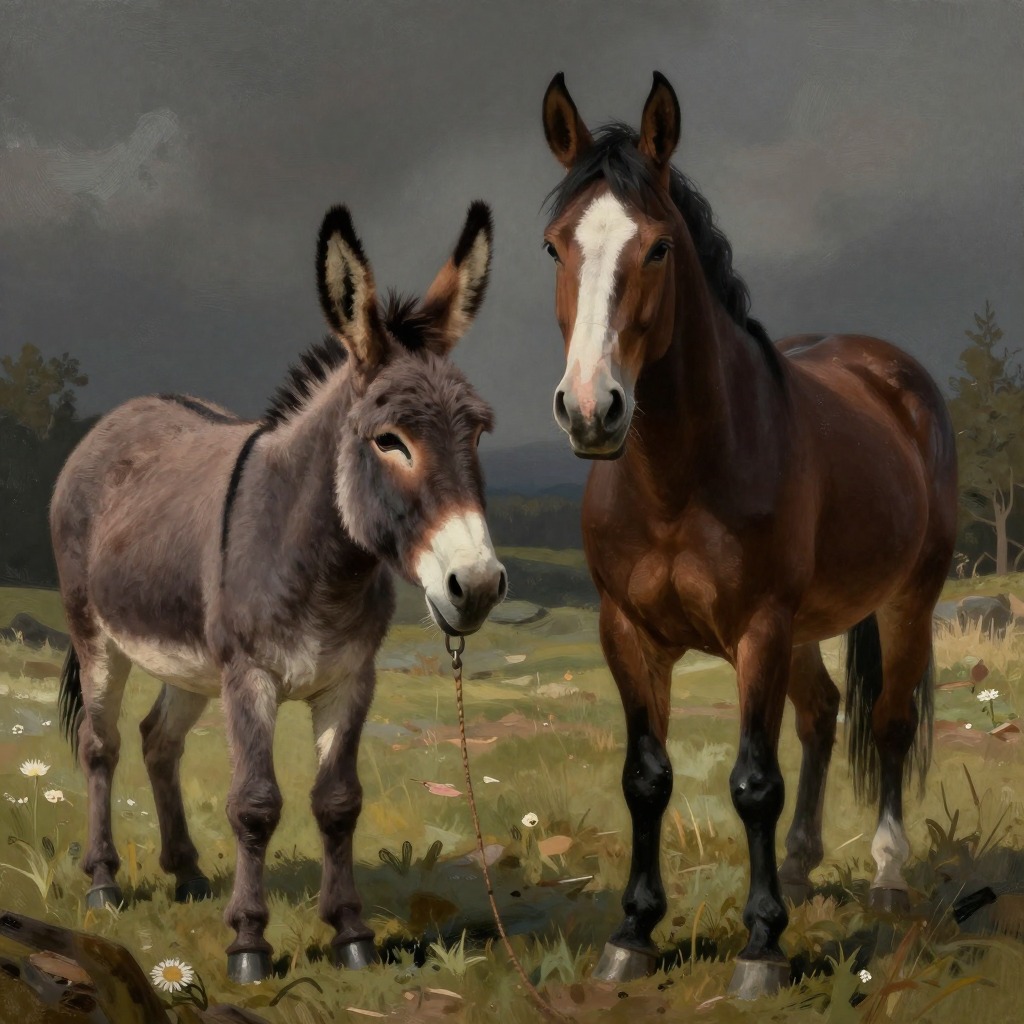
Small Paddock
Animal FarmThe Small Paddock, a field lying beyond the orchard on Animal Farm, is a space whose fate encapsulates the regime's progressive betrayal of its own founding ideals. First proposed as a home of rest for animals who were past work, it was repeatedly promised to the aging laborers who had given their strength to the farm, only to be repurposed for the exclusive benefit of the pigs. Its transformation from a symbol of promised security to a source of the pigs' luxury marks one of the most concrete and bitter reversals in the story of the farm.
Identity and Early Promise
The Small Paddock is first mentioned during the early, relatively democratic period of Animal Farm, when the Sunday Meetings still allowed debate. It was resolved—a thing no one could object to in itself—to set aside the small paddock behind the orchard as a home of rest for animals who were past work. This resolution, passed without opposition, represented the animals' collective commitment to caring for those who had spent their lives in labor. The paddock was thus established in the community's imagination as a place of future comfort and dignity, a reward for a lifetime of service.
The Promise of Retirement
The promise of the Small Paddock as a retirement haven was kept alive for years, particularly for the horse Boxer, whose immense strength and unwavering dedication made him the farm's most valuable worker. As Boxer's twelfth birthday—the official retiring age for horses—approached, the subject was discussed more and more. It was rumored that a corner of the large pasture was to be fenced off and turned into a grazing-ground for superannuated animals. For a horse, it was said, the pension would be five pounds of corn a day and, in winter, fifteen pounds of hay, with a carrot or possibly an apple on public holidays. Boxer himself looked forward to this retirement, hoping that Benjamin, who was also growing old, might be allowed to retire at the same time and be a companion to him. The Small Paddock thus became the focus of Boxer's final hopes, the place where he imagined he would finally rest after a life of relentless toil.
The Betrayal: Barley for the Pigs
The promise was broken without ceremony. After the pigs' drunken revelry following the discovery of whisky in the farmhouse cellars, Napoleon gave orders that the small paddock beyond the orchard was to be ploughed up. It was given out that the pasture was exhausted and needed re-seeding, but it soon became known that Napoleon intended to sow it with barley. This was not for the common good. The barley was reserved exclusively for the pigs, who were soon receiving a daily ration of a pint of beer, with half a gallon for Napoleon himself, served in the Crown Derby soup tureen. The Small Paddock, once envisioned as a sanctuary for the worn-out and the elderly, was transformed into a barley field to supply the pigs with alcohol. The retirement home was never built; no animal ever actually retired on the promised pension.
Narrative Significance
The Small Paddock functions as a concrete measure of the regime's corruption. Its initial dedication as a home of rest reflected the egalitarian and compassionate spirit of the early Rebellion. Its later conversion into a barley field for the pigs' beer demonstrates the complete abandonment of that spirit. The paddock is not merely a piece of land; it is a promise made and broken, a symbol of the pigs' self-serving priorities. The fact that Boxer, the most loyal and hardworking of all the animals, was the one most looking forward to retiring there, and that he died before he could ever reach it, makes the betrayal of the Small Paddock one of the most poignant and damning details in the narrative of Animal Farm's decline.