The Rebellion
Animal FarmThe Rebellion is the sudden, successful overthrow of the human farmer Mr. Jones by the animals of Manor Farm, an event that transforms the farm into an animal-run collective and establishes the principles of Animalism. Though long prepared for in secret, the uprising itself was unplanned, triggered by a single act of neglect and cruelty, and it succeeded almost before the animals knew what was happening. This event marks the decisive break from human tyranny and sets the stage for the entire narrative of Animal Farm, including the subsequent struggles to build and then defend the new society.
Causes and Background
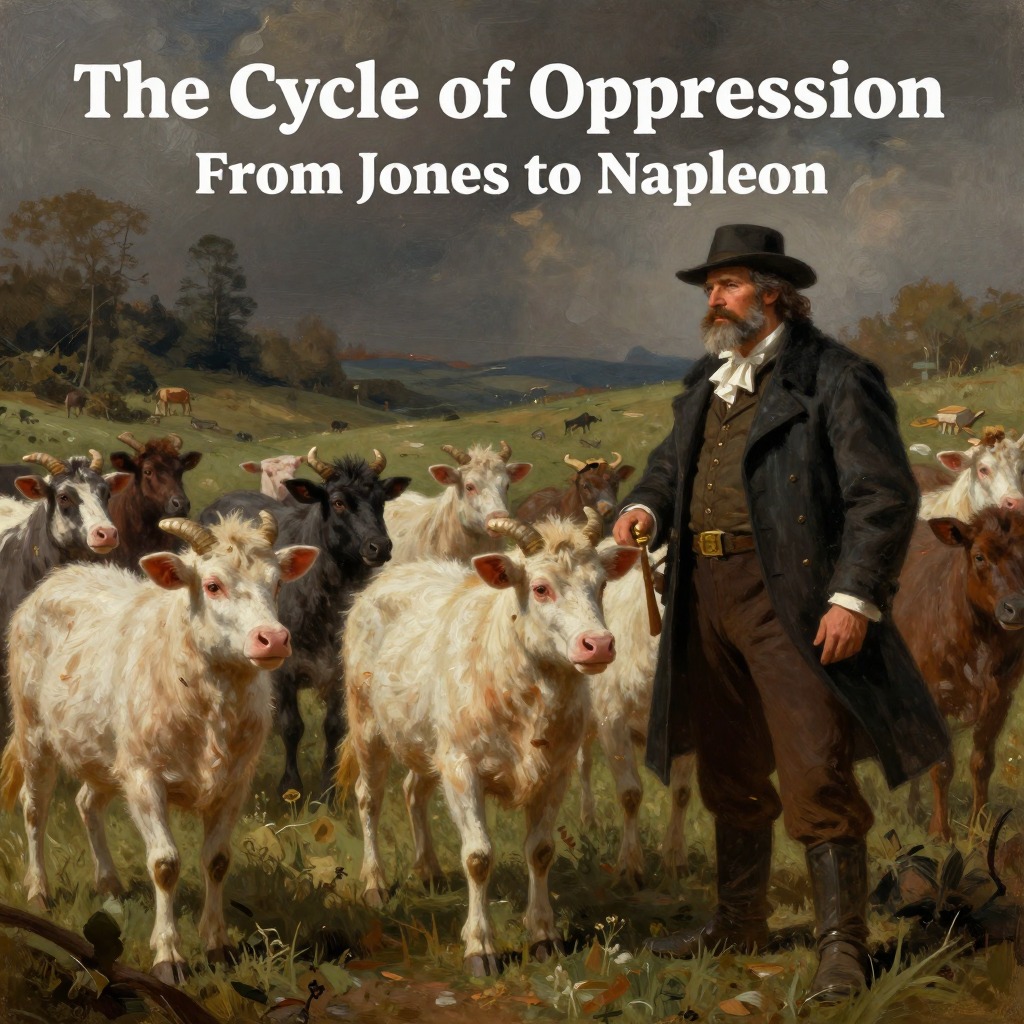
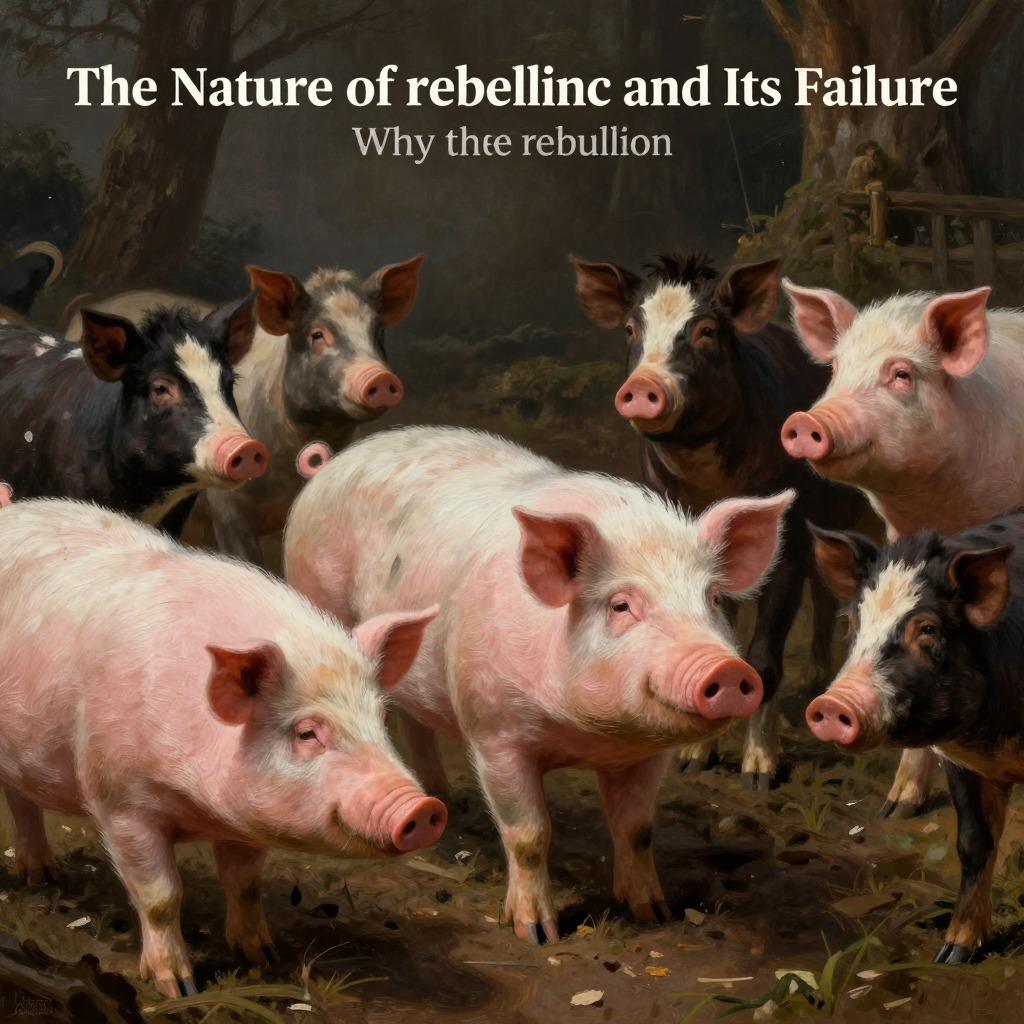
The Rebellion did not occur in a vacuum. Its ideological foundation was laid by Old Major, the prize Middle White boar, who, three nights before his death, delivered a powerful speech to all the animals in the big barn. He argued that their miserable, laborious, and short lives were the result of human tyranny, declaring that "Man is the only real enemy we have" and that the root cause of all their problems was that "nearly the whole of the produce of our labour is stolen from us by human beings." He called for a rebellion, teaching the animals the song "Beasts of England" and the principle that "All animals are comrades." After Old Major died peacefully in his sleep, the pigs—pre-eminently Snowball, Napoleon, and Squealer—elaborated his teachings into a complete system of thought called Animalism. They held secret meetings in the barn several nights a week, expounding its principles, though they initially met with much stupidity and apathy from the other animals. The immediate material cause was the deteriorating condition of the farm under Mr. Jones, who had become a disheartened drunkard, neglecting his duties, leaving his men idle and dishonest, and the animals underfed. On Midsummer's Eve, Mr. Jones got so drunk in Willingdon that he did not return until midday on Sunday, and the men, after milking the cows, went out rabbiting without feeding the animals. By evening, the animals were still unfed and could stand it no longer.
What Happens
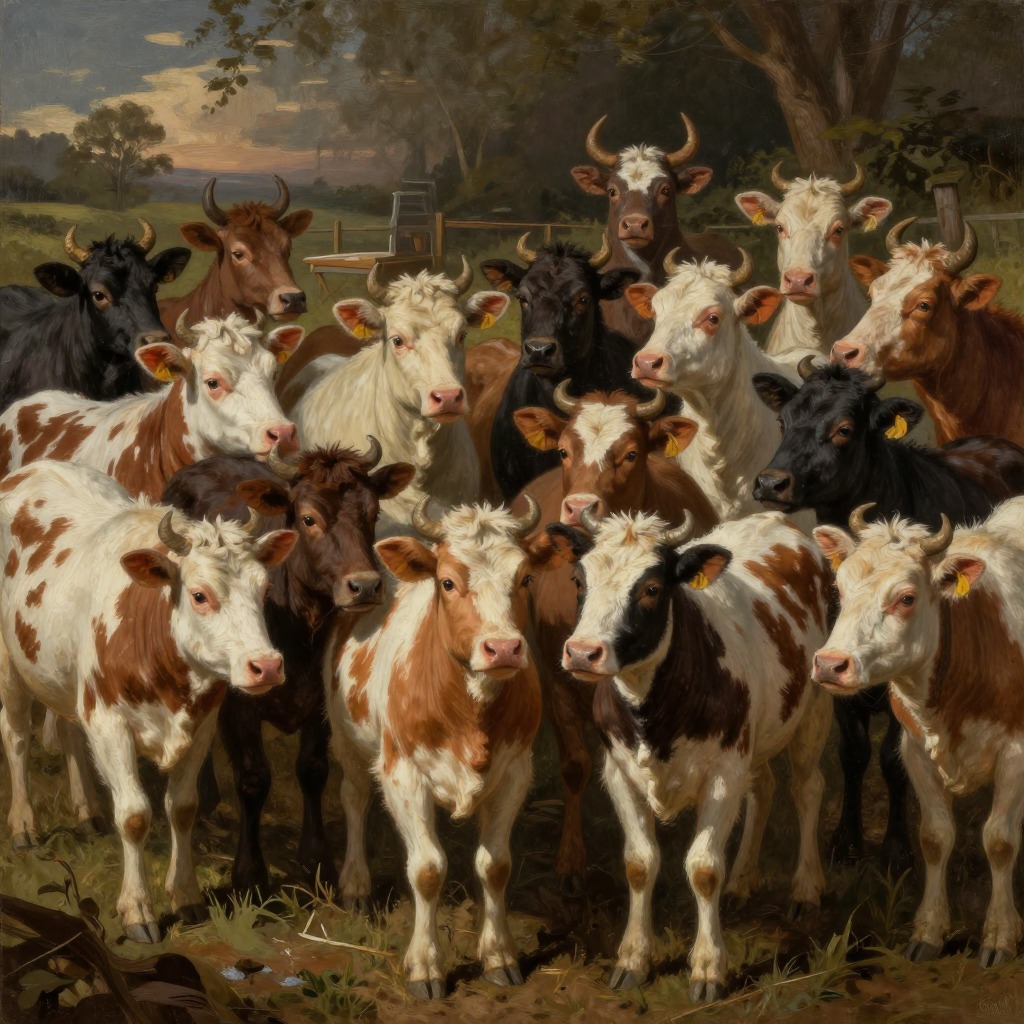
The Rebellion began when one of the cows broke in the door of the store-shed with her horn, and all the animals began to help themselves from the bins. Mr. Jones woke up and, together with his four men, rushed into the store-shed with whips, lashing out in all directions. This was more than the hungry animals could bear. With one accord, though nothing of the kind had been planned beforehand, they flung themselves upon their tormentors. Jones and his men, suddenly finding themselves butted and kicked from all sides, were frightened almost out of their wits by this unprecedented uprising. After only a moment or two, they gave up trying to defend themselves and took to their heels. A minute later, all five of them were in full flight down the cart-track that led to the main road, with the animals pursuing them in triumph. Mrs. Jones, seeing what was happening from the bedroom window, hurriedly flung a few possessions into a carpet bag and slipped out of the farm by another way, with Moses the raven flapping after her. The animals chased Jones and his men out onto the road and slammed the five-barred gate behind them. The Rebellion had been successfully carried through: Jones was expelled, and the Manor Farm was theirs.
Immediate Aftermath and Symbolic Acts
For the first few minutes, the animals could hardly believe in their good fortune. Their first act was to gallop in a body right round the boundaries of the farm to make sure no human being was hiding anywhere. Then they raced back to the farm buildings to wipe out the last traces of Jones's hated reign. The harness-room was broken open, and the bits, nose-rings, dog-chains, and the cruel knives used for castrating pigs and lambs were all flung down the well. The reins, halters, blinkers, degrading nosebags, and whips were thrown onto a rubbish fire. Snowball also threw onto the fire the ribbons with which the horses' manes and tails had been decorated on market days, declaring that ribbons should be considered as clothes, which are the mark of a human being. Boxer fetched his small straw hat and flung it onto the fire as well. Napoleon then led them back to the store-shed and served out a double ration of corn to everybody, with two biscuits for each dog. They sang "Beasts of England" from end to end seven times running and then settled down for the night, sleeping as they had never slept before. The next morning, they made a tour of inspection of the whole farm, surveying with speechless admiration the ploughland, the hayfield, the orchard, the pool, and the spinney, hardly believing it was all their own. They filed back to the farm buildings and, after a moment of hesitation, entered the farmhouse, tiptoeing from room to room in awe of the unbelievable luxury. A unanimous resolution was passed on the spot that the farmhouse should be preserved as a museum, and that no animal must ever live there. The pigs then revealed that they had taught themselves to read and write, and Snowball painted out "Manor Farm" from the five-barred gate and in its place painted "Animal Farm." The principles of Animalism were reduced to the Seven Commandments, which were inscribed on the end wall of the big barn.
Consequences and Legacy
The Rebellion had profound and lasting consequences. It immediately transformed the animals' lives: they worked harder than ever before but were happy, as every mouthful of food was now truly their own. The harvest was the biggest the farm had ever seen, and the work of the farm went like clockwork. The news of the Rebellion spread across half the county, carried by pigeons sent out by Snowball and Napoleon, and a wave of rebelliousness ran through the countryside. The human farmers, Frederick and Pilkington, were thoroughly frightened and spread lies about the animals practicing cannibalism and torturing one another. The Rebellion also set in motion the internal dynamics that would eventually corrupt the revolution. The pigs, who had assumed leadership, began to claim privileges, such as the milk and apples being reserved for them alone, arguing it was necessary for their health as brainworkers. The memory of the Rebellion was later used by Napoleon to justify the abolition of the Sunday-morning Meetings, the execution of animals accused of being traitors, and the eventual abandonment of the principles of Animalism. The song "Beasts of England," which had been the anthem of the Rebellion, was later abolished by Napoleon on the grounds that the Rebellion was now completed. In the final years of the farm, the Rebellion became a dim tradition for animals born after it, and the farm's name was changed back to Manor Farm. Yet, even in the face of hunger and hardship, the animals never gave up hope, and the memory of the Rebellion—the expulsion of Jones, the writing of the Seven Commandments, the great battles—remained a source of imperishable pride.