Voluntary Sunday work
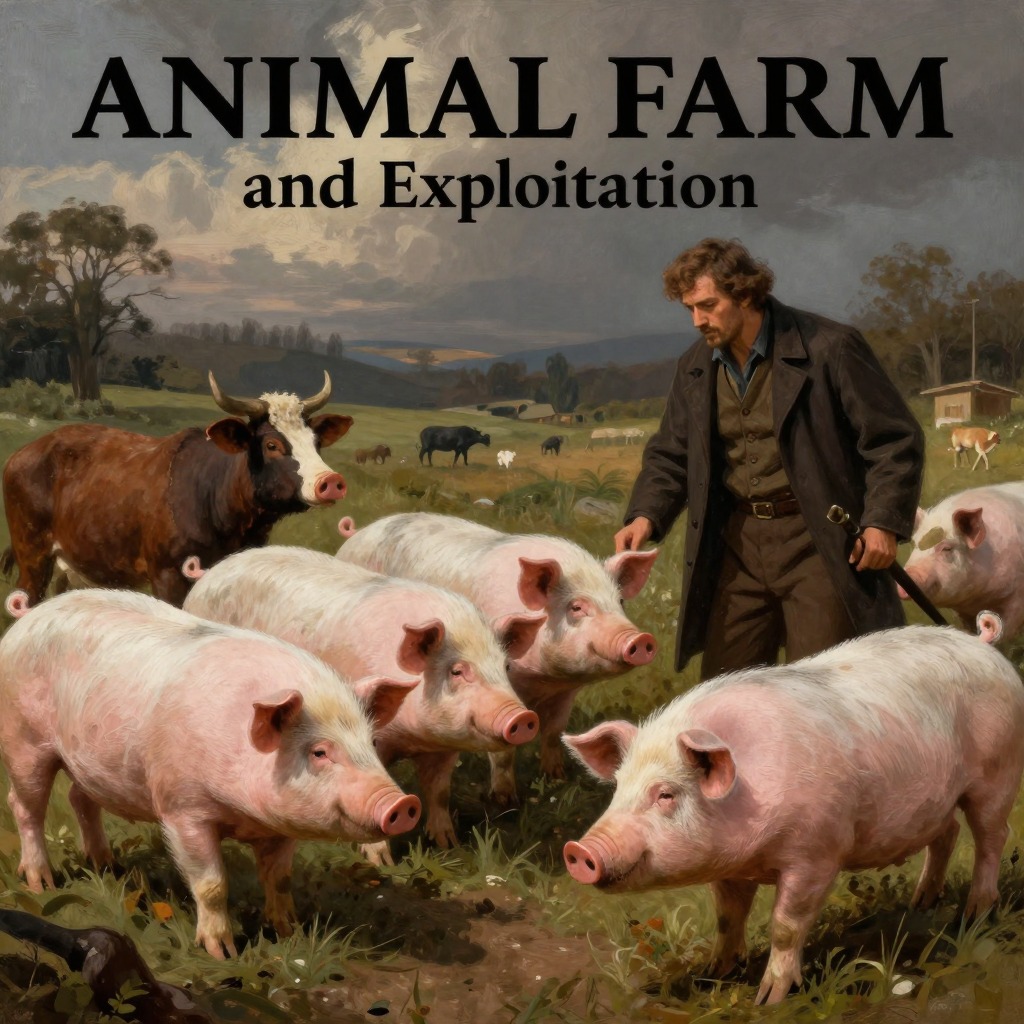
Animal FarmVoluntary Sunday work was a policy introduced by Napoleon in August of the first year after the Rebellion, requiring animals to work on Sunday afternoons under the threat of a half-ration penalty for absence, thereby transforming a day of rest into compulsory labor while maintaining the fiction of voluntariness.
Origin and Announcement
Throughout the spring and summer after the Rebellion, the animals worked a sixty-hour week, but in August Napoleon announced that there would be work on Sunday afternoons as well. This work was strictly voluntary, but any animal who absented himself from it would have his rations reduced by half. The policy was thus framed as a choice while carrying a coercive penalty that made refusal effectively impossible for hungry animals. The announcement came during a period when the farm was already straining to meet its production goals: the harvest was less successful than the previous year, and two fields that should have been sown with roots in the early summer remained unploughed because the work had not been completed in time, making a hard winter foreseeable.
Enforcement and Consequences
The penalty of reduced rations was a severe threat on a farm where food was already scarce. The policy operated alongside other measures that steadily increased the animals' workload: Boxer, the cart-horse, had already made arrangements with a cockerel to call him half an hour earlier than anyone else, and after the introduction of Sunday work he extended this to three-quarters of an hour. The animals' labor was further intensified by the rebuilding of the windmill, which required collecting much larger quantities of stone after the first structure was destroyed. Squealer made speeches on the joy of service and the dignity of labor, but the animals found more inspiration in Boxer's strength and his never-failing cry of "I will work harder!"
Ideological Justification
The policy was justified through the same rhetorical framework used for other sacrifices. Squealer argued that the pigs, as brainworkers, needed special privileges to preserve their health, and that without them Jones would come back. The threat of Jones's return was the ultimate argument that silenced any objection. The animals, who had no written record of earlier resolutions against such practices, were persuaded that their memories were mistaken. The policy thus became part of a broader pattern in which the pigs' decisions, however burdensome, were accepted because the alternative—the return of human beings—was unthinkable.
Place in the Farm's Transformation
Voluntary Sunday work was one of several steps that gradually eroded the distinction between the animals' revolutionary ideals and the old human regime. The policy was introduced alongside the abolition of Sunday-morning Meetings, the establishment of a special committee of pigs to decide all questions of farm policy, and the requirement that animals file past Old Major's skull before entering the barn. Over time, the farm's prosperity increased without making the animals themselves any richer, and the pigs and dogs alone benefited. The policy of Sunday work, like the later Spontaneous Demonstrations, served to keep the animals constantly occupied, leaving them little time for speculation or protest. By the end, the animals worked longer hours and received less food than in Jones's day, yet they continued to believe that they were free because they worked for themselves—a belief sustained by the very policies that made their labor unending.