Mrs. Barry
Anne of Green GablesMrs. Barry, the mother of Diana Barry and mistress of Orchard Slope, is introduced as a tall, black-eyed, black-haired woman with a very resolute mouth and a reputation for being very strict with her children. She embodies the conventional, protective, and somewhat suspicious attitudes of Avonlea's established families, making her an early antagonist to the imaginative and impulsive Anne Shirley. Her initial judgment of Anne is harsh and unforgiving, yet her eventual gratitude and reconciliation mark a crucial turning point in Anne's integration into the community, demonstrating the power of genuine action to overcome prejudice.
Identity and First Impressions
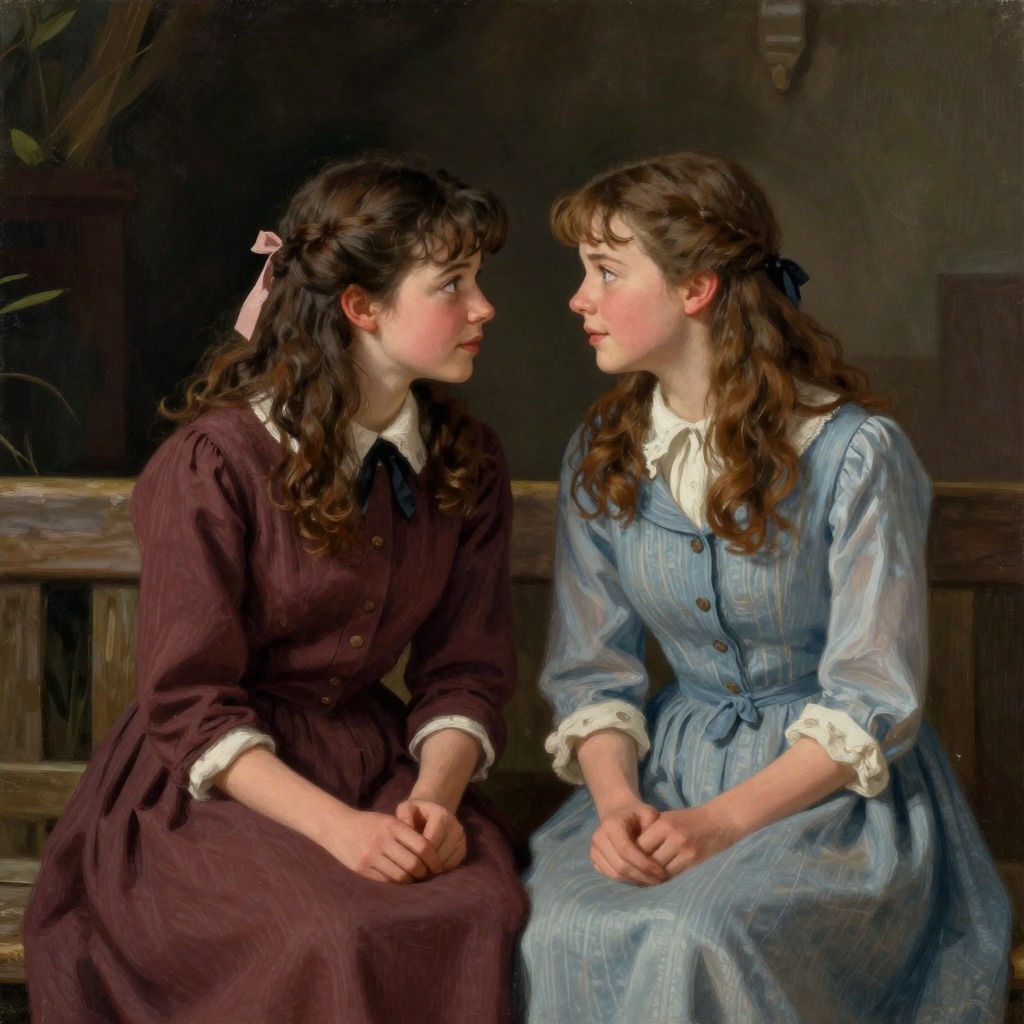
Mrs. Barry is first seen when Marilla Cuthbert brings Anne to Orchard Slope to introduce her to Diana. She comes to the kitchen door in answer to Marilla's knock, and Anne, tremulous and excited, immediately insists that her name is "Anne spelled with an E." Mrs. Barry, not hearing or not comprehending, merely shakes hands and asks Anne how she is, to which Anne gravely replies, "I am well in body although considerable rumpled up in spirit, thank you ma'am." Mrs. Barry is described as having a very resolute mouth and the reputation of being very strict with her children. When the little girls go out to the garden, she confides to Marilla that Diana reads too much and that she is glad Diana has the prospect of a playmate, hoping it will take her more out-of-doors. This initial encounter establishes Mrs. Barry as a conventional, no-nonsense mother who values practicality and proper behavior, setting the stage for her conflict with the unconventional Anne.
The Currant Wine Incident and Its Aftermath
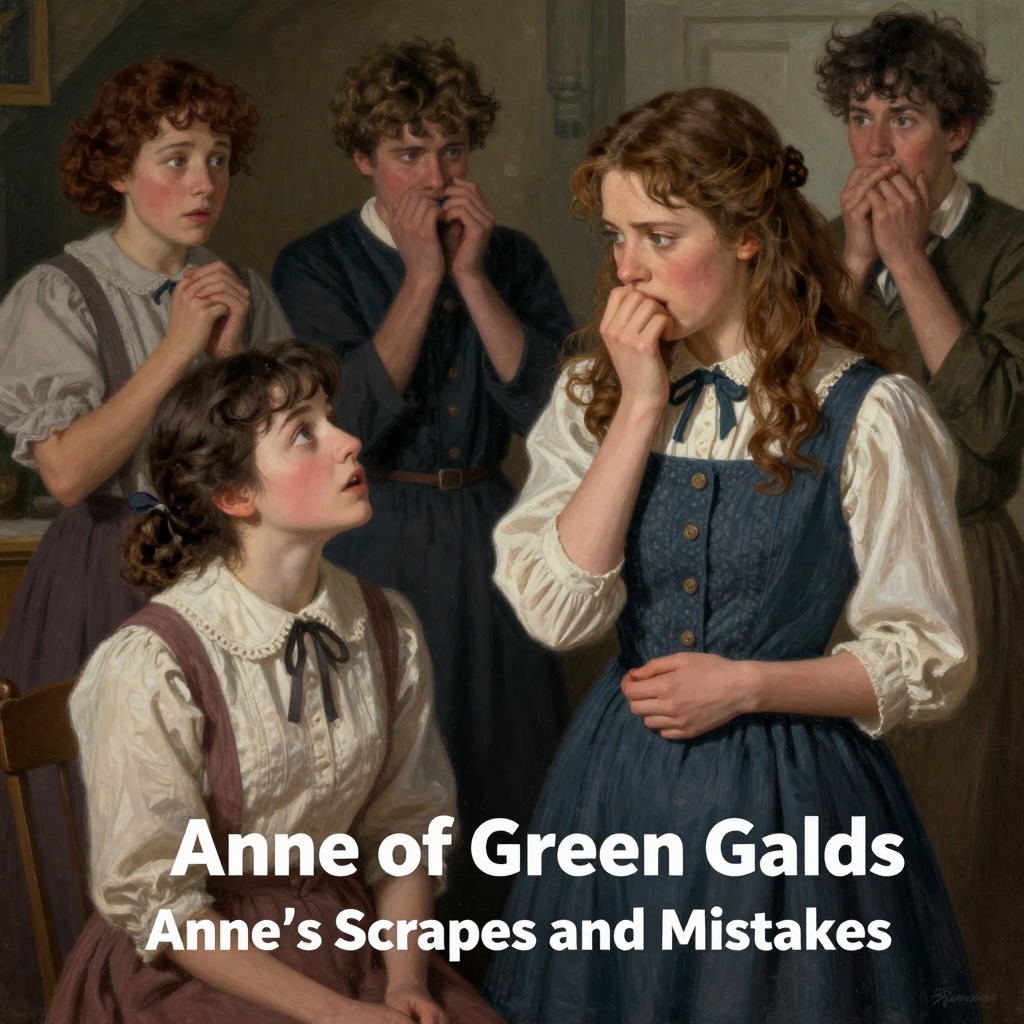
The pivotal conflict between Mrs. Barry and Anne arises from the disastrous tea party where Anne, intending to serve raspberry cordial, mistakenly gives Diana three large tumblers of Marilla's homemade currant wine. Diana becomes ill and is sent home in a "disgraceful condition." Mrs. Barry, believing Anne acted out of "sheer malice prepense," is furious and forbids Diana from ever playing with Anne again. When Marilla goes to Orchard Slope to explain the mistake, Mrs. Barry refuses to believe her, and Marilla later reports that Mrs. Barry "rubbed it well in about my currant wine." Anne, desperate, goes to Mrs. Barry herself, clasping her hands and pleading, "Oh, Mrs. Barry, please forgive me. I did not mean to--to--intoxicate Diana." But Mrs. Barry, a woman of strong prejudices and dislikes, whose anger is of the cold, sullen sort, remains unmoved. She tells Anne coldly and cruelly, "I don't think you are a fit little girl for Diana to associate with. You'd better go home and behave yourself." When Anne asks to see Diana just once to say farewell, Mrs. Barry replies that Diana has gone to Carmody with her father and shuts the door. This episode reveals Mrs. Barry's rigid judgment and her inability to see beyond the surface of a mistake, a trait that makes her a formidable obstacle to Anne's happiness.
Reconciliation Through Crisis: The Croup
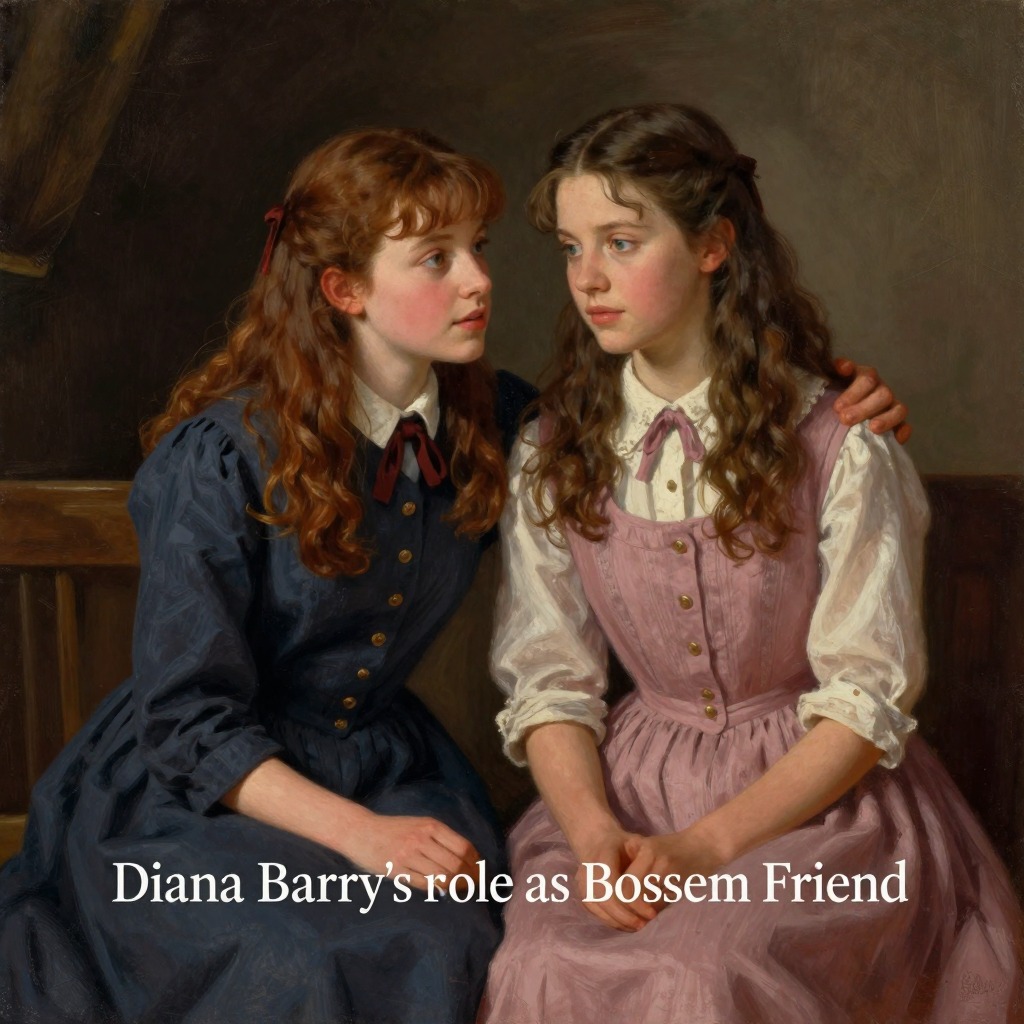
The turning point in Mrs. Barry's relationship with Anne comes when her three-year-old daughter, Minnie May, falls desperately ill with croup while Mrs. Barry and her husband are away in town. Diana rushes to Green Gables for help, and Anne, drawing on her experience caring for Mrs. Hammond's twins, takes charge. Anne works with skill and promptness, administering ipecac and caring for the child through the night. When the doctor finally arrives, he tells Mr. and Mrs. Barry that "that little redheaded girl they have over at Cuthbert's is as smart as they make 'em. I tell you she saved that baby's life." Upon her return, Mrs. Barry comes to Green Gables to see Anne. She tells Marilla that Anne saved Minnie May's life and that she is very sorry she acted as she did in the affair of the currant wine. She says she knows now Anne did not mean to set Diana drunk and hopes Anne will forgive her and be good friends with Diana again. When Anne goes to Orchard Slope that evening, Mrs. Barry kisses her and cries, saying she was so sorry and could never repay her. Anne, feeling fearfully embarrassed, responds with dignity, "I have no hard feelings for you, Mrs. Barry. I assure you once for all that I did not mean to intoxicate Diana and henceforth I shall cover the past with the mantle of oblivion." Mrs. Barry then serves tea using her very best china set, treating Anne as if she were real company, a gesture that gives Anne a tremendous thrill. This crisis fundamentally alters Mrs. Barry's perception of Anne, transforming her from a suspect outsider into a valued and trusted member of the community.
Character and Thematic Significance
Mrs. Barry's arc from stern disapproval to heartfelt gratitude illustrates a central theme of the novel: the power of demonstrated character to overcome prejudice. She is a woman of strong convictions, both for good and for ill, and her initial harshness is rooted in a protective, if narrow, maternal instinct. Her eventual willingness to admit her mistake and offer genuine thanks shows a capacity for growth and fairness, even if it is prompted by a dramatic event. Her reconciliation with Anne not only restores the vital friendship between Anne and Diana but also signals Anne's growing acceptance within the rigid social fabric of Avonlea. Mrs. Barry's character serves as a foil to the more open-minded Marilla and Matthew, representing the conventional standards that Anne must learn to navigate and, ultimately, to win over through her own merits.