
Sethe and Beloved's Consuming Bond
BelovedTraces the evolving emotional relation between mother and returned daughter from adoration and storytelling to possession and collapse.
increasing Bearing strength in each event
 decreasing
Bearing strength in each eventdecreasingThe Love That Killed
The Love That Killed
A Mother's Choice
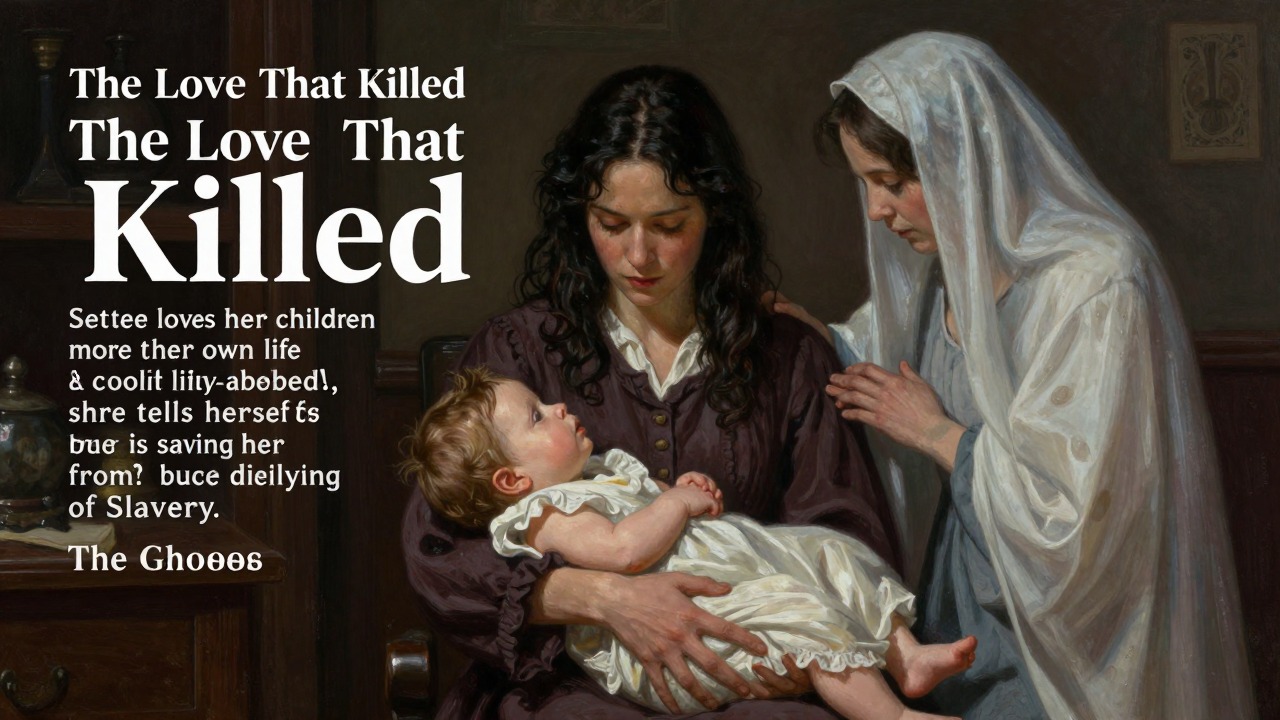
Sethe loves her children more than her own life. When she kills her crawling-already? baby, she tells herself she is saving her from the dirtying of slavery. The act is a perversion of motherlove, but it is also its fullest expression.
The Ghost as Requital
The baby's spirit returns to haunt the house, angry and venomous. Sethe understands: the love that killed was powerful, and the child's ghost is the echo of that force.
The Word on the Tombstone
Because she cannot afford "Dearly Beloved," Sethe buys only "Beloved." The word names both her daughter and her endless grief.
Beloved's Devouring Eyes
Beloved's Devouring Eyes
The Look That Eats
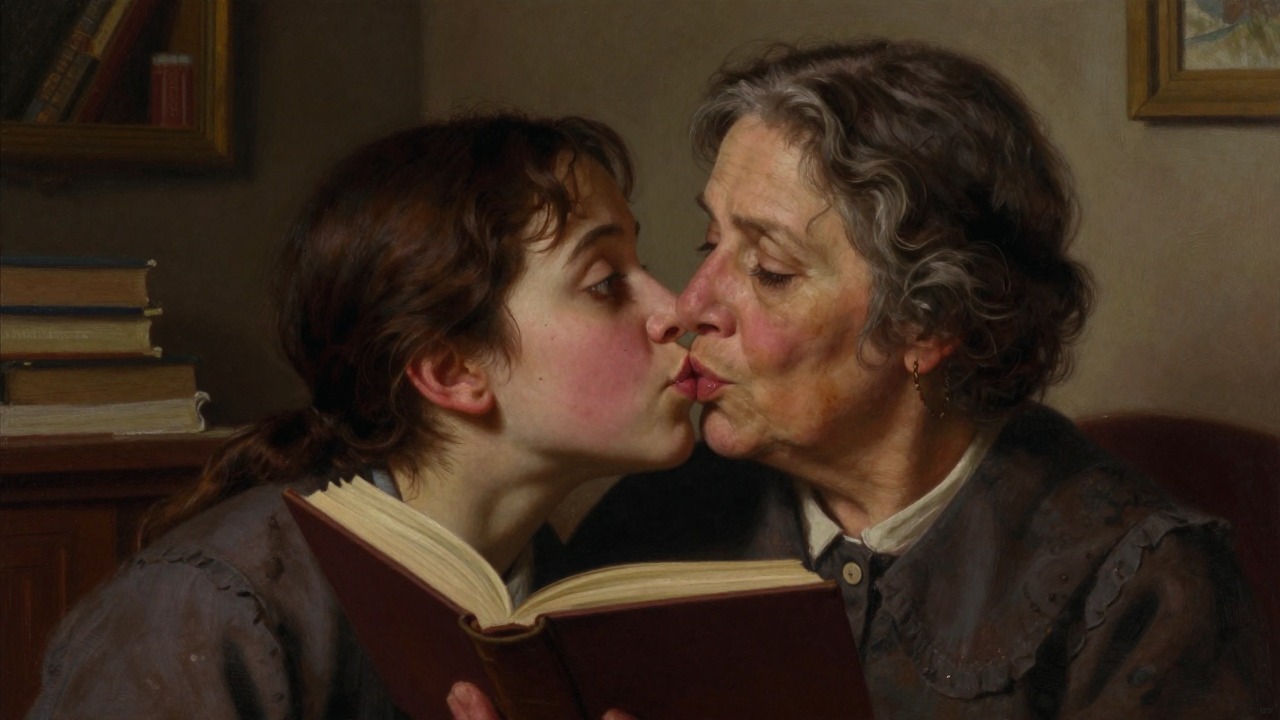
Beloved watches Sethe constantly, as if she is being fed by the sight of her. She follows her from room to room, meets her on the road, and cannot take her eyes off the older woman.
The Pleasure of Adoration
Sethe, flattered, begins to bloom under the girl's attention. She tells herself Beloved is no trouble, and she prefers her company to the sullenness of Denver. The zealotry of the guest pleases the teacher.
The Hunger Beneath
The adoration is also a demand. Beloved asks Sethe to tell the story of the earrings, the diamonds, the escape. Each story is a meal, and Beloved is always hungry.
The Recognition in the Song
The Recognition in the Song
The Unknowable Song
Sethe makes up a lullaby and sings it to her children. When Beloved hums the same tune and knows the words, Sethe knows beyond doubt that she is the returned daughter. The bond is sealed by memory.
The Kiss in the Clearing
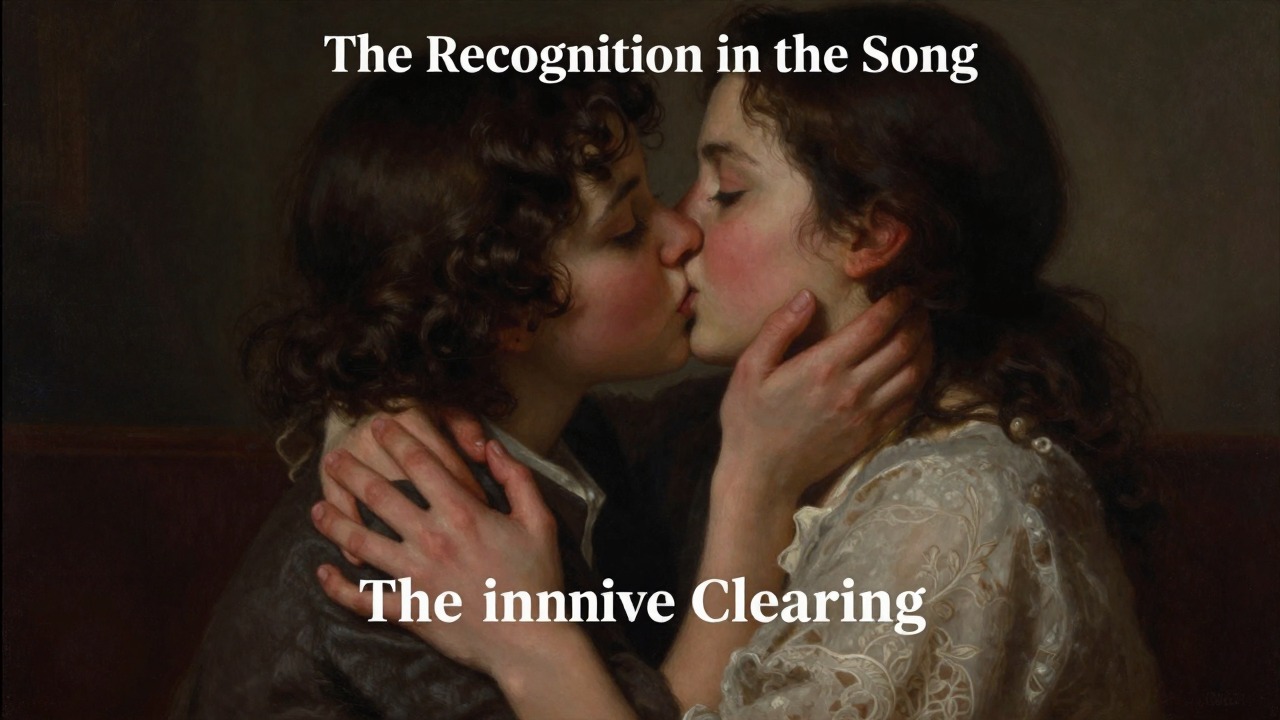
Beloved's cool hands soothe Sethe's neck in the Clearing, and she kisses her under the chin. Their love is both maternal and erotic, both healing and confusing.
The Language of the Body
From that moment, Sethe and Beloved exist in a closed circle of flesh and word, bone and scar. Denver is the outside, the one left to watch.
The Inverted Mother
The Inverted Mother
The Changing Shapes
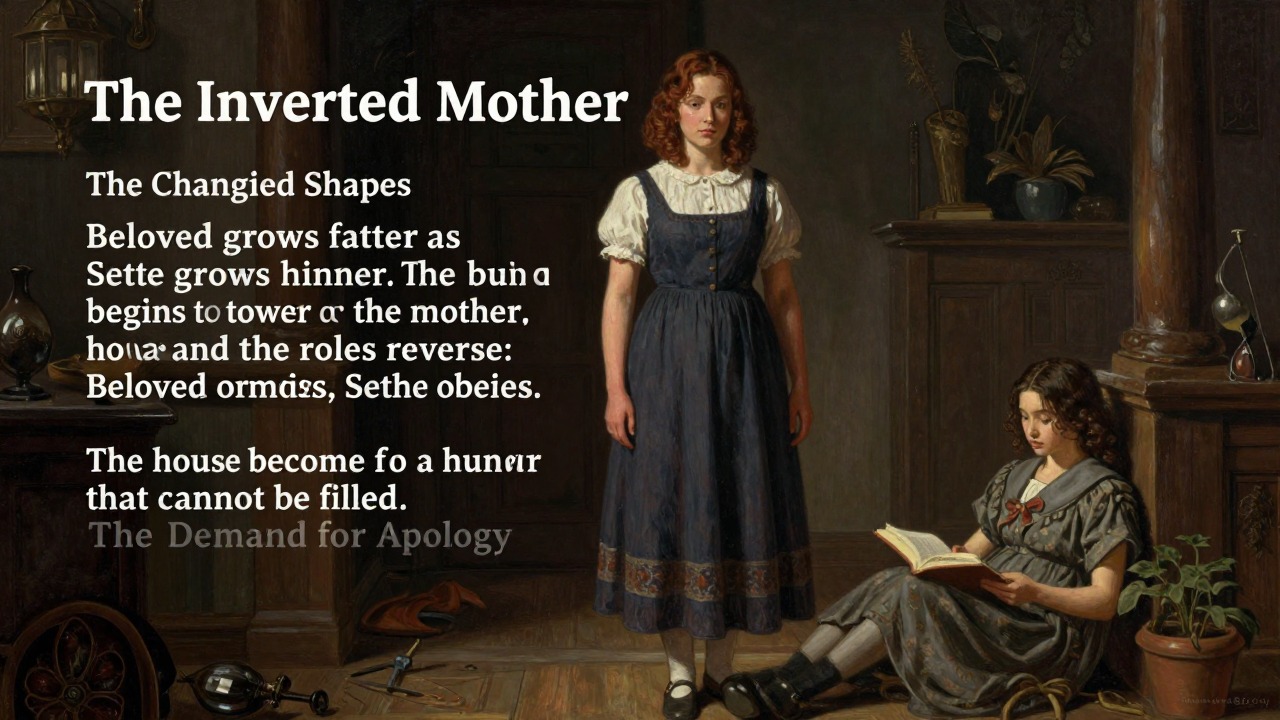
Beloved grows fatter as Sethe grows thinner. The daughter begins to tower over the mother, and the roles reverse: Beloved commands, Sethe obeys. The house becomes a stage for a hunger that cannot be filled.
The Demand for Apology
Beloved insists that Sethe left her behind, that she never came back, that she forgot to smile. Sethe pleads for forgiveness, but every explanation is rejected. The one who was killed is now the one who judges.
The Self-Consuming Love
Sethe gives Beloved her whole life, including her work, her strength, and her will. The love that once killed the child now kills the mother.
The Loss of the Best Thing
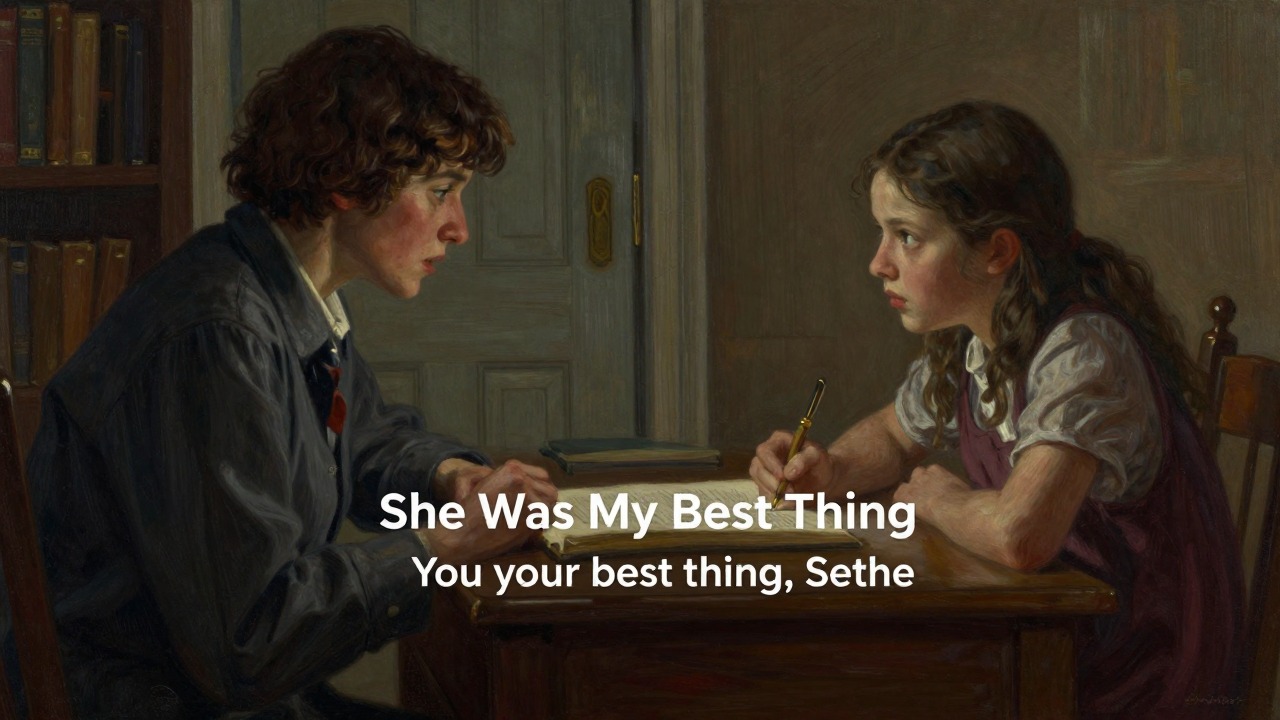
The Loss of the Best Thing
She Was My Best Thing
Sethe tells Paul D that Beloved left her, and she calls her "my best thing." The phrase reveals how completely she had identified herself with her daughter: losing Beloved is losing herself.
The Correction
Paul D answers, "You your best thing, Sethe. You are." The statement reframes her entire identity, separating her selfhood from her motherhood.
The Beginning of Letting Go
Sethe's repeated "Me? Me?" is the sound of a self struggling to be born. The love that was too thick begins to thin into something that includes her own existence.
the original infanticide, eighteen years before the story begins
the first weeks after Beloved arrives
after the ice-skating evening
as Sethe begins to shrink and Beloved to swell
after Beloved's disappearance, in Sethe's final conversation
