
From Ma'am to Sethe: Maternal Lineage
BelovedExplores the chain of mothers and daughters beneath the novel—from Sethe's mother in the rice fields, through Nan's testimony, to Sethe's own children and Beloved's return.
increasing Bearing strength in each event
 decreasing
Bearing strength in each eventdecreasingThe Mother in the Rice Field
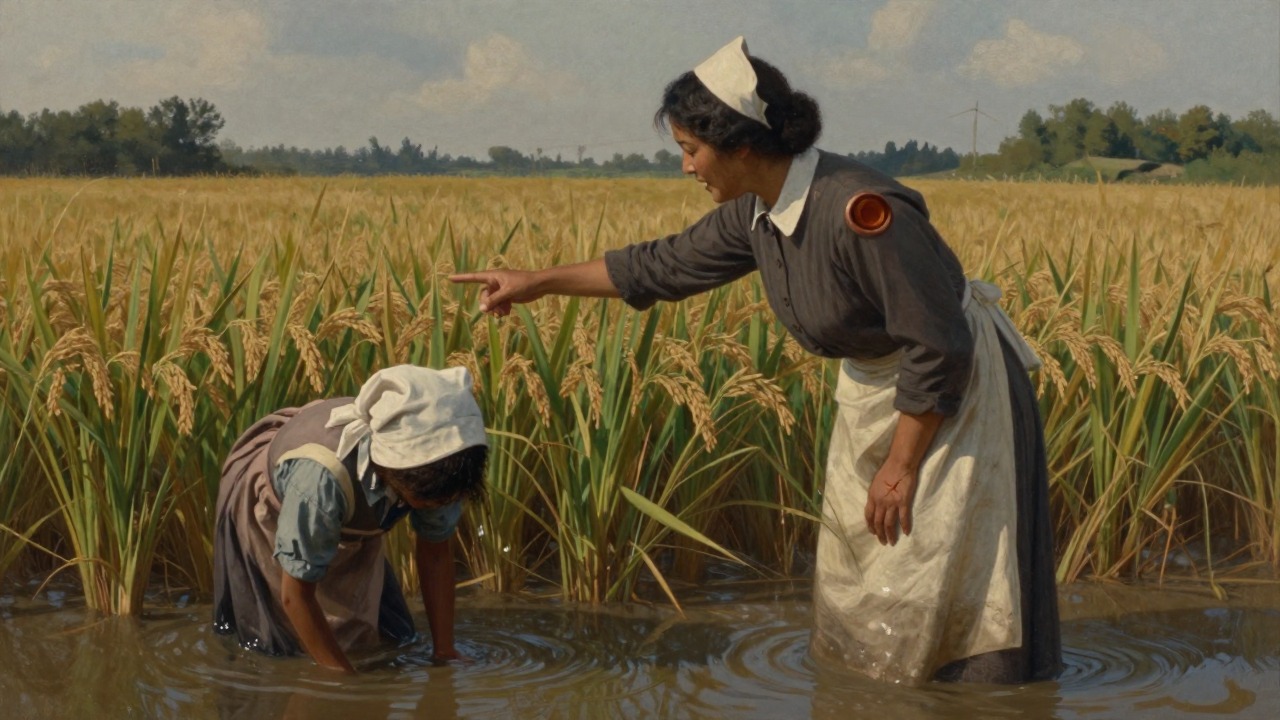
The Mother in the Rice Field
A Back in a Field
Sethe knows her mother only as one of many backs stooping in a watery field. She is pointed out by an eight-year-old nurse, identified by a cloth hat rather than a face.
The Mark of Ownership
Her mother shows Sethe a circle and a cross burnt into her rib under the breast, saying, "This is your ma'am." She is the only one left with the mark, the rest are dead.
The Unasked Question
Sethe asks, "How will you know me? Mark me too," and her mother slaps her face. The slap pushes the question away, but the longing for maternal recognition never dies.
Nan's Story
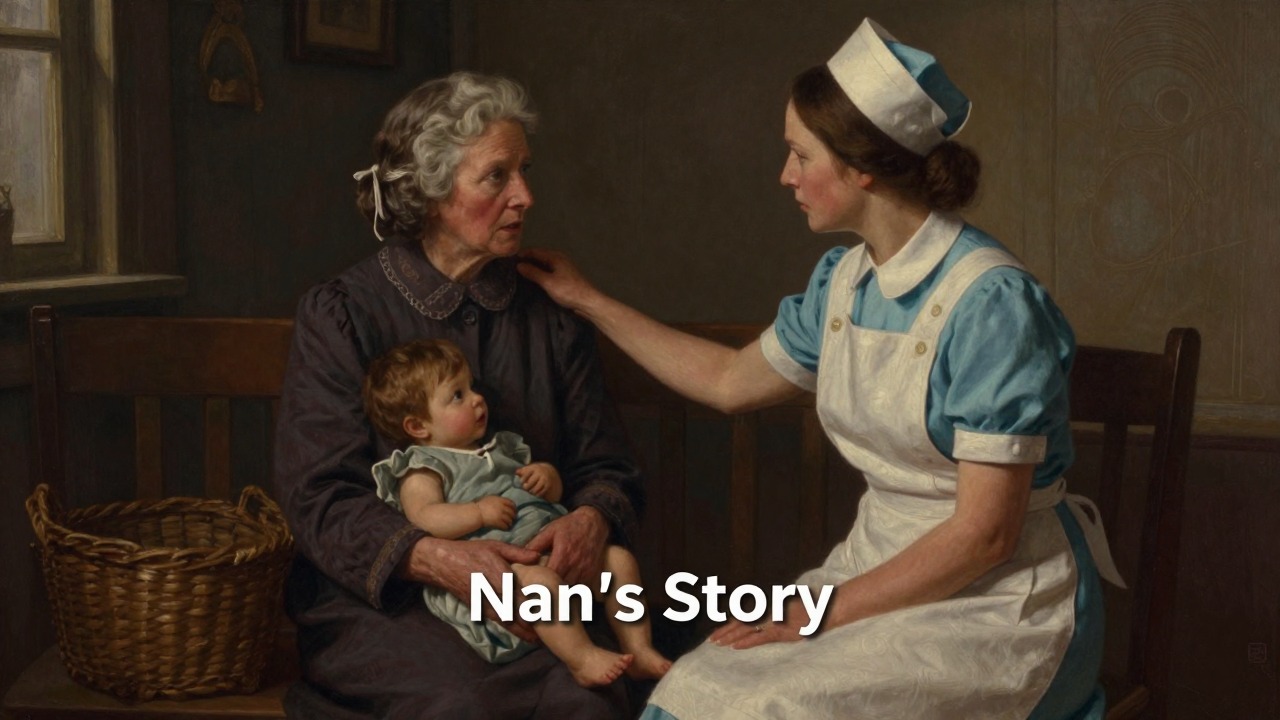
Nan's Story
The One-Armed Nurse
Nan, who has one good arm and half of another, tells Sethe the story of her mother. She says her mother and Nan came from the sea together and were taken up many times by the crew.
The Thrown-Away Children
Her mother threw away the children of the crew and the more white men; she threw them away without names. Only Sethe she kept, and gave her the name of the black man whose child she was.
The Gift of the Name
Sethe's name is a black man's name, not a slave label. Nan's words survive even though the language dies, and they tell Sethe that she was wanted.
The Milk for the Daughter
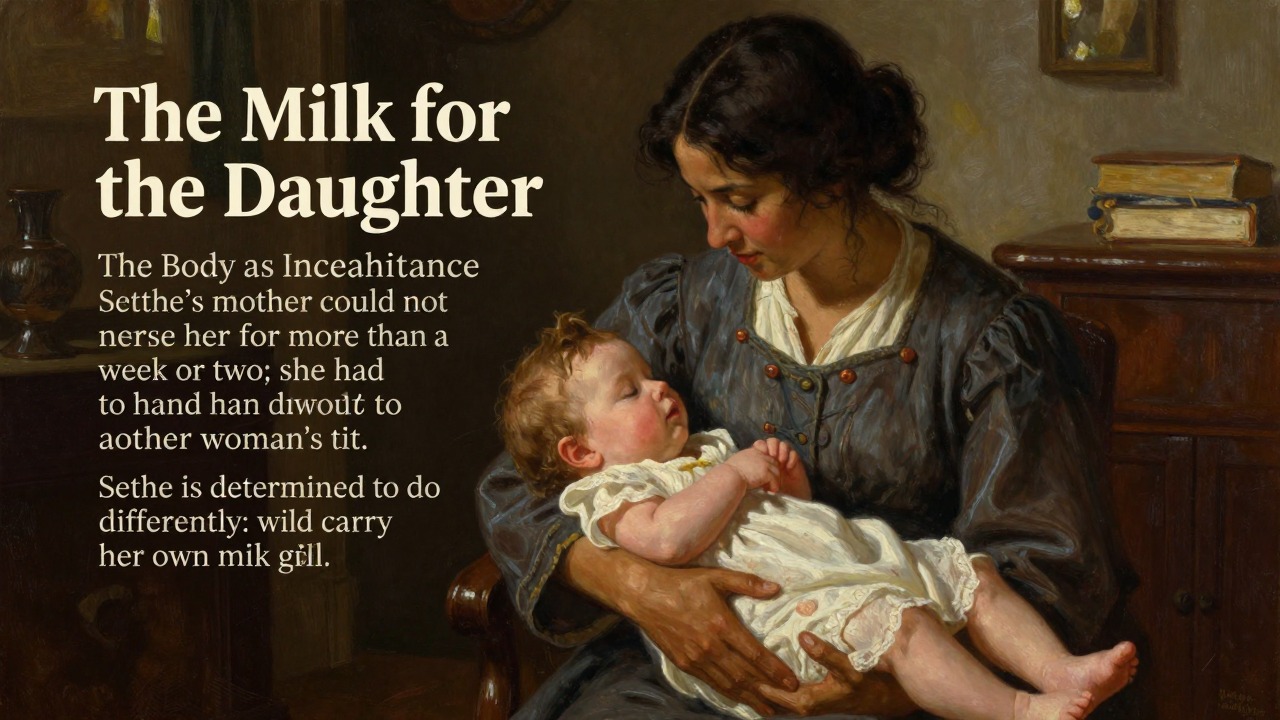
The Milk for the Daughter
The Body as Inheritance
Sethe's mother could not nurse her for more than a week or two; she had to hand her daughter to another woman's tit. Sethe is determined to do differently: she will carry her own milk to her baby girl.
The Stolen Milk and the Whip
When schoolteacher's nephews steal the milk and the cowhide opens her back, Sethe's body repeats her mother's history: a body that cannot feed its own child without being violated.
The Dogged Determination
Despite the blood, the swollen feet, and the wild onions, Sethe gets out. Her milk is a line of continuity that no master can sever. She is doing for her child what her mother could not.
The Circle and Cross in the Flesh
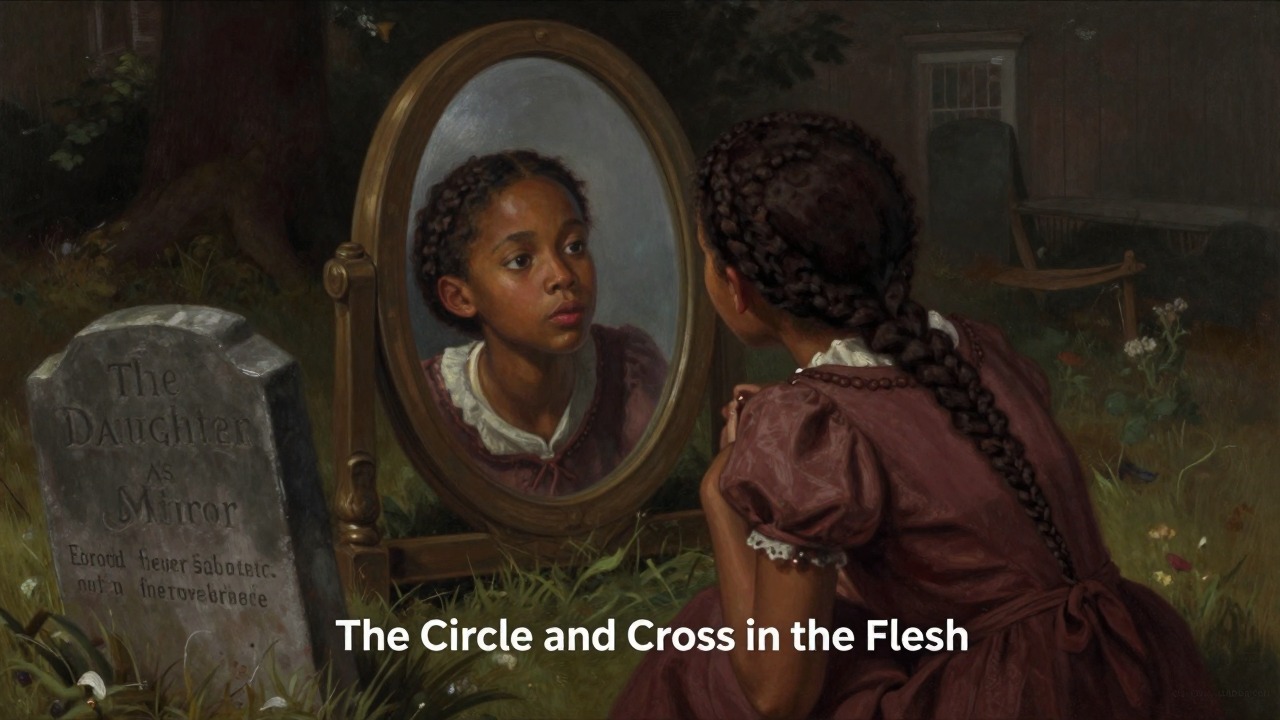
The Circle and Cross in the Flesh
The Daughter as Mirror
Beloved returns with the face Sethe lost, and Sethe sees in her the daughter she never got to raise. She believes Beloved understands everything—the milk, the shed, the gravestone.
The Recapitulation of the Mother
Sethe's love for Beloved echoes her own longing for her mother. She wants Beloved to mark her, to recognize her, to say that she is the one. The circle of maternal need closes: the mother who was not claimed becomes the mother who claims too much.
The Impossible Reparation
Sethe cannot undo the slap her mother gave her, any more than she can undo the handsaw. She tries to repair the past by giving Beloved every story, every meal, every drop of her own life.
Denver Carries the Line
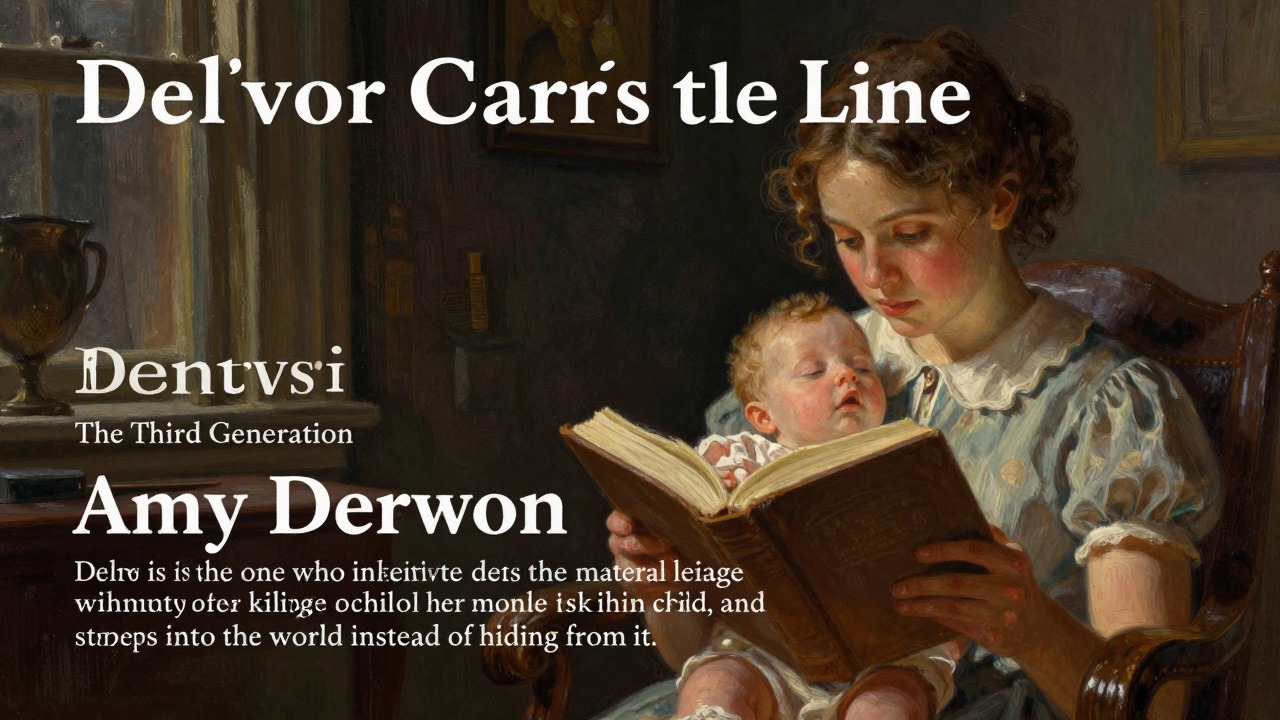
Denver Carries the Line
The Third Generation
Denver is the one who inherits the maternal lineage without repeating its tragedy. She saves her mother instead of killing her child, and she steps into the world instead of hiding from it.
The Names of the Women
Amy Denver's name survives in her; Baby Suggs's stories survive in her memory; Sethe's survival is written on Denver's face. She is a palimpsest of the mothers who came before.
The Beginning of a New Story
Denver does not need Beloved or a ghost to be someone. She can go to Oberlin, work at the Bodwins', and make her own future. The maternal line becomes a future rather than a haunting.
Sethe's childhood on the plantation before Sweet Home
Sethe's childhood memories, recalled years later
the flight from Sweet Home, 1855
when Beloved returns as a grown woman
after Beloved's disappearance, as Denver begins her new life
