
The Body as Battlefield and Sanctuary
BelovedFollows the theme of the flesh as both the site of violation and the source of love, from Sethe's scarred back to Baby Suggs's sermon and Paul D's final touch.
increasing Bearing strength in each event
 decreasing
Bearing strength in each eventdecreasingThe Chokecherry Tree
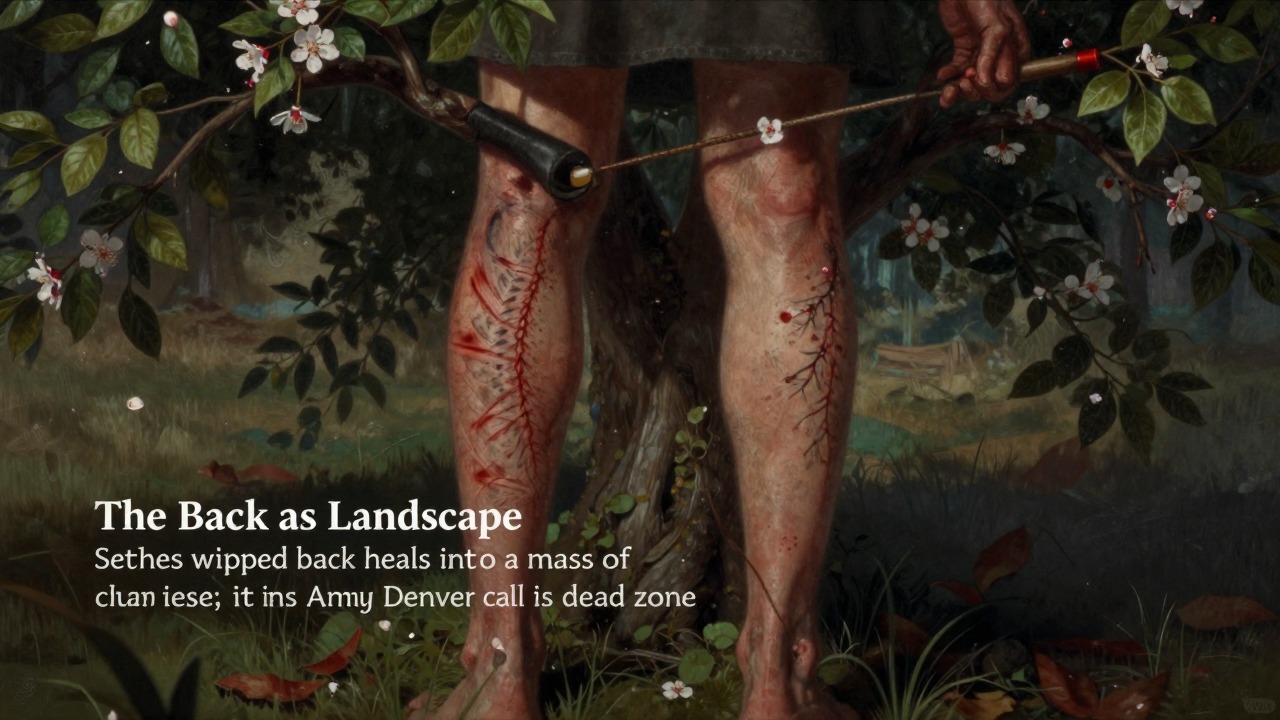
The Chokecherry Tree
The Back as Landscape
Sethe's whipped back heals into a mass of scars that Amy Denver calls a chokecherry tree. The body becomes a landscape written by the whip, with trunk, branches, leaves, and even blossoms.
The Dead Skin
Sethe cannot feel the scar tissue; it is a dead zone on her back. Yet the tree is always with her, a constant reminder that her body was once a field for white violence.
The Need to Tell
When Paul D kisses the tree, Sethe cannot feel his mouth, but she can feel the weight of his care returning her body to her. The scar is transformed from injury to story.
The Stolen Milk
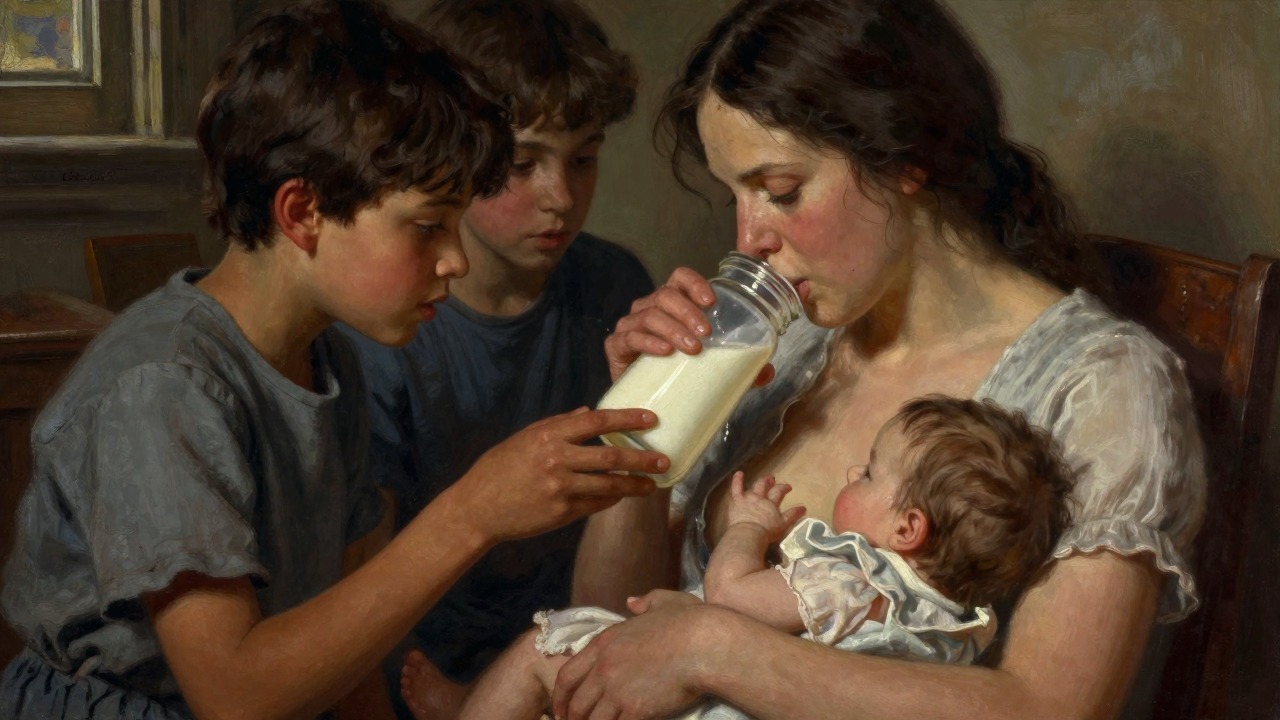
The Stolen Milk
The Body as Food
The milk in Sethe's breasts is the most intimate food a mother can give. The nephews steal it, turning her body into a resource for white appetite. The violation is both sexual and maternal.
The Mouth That Cannot Feed
Sethe's determination to get her milk to her baby girl becomes the driving force of her escape. The body is not just a site of pain; it is a vessel of love she refuses to surrender.
The Taste of Iron
Paul D's own mouth is filled with iron, and Sethe knows the wildness it leaves in the eyes. The stolen milk and the iron bit are the same wound: the body taken from its owner.
Love Your Flesh
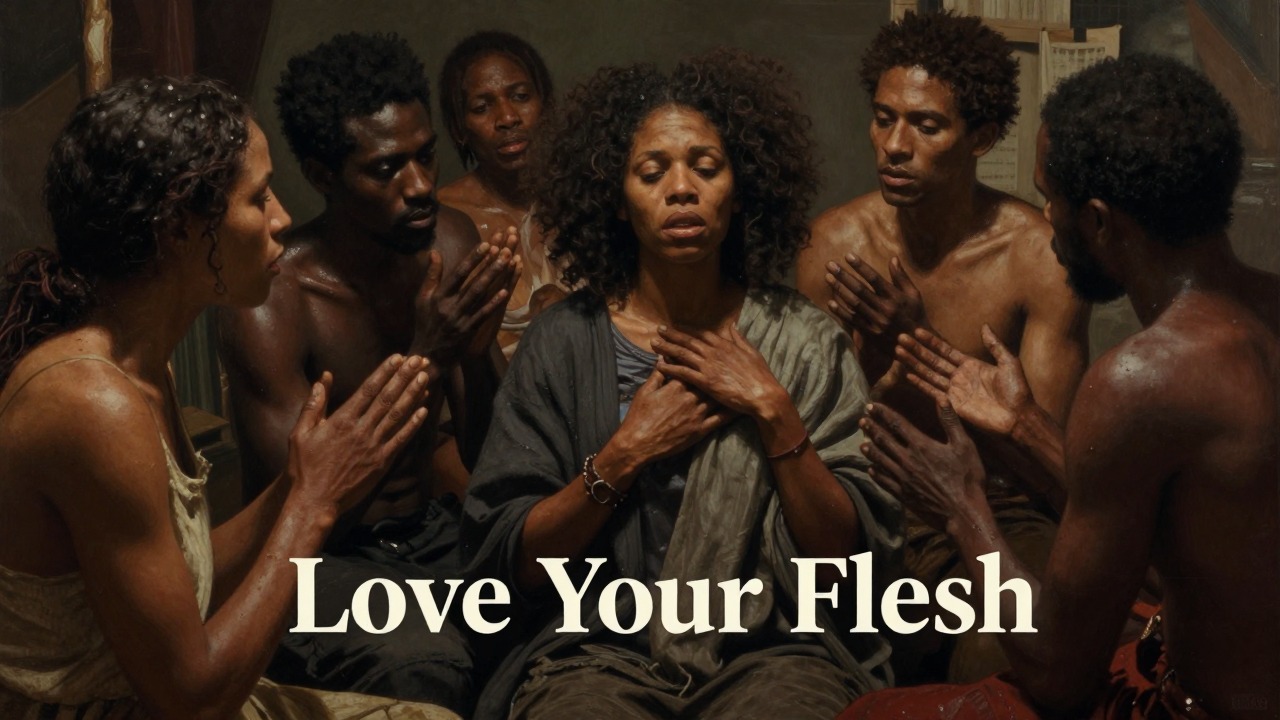
Love Your Flesh
The Preaching Body
Baby Suggs tells the people to love their flesh—hands, neck, liver, eyes, heart. "Yonder they do not love your flesh," she says. "You got to love it."
The Reclamation of the Body
Her sermon is a radical act of resistance. Slaves are taught to hate their bodies as property and sin; Baby Suggs commands them to worship the flesh that has survived.
The Flesh That Dances
The Clearing becomes a place where bodies can be free: laughing children, dancing men, crying women. The body is not escaped but entered, claimed, and enjoyed.
The Spiderwebs and the Rub
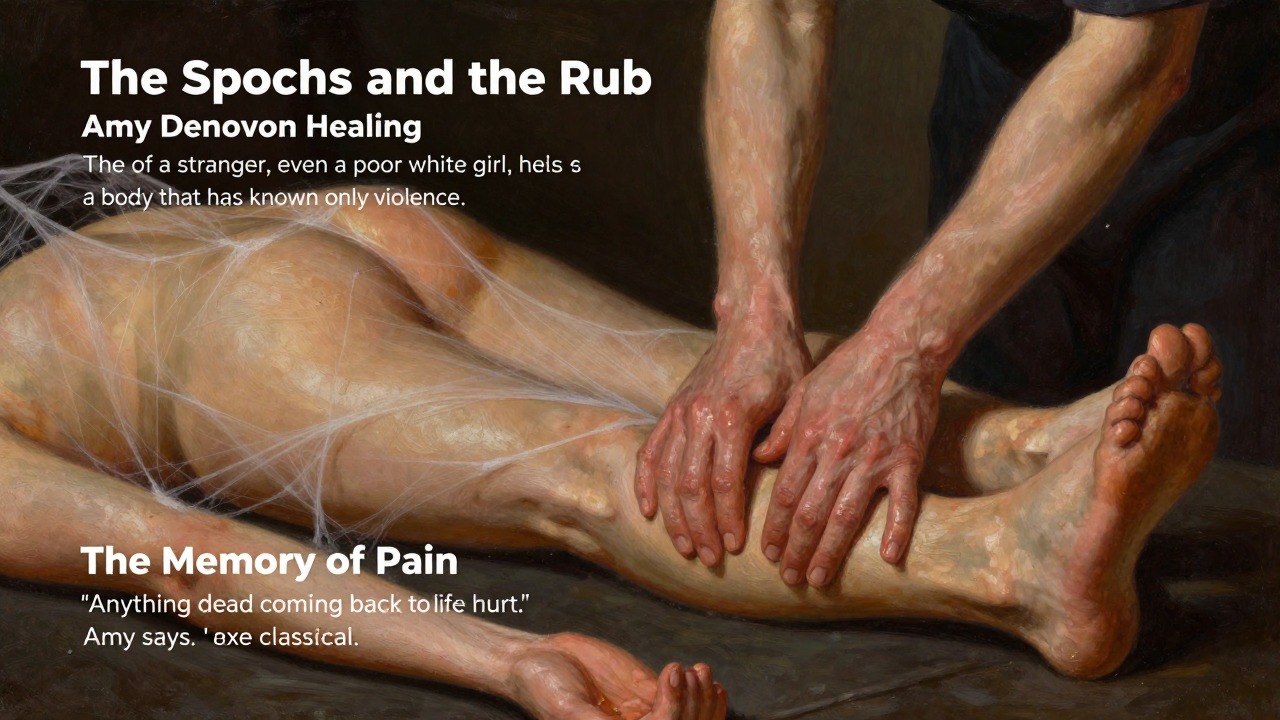
The Spiderwebs and the Rub
The Touch of Healing
Amy Denver massages Sethe's swollen feet and drapes spiderwebs on her back. The touch of a stranger, even a poor white girl, heals a body that has known only violence.
The Memory of Pain
"Anything dead coming back to life hurts," Amy says. The body's pain is the signal of its resurrection. Sethe's crawling body reaches the river and gives birth, a miracle formed of wounds.
The Body of the Other
Amy's good hands become part of Sethe's story and Denver's name. They are the proof that flesh can be a site of grace as well as pain.
The Feet That Are Rub
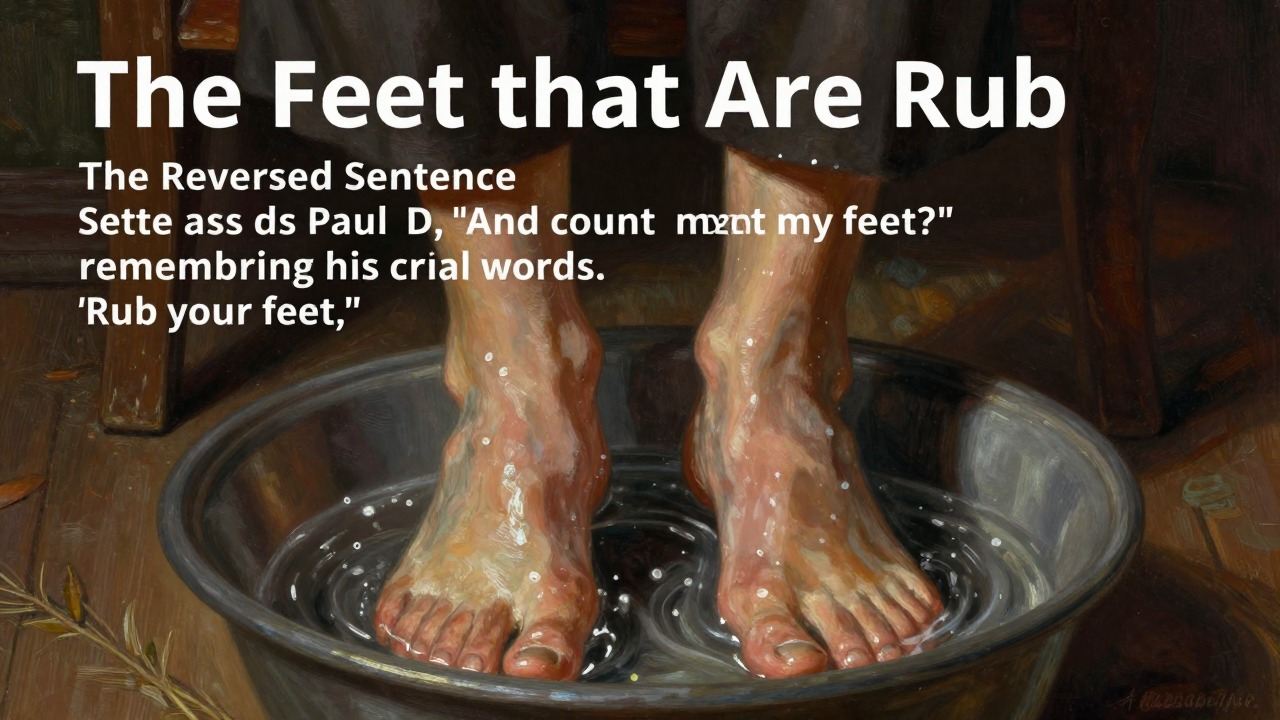
The Feet That Are Rub
The Reversed Sentence
Sethe asks Paul D, "And count my feet?" remembering his cruel words. He answers, "Rub your feet," turning the memory of contempt into a gesture of care.
The Body as a Self
The feet he wants to wash are the same feet that walked out of slavery, stood in the shed, and carried Denver. The attention to the body is a way of restoring Sethe's personhood.
The Final Touch
The novel ends with physical tenderness, not metaphysics. The body that was once a battlefield becomes a sanctuary where two wounded people can meet.
after the whipping at Sweet Home
at Sweet Home, before the escape
Baby Suggs's sermons in the Clearing
Amy Denver's care for Sethe on the escape
the final scene between Paul D and Sethe
