
Freedom and the Best Thing
BelovedTracks the novel's meditation on what it means to own oneself, culminating in the question of whether Sethe can ever be her own best thing.
increasing Bearing strength in each event
 decreasing
Bearing strength in each eventdecreasingThe Heart That Started Beating
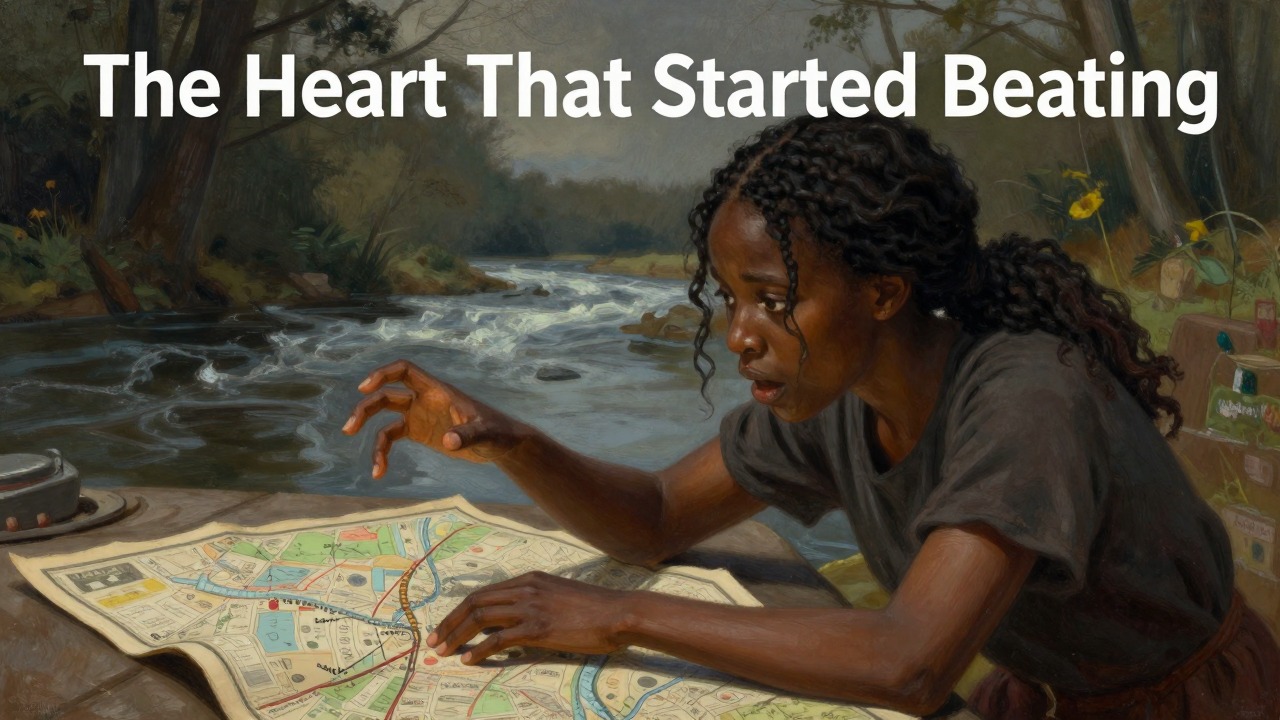
The Heart That Started Beating
The Discovery of the Self
When Baby Suggs crosses the Ohio River, she suddenly feels her heartbeat and sees her hands as her own. The physical sensation of freedom is overwhelming and terrifying.
The Empty Self
She has never had a map to discover who she is. Freedom is not a status but a start: she must learn to sing, to love, to be a woman beyond the category of mother.
The Price of the Heart
The heart that starts beating in freedom is the same heart that will be broken by the whitefolks in her yard. Freedom does not protect the self from pain.
Claiming Ownership of the Freed Self
Claiming Ownership of the Freed Self
The Twenty-Eight Days
Sethe has twenty-eight days of unslaved life: healing, company, real-talk. She learns the alphabet, a stitch, and how to decide what to do with the day.
The Distinction
"Freeing yourself was one thing; claiming ownership of that freed self was another." Sethe begins to claim herself as a person, not a mother only.
The Interruption
The four horsemen end the claiming. The shed and the handsaw shatter the self she was beginning to own, and she will not recover that self for eighteen years.
The Too-Thick Love
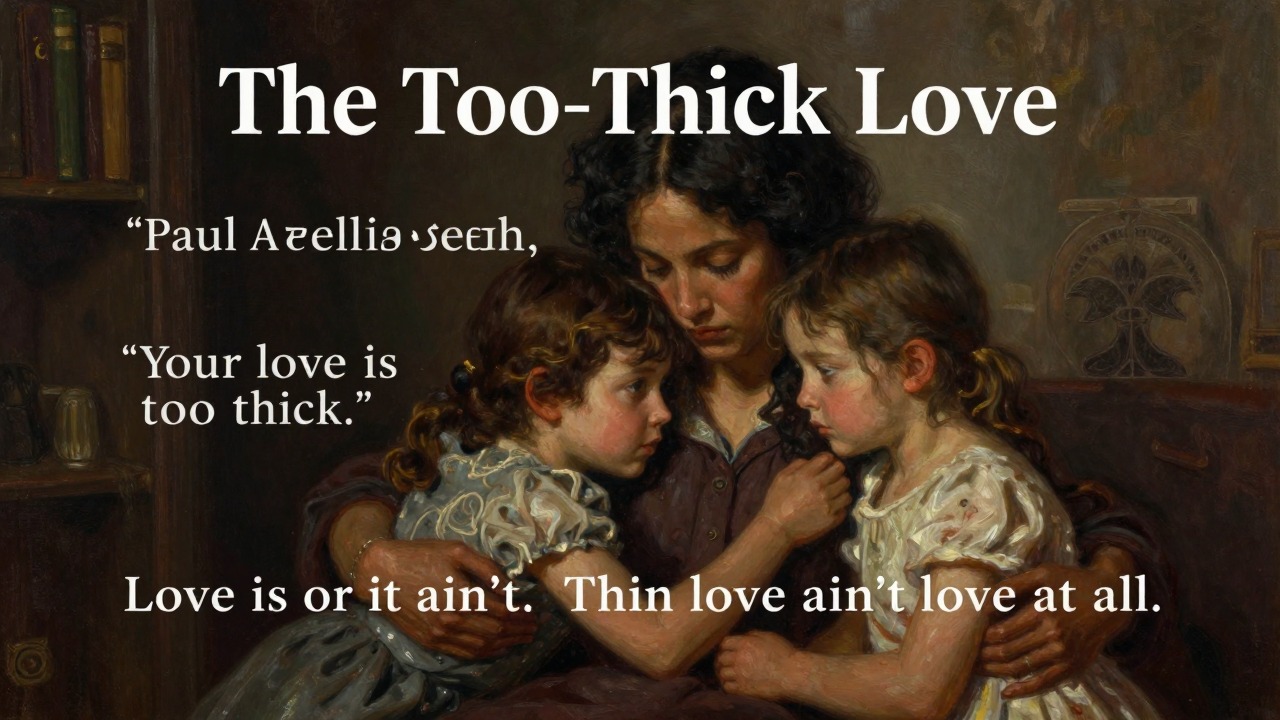
The Too-Thick Love
The Accusation
Paul D tells Sethe, "Your love is too thick." He means that her love for her children has swallowed her own identity, making her capable of killing to keep them.
The Defense of Love
Sethe answers, "Love is or it ain't. Thin love ain't love at all." For her, love is absolute, and any dilution would be betrayal.
The Cost
Paul D asks whether it worked. Sethe says it worked because her children are not at Sweet Home, but she has paid for it with her self. The self has been eaten alive by the very love that defined it.
She Was My Best Thing
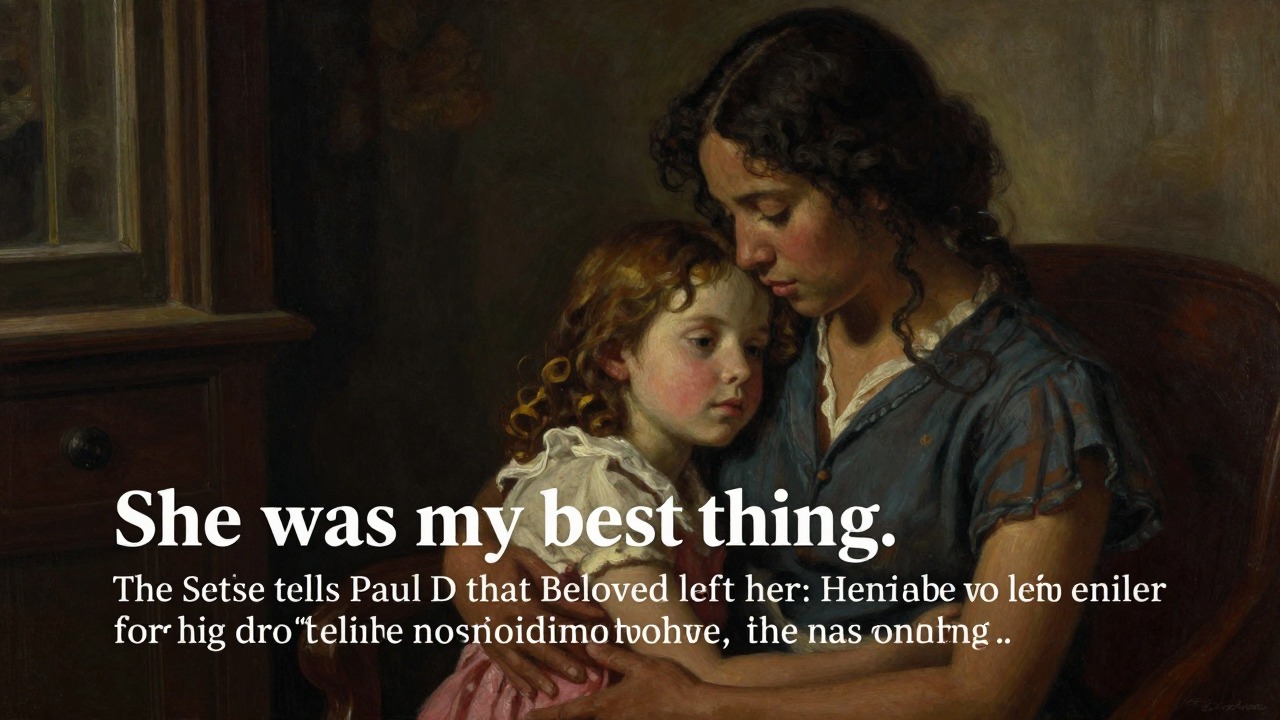
She Was My Best Thing
The Loss of Beloved
Sethe tells Paul D that Beloved left her. Her words are the cry of a mother who has lost the meaning of her life: "She was my best thing."
The Fusion of Self and Child
Sethe's selfhood has been entirely in her daughter. With Beloved gone, she has nothing left to hold onto. The statement reveals the collapse of her identity.
The Waiting Reply
Paul D's correction is not a theory but a lifeline. He offers her a way to be without being only a mother.
You Your Best Thing
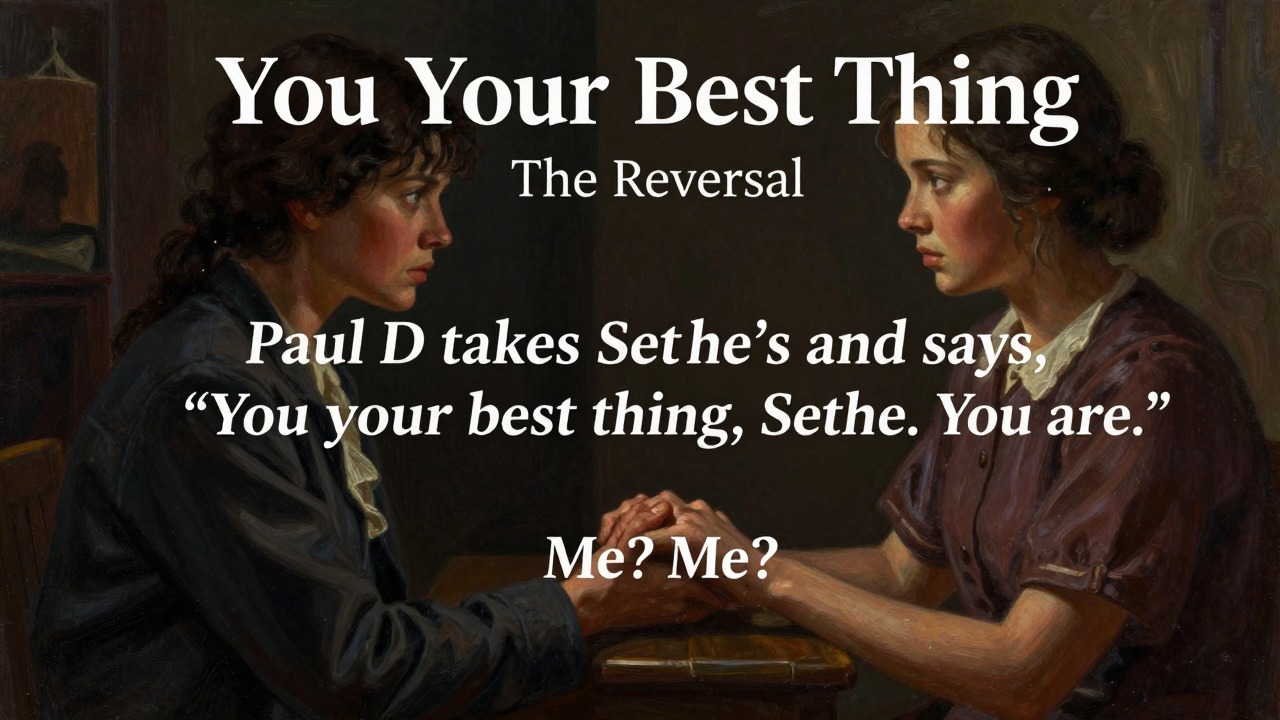
You Your Best Thing
The Reversal
Paul D takes Sethe's hand and says, "You your best thing, Sethe. You are." The phrase inverts her entire life: the best thing is not the child she killed, not the daughter who returned, but Sethe herself.
The Doubt
Sethe's response—"Me? Me?"—is not full acceptance but the beginning of questioning. The self that was never claimed begins to stir.
The Future
The novel ends with this possibility rather than a conclusion. Freedom is not a place but a process, and Sethe is at the threshold of choosing herself.
Baby Suggs's journey to freedom
Sethe's twenty-eight days at 124
Paul D's confrontation with Sethe about the infanticide
the conversation in Baby Suggs's room
the closing lines of the novel
