
The Rational vs. the Supernatural
CarmillaTraces the central conflict between the characters' Enlightenment rationality and the terrifying reality of the vampire.
increasing Bearing strength in each event
 decreasing
Bearing strength in each eventdecreasingInitial Skepticism
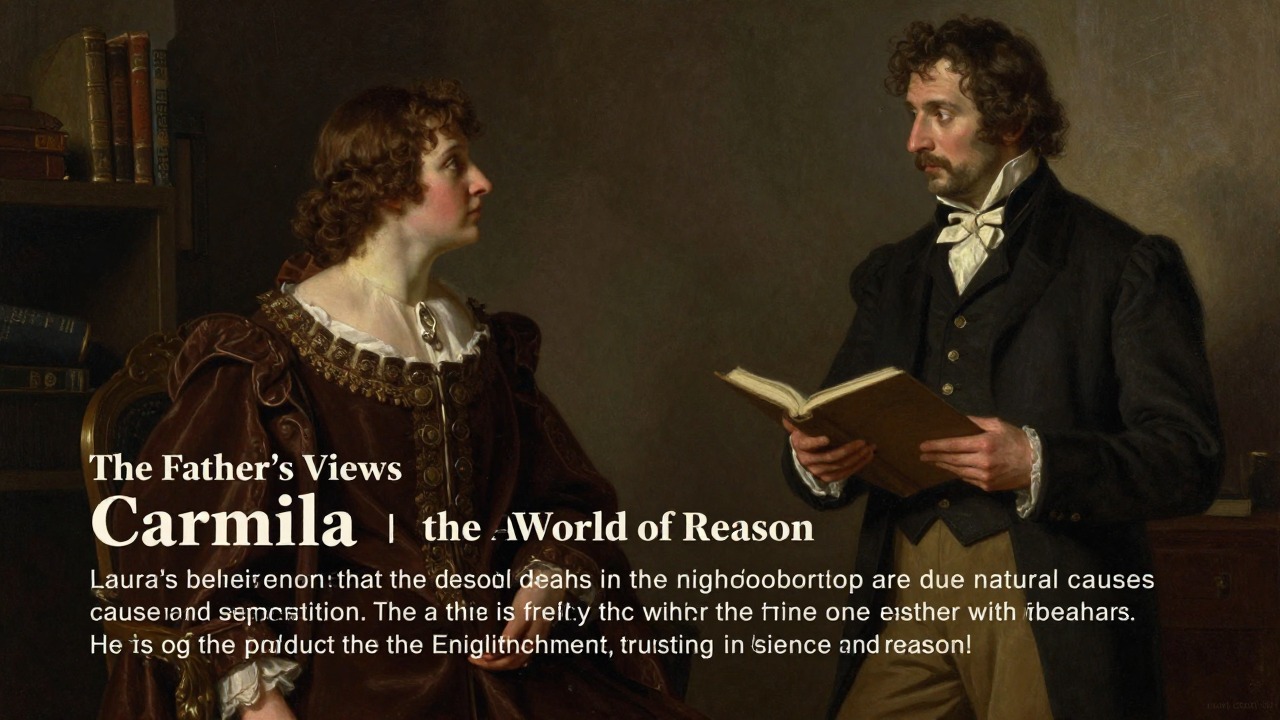
A World of Reason
The Father's Views
Laura's father believes that the mysterious deaths in the neighborhood are due to natural causes and superstition. He says that the peasants infect one another with their fears. He is a product of the Enlightenment, trusting in science and reason.
The General's Initial Disbelief
General Spielsdorf also started as a skeptic. He dismissed the doctor's letter about a vampire as absurd. Both men represent the rational worldview that is challenged by the events.
Growing Evidence
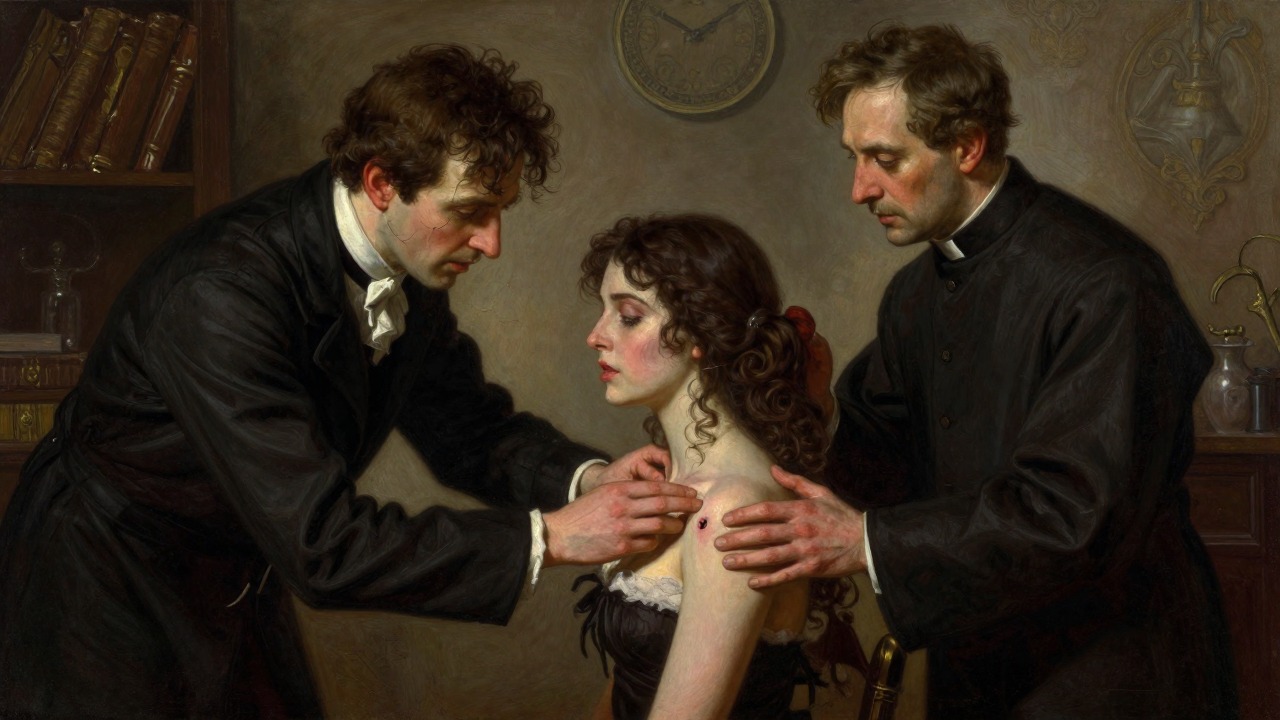
Cracks in the Facade
The Doctor's Change
Doctor Spielsberg, after examining Laura, begins to act on the assumption of a supernatural cause. He orders a night vigil and consults with the priest. His rationalism is overwhelmed by the physical evidence of the puncture marks.
The Father's Unspoken Fear
Laura's father becomes agitated and pale. He no longer laughs at superstition. The mystery of Carmilla's behavior and Laura's symptoms force him to accept that something beyond natural law is at work.
The General's Testimony
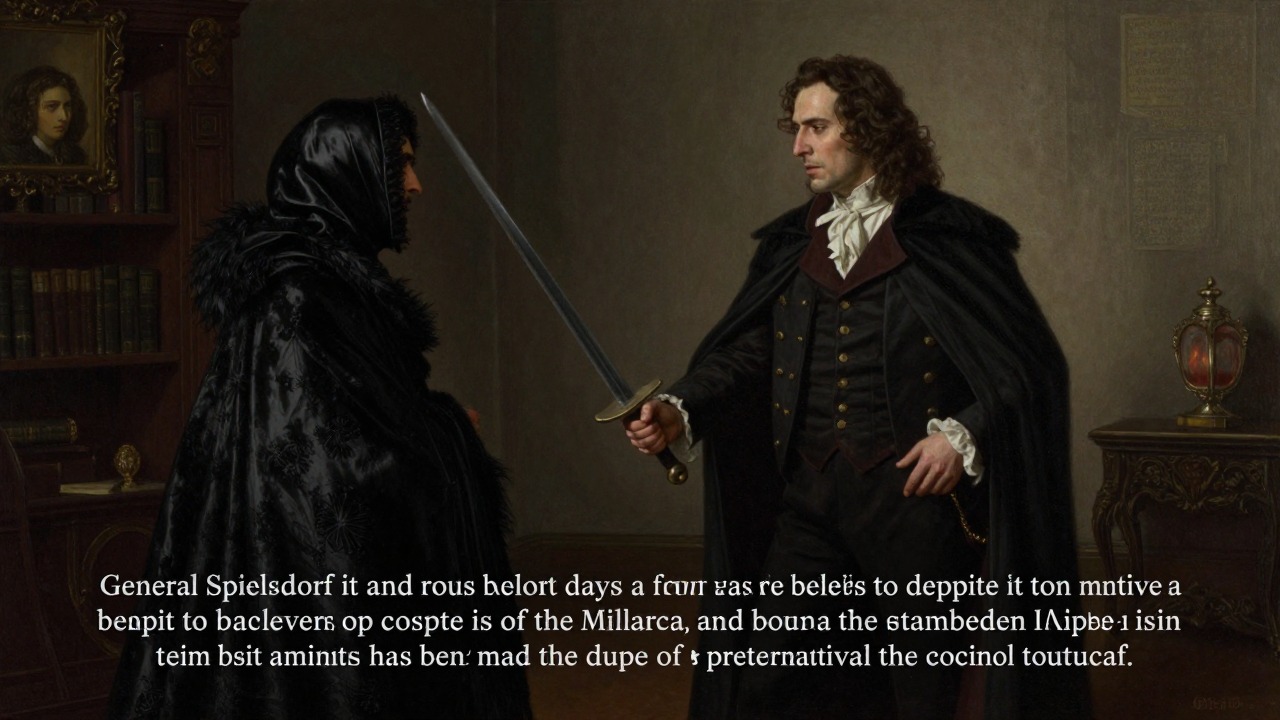
A Rational Man Convinved
The General's Story
General Spielsdorf recounts how he was forced to believe in the vampire despite his own rational nature. He describes the black mass that transformed into Millarca and his failed sword attack. He admits that he has been made the dupe of a preternatural conspiracy.
The Implication for Laura
Laura listens to the General's story and realizes that her own symptoms are identical. The rational world she knew is crumbling. The conflict between reason and superstition is resolved in favor of the supernatural, but only after terrifying evidence.
The Official Acceptance
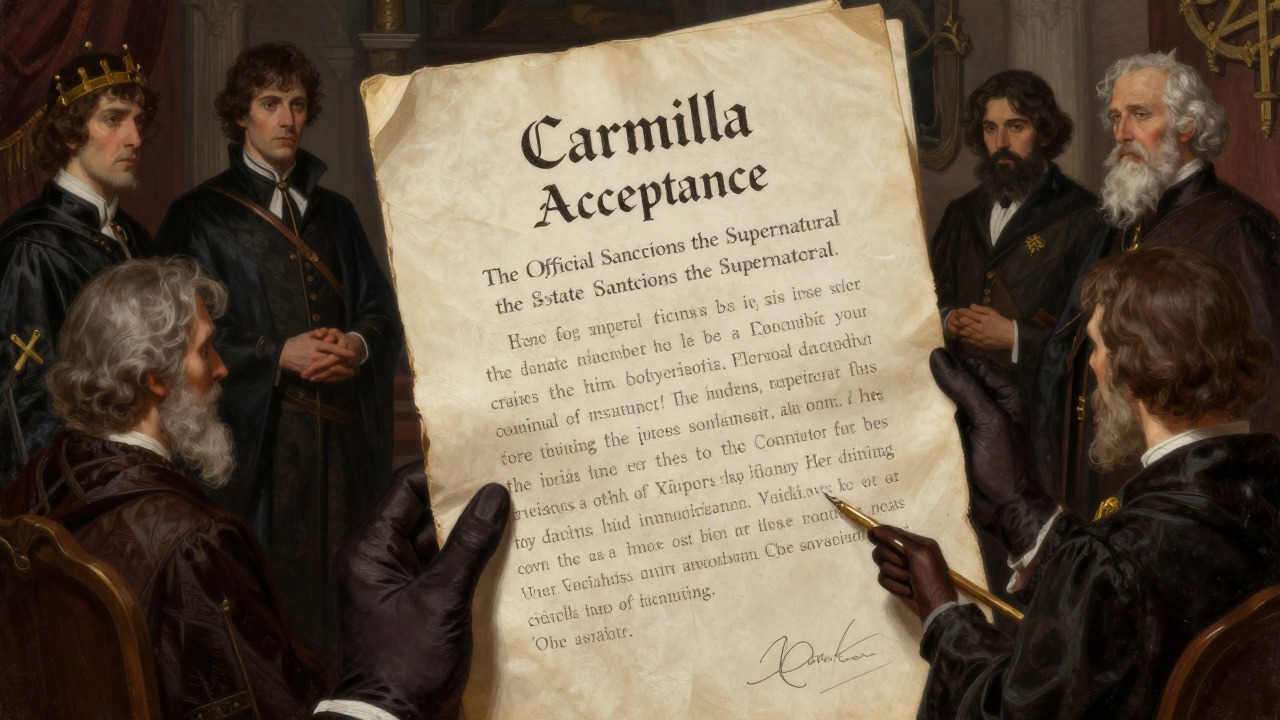
The State Sanctions the Supernatural
The Imperial Commission
The Imperial Commission, composed of legal and medical authorities, follows the ancient procedure for vampire execution. The official report confirms the existence of vampires. The state, the ultimate rational authority, now acknowledges the supernatural.
The End of Doubt
The evidence of the vampire's body—fresh blood, beating heart, flexible limbs—is undeniable. The conflict between reason and superstition is settled: the supernatural is real, and reason must accommodate it. The story ends with the triumph of the vampire-hunting tradition, which is a blend of folk belief and legal procedure.
Laura's Lasting Ambivalence
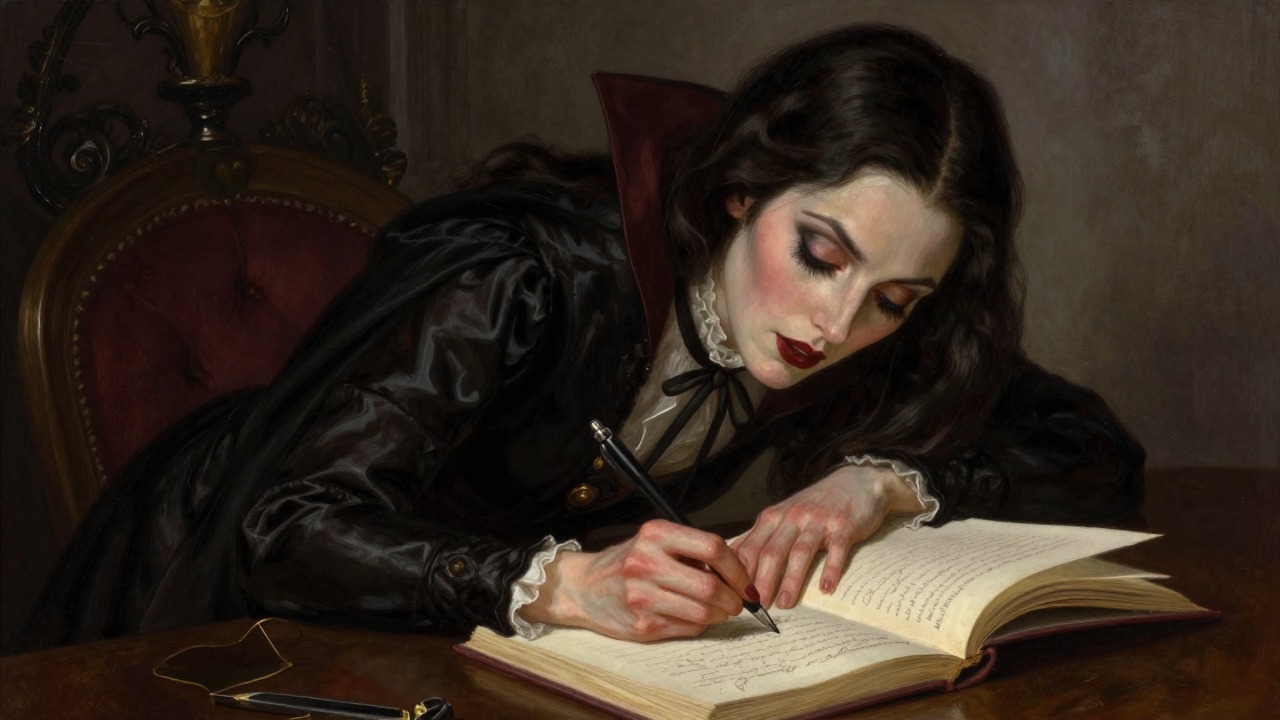
A Haunted Mind
The Ambiguous Memory
Laura writes her narrative with a trembling hand, and she cannot think of the events without agitation. The image of Carmilla returns to her with ambiguous alternations—sometimes beautiful, sometimes fiendish. The rational explanation of the vampire's destruction does not erase the emotional and psychological impact.
The Unresolved Tension
The conflict between the desire for rational order and the experience of supernatural horror remains unresolved in Laura's mind. The story itself is a testament to that tension, a narrative that tries to make sense of the inexplicable.
early in the story, before the vampire attacks
as Laura's illness progresses
during the trip to Karnstein
during the exhumation
years after the events
