
Willy's Last Day and Suicide
Death of a SalesmanTraces Willy Loman's final twenty-four hours from his exhausted return home to his fatal car crash, driven by despair and a misguided belief in the insurance payout.
increasing Bearing strength in each event
 decreasing
Bearing strength in each eventdecreasingExhausted Return
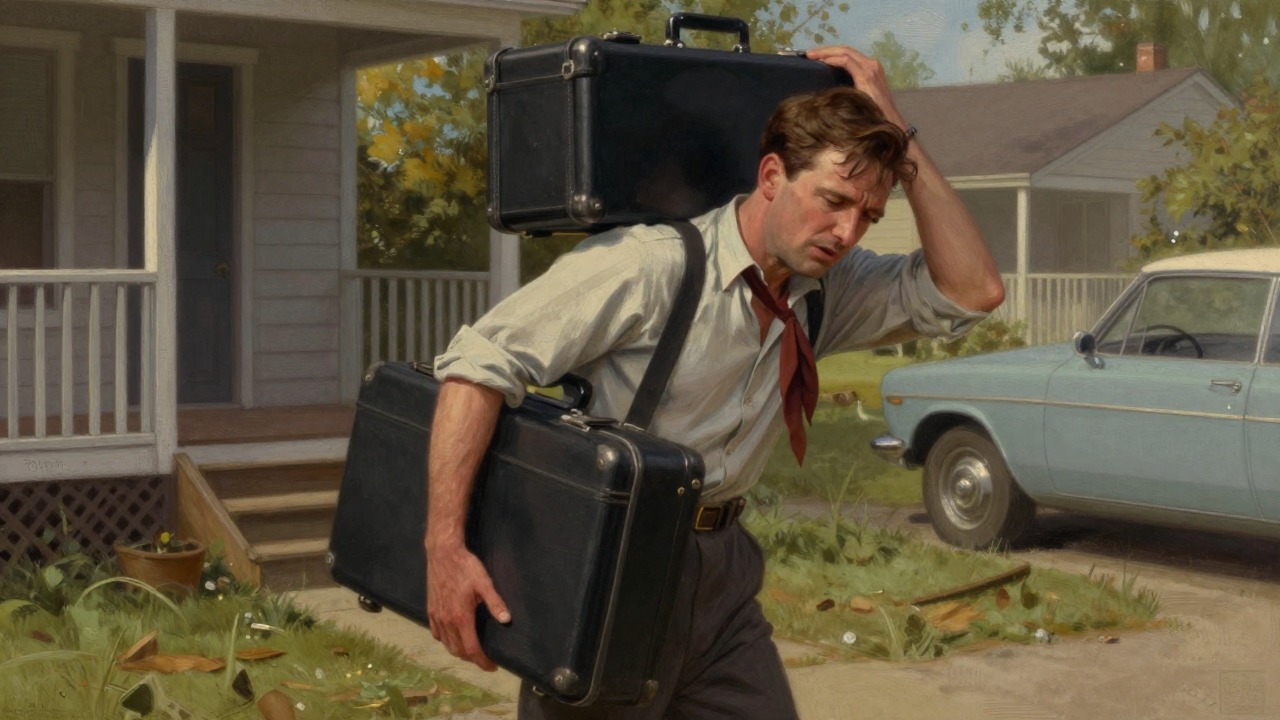
Willy Loman's Return
The Weight of Failure
Willy Loman enters his Brooklyn home carrying two heavy sample cases, his exhaustion palpable. The flute music that accompanies him evokes a lost pastoral past. He tells Linda he couldn't make it to New England, confessing he nearly drove off the road. This opening immediately establishes his physical and mental decline.
A Marriage Under Strain
Linda warmly greets him but is clearly worried. She suggests he ask for a New York job. Willy's defensiveness about his role as "the New England man" reveals his fragile ego. The conversation drifts to their sons, especially Biff, whose return triggers Willy's anxiety. Linda's gentle attempts to soothe him highlight her role as caretaker.
The Seeds of Despair
Willy's rambling thoughts about the past, the lost elm trees, and the encroaching apartment buildings show his disconnection from the present. His memory of the 1928 Chevy and his pride in Biff's youth contrast painfully with his current state. The scene ends with Willy's first hint of suicidal ideation, as he muses about being worth more dead.
Morning Hope and Denial
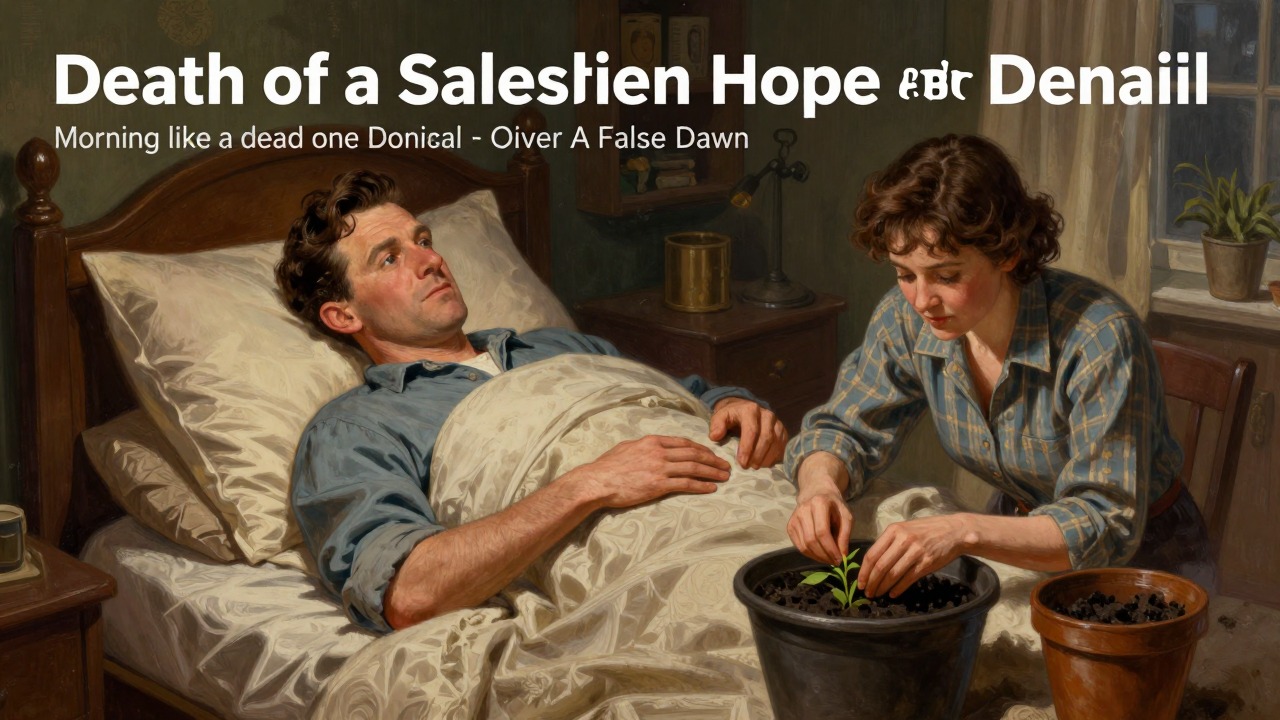
A False Dawn
Optimistic Preparations
Willy wakes refreshed, claiming he slept like a dead one. Linda reports that Biff left early to see Bill Oliver, and Willy is buoyed by the prospect. He talks of buying seeds and planting a garden, a symbol of his desire for renewal. He prepares to confront Howard Wagner for a New York job.
The Pressure of Debts
Linda reminds him of the insurance premium and the mortgage's final payment. Willy's anxiety about money surfaces, but he suppresses it with grand plans. The scene reveals the family's precarious financial state and Willy's reliance on fantasy.
Underlying Tension
Despite his optimism, Willy's insistence on not mending stockings in his presence betrays his guilt over the affair with The Woman. The morning's hope is fragile, built on illusions that will soon shatter.
Firing by Howard Wagner
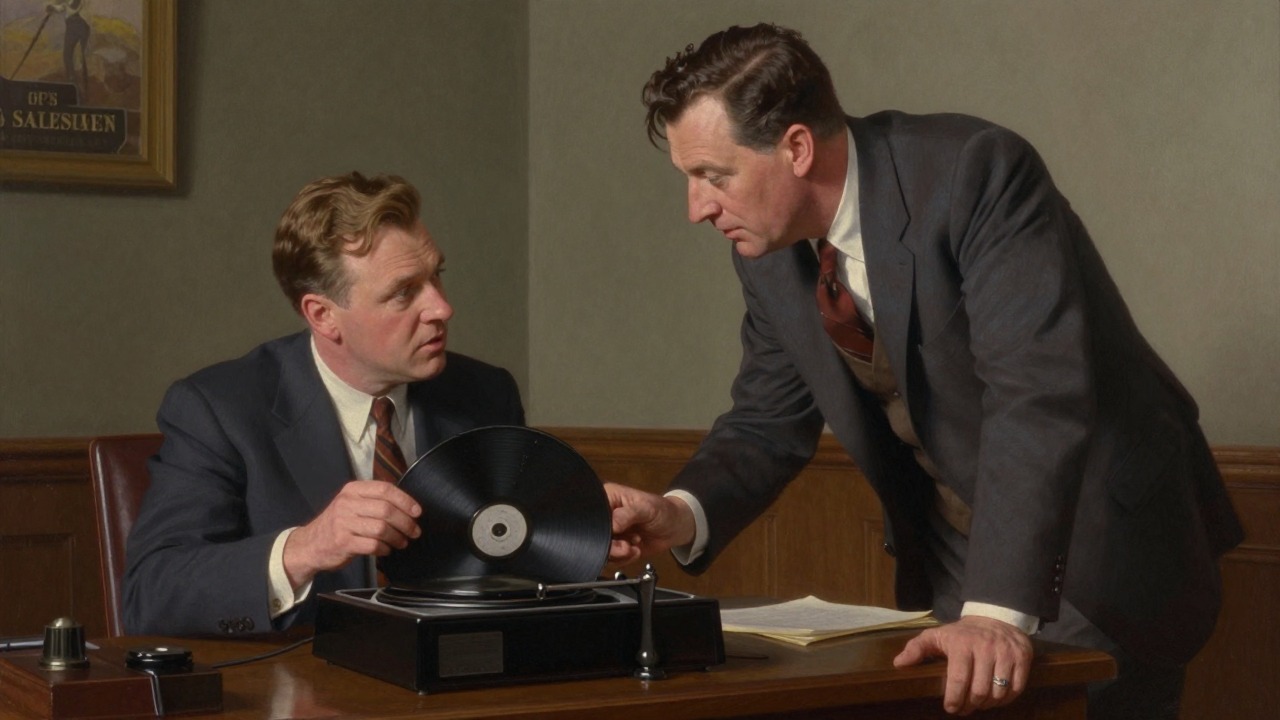
The Crushing Blow
Howard's Indifference
Willy enters Howard Wagner's office to find him absorbed in a new wire recorder. Howard's fascination with the machine and his family's recorded voices underscores his detachment from Willy's plight. Willy tries to discuss a transfer to New York, but Howard is distracted and dismissive.
The Plea and the Rejection
Willy recounts his years of service, invoking the memory of Howard's father, Frank Wagner. He tells the story of Dave Singleman, the eighty-four-year-old salesman who died in his green velvet slippers, to illustrate the nobility of selling. But Howard is unmoved. He fires Willy, telling him to take a rest and come back when he feels better, but that he cannot represent the firm.
Humiliation and Despair
Willy's desperation turns to anger, but he is powerless. The wire recorder accidentally plays Howard's son reciting state capitals, which seems to mock Willy's pleas. He leaves the office shattered, having lost his livelihood and his identity.
Borrowing from Charley
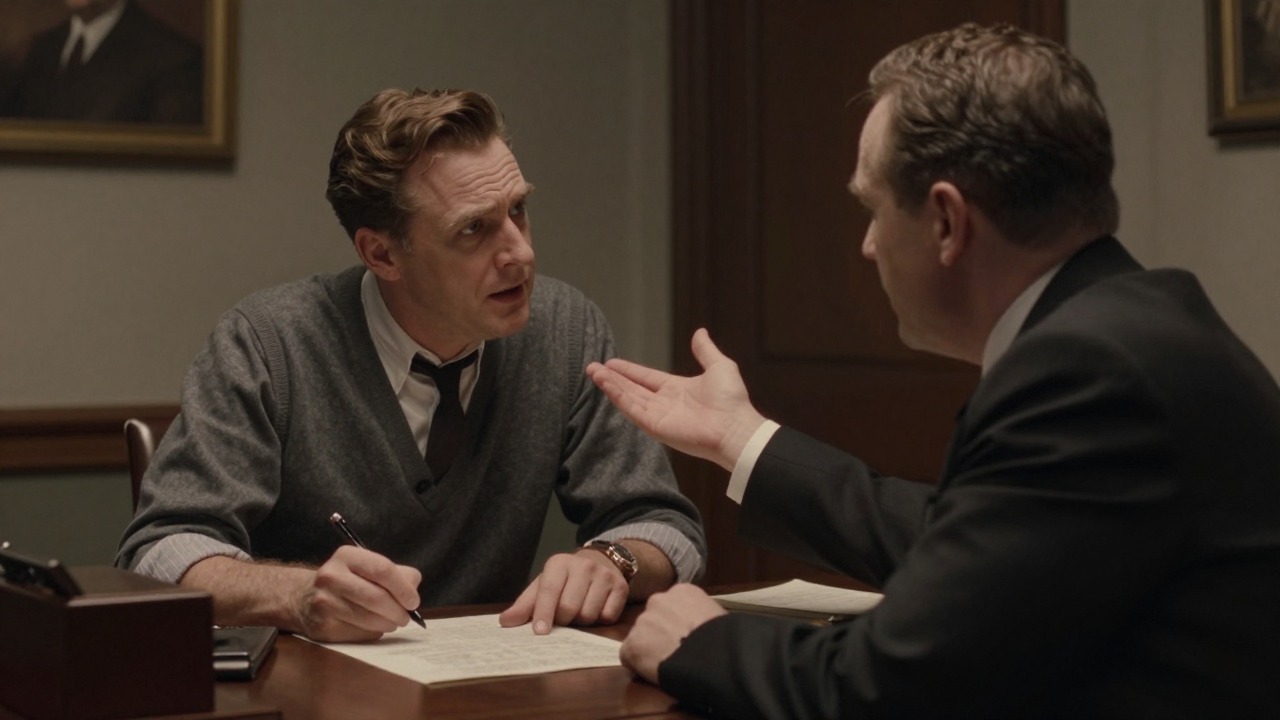
The Unwanted Charity
A Necessary Visit
After the firing, Willy goes to Charley's office, ostensibly to borrow money to pay the insurance. He encounters Bernard, now a successful lawyer arguing a case before the Supreme Court. Willy's envy and confusion surface as he asks Bernard the secret of his success.
Charley's Offer
Charley offers Willy a job, but Willy refuses out of pride. He cannot accept that his neighbor is more successful and that his own values have failed him. Charley gives him the money anyway, with the observation that "the only thing you got in this world is what you can sell."
A Moment of Insight
Willy acknowledges Charley as his only friend, but he cannot accept the reality of his situation. The visit deepens his sense of failure and isolation, pushing him further toward his tragic decision.
The Restaurant Disaster
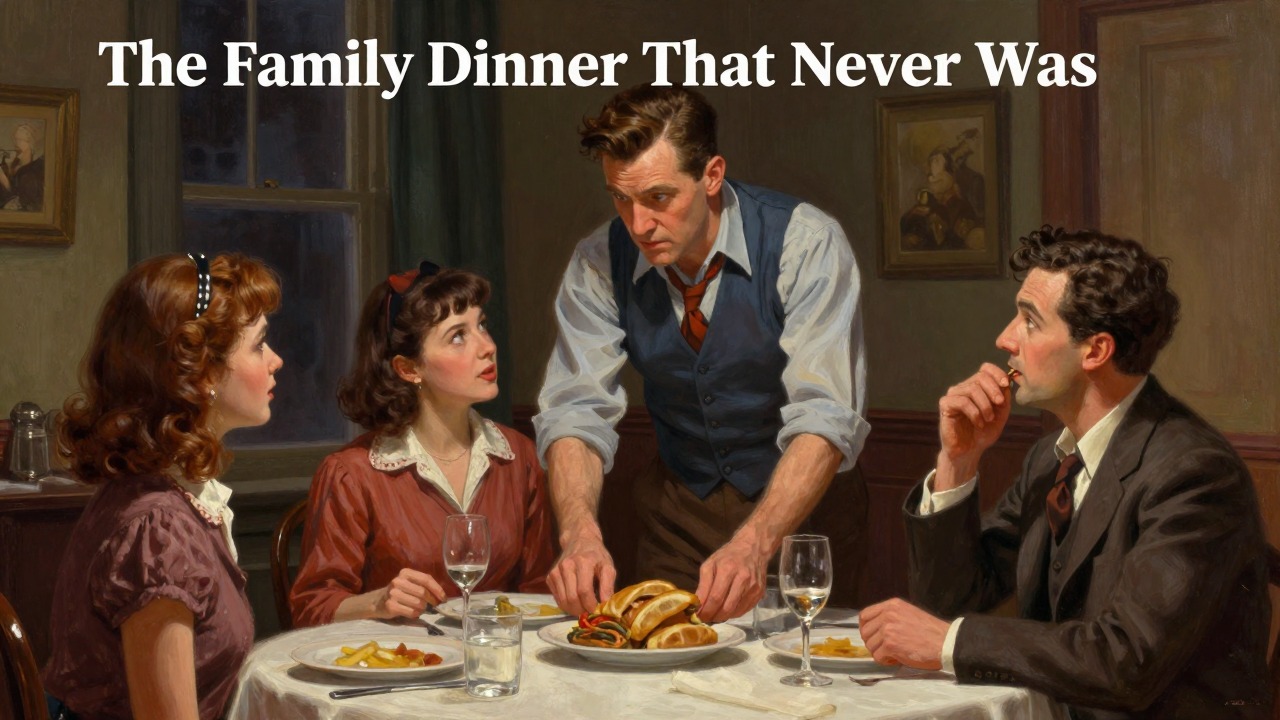
The Family Dinner That Never Was
Happy's Distractions
Happy arranges a dinner at Frank's Chop House to celebrate Biff's expected loan. He invites two girls, Miss Forsythe and Letta, turning the occasion into a pickup opportunity. Willy arrives, already desperate, hoping for good news.
Biff's Confession
Biff tries to tell Willy the truth: that Bill Oliver did not remember him and that he never was a salesman. He admits stealing Oliver's fountain pen. But Willy, manic and in denial, refuses to hear the truth. He hallucinates the past, reliving Biff's discovery of his affair in Boston.
Abandonment
In the midst of Willy's breakdown, Happy and Biff leave him alone in the restaurant with the girls. Willy is left babbling, imagining the voice of The Woman. The dinner ends in humiliation, with Willy wandering off to buy seeds.
The Garden at Midnight
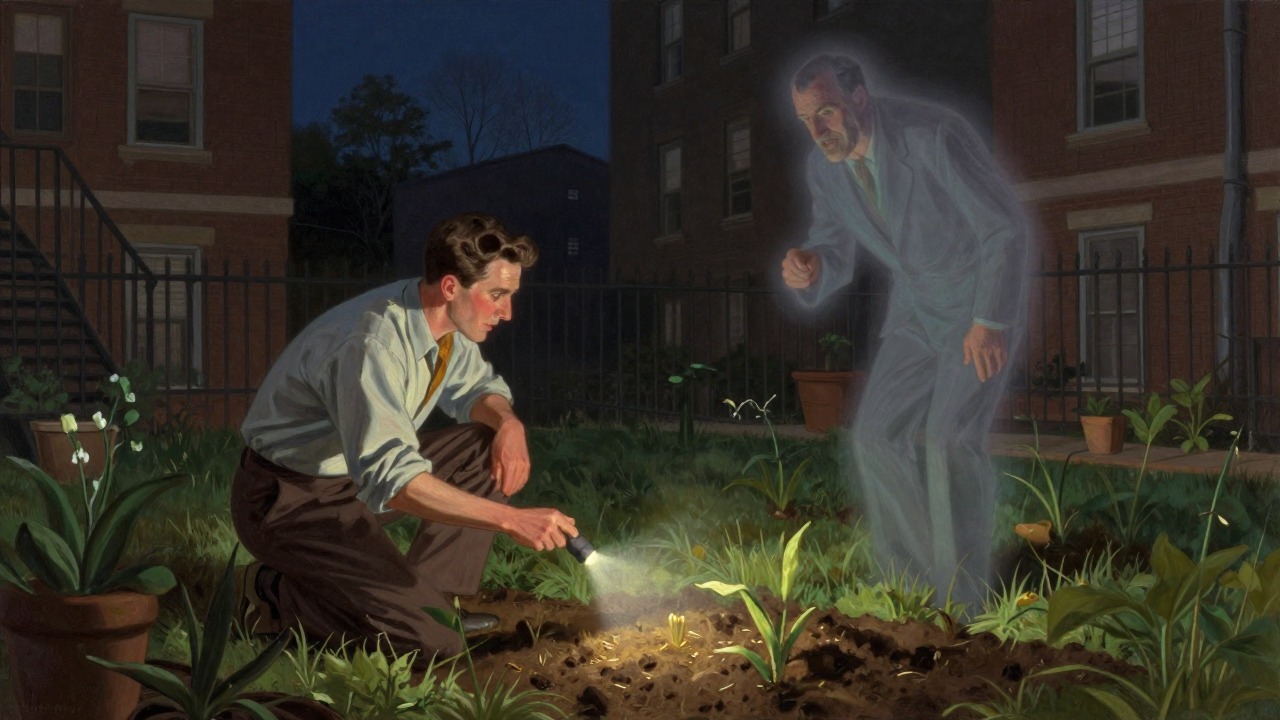
A Desperate Planting
Seeds of Illusion
Returning home, Willy goes into the backyard to plant seeds by flashlight. The apartment buildings tower around him, symbolizing the impossibility of his dream. He talks to Ben, who appears as a ghostly advisor, urging him to consider the insurance proposition.
The Final Argument
Biff confronts Willy outside, determined to end the cycle of lies. He tells Willy that he is not a leader of men, that they are both "a dime a dozen." But Willy, hearing Biff's tears, interprets them as love. He becomes convinced that Biff will be magnificent with the insurance money.
The Decision
Ben's voice reinforces the idea: "The jungle is dark but full of diamonds." Willy decides to commit suicide for the twenty-thousand-dollar payout. He rushes off, drives away, and the car crash is heard. The music swells, then fades into a cello's single note.
The Requiem
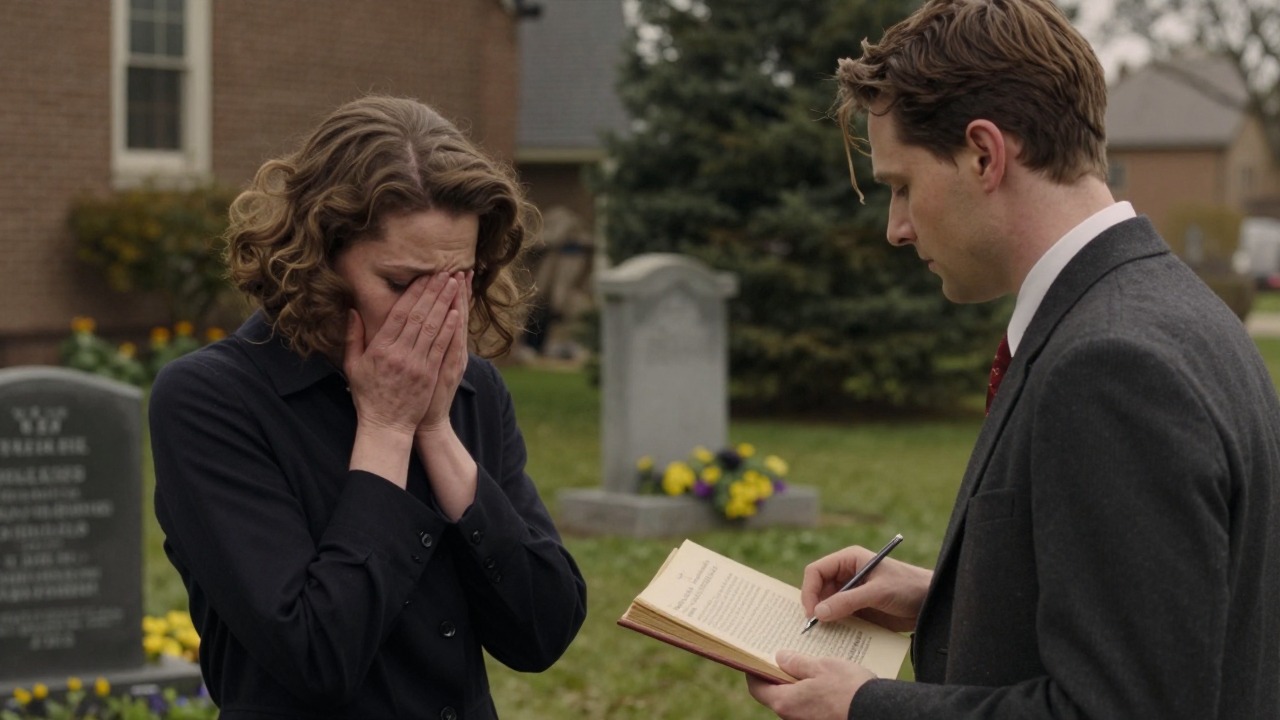
Aftermath of a Tragedy
Linda's Confusion
At the graveside, Linda cannot understand why no one else attended. She recalls that they were finally free of debt, that the house was paid off. The irony of their freedom is overshadowed by her grief.
Biff's Insight
Biff states that Willy had the wrong dreams and never knew who he was. He recognizes that his father was happiest working with his hands, not as a salesman. Biff decides to go West, leaving the city behind.
Charley's Defense
Charley defends Willy, saying that a salesman has to dream, that it comes with the territory. Happy vows to stay and win the racket for Willy. The play ends with Linda's final sobs: "We're free," as the flute melody returns, and the apartment towers loom over the stage.
Late evening, present day
Next morning, present day
Later that morning, present day
Afternoon, present day
Evening, present day
Late night, present day
At the funeral, the day after
