Wire recorder
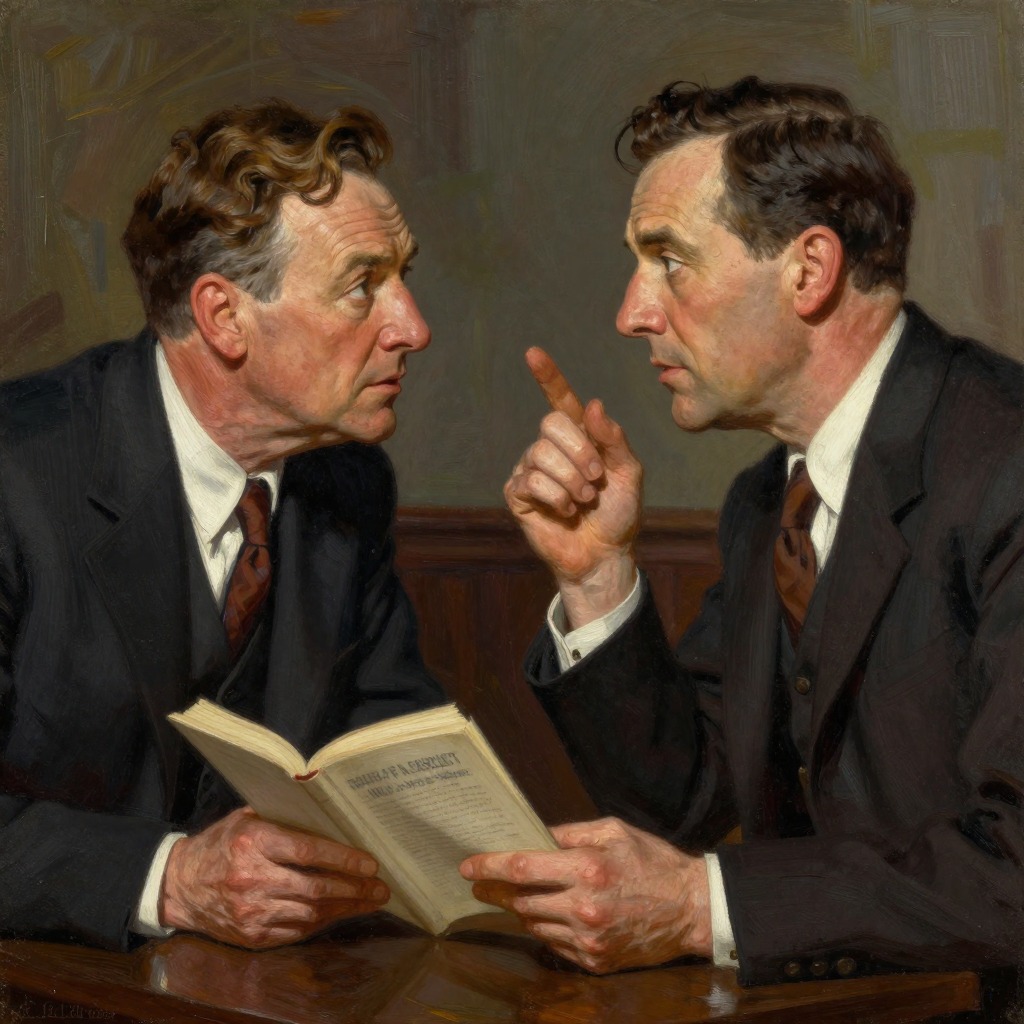
Death of a SalesmanThe wire recorder is a new dictation machine that Howard Wagner, the thirty-six-year-old son of the founder of the Wagner Company, has just purchased. When Willy Loman arrives at Howard's office to ask for a transfer to a non-traveling job in New York, Howard is preoccupied with demonstrating the machine's capabilities. He proudly plays back recordings of his seven-year-old daughter whistling "Roll out the Barrel," his five-year-old son reciting state capitals in alphabetical order, and his wife's shy, reluctant greeting. Howard describes the wire recorder as "the most terrific machine I ever saw in my life" and declares that it will replace his camera, bandsaw, and all his other hobbies as "the most fascinating relaxation I ever found." He explains to Willy that the machine can be set to automatically record radio programs, allowing him to listen to Jack Benny's show in the middle of the night whenever he comes home. The recorder costs a hundred and a half dollars, a sum that is far beyond Willy's means and that underscores the gulf between Howard's world of leisure and gadgets and Willy's desperate financial straits.
The Recorder as a Barrier to Communication
The wire recorder creates a profound barrier between Willy and Howard. Willy repeatedly tries to steer the conversation toward his request for a New York job, but Howard ignores him, insisting that Willy listen to the recordings. The machine embodies Howard's complete lack of interest in Willy's plight; he is more engaged with his new toy than with a loyal employee of thirty-four years. When Willy finally manages to state his case, Howard dismisses him with the cold business logic that "everybody's gotta pull his own weight" and that there is "no spot" for him in the New York office. The recorder thus serves as a dramatic device that establishes Howard's character as a man who values technology and efficiency over human relationships, directly contrasting with Willy's nostalgic belief in the importance of personality and being "well liked."
The Recorder's Role in Willy's Firing
The wire recorder is directly implicated in the moment of Willy's firing. After Howard leaves the office, Willy, alone and distraught, begins speaking to the ghost of his former boss, Frank Wagner, accidentally switching on the recorder. The machine suddenly blares out the son's voice reciting state capitals, startling Willy and causing him to shout in terror. Howard rushes back in, and in the ensuing confrontation, he tells Willy that he cannot represent the company anymore and that he needs "a good long rest." The recorder's jarring, mechanical interruption of Willy's private moment of grief and confusion marks the final breakdown of communication between the two men. The machine, which Howard had presented as a marvel of modern convenience, becomes an instrument of humiliation and dismissal, its cold, repetitive voice a stark contrast to the human warmth and connection that Willy craves.
Thematic Significance: Technology vs. Humanity
The wire recorder is a powerful symbol of the dehumanizing forces of modern capitalism that have left Willy Loman behind. Howard's fascination with the machine—his eagerness to record his children's voices and his wife's awkwardness—reveals a world where even family life is mediated by technology, where spontaneous human interaction is replaced by a recorded, reproducible product. Willy, by contrast, lives in a world of personal relationships, of jokes and smiles and handshakes, a world that the play suggests is vanishing. The recorder's ability to capture and replay sound at will represents a kind of control and permanence that Willy's life utterly lacks. His own memories are fragmented, unreliable, and painful, while Howard's machine offers a clean, orderly, and repeatable version of reality. The wire recorder is thus not merely a prop but a concentrated emblem of the play's central conflict between the old world of personal salesmanship and the new world of corporate efficiency, a world in which a man like Willy Loman has become obsolete.