
The Gom Jabbar and the Definition of Human
DuneExplores the Bene Gesserit test of humanity and its ethical shadows through Paul and Alia.
increasing Bearing strength in each event
 decreasing
Bearing strength in each eventdecreasingPain as a Sifting Screen
Pain as a Sifting Screen
Ancient Method
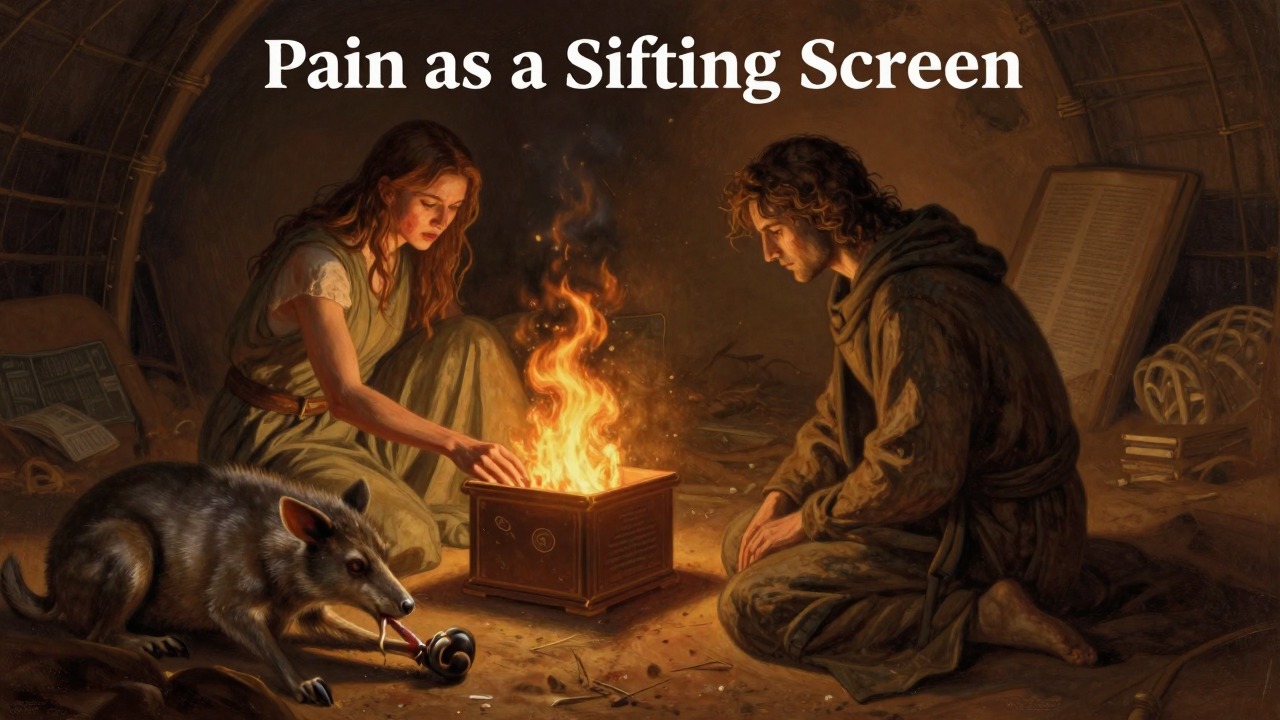
Reverend Mother Mohiam explains that the Bene Gesserit sift humans from animals through pain. The box burns while the Gom Jabbar waits.
Animal Trap
A human remains in the trap, endures pain, and waits to kill the trapper. An animal chews off its leg and flees.
Choice and Humanity
Paul passes by refusing to withdraw his hand. Humanity is defined not by intelligence but by the choice to endure.
The Poison Needle's Shadow
The Poison Needle's Shadow
Inherited Weapon
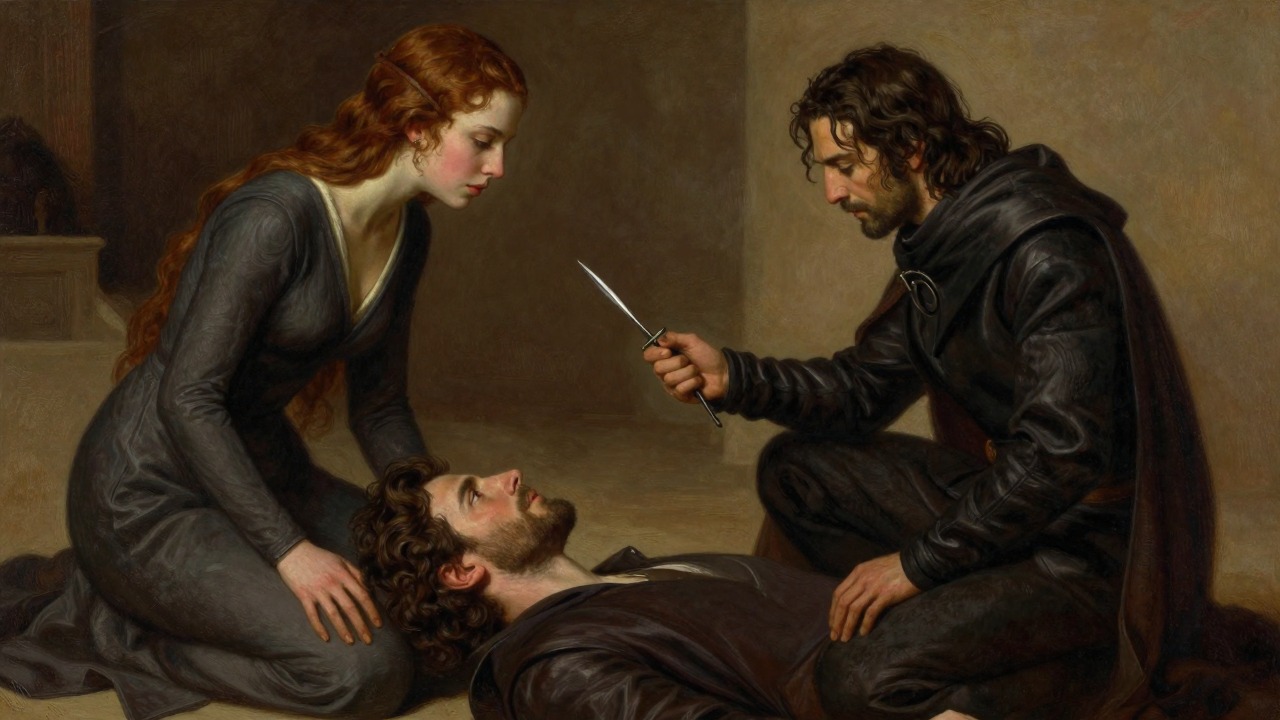
Alia carries the Atreides Gom Jabbar, a hidden needle, to the Baron's presence. She kills him with the same tool that once tested her brother.
Instrument of Justice
The needle is both death and judgment: it kills only animals, whoever they may be. The Baron's nature places him in that category.
Transformation of Symbol
The Gom Jabbar becomes a living curse of House Atreides. Its definition of humanity is now a political execution.
Humans and Monsters
Humans and Monsters
Beast in Human Shape
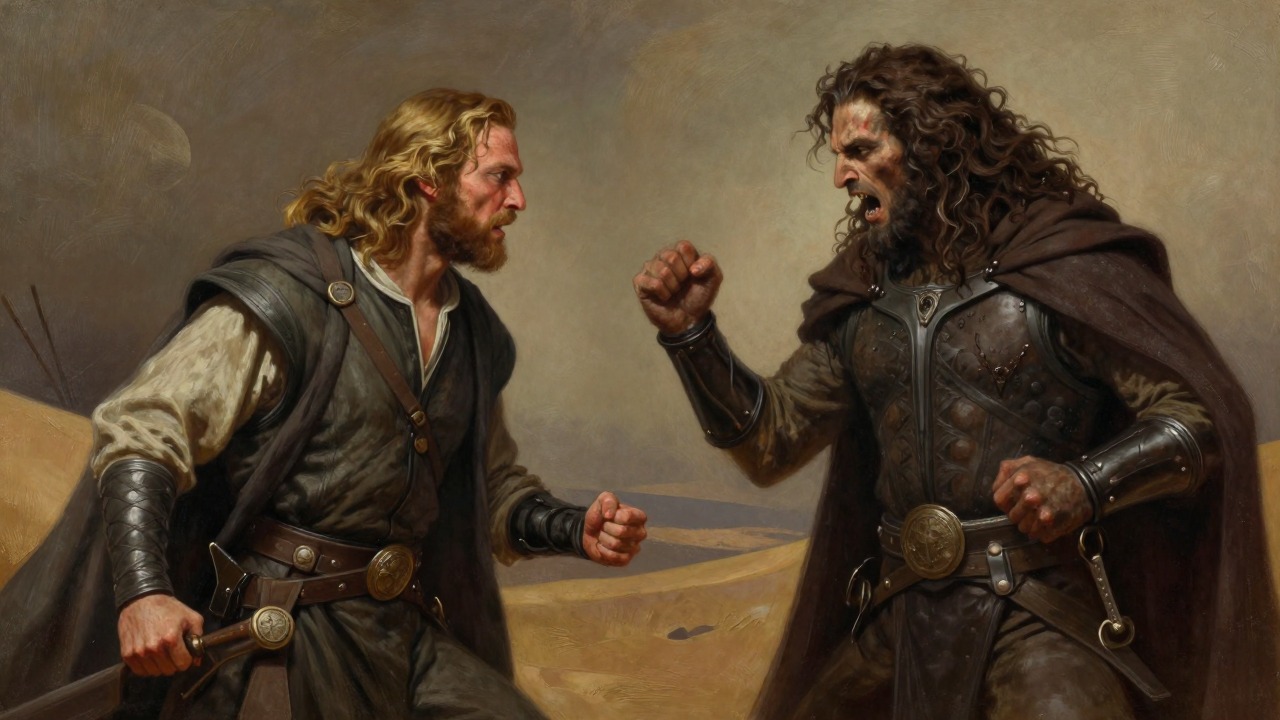
Feyd-Rautha embodies the Harkonnen cruelty dressed in civilized form. Paul's fight with him is a test of who is more human.
Refusal of Unfair Word
Paul refuses to use the Uroshnor word that would paralyze Feyd. He insists the duel be decided by strength, not secret conditioning.
Winner and Loser
Feyd's hidden poison needle proves him the animal. Paul's refusal elevates his own humanity and justifies his mercy.
Paul's test on Caladan
Alia's killing of the Baron
Paul's duel with Feyd-Rautha
