Thanksgiving
East of EdenThanksgiving in East of Eden is not a backdrop of simple gratitude but a recurring pressure point where family bonds are tested, secrets surface, and the trajectory of characters is decisively altered. The holiday appears twice in the novel, each time as a domestic ritual that fails to contain the tensions within the household, and each time the meal becomes the stage for a crisis that reshapes the lives of those seated at the table.
The Hamilton Thanksgiving of 1911
The first Thanksgiving occurs on the Hamilton ranch in 1911, when all the surviving children except Joe and Lizzie gather with their families. The home place flares up with noise and activity: children cry and fight, the men make trips to the forge and return self-consciously wiping their mustaches, and Liza’s kitchen stove never goes out. The beds are full, and comforters laid on pillows on the floor serve as beds for children. Samuel digs up his old gaiety, his sardonic mind glows, and his speech takes on its old singing rhythm. But the celebration is shadowed by a discovery the children make in outrage: Samuel is an old man. His shoulders slump, his toes drag, and his eyes are old. He goes to bed before midnight, weary and puzzled at himself. The children, gathered in the kitchen after the parents have retired, speak softly and pass whisky in round-bottomed jelly glasses. They realize that Samuel is dying of sorrow over Una’s death, and they turn on Tom, who has been there to watch it happen. Tom defends himself hoarsely, saying that Samuel told him again and again that a real man had no right to let sorrow destroy him, and he said it so often that Tom knew he was losing. The family decides to write a letter inviting Samuel and Liza to visit, hoping to freshen him, but Tom knows his father will see through the ruse. This Thanksgiving marks the beginning of the end for Samuel Hamilton, whose vitality had seemed immortal to his children.
The Trask Thanksgiving of 1917
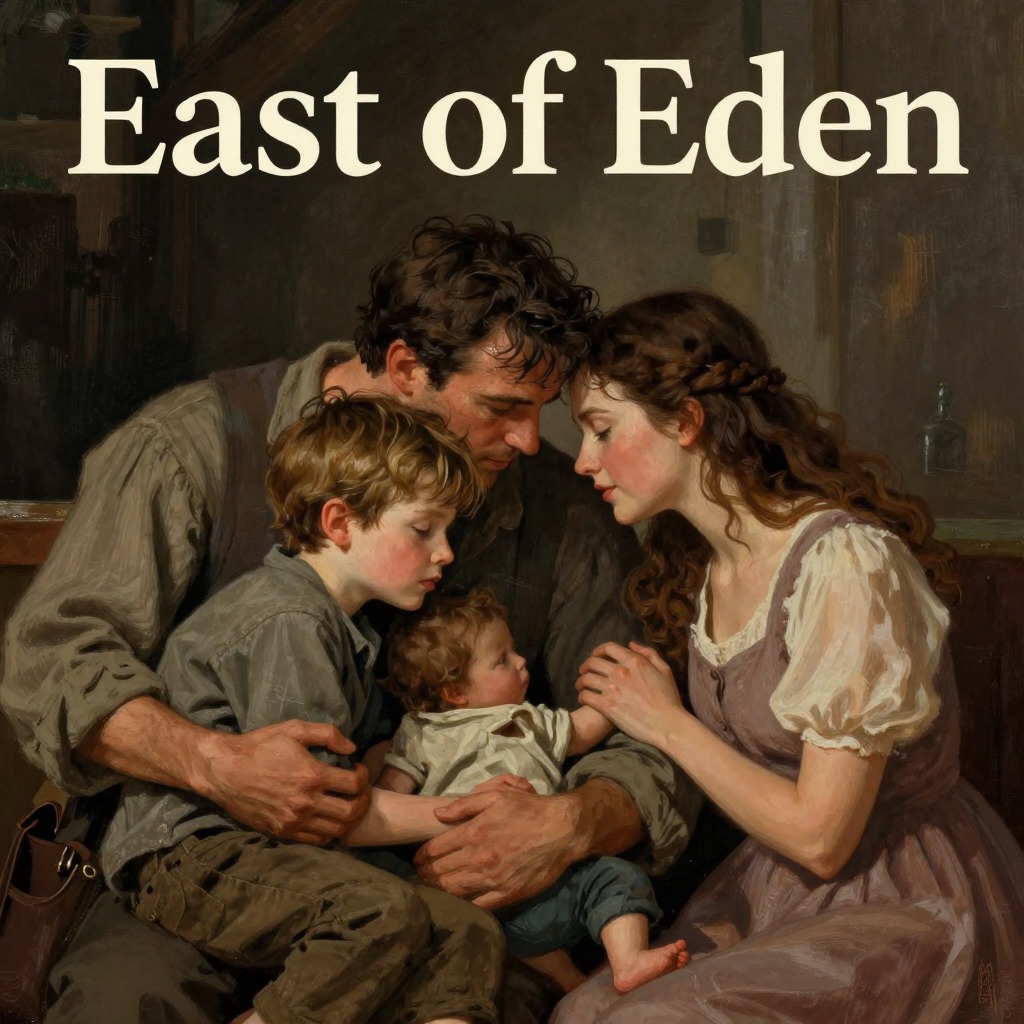
The second Thanksgiving, six years later, takes place in the Trask house next to Reynaud’s Bakery in Salinas. Adam has been waiting impatiently for Aron to come home from Stanford, and he has bought a massive gold watch to give him. Lee roasts an eighteen-pound turkey and bakes a cake, and Adam opens three bottles of Oeil de Perdrix champagne. The table is treated with ceremony: toasts are proposed, each person’s health is drunk, and Adam makes a little speech to Abra. Aron holds Abra’s hand under the table, and the wine dulls Cal’s nervousness. Adam declares that he does not remember when he has felt so good—fulfilled, at peace, with the family together. Then Cal reaches into his jacket pocket and pushes a red-ribboned package across the table. Adam unfolds the tissue paper and stares down at fifteen thousand dollars in gold certificates. Cal explains that he made the money on beans with Will Hamilton, buying futures at five cents and selling when the price jumped, and that it is for Adam to make up for the lettuce loss. Adam touches the new bills and folds the tissue over them. He looks helplessly at Lee and then says, “You’ll have to give it back.” Cal protests that the British Purchasing Agency cannot take it back and that they paid the farmers two cents over the market. Adam replies that he sends boys out to war, that some will die and some will lie helpless without arms and legs, and that he could not take a profit on that. He says he would have been so happy if Cal could have given him what his brother has—pride in the thing he is doing, gladness in his progress. Money, even clean money, does not stack up with that. Cal runs from the room, holding his breath, and the hate that seeps through him leads directly to his decision that night to take Aron to Kate’s house and reveal their mother. The Thanksgiving dinner that was meant to celebrate family unity instead shatters it, and the rejection of Cal’s gift becomes the proximate cause of Aron’s enlistment and death.
Thematic Significance
Thanksgiving in the novel functions as a ritual of failed communion. The Hamiltons’ gathering in 1911 exposes the family’s helplessness before Samuel’s decline, while the Trasks’ celebration in 1917 exposes the impossibility of buying love or atoning for guilt with money. Both meals are surrounded by alcohol—whisky at the Hamilton ranch, champagne at the Trask house—and both end with a child’s departure into darkness: Tom’s violent exit after being blamed for Samuel’s aging, and Cal’s flight into vengeful cruelty. The holiday, which ought to be a time of gratitude and unity, becomes instead the occasion for the deepest wounds in the novel’s two central families.