
The Ethics of Deception for Survival
Ender's GameAdults lie to Ender from his recruitment to the final revelation, arguing that the survival of humanity justifies the destruction of a child's innocence.
increasing Bearing strength in each event
 decreasing
Bearing strength in each eventdecreasingThe Recruitment Lie
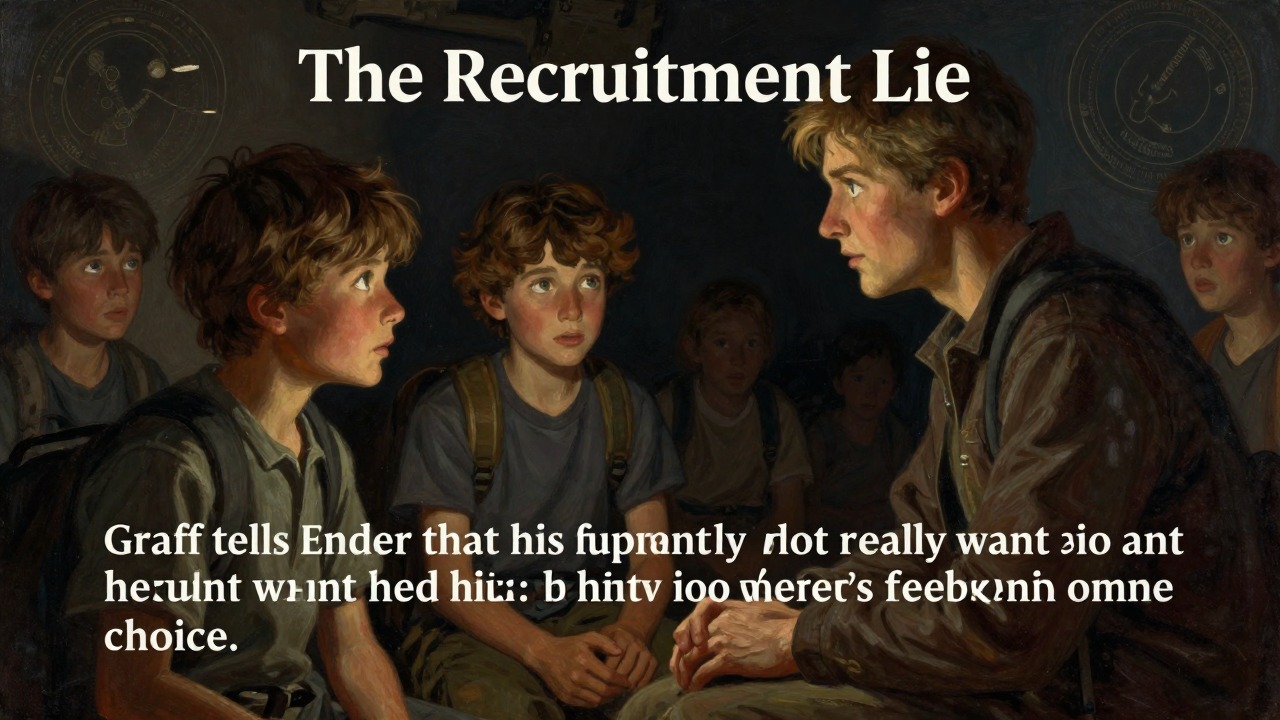
The Recruitment Lie
Graff tells Ender that his parents do not really want him and that humanity needs his genius. The truth is used as the most effective lie: it makes Ender feel he has no choice.
Context
Graff has been authorized to say or do whatever is necessary to secure Ender's consent.
Significance
The recruitment is the original sin from which all other deceptions flow.
The Censored Letters

The Censored Letters
The I.F. withholds letters from Ender's family and only sends Valentine's letter when it will psychologically benefit the training program. Ender is deliberately starved of love.
Context
Graff says isolation is the optimum environment for creativity. The letters are tools to be used.
Significance
Ender discovers the censorship and realizes that even his private memories are part of the military machine.
The Simulator as Lie

The Simulator as Lie
The Command School simulator is presented as a training game, but every battle is real. Ender is told he is playing; he is actually killing pilots and buggers.
Context
The deception is justified by the need for a commander with total emotional commitment. Only ignorance allows Ender's compassion to remain intact.
Significance
The simulator lie is the most extreme form of adult manipulation in the novel, and its revelation destroys Ender's faith in everything.
The Aftermath of Truth
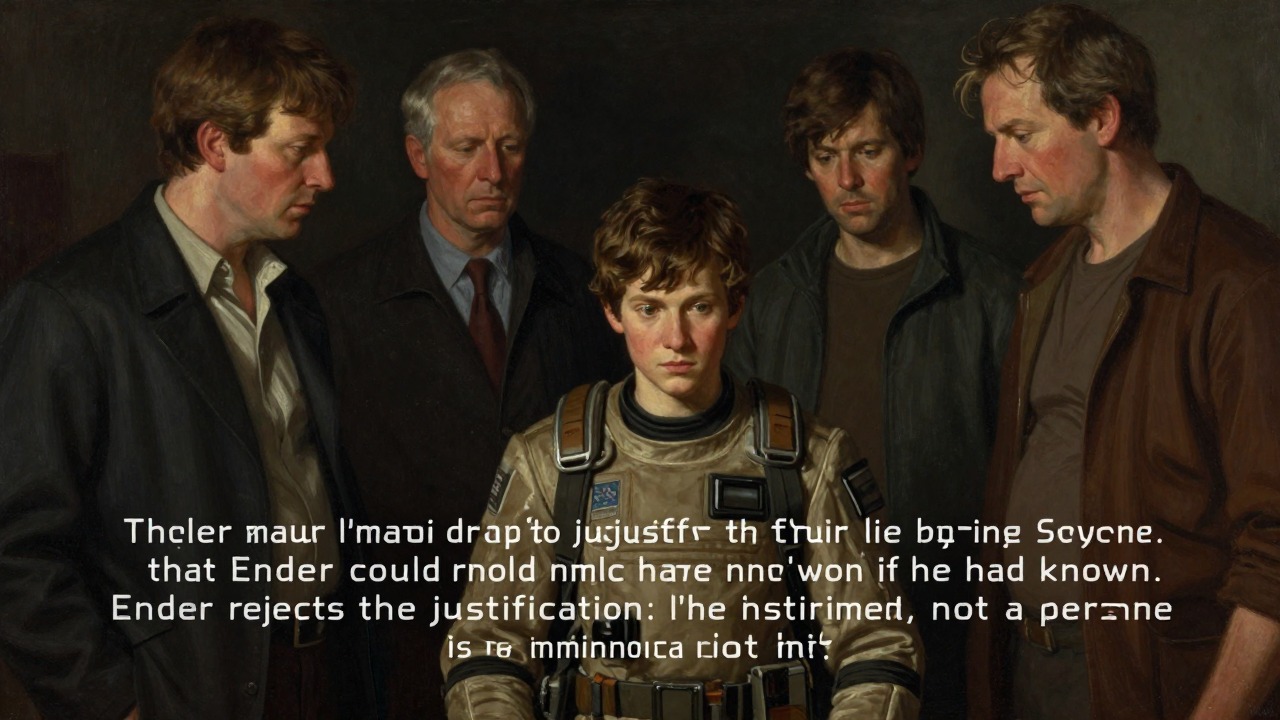
The Aftermath of Truth
Mazer and Graff try to justify their lie by saying that Ender could not have won if he had known. Ender rejects the justification: he was an instrument, not a person.
Context
The war is over, but Ender's emotional life is in ruins. The adults offer logic, not comfort.
Significance
The novel leaves the ethics unresolved: humanity survives because of the deception, but Ender is sacrificed to it.
Truth Through the Speaker
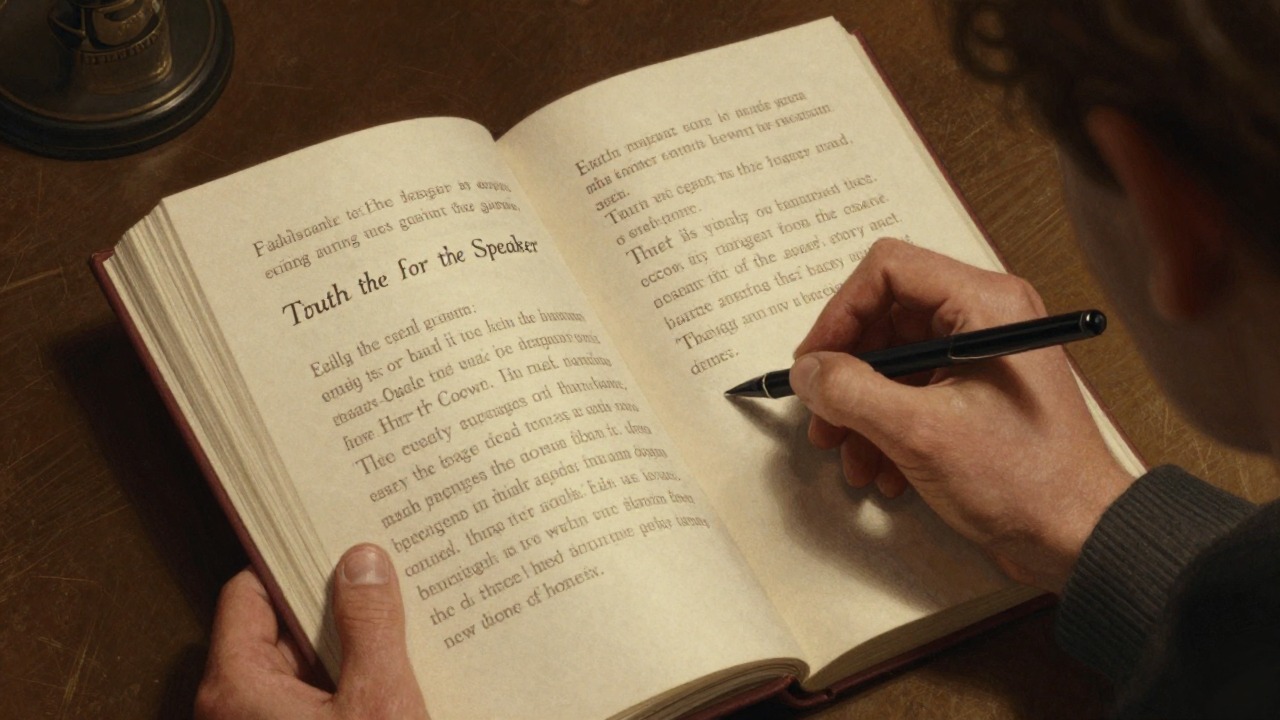
Truth Through the Speaker
Ender writes the Speaker for the Dead, telling the buggers' story and casting off the adults' lies. The book becomes a new scripture of honesty.
Context
He has spent years carrying the guilt and the Hive-Queen's Cocoon. Writing is his way of repairing the harm done by official secrecy.
Significance
Ender's book shows that the only cure for the ethics of deception is the relentless pursuit of truth, even when it is painful.
at the Wiggin home
throughout Ender's years at Battle School
during Command School
after the final battle
years after the war, when Ender writes his book
