
Graff's Deliberate Crucible
Ender's GameColonel Graff shapes Ender through isolation, cruelty, and rigged challenges, believing that only a broken and isolated child can save humanity.
increasing Bearing strength in each event
 decreasing
Bearing strength in each eventdecreasingThe Monitor Is the Final Test
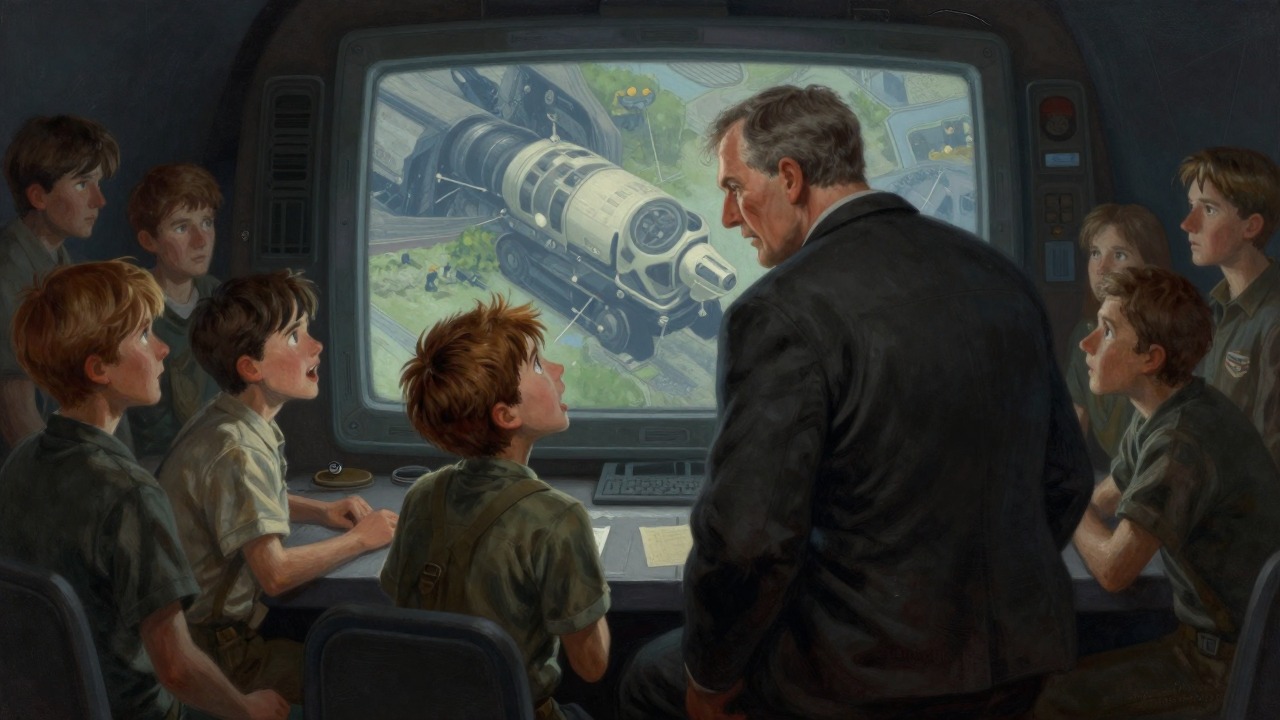
The Monitor Is the Final Test
Graff has been watching Ender through the monitor for years, and its removal is the last experimental step. He wants to see what Ender does without adult protection.
Context
Graff's team has already rejected Peter and Valentine. Ender's violent response to Stilson is the proof they need that he will fight without support.
Significance
The test is a kind of indoctrination: Ender learns that no adult will rescue him, which is exactly the belief Graff wants to implant.
Creating Enemies on the Shuttle
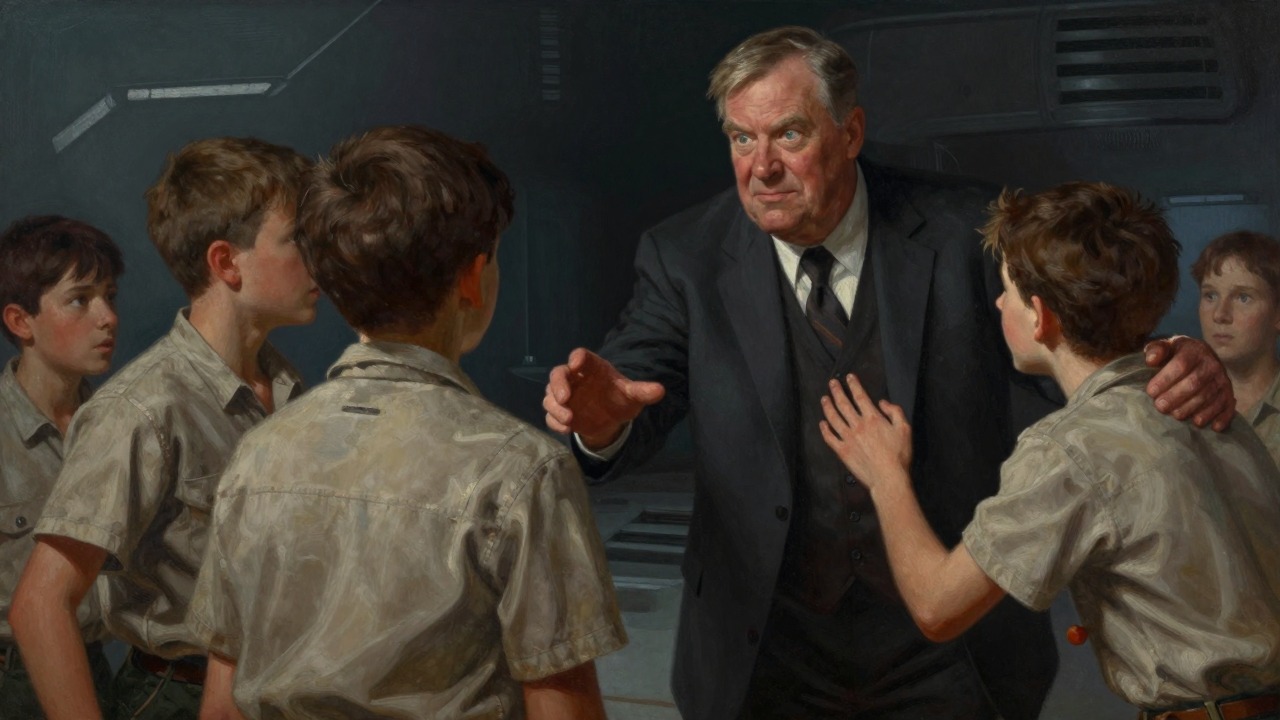
Creating Enemies on the Shuttle
Graff publicly praises Ender and calls him the best boy in the launch, deliberately making the others hate him. He then refuses to stop a boy from hitting Ender from behind.
Context
Graff's goal is to isolate Ender, because friendship makes a commander soft and dependent. The anger of the other boys keeps Ender constantly alert.
Significance
The shuttle incident establishes Ender's pattern of solitary excellence and lays the foundation for his permanent loneliness.
Structural Isolation
Structural Isolation
Graff gives Ender no respite: he is promoted early, assigned to hostile armies, and given no chance to build lasting friendships. The system surrounds him with rivals and subordinates.
Context
Graff and Anderson monitor every relationship. They allow Ender enough friendship to keep him sane, but always remove it when it becomes a support.
Significance
This isolation is not cruelty for its own sake; it is the forging of a man who can trust no one but himself and therefore can make impossible decisions alone.
Rigging the Game
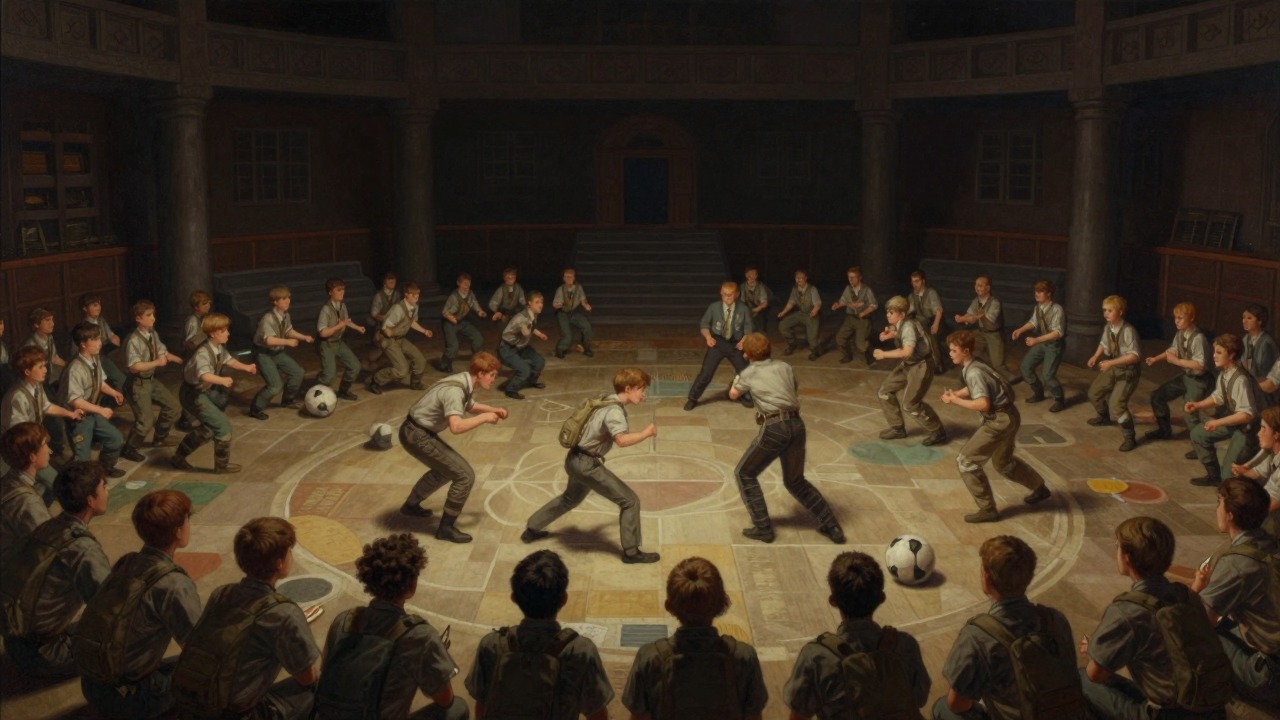
Rigging the Game
Graff orders Anderson to design unfair battles for Ender's Dragon Army: daily fights, two armies at once, and twisted star arrangements. He wants Ender pushed past his limits.
Context
Anderson protests that the Battle School game will become meaningless, but Graff insists that the real war is coming and Ender must be ready at any cost.
Significance
Graff's rigging forces Ender to innovate endlessly and desensitizes him to unfairness, which later makes it possible for him to believe the equally rigged Command School simulations.
The Court Martial Defense
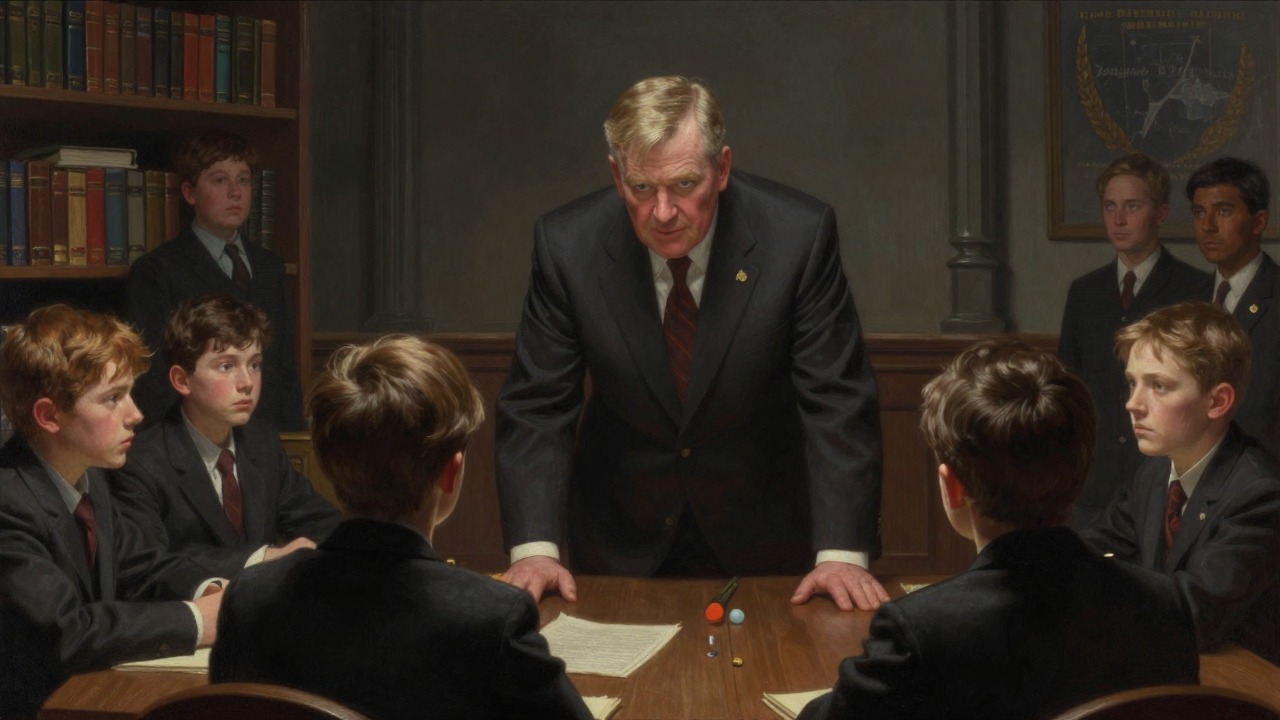
The Court Martial Defense
Graff is court-martialed for his treatment of Ender, but he is acquitted because the judges accept that his methods were necessary for the survival of humanity.
Context
The prosecution uses videos of Ender's fights with Stilson and Bonzo to show that Graff created a killer. Graff's defense is that Ender's empathy and violence won the war.
Significance
The trial is a public reckoning with the ethics of what Graff did, but it changes nothing: Ender remains a hero and Graff becomes Minister of Colonization.
the day Ender loses his monitor
en route to Battle School
Ender's first years at Battle School
after Ender becomes the youngest commander
after the League War
