
The Theme of Fire: Destruction and Renewal
Fahrenheit 451Explores the dual nature of fire as a tool of state control and a symbol of regeneration, culminating in the Phoenix metaphor.
increasing Bearing strength in each event
 decreasing
Bearing strength in each eventdecreasingFire as Pleasure
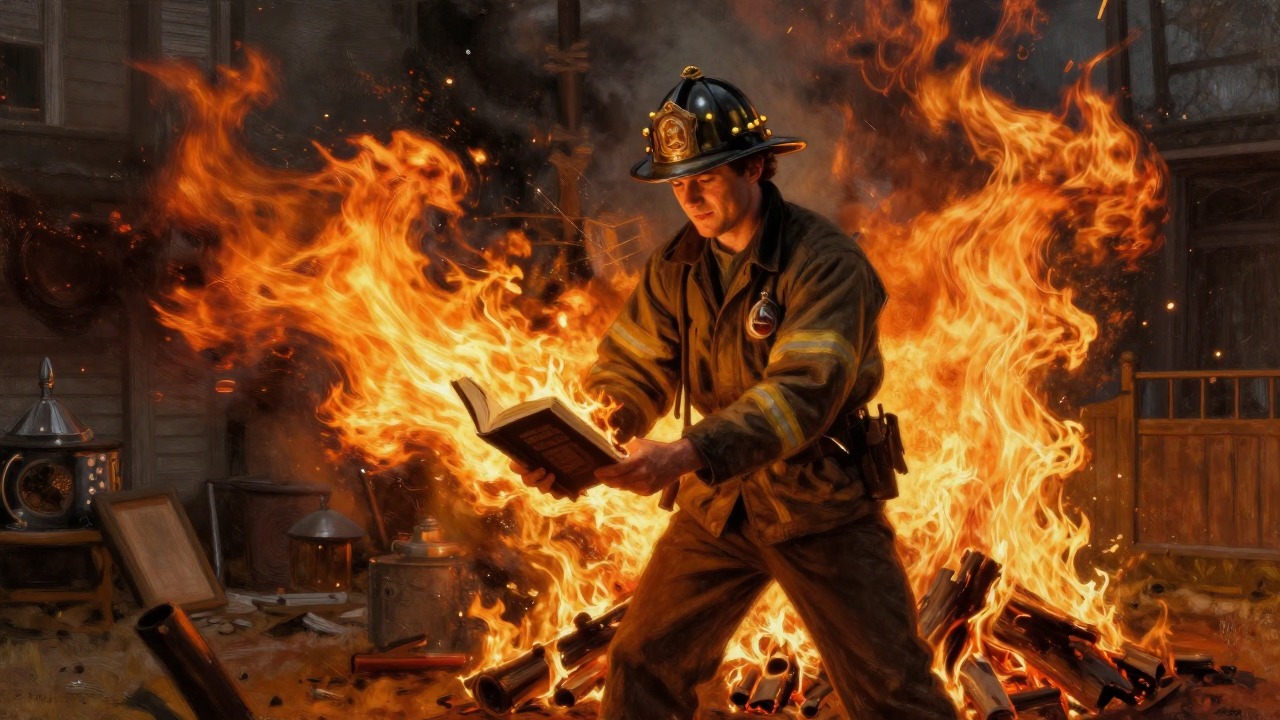
The Joy of Burning
Montag's Initial Attitude
In the opening lines, Montag revels in burning books. He describes the fire as a 'special pleasure' and compares himself to a conductor. Fire is his identity and his joy.
The Fireman's Pride
He wears his helmet like a crown and feels powerful. The firehouse and the Salamander are his home. This chapter establishes fire as a positive force in his world.
The Change
Later, after the old woman's suicide, fire begins to feel different. The pleasure is tainted by guilt. The shift in his perception of fire mirrors his moral awakening.
Fire as Destruction of Conscience
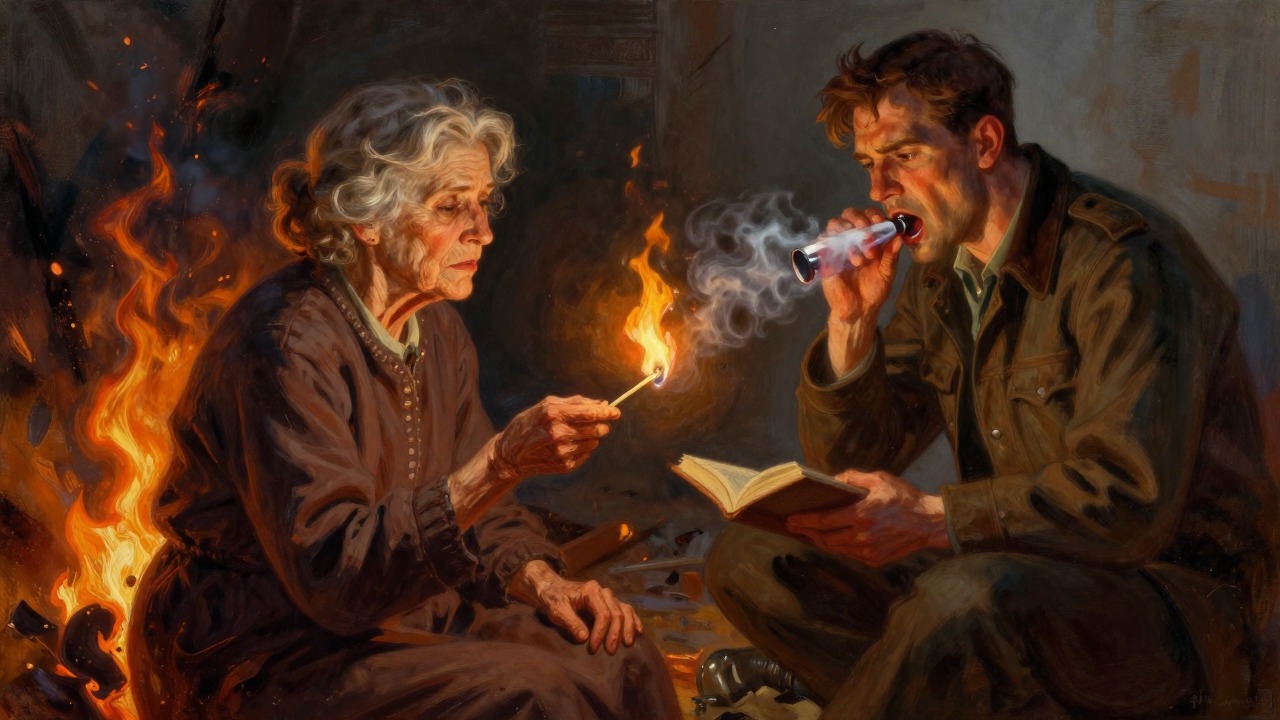
The Horror of Flames
The Old Woman's Sacrifice
When the old woman strikes the match, she transforms fire from a tool of oppression into a weapon of martyrdom. Montag is horrified.
The Burden of Guilt
Fire becomes associated with death and guilt. Montag vomits from the smell of kerosene. He cannot escape the memory of the woman burning.
The Beginning of Doubt
This event is the turning point. Fire is no longer cleansing; it is murderous. Montag's conscience is awakened, and he begins to reject his role.
Fire as Rebirth
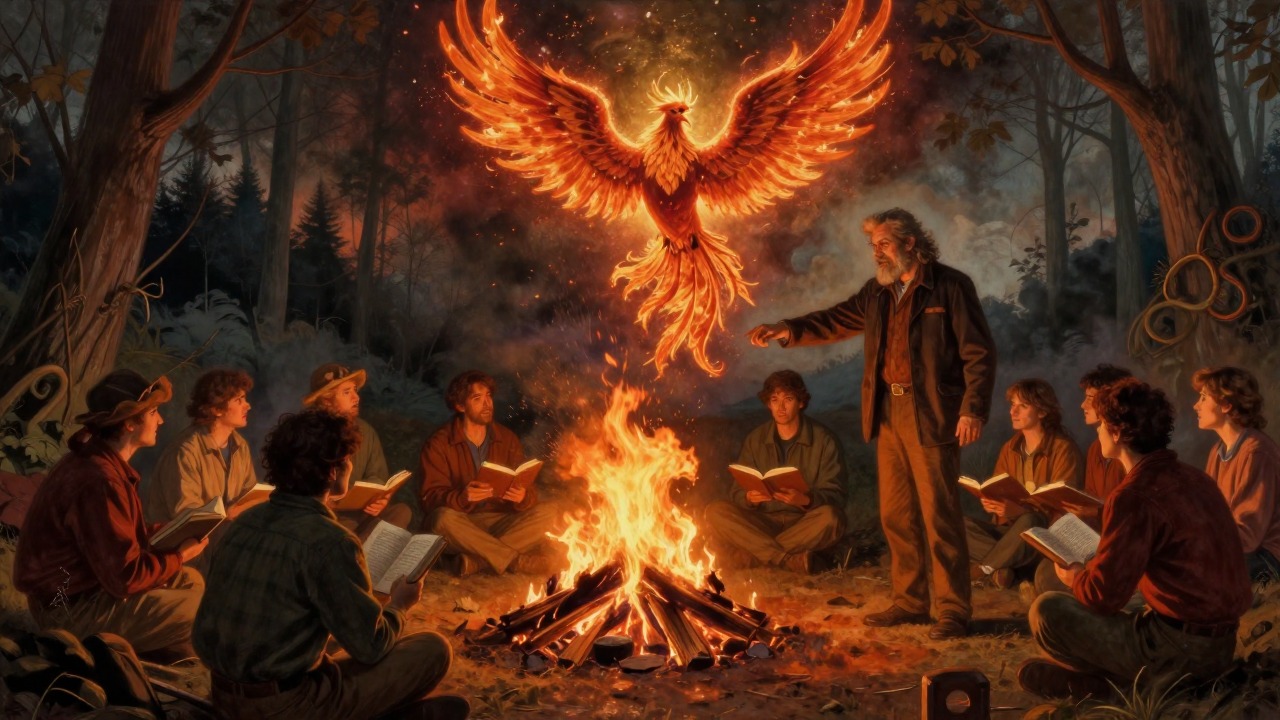
The Warmth of Community
A Different Fire
After escaping, Montag sees a campfire where the book people are gathered. The fire is warm, not destructive. It is used for cooking and companionship.
The Phoenix Myth
Granger tells the story of the Phoenix, a bird that burns itself and is reborn. He compares it to humanity, which can be reborn after destruction.
A New Relationship with Fire
Montag learns that fire can give as well as take. The fire he now tends is a source of life, not death. This reframes the entire novel's imagery.
Opening of the story
The burning of the old woman
The campfire scene with Granger
