
Victor's Guilt and Remorse
Frankenstein, or the Modern PrometheusVictor's internal torment as he realizes the consequences of his creation, a theme of guilt that deepens with each death.
increasing Bearing strength in each event
 decreasing
Bearing strength in each eventdecreasingThe First Deaths
The Weight of Guilt
The Realization
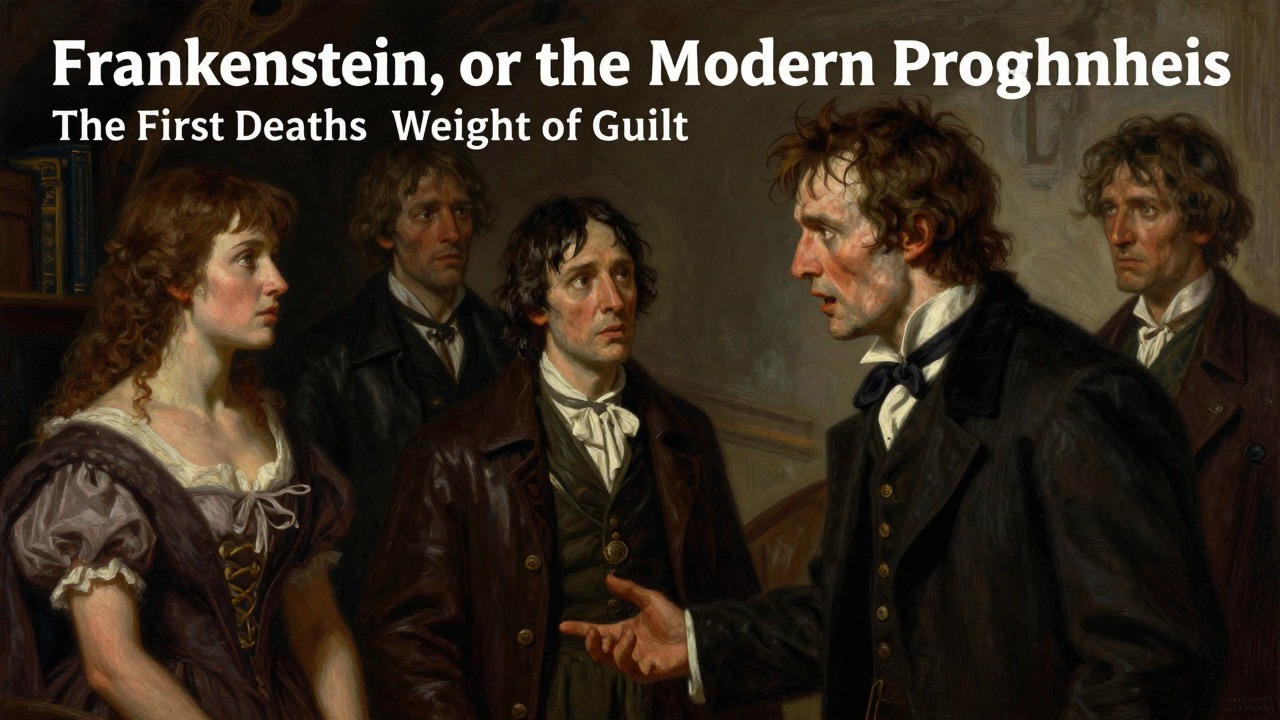
Victor knows that the monster murdered William, and he feels responsible. When Justine is executed for a crime she did not commit, Victor's guilt becomes unbearable. He is the true murderer, as he created the monster. He is haunted by the faces of the victims.
The Torment of Silence
Victor cannot reveal the truth without being thought mad. He must bear the guilt alone, watching his family mourn. He isolates himself, unable to find comfort in their presence. The knowledge that he could have prevented the deaths by destroying the monster earlier gnaws at him.
The Nightmare Continues
Victor's guilt manifests in nightmares and feverish hallucinations. He sees the monster everywhere. He believes that he is cursed and that his destiny is to bring misery to everyone he loves. The sense of guilt becomes a permanent part of his identity.
After Clerval's Death
A Deeper Despair
The Confession
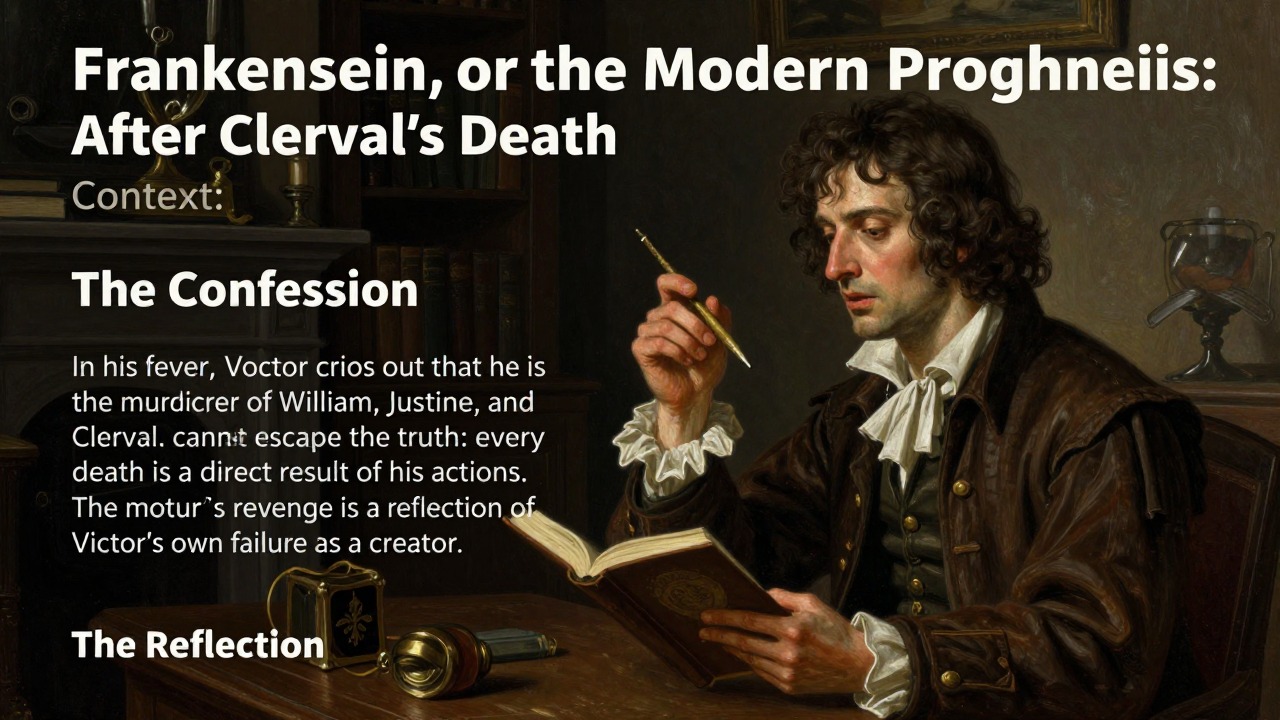
In his fever, Victor cries out that he is the murderer of William, Justine, and Clerval. He cannot escape the truth: every death is a direct result of his actions. The monster's revenge is a reflection of Victor's own failure as a creator.
The Reflection
Victor's father tries to comfort him, but Victor cannot accept consolation. He feels that he is beyond redemption. He considers suicide, but the thought of the monster still alive and free prevents him. He must live to finish what he started.
The Burden of Revenge
Victor's guilt transforms into a consuming need for revenge. He believes that only by destroying the monster can he atone for his sins. But the guilt never leaves him; it drives him forward, even as it destroys his sanity.
After the murder of William and execution of Justine
During Victor's imprisonment in Ireland
