
The Theme of Hunger as a Catalyst
HungerHow hunger drives the protagonist's actions, perceptions, and mental state, transforming him and his environment.
increasing Bearing strength in each event
 decreasing
Bearing strength in each eventdecreasingHunger as a Physical Force
Hunger as a Physical Force
The Gnawing in the Chest
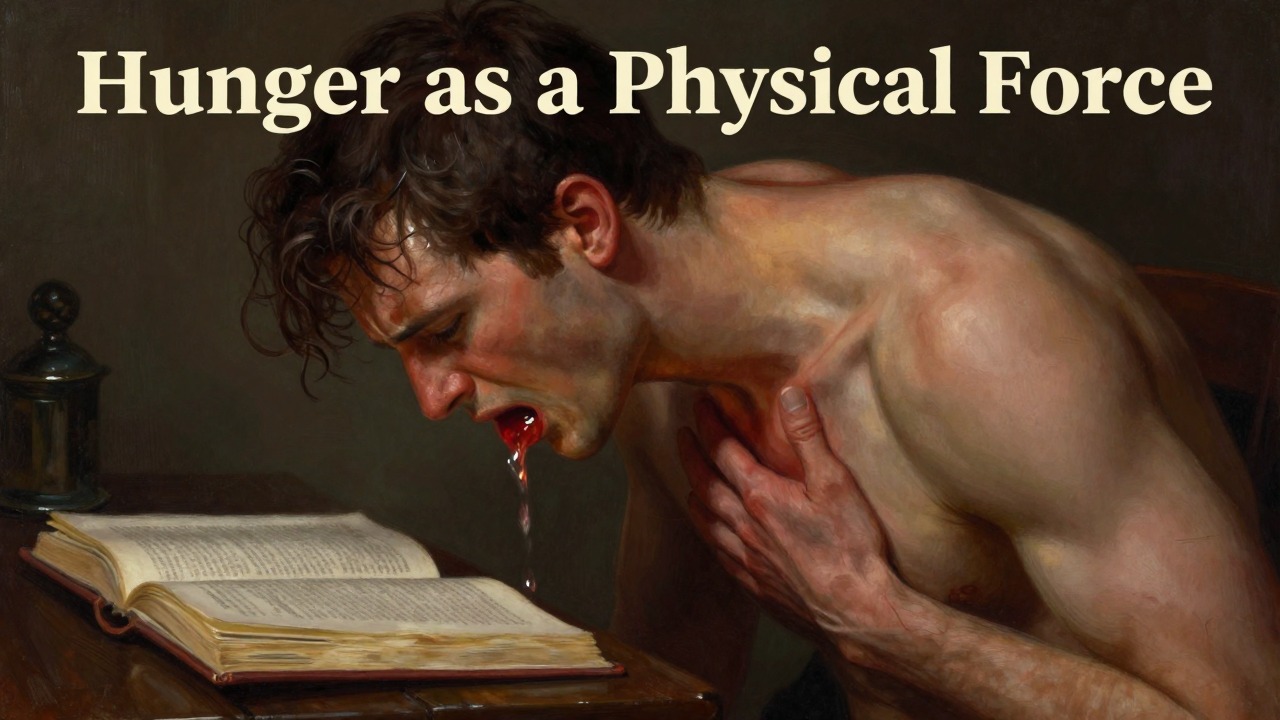
Hunger is described as a physical pain, a gnawing in the chest, a feeling of emptiness. The protagonist's back and shoulders ache. He vomits when he tries to eat.
The Hunger Drives Madness
When he is hungry for a long time, his brain feels empty. He has visions, invents words, and becomes erratic. Hunger is directly linked to his mental deterioration.
The Hunger Shapes Perception
He sees food everywhere. The smell of cooking makes him nauseous. He chews wood, shavings, and a bone. Hunger dominates his existence.
Hunger and Social Status
Hunger and Social Status
The Mark of Poverty
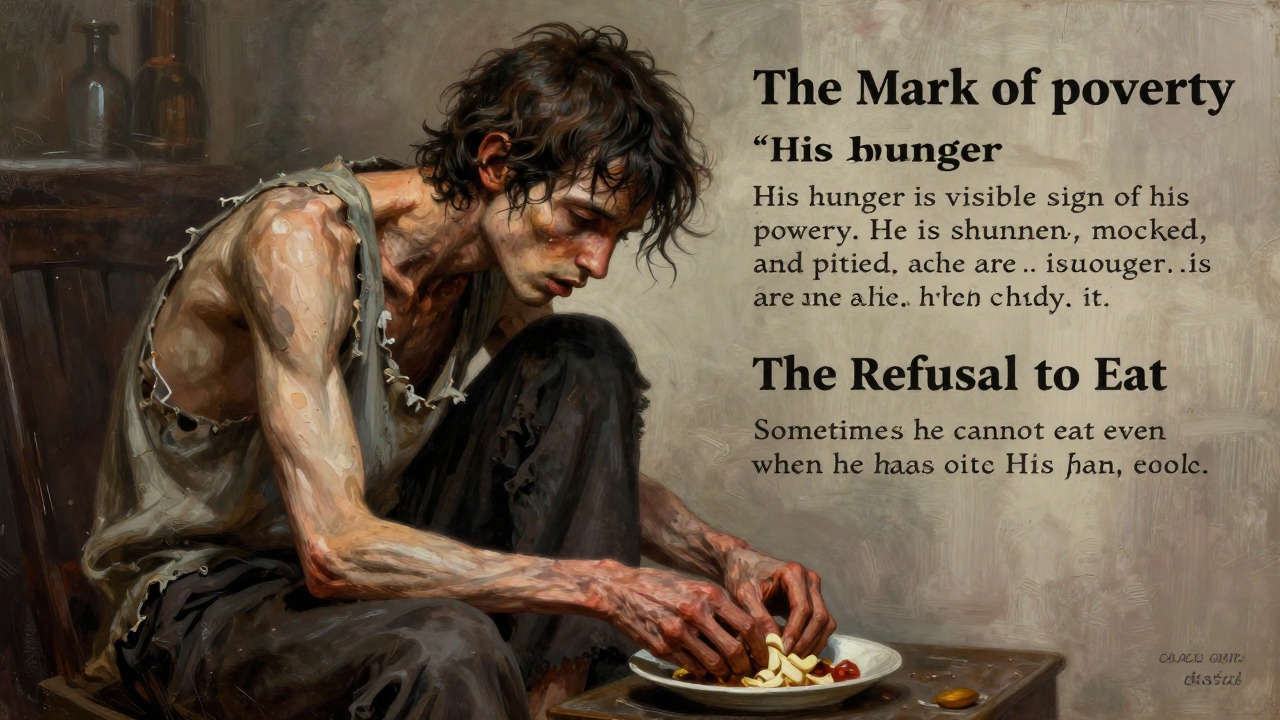
His hunger is a visible sign of his poverty. He is shunned, mocked, and pitied. His clothes are shabby, his body thin.
The Refusal to Eat
Sometimes he cannot eat even when he has food. His body rejects it. Hunger has become a condition that is beyond his control.
The Hunger as a Leveler
Hunger strips him of his humanity. He is reduced to an animal, eating a raw bone. It is the ultimate degradation.
The Illusions of Fullness
The Illusions of Fullness
The Paper Cone Trick
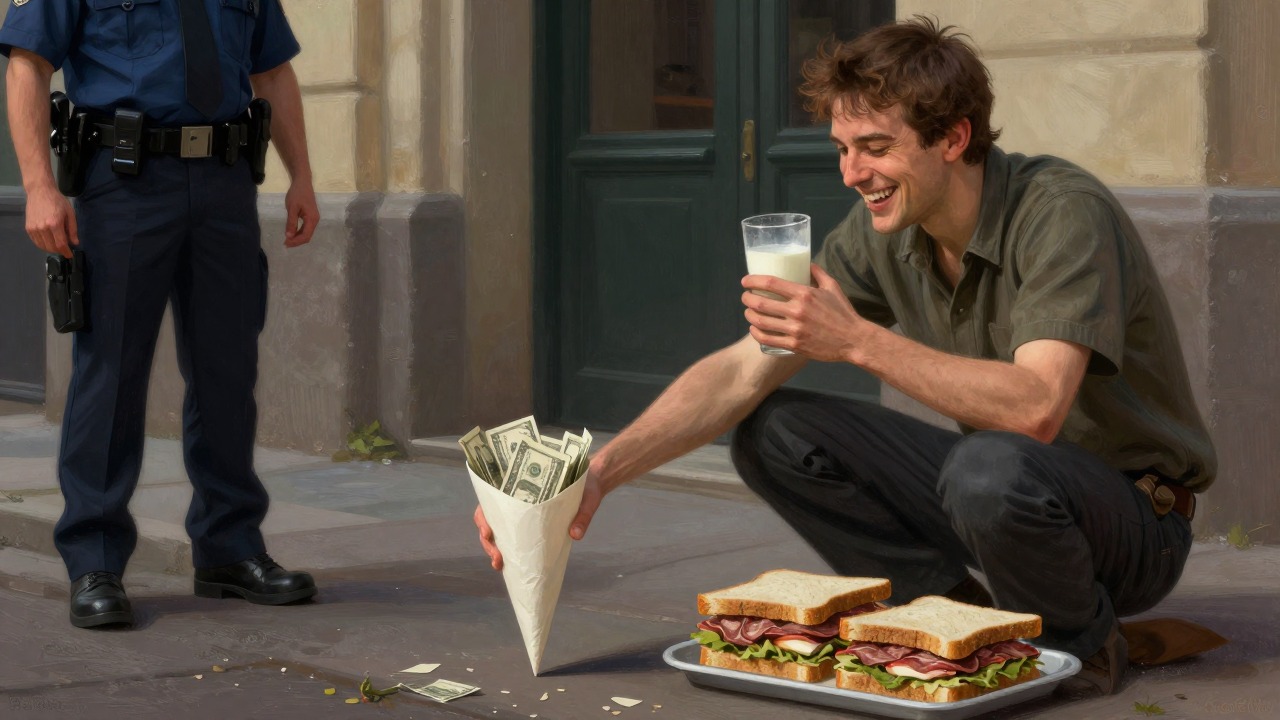
He throws a paper cone filled with nothing onto the pavement, pretending it is full of money. He watches a policeman pick it up, laughing at his disappointment.
The Fantasy of Food
He dreams of meat, bread, and milk. He imagines a tray of sandwiches. These fantasies are a substitute for real food.
The Temporary Relief
When he eats, he is often sick. The satisfaction is fleeting. Hunger always returns, stronger than before.
Throughout the novel
Throughout
Part I and II
