
The Theme of Madness and Sanity
HungerThe protagonist's constant questioning of his own sanity, and the blurred line between madness and hunger-induced delirium.
increasing Bearing strength in each event
 decreasing
Bearing strength in each eventdecreasingThe Awareness of Insanity
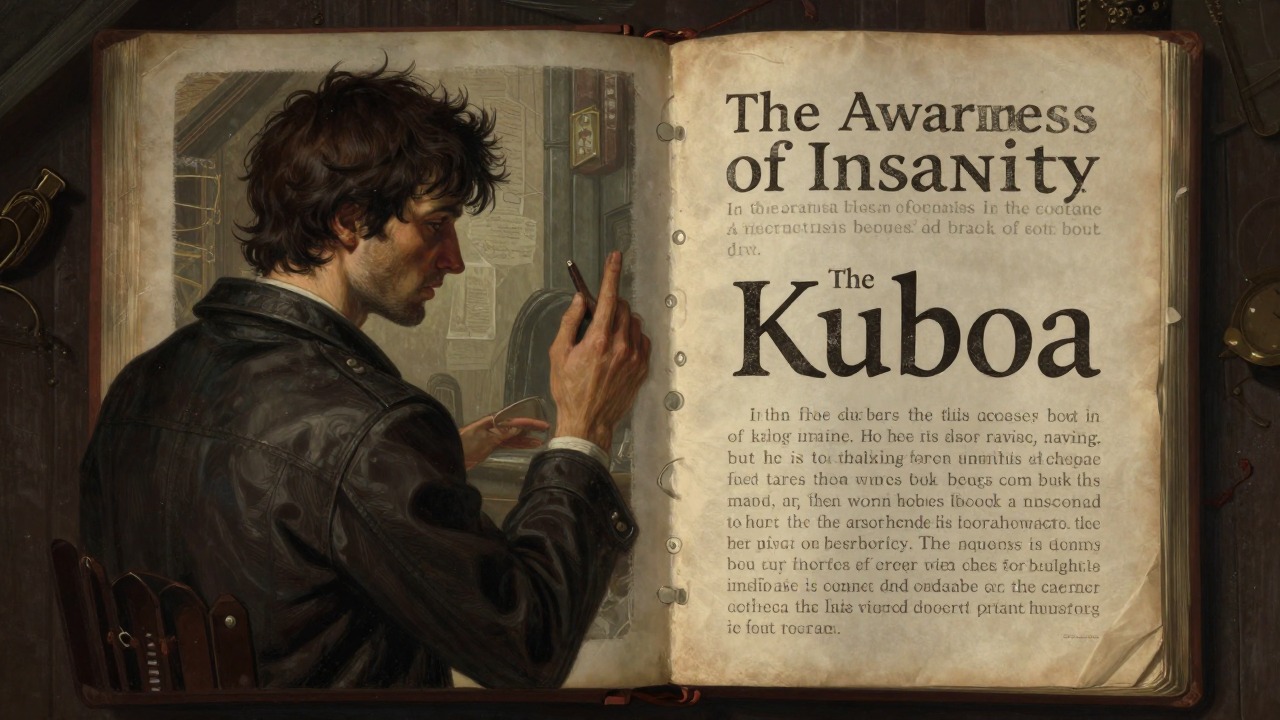
The Awareness of Insanity
The Fear of Madness
In the dark cell, the protagonist fears he is going insane. He hears himself raving, but he is also aware of it. He tries to control his thoughts, but fails.
The Word 'Kuboa'
He invents a word and becomes obsessed with its meaning. He argues with himself, unable to decide. He knows this is irrational, but he cannot stop.
The Morning Calm
When daylight comes, he calms down. He rationalizes that he was not truly mad, only weakened by hunger. The episode leaves him shaken.
The Madness in the Streets
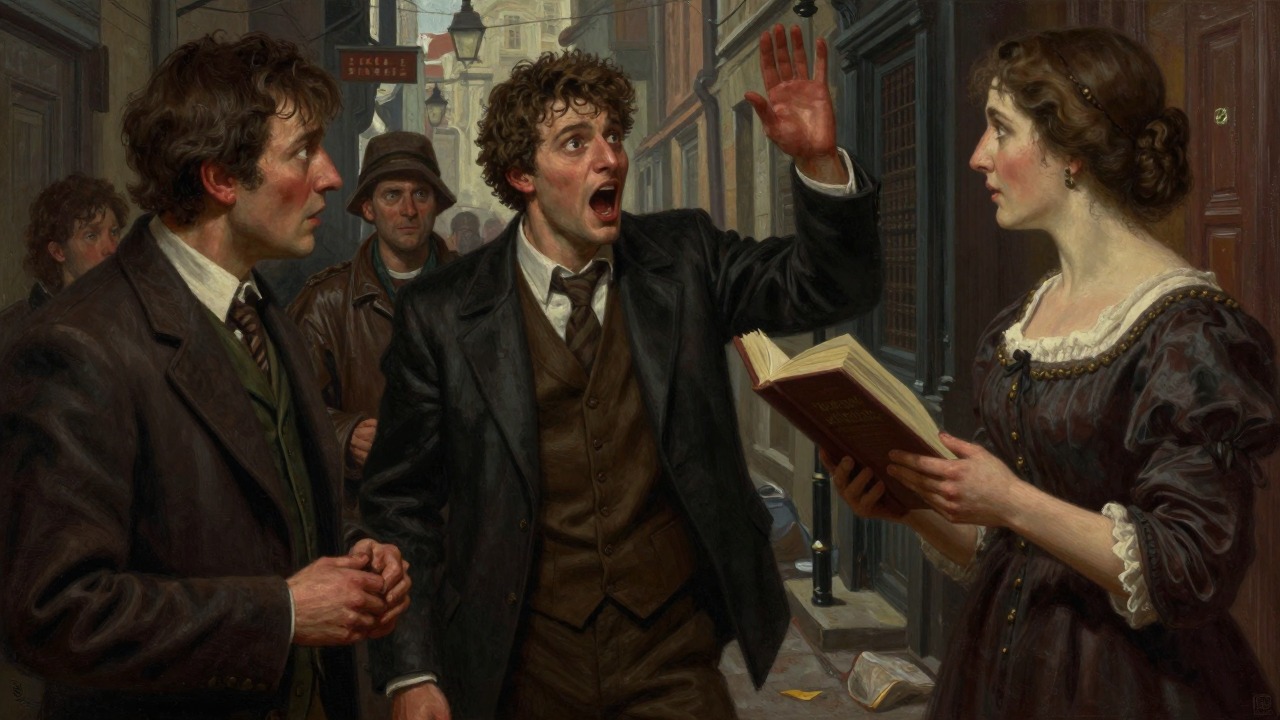
The Madness in the Streets
The Erratic Behavior
He talks to himself, makes faces, shouts at strangers. He invents stories, like the search for Kierulf. He is aware of his madness but cannot control it.
The Perception of Reality
He sees things that are not there, like the book the lady is losing. He is a prey to strange impulses.
The Judgment of Others
People call him mad. The Duke suggests he should be locked up. He knows he is near the edge.
The Reason within Madness
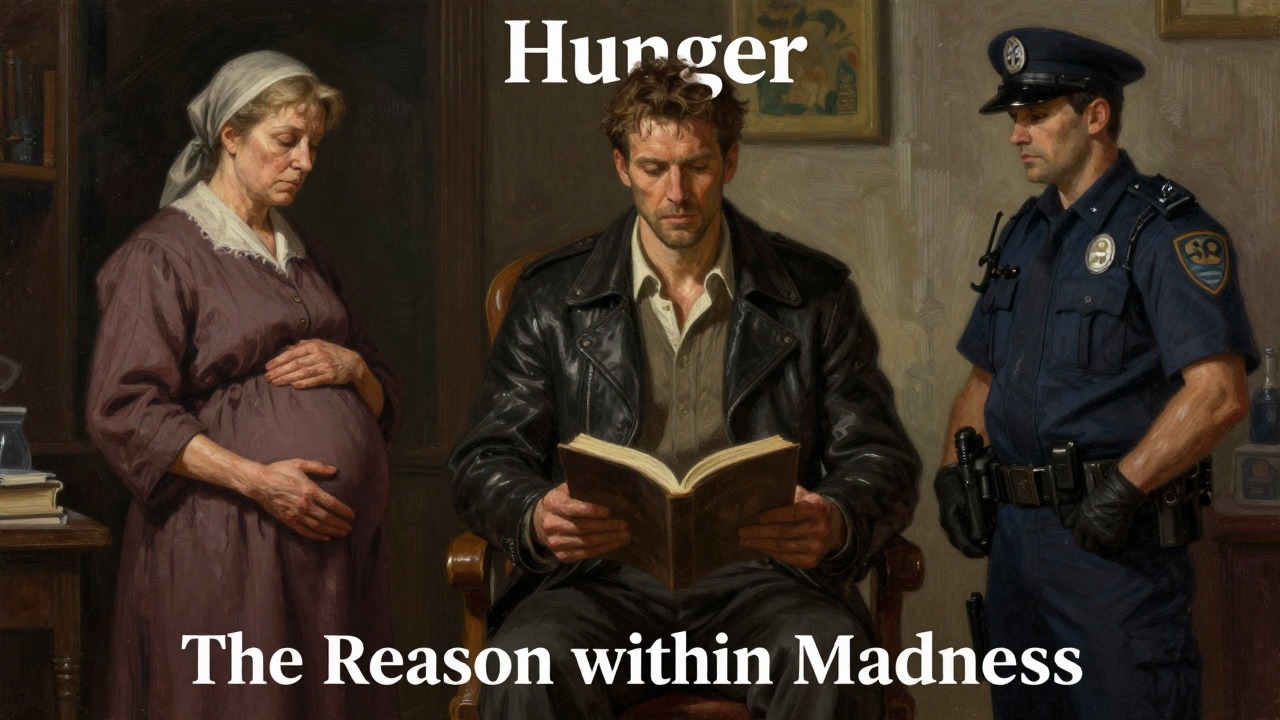
The Reason within Madness
The Clear Observation
Despite his confusion, he notices details: the landlady's pregnancy, the number 69 on a policeman. He argues that he cannot be insane because he perceives accurately.
The Self-Diagnosis
He tells himself that his madness is only a result of hunger. He is not permanently insane. He clings to this belief.
The Final Survival
He signs on the ship, a rational decision. He leaves the city, perhaps to escape madness. The ending is ambiguous.
Part II, guardhouse
Part III and IV
Part IV
