
The Conflict Between Social Classes
Jane EyreExplores the tensions arising from Jane's position as a governess and her relationships with the upper-class characters, highlighting issues of rank and equality.
increasing Bearing strength in each event
 decreasing
Bearing strength in each eventdecreasingGoverness in a Great House
The In-Between Status
A Dependent
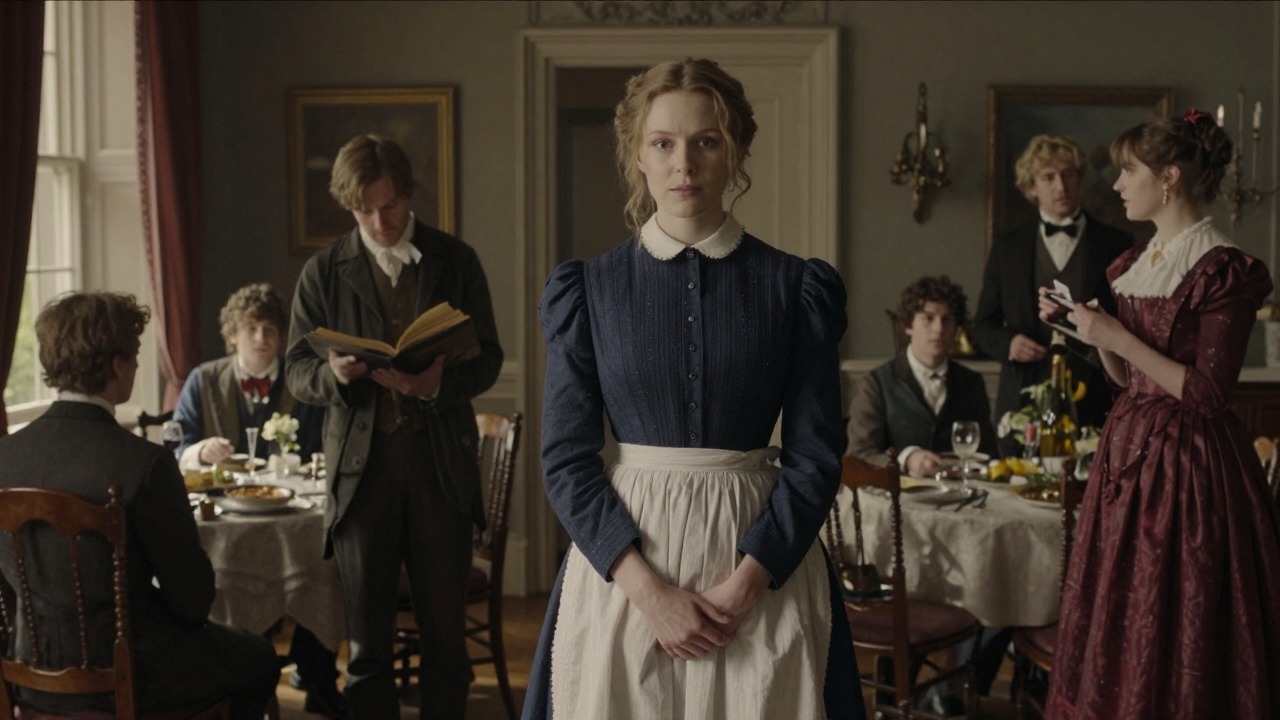
Jane is neither servant nor family. She is treated with courtesy by Mrs. Fairfax but is reminded of her place. She feels the isolation of her position.
The House Party
During the party, the aristocratic guests ignore or disdain Jane. Blanche Ingram openly mocks governesses. Jane feels the sting of class prejudice.
Rochester's Defiance
Rochester treats Jane as an equal, ignoring social conventions. He values her for herself. This sets him apart from his class.
The Marriage Barrier
The Social Gulf
Mrs. Fairfax's Warning
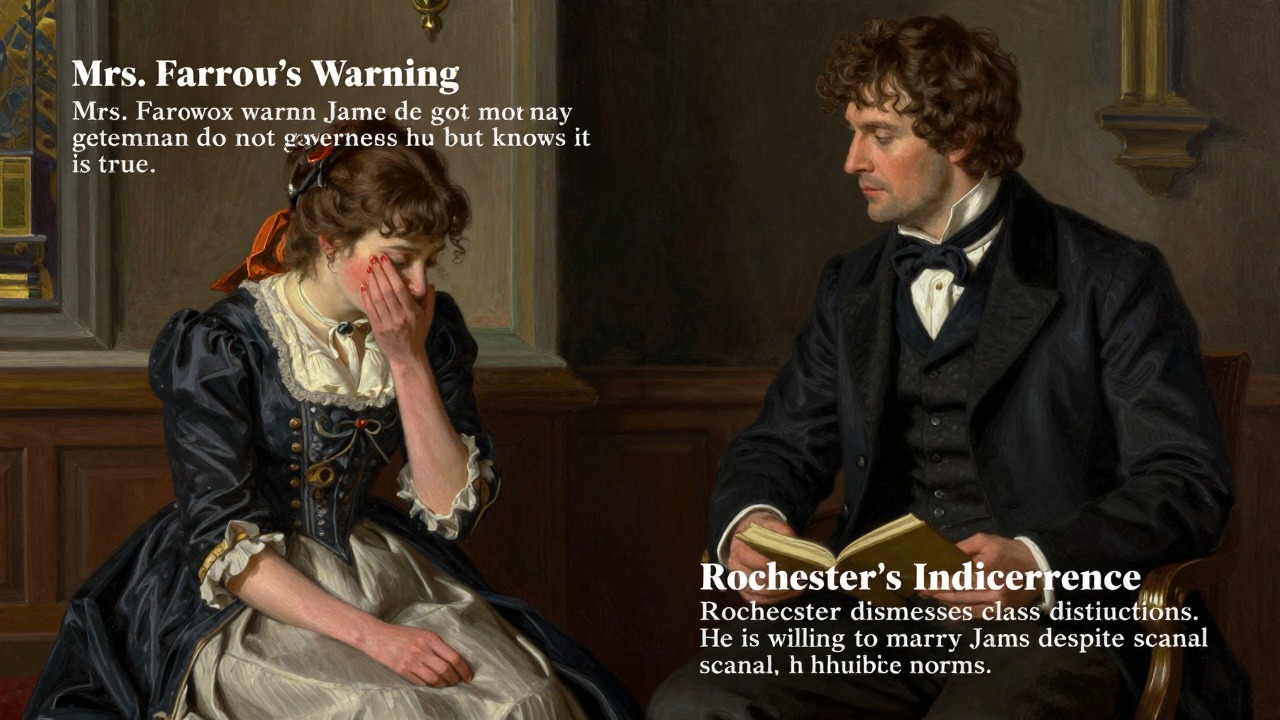
Mrs. Fairfax warns Jane that gentlemen do not marry their governesses. Jane is hurt but knows it is true.
Rochester's Indifference
Rochester dismisses class distinctions. He is willing to marry Jane despite the scandal. His love transcends social norms.
The Revelation
The real barrier is not class but Rochester's existing marriage. Social prejudice is secondary to the moral issue.
Jane's Assertion of Equality
A Declaration of Equality
The Speech
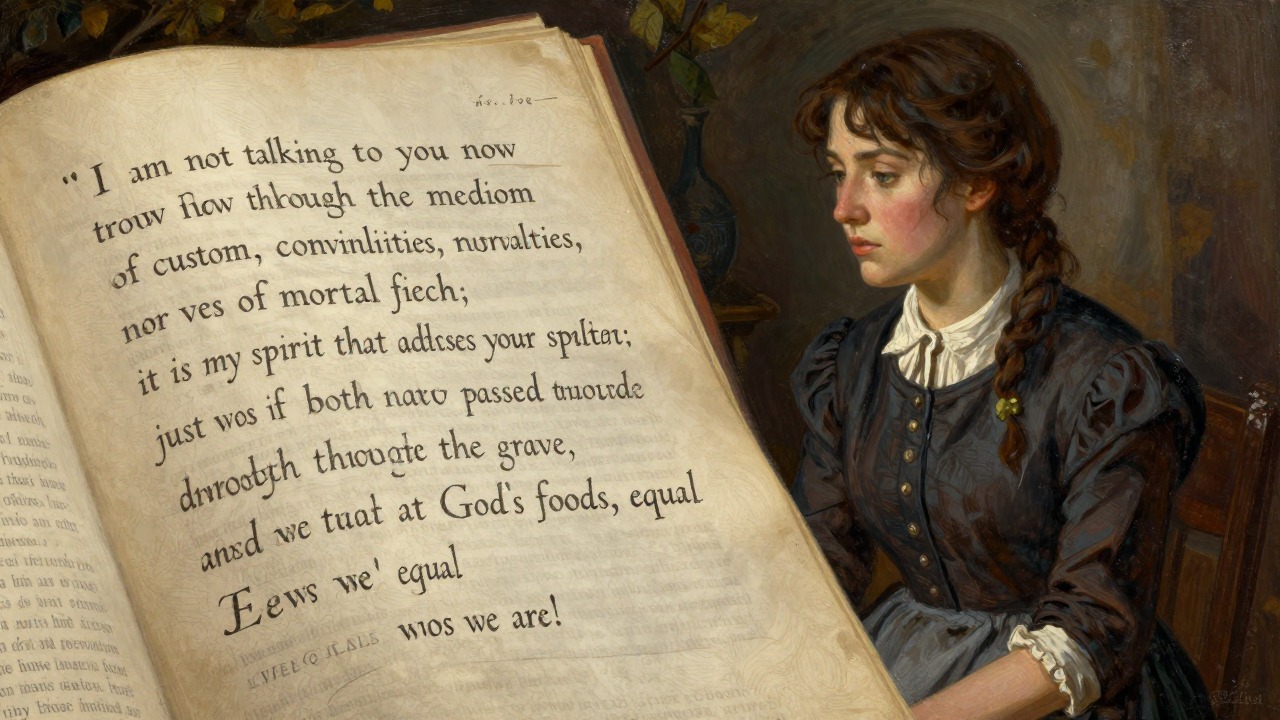
Jane tells Rochester, "I am not talking to you now through the medium of custom, conventionalities, nor even of mortal flesh;—it is my spirit that addresses your spirit; just as if both had passed through the grave, and we stood at God's feet, equal,—as we are!"
The Impact
This declaration asserts their spiritual equality despite social differences. It is a key moment in Jane's self-assertion.
The Resolution
Rochester accepts her equality. Their marriage later embodies this ideal, as Jane becomes his partner, not his dependent.
at Thornfield
before the wedding
the night of the proposal
