
Poirot's Investigation of the Murder
Murder on the Orient ExpressHercule Poirot is recruited by M. Bouc to solve the murder of Samuel Ratchett aboard the snowbound Orient Express, systematically interviewing passengers and collecting evidence.
increasing Bearing strength in each event
 decreasing
Bearing strength in each eventdecreasingPoirot Accepts the Case
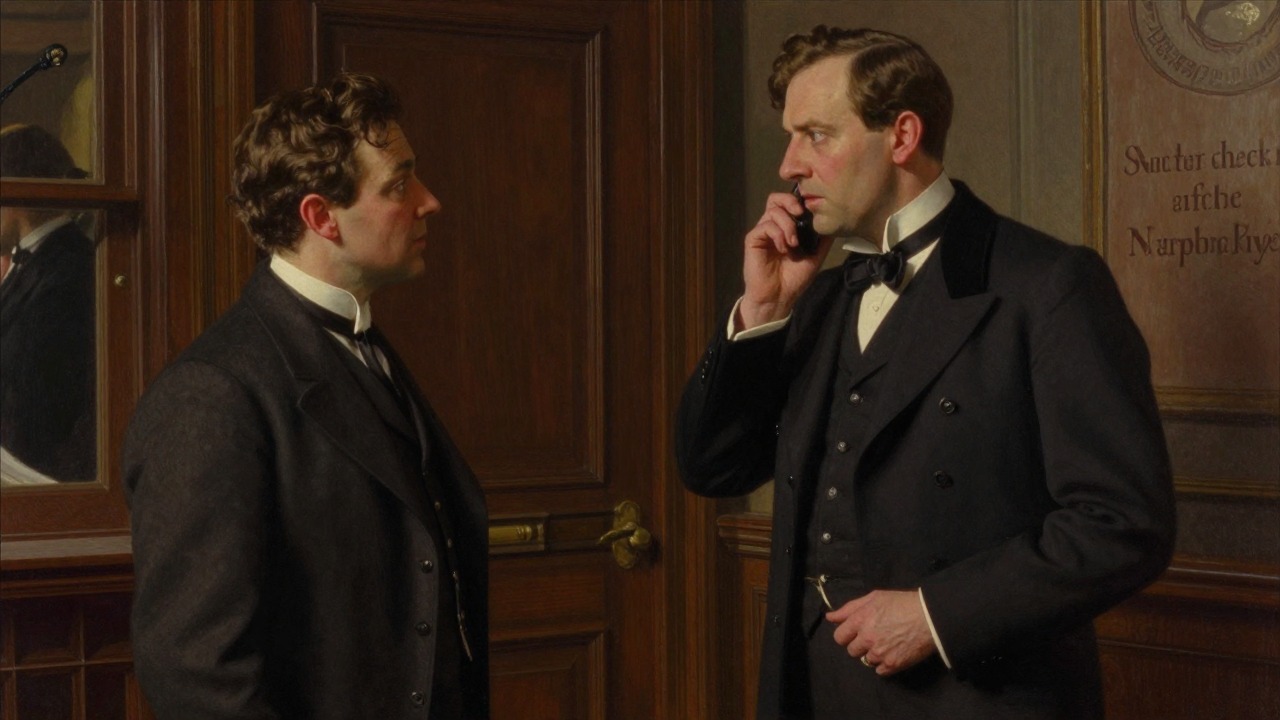
Poirot Accepts the Case
The Call to Duty
M. Bouc, a director of the Compagnie Internationale des Wagons Lits, implores Hercule Poirot to take charge of the investigation into the murder of Samuel Ratchett. Bouc emphasizes the urgency of solving the case before the arrival of the Jugo-Slavian police, who would cause endless delays and inconvenience. Poirot, intrigued by the puzzle, agrees, noting that the circumstances—a snowbound train, a locked compartment, and a diverse group of passengers—present a unique intellectual challenge.
The Initial Briefing
Poirot is briefed by Dr. Constantine, who confirms the murder occurred between midnight and 2 a.m., and by the Wagon Lit conductor, Pierre Michel, who describes the locked door and the victim's bell ring. The detective is given a plan of the Istanbul-Calais coach and the passengers' passports and tickets. He begins to form a mental picture of the crime, aware that the murderer must be among the passengers on the train.
The First Steps
Poirot's first official act is to interview the victim's secretary, Hector MacQueen, who reveals that Ratchett had received threatening letters. The detective also examines the body, noting the multiple stab wounds and the dented watch stopped at 1:15. He discovers a charred note fragment with the word "Armstrong," which immediately connects the case to the infamous Armstrong kidnapping. This sets the stage for a deep investigation into the past.
Interviewing the Passengers
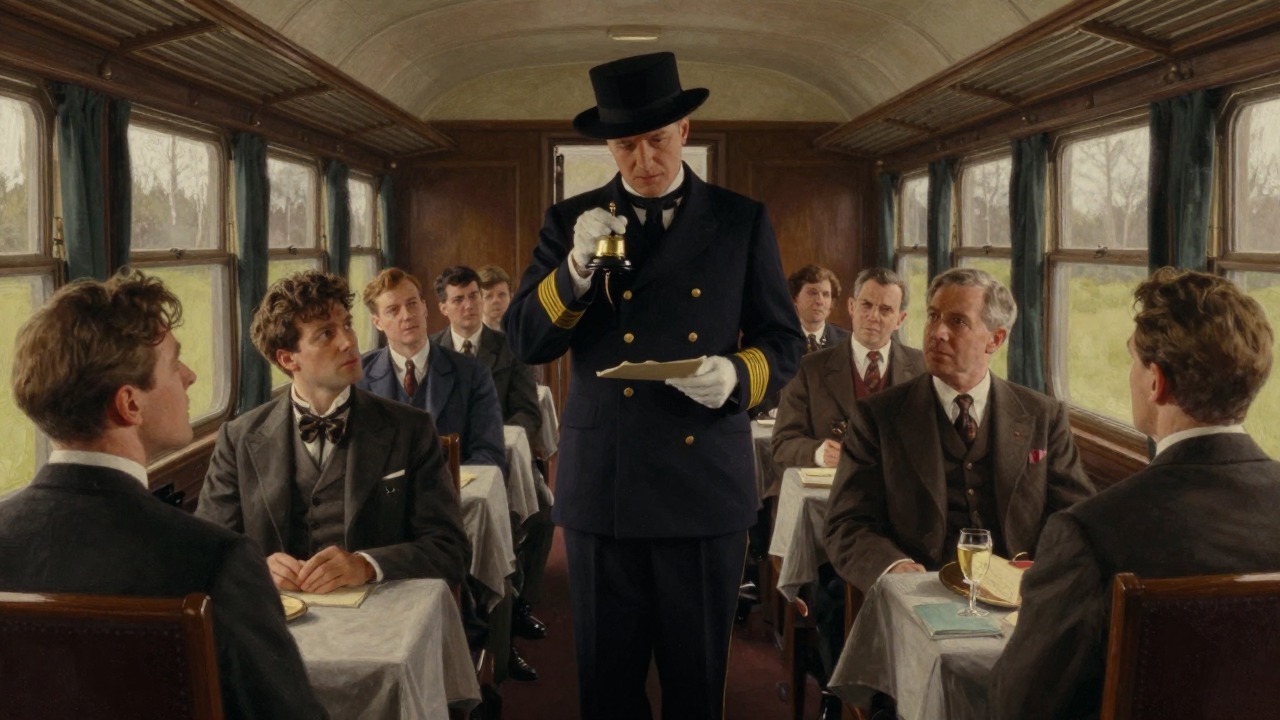
Interviewing the Passengers
The Systematic Approach
Poirot conducts a series of interviews in the dining car, questioning each passenger about their movements and observations. He begins with the Wagon Lit conductor, Pierre Michel, who confirms his schedule and the timing of Ratchett's bell ring. Then he speaks with Hector MacQueen, who admits to disliking his employer and provides the threatening letters. The valet, Edward Masterman, describes his dutiful service and the sleeping draught he prepared for Ratchett.
The American Lady's Story
Mrs. Hubbard, a garrulous American, claims a man was in her compartment during the night and produces a button from a Wagon Lit uniform as evidence. Poirot listens patiently, noting the inconsistencies in her story. He then interviews the Swedish lady, Greta Ohlsson, who mistakenly opened Ratchett's door and later checked the bolt on the communicating door. The princess, Dragomiroff, and the Count and Countess Andrenyi provide alibis, but the Countess seems nervous.
The Detective's Observations
Poirot focuses on the psychological clues: the overheard conversation between Mary Debenham and Colonel Arbuthnot, and the evasiveness of several passengers. He notes that the pipe-cleaner in the victim's compartment could belong to Arbuthnot, and the handkerchief with an 'H' is a potential clue. Each interview adds pieces to the puzzle, but also reveals layers of deception.
Clues and Red Herrings
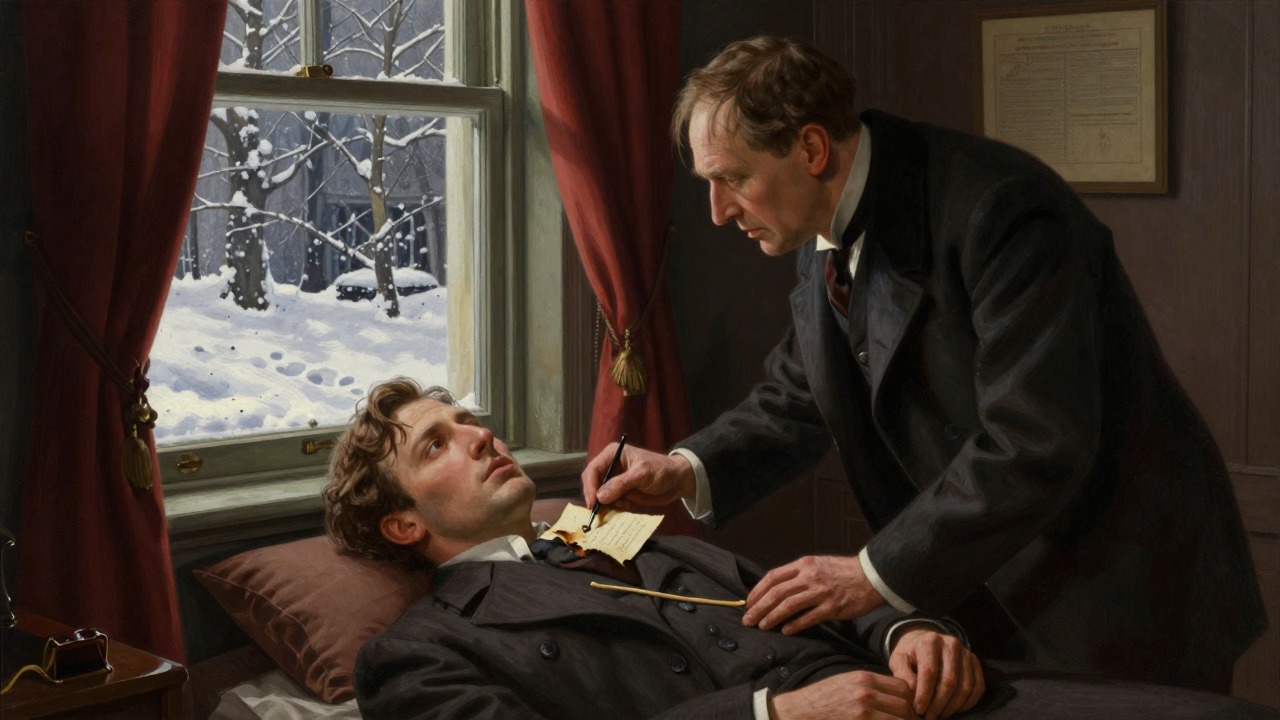
Clues and Red Herrings
The Physical Evidence
Poirot and Dr. Constantine examine the victim's compartment in detail. The window is open but no footprints in the snow, indicating the killer did not escape that way. The charred note fragment, the pipe-cleaner, and the handkerchief are found. Poirot uses a spirit stove and curling-tongs to reconstruct the fragment, revealing the word "Armstrong." This confirms the connection to the Armstrong case and gives him a crucial lead.
The Search for the Uniform
A button from a Wagon Lit uniform is found in Mrs. Hubbard's compartment, and later the uniform itself is discovered in Hildegarde Schmidt's suitcase. Poirot deduces that the real killer used the uniform as a disguise and then planted it to frame the maid. The scarlet kimono, also found in Poirot's own luggage after the search, is another deliberate misdirection.
The Pattern of Deception
Poirot realizes that the clues are too convenient—someone is trying to make the case look like an outside job. He also notices that the dented watch may have been tampered with. The conflicting evidence suggests a carefully planned conspiracy rather than a single murderer. This insight leads him to reconsider the entire investigation.
The Conspiracy Unravels
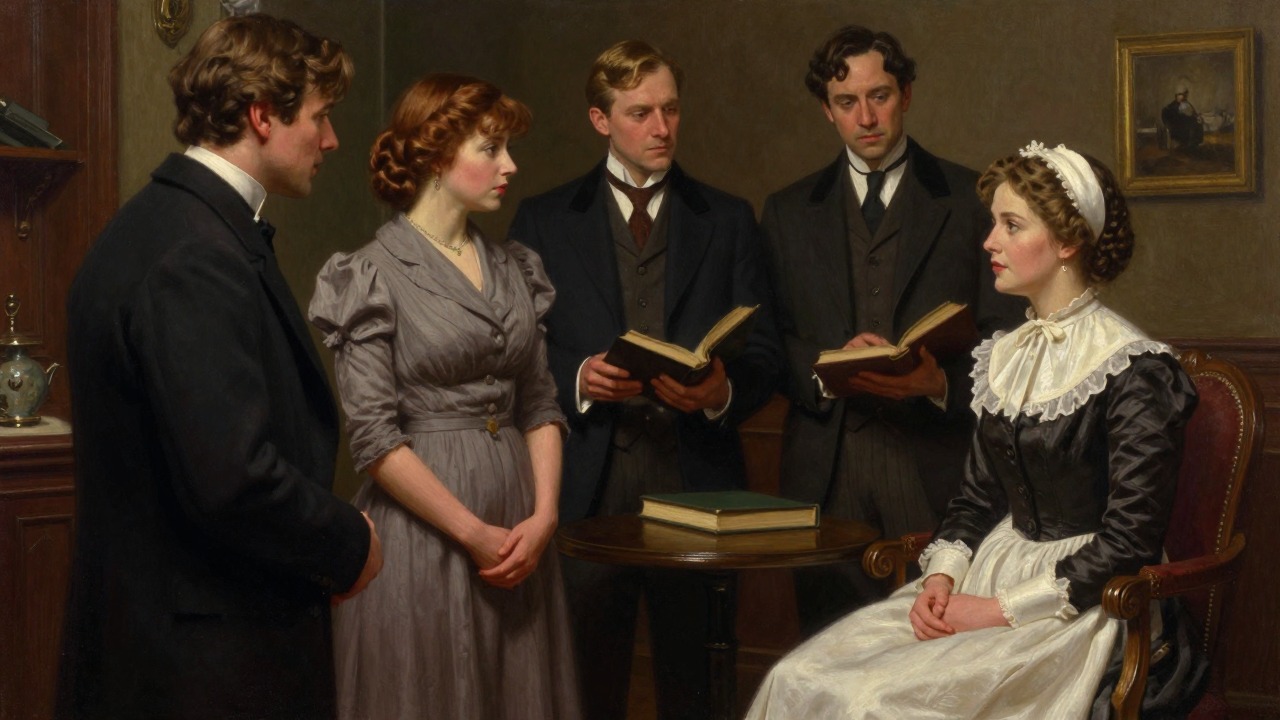
The Conspiracy Unravels
The Revelation of Connections
Poirot confronts each passenger about their hidden ties to the Armstrong family. He forces Countess Andrenyi to admit she is Helena Goldenberg, the sister of Mrs. Armstrong. He reveals that Mary Debenham was the governess, Greta Ohlsson the nurse, Antonio Foscarelli the chauffeur, and Edward Masterman the colonel's batman. Princess Dragomiroff is the godmother, and Hector MacQueen's father was the district attorney. Pierre Michel's daughter, Susanne, was the maid who died.
The Conspirators' Confession
Under pressure, the passengers admit their involvement. They had all been part of the Armstrong household or close to the family, and they had sworn to execute Cassetti (Ratchett) for his crimes. They planned the murder to look like an outside job, each taking a turn to stab the victim. The snowdrift and Poirot's presence forced changes, but they carried out their plan.
The Final Unveiling
Linda Arden, disguised as Mrs. Hubbard, reveals herself as the mastermind. She explains that they had no choice but to take justice into their own hands after the legal system failed. Poirot is moved by her story but remains impartial. He now has the full picture of the conspiracy.
Poirot Propounds Two Solutions
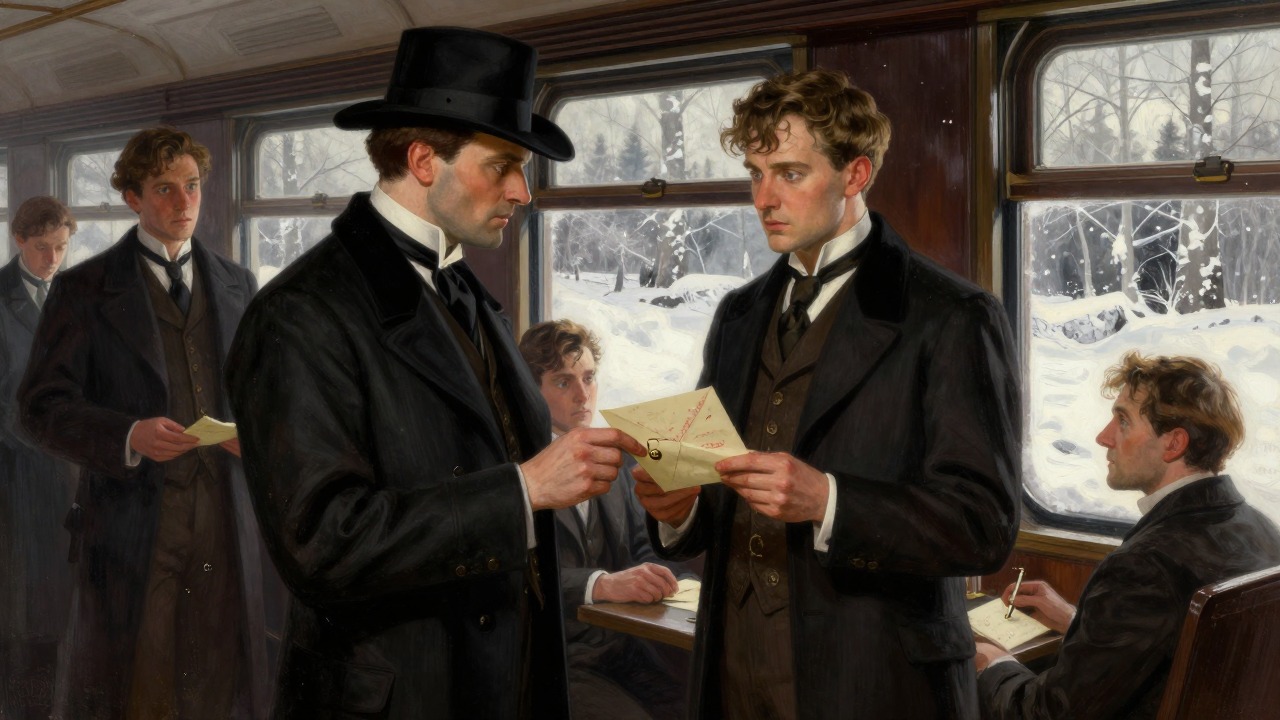
Poirot Propounds Two Solutions
The First Solution
Poirot presents a plausible but false solution: an unknown assassin boarded the train, killed Ratchett, and escaped through the snow. He uses the evidence of the threatening letters and the button to support this theory. The passengers are relieved, but Dr. Constantine objects, pointing out numerous inconsistencies.
The Second Solution
Poirot then reveals the true solution: the twelve passengers, all connected to the Armstrong case, formed a jury of twelve and each stabbed Ratchett once. He explains the charred note, the faked watch, the scarlet kimono, and the collusion of Pierre Michel. He commends the conspirators for their ingenuity but notes that the snow foiled their perfect plan.
The Moral Choice
Poirot leaves the final decision to M. Bouc and Dr. Constantine. They choose to accept the first solution, allowing the passengers to go free. Poirot agrees, acknowledging that justice has been served in a way. The case is closed, and the passengers are permitted to continue their journey when the train is freed.
Morning after the murder, during the snowdrift
Morning and early afternoon, during the snowdrift
Early afternoon, still snowbound
Late afternoon, after the baggage search
Evening, final reconstruction of the crime
