
The Diary as a Letter to the Future
Nineteen Eighty-FourFollows Winston's blank book from its purchase to its role as a testament addressed to an unborn age.
increasing Bearing strength in each event
 decreasing
Bearing strength in each eventdecreasingThe Beauty of the Blank Page
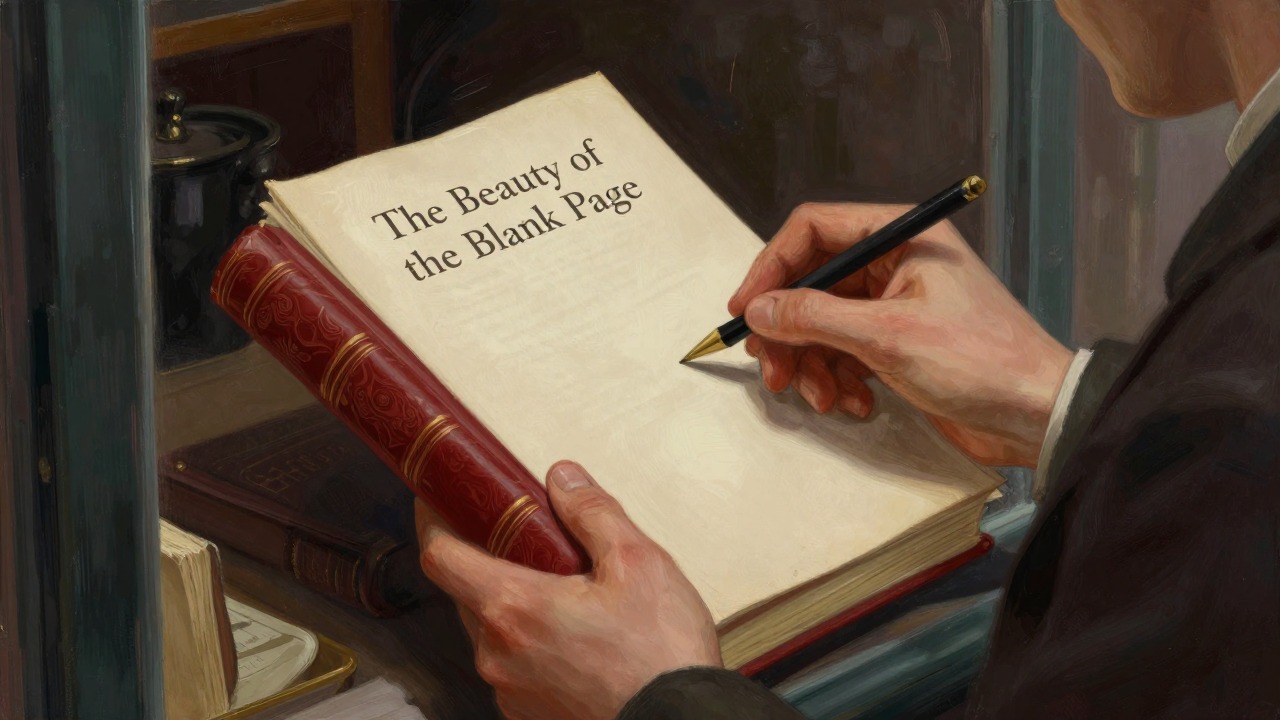
The Beauty of the Blank Page
The Furtive Purchase
Winston spots a thick quarto book with a red back and marbled cover in the window of a junk shop. He knows it is a compromising possession, but the smooth creamy paper so overwhelms him that he slips inside and buys it for two dollars fifty.
The Archaic Tool
He procures an old-fashioned pen with a nib, refusing to scratch the beautiful paper with an ink-pencil. This is not a practical decision; it is a tribute to a lost world where writing was a physical act of love.
The Beginning
When he opens the book in the alcove, he feels that the decision to write is a decisive step toward death. The diary is born as an heirloom of the doomed.
Down with Big Brother
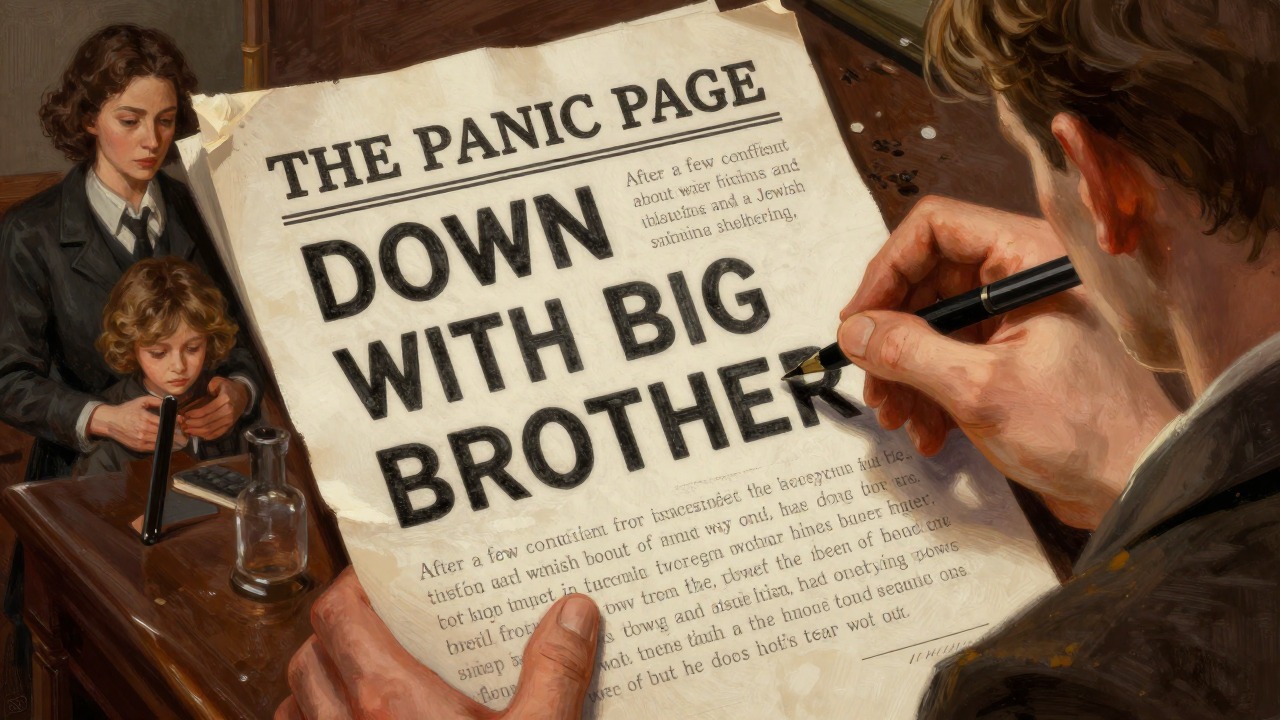
Down with Big Brother
The Panic Page
After a few confused sentences about war films and a Jewish woman sheltering a child, Winston's pen takes over and fills the page with 'DOWN WITH BIG BROTHER' in large neat capitals. He feels a twinge of panic, but he does not tear the page out.
The Acceptance
He realizes that whether he writes it or not makes no difference. He has already committed thoughtcrime, the essential crime that contains all others. The diary is not the crime; it is the confession.
The Turn
This page transforms the diary from a private notebook into a damning document. Winston knows that the Thought Police will read it eventually, but writing it gives him a strange sense of continuity.
Greetings to the Future
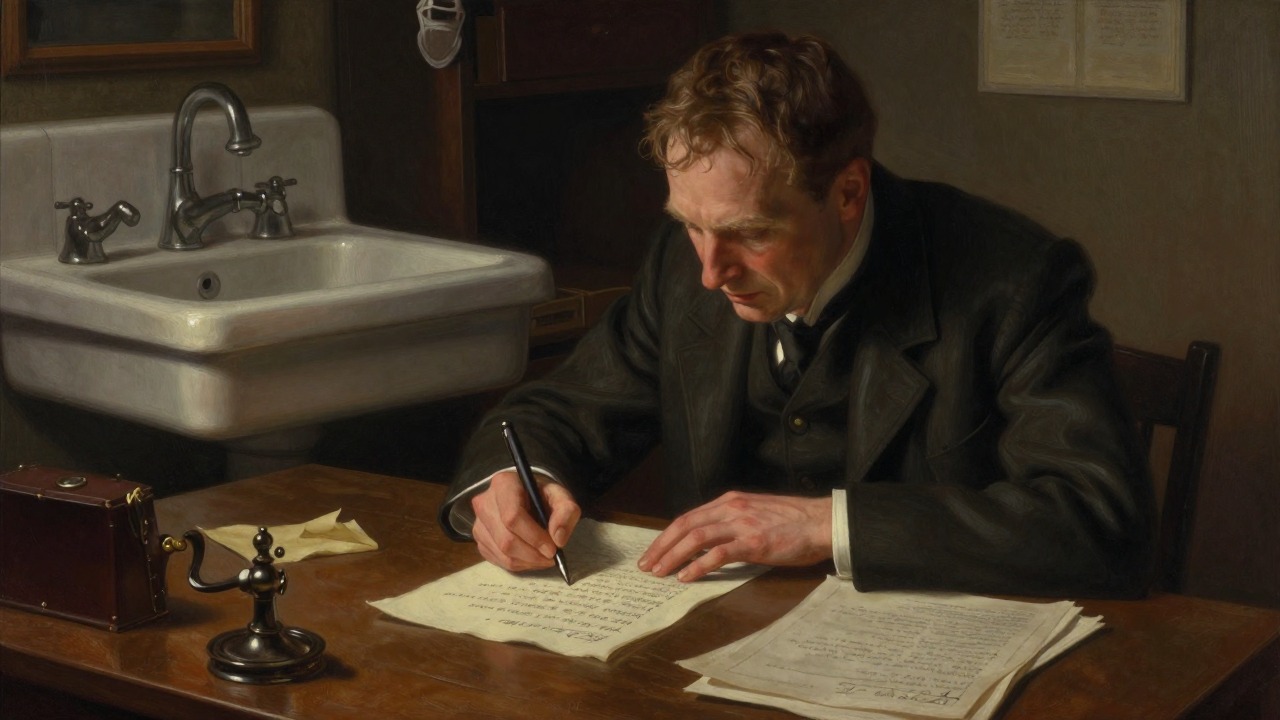
Greetings to the Future
The Address
Winston returns to the table after repairing Mrs Parsons' sink and writes: 'To the future or to the past, to a time when thought is free... From the age of uniformity, from the age of solitude, from the age of Big Brother, from the age of doublethink - greetings!'
The Hope
He imagines the diary as a message in a bottle thrown into an ocean of time. He knows that the future may never read it, but the act of addressing someone gives his loneliness a shape.
The Death Sentence
He writes: 'Thoughtcrime does not entail death: thoughtcrime IS death.' Having recognized himself as a dead man, he is now free to live with purpose.
A Diary Written for O'Brien
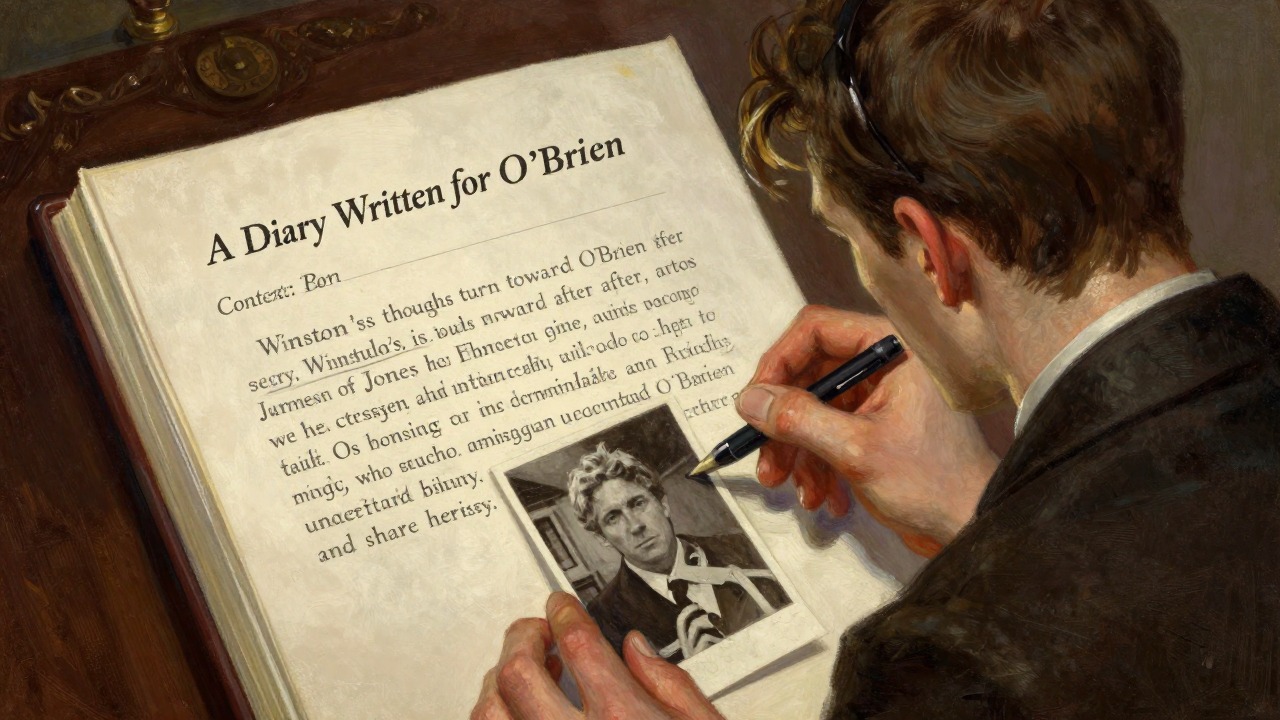
A Diary Written for O'Brien
The Imagined Reader
Winston's thoughts turn toward O'Brien after he destroys the photograph of Jones, Aaronson and Rutherford. He writes with the feeling that he is addressing an interminable letter to O'Brien, a person who might understand and share his heresy.
The Intimacy
The diary becomes a conversation with a silent ally. Winston tests his ideas against an imagined intelligence, and the act of writing gives him courage.
The Doubt
He cannot be certain that O'Brien is on his side, but the diary is a way of believing in the impossible. The letter is never sent, but the direction of the address changes everything.
The Diary That Outlives Its Writer
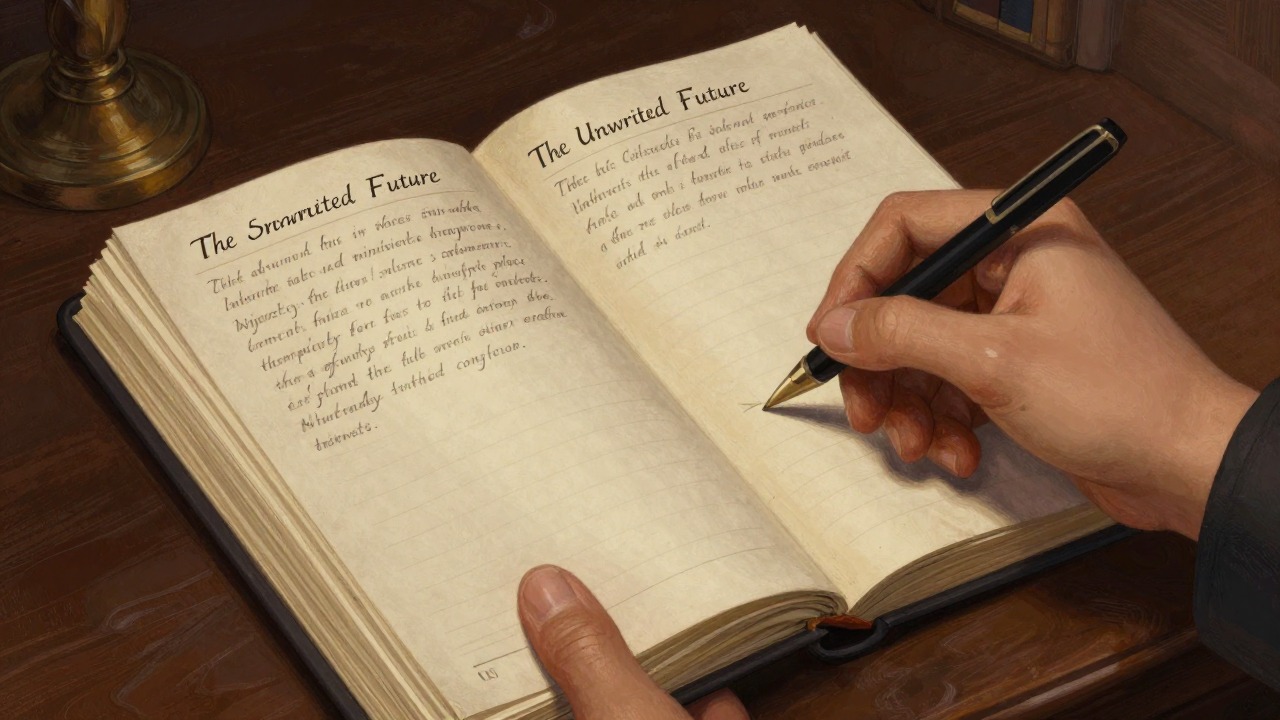
The Diary That Outlives Its Writer
The Seized Book
The diary is discovered in Winston's flat, and its entries are used as evidence. It is read by the Thought Police, then presumably fed to a memory hole or filed among a thousand other confessions.
The Unwritten Future
Winston never writes in it again. The voice that once addressed the future is silenced, and the diary's promise of a free age passes to the proles, who know nothing of it.
The Fragile Record
Like the glass paperweight, the diary is a fragment of the abolished past. It survives only in the memory of the reader, and even that memory is soon to be wiped clean.
before the story opens, Winston buys it in a junk shop
April 4, 1984, the first evening
later on the same day, after Mrs Parsons' visit
after the discovery of the photograph, mid Part I
after Winston's arrest, by implication
