
The Photograph and the Abolished Past
Nineteen Eighty-FourCharts Winston's discovery, destruction, and later philosophical undoing of the photograph that proved three Party leaders were innocent.
increasing Bearing strength in each event
 decreasing
Bearing strength in each eventdecreasingThe Slip of Paper
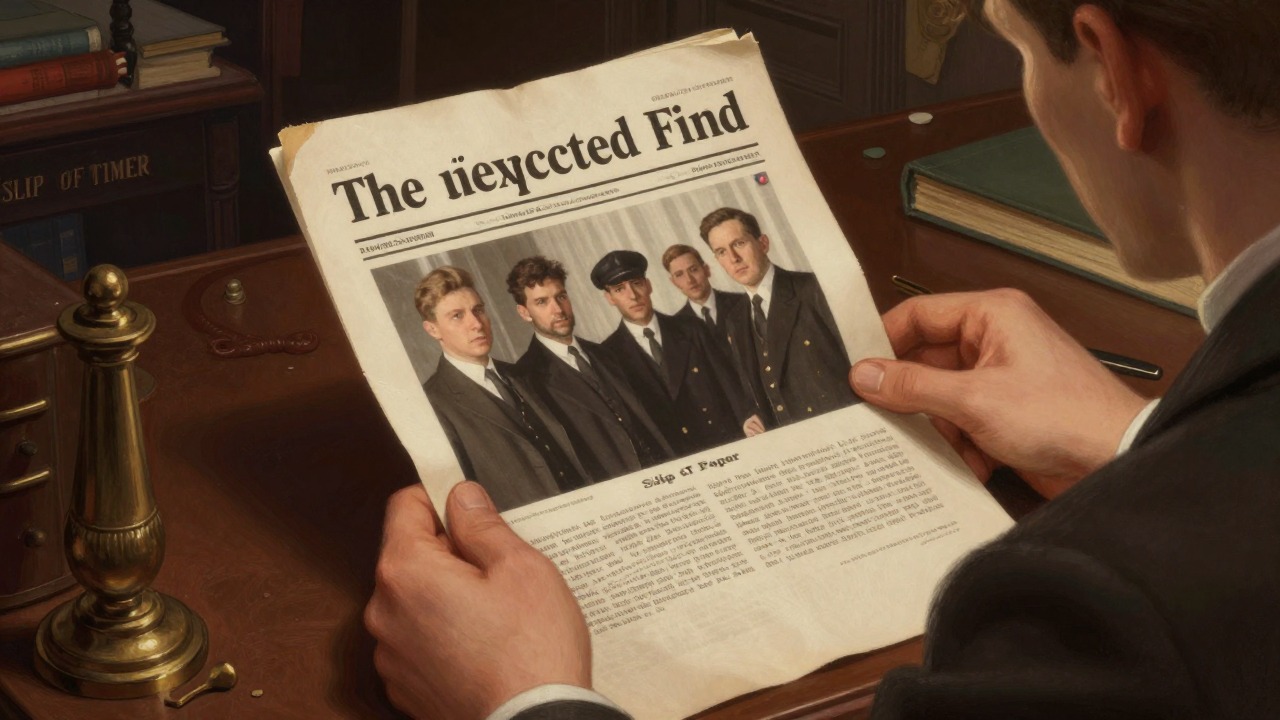
The Slip of Paper
The Unexpected Find
Winston, working in the Records Department, unrolls a wad of documents and finds a half-page torn from the Times, dated ten years earlier. It shows a photograph of Party delegates in New York, with Jones, Aaronson and Rutherford prominent in the group.
The Significance
He knows that these three men had confessed to being on Eurasian soil on that exact date, betraying military secrets. The photograph proves the confessions were lies.
The Impossible Evidence
Winston holds the paper for perhaps thirty seconds, then hides it under another sheet. It is a fragment of the abolished past, but it is worthless unless shared, and sharing it would mean death.
The Memory of the Chestnut Tree
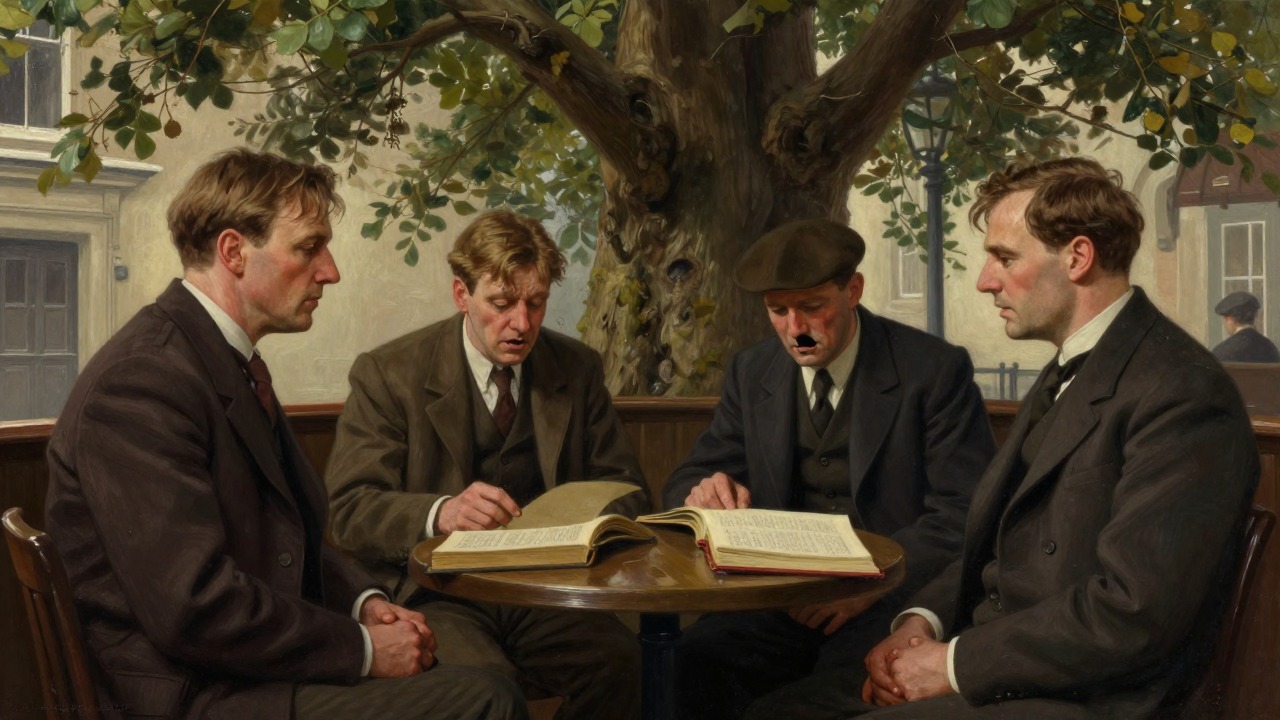
The Memory of the Chestnut Tree
The Three Old Men
Winston remembers seeing Jones, Aaronson and Rutherford in the Chestnut Tree Café years ago, giants of the early Party, sitting in silence like corpses waiting to be returned to the grave.
The Broken Noses
He notices that two of them have broken noses, marks of torture. When the telescreen plays a strange, jeering song, Rutherford's eyes fill with tears.
The Doomed
They were released on a string and later re-arrested, confessed again, and were executed. Winston's memory of them becomes part of his secret understanding of the Party's lies.
Feeding the Memory Hole
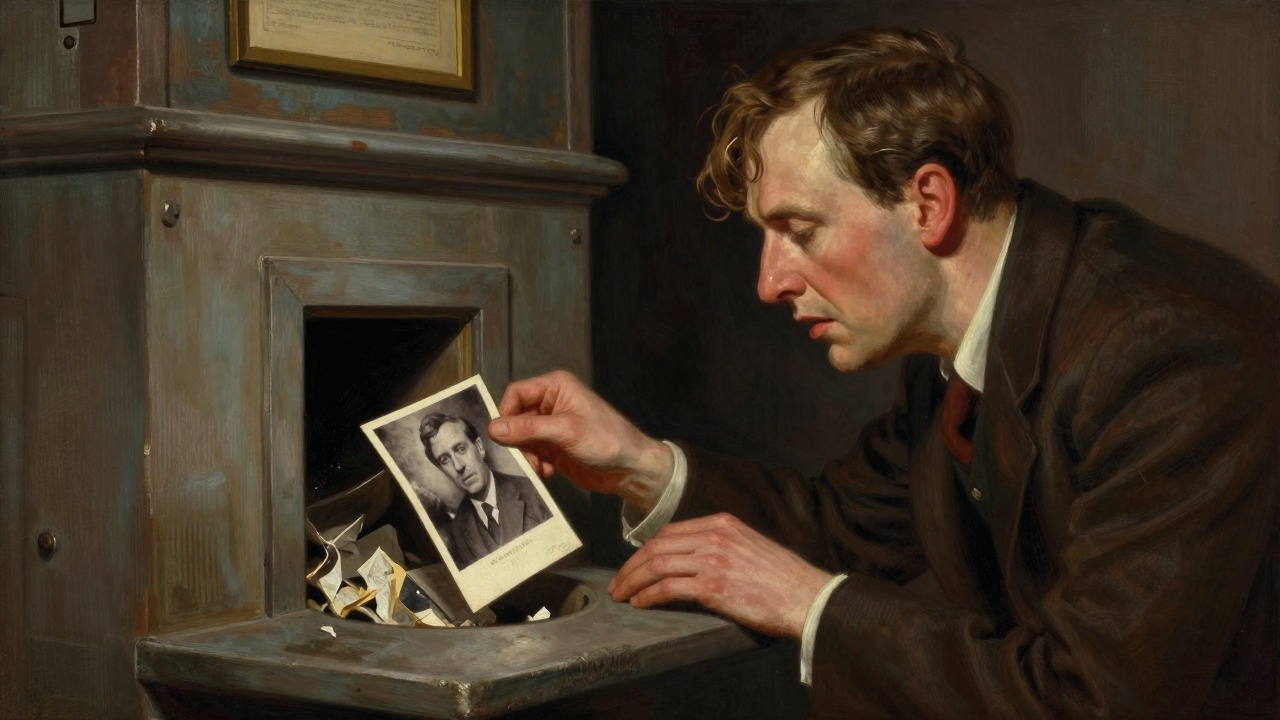
Feeding the Memory Hole
The Decision
Winston knows he cannot keep the photograph. He waits ten minutes, controlling his breathing, then drops it into the memory hole chute along with other waste paper. Within a minute it is ashes.
The Regret
Today, he reflects, he would have kept it. But the fact that it once existed still seems to him a kind of guarantee that the past is not wholly controllable.
The Turn
The memory of the photograph becomes the bedrock of Winston's belief in objective truth. It is a secret treasure that no official history can erase from his mind.
O'Brien Shows the Photograph
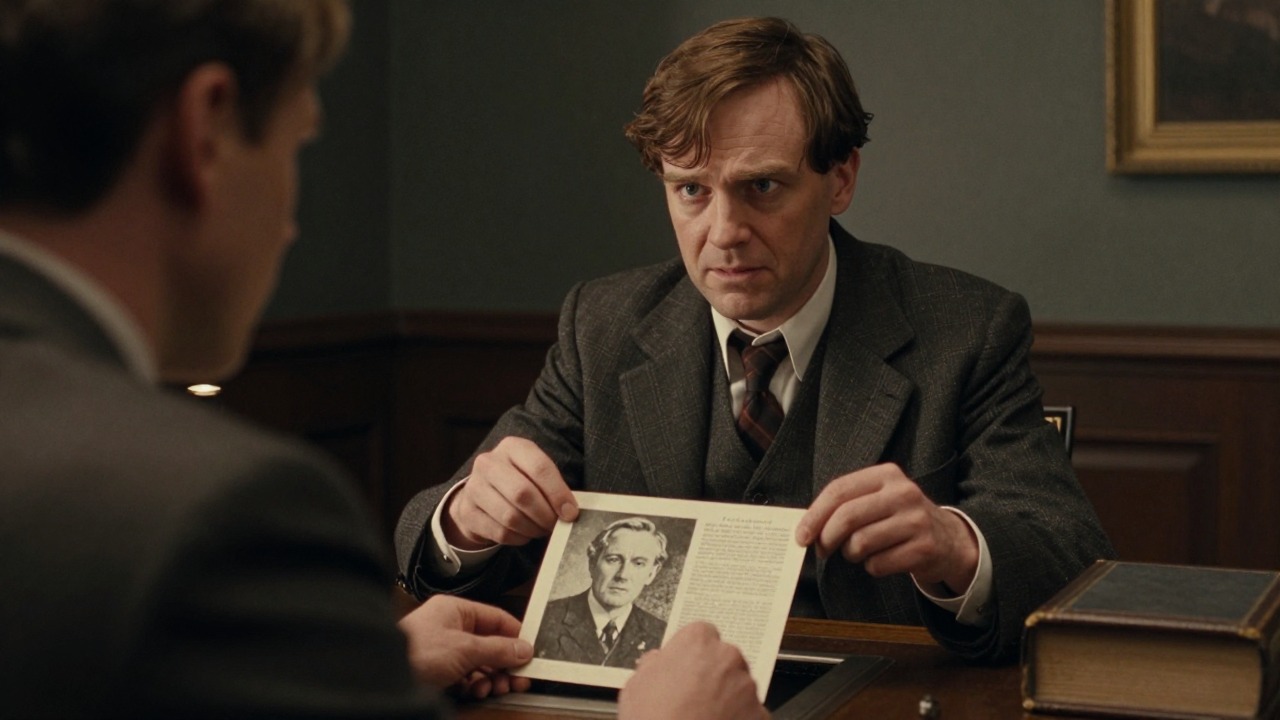
O'Brien Shows the Photograph
The Second Copy
In the Ministry of Love, O'Brien produces a copy of the same photograph. For five seconds Winston sees it and cries out, 'It exists!' He feels a rush of hope that his memory is vindicated.
The Denial
O'Brien feeds the photograph into a memory hole and says, 'It does not exist. It never existed.' He claims not to remember it, and Winston feels the ground of sanity give way.
The Lesson
The Party can destroy not only documents but the certainty in a man's mind. The photograph exists only in Winston's fading memory, and O'Brien's forgetting is a more powerful weapon than the fire.
The Erasure of the Innocent
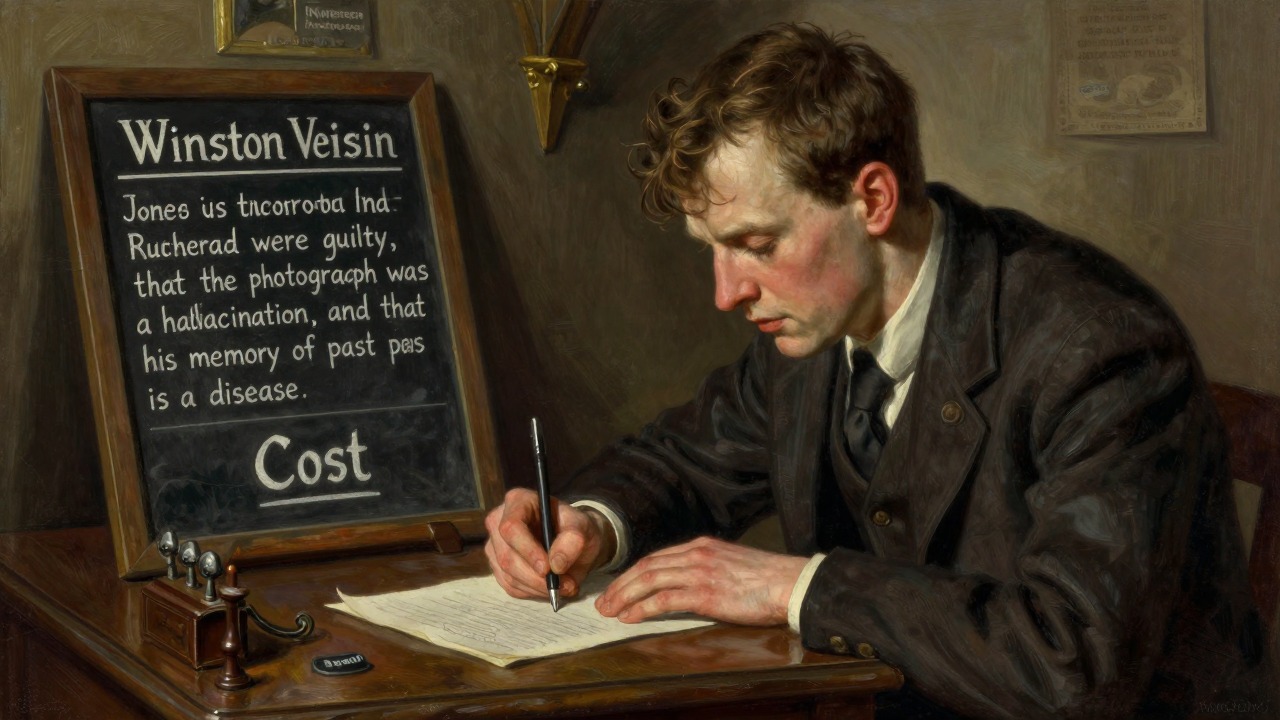
The Erasure of the Innocent
The New Version
Winston is taught to accept that Jones, Aaronson and Rutherford were guilty, that the photograph was a hallucination, and that his memory of the past is a disease. He writes the new belief on his slate.
The Cost
The death of his memory is also the death of his self. He no longer trusts the evidence of his eyes; he can see five fingers when there are four.
The Victory
The story of the photograph ends in the triumph of the Party. The only concrete proof of a lie is now a false memory in a mind that will soon be vaporized.
eleven years before the main story, in 1973
before the photograph, recalled in Chapter VII
1973, shortly after the discovery
during Winston's interrogation in the Ministry of Love
after the interrogation, in Winston's re-education
