Diary
Nineteen Eighty-FourThe Diary is the blank book that turns Winston Smith's private heresy into an object the Party can find. A thick quarto-sized volume with a red back and a marbled cover, bought for two dollars fifty and carried home guiltily in a briefcase, it is opened on April 4th, 1984, in the one part of his flat that the telescreen cannot see. To mark its creamy paper is, in Winston's own words, "the decisive act"; he later writes that thoughtcrime does not entail death but is death. Every consequence of the novel follows from this first deliberate act of writing.
Identity and Physical Character
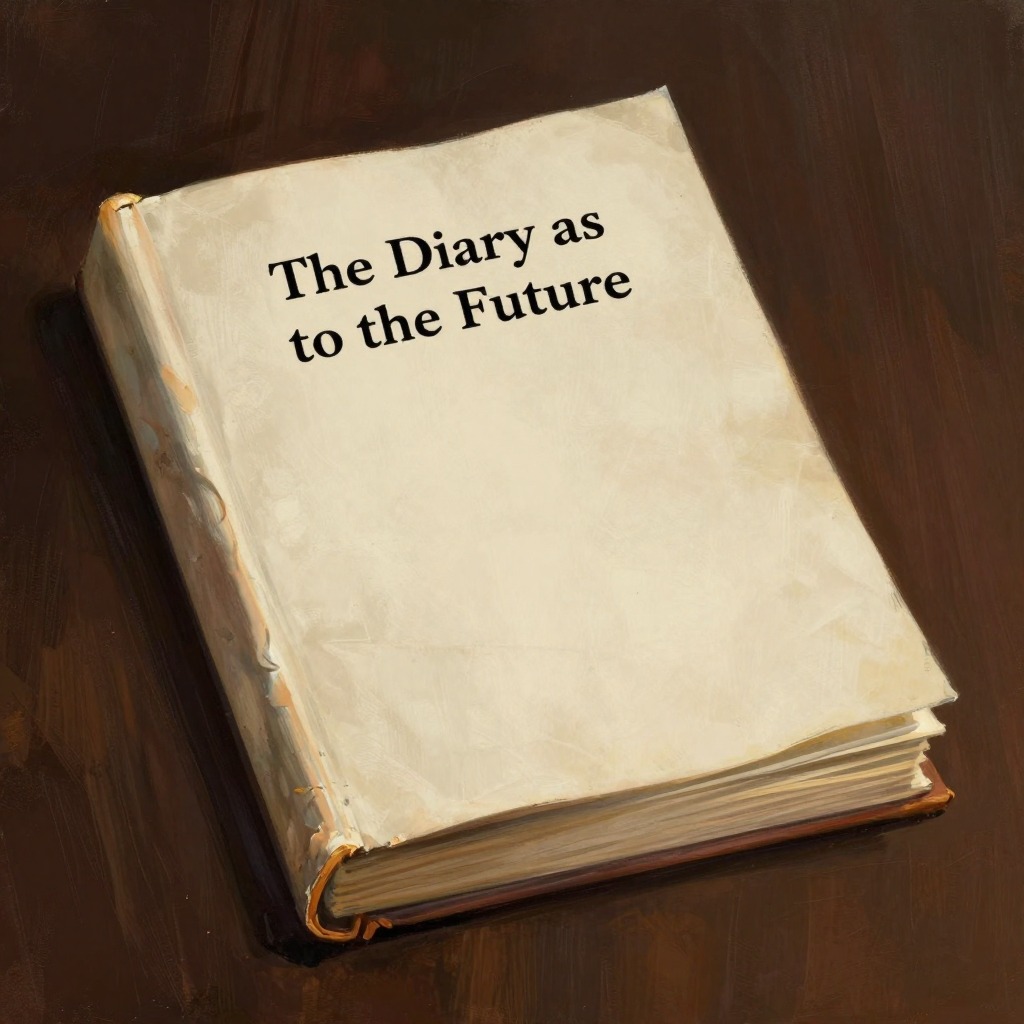
The diary is "a peculiarly beautiful book" with smooth creamy paper, a little yellowed by age, of a kind that had not been manufactured for at least forty years past. Its cover is red-backed and marbled, and its pages are so fine that Winston feels they deserve a real pen-nib rather than an ink-pencil; he procures an archaic penholder, a bottle of ink and the book itself, all furtively. Mr Charrington, the junk-shop keeper, later recognises it as a "young lady's keepsake album" made of cream-laid paper, and remarks that no such paper has been made for perhaps fifty years. Even with nothing written in it, Winston reflects, the book is a compromising possession.
Acquisition and the Geometry of Secrecy
Winston had first seen the book lying in the window of a frowzy junk-shop in a slummy quarter of the town, and had been "stricken immediately by an overwhelming desire to possess it". Party members were not supposed to enter ordinary shops — "dealing on the free market", it was called — but the rule was laxly kept because things like shoelaces and razor blades could be got in no other way. He slipped inside, paid two dollars fifty, and carried the book home in his briefcase, guilty even before it was written in. The decision to open it as a diary was suggested partly by the book itself and partly by the unusual geography of his flat: the living-room telescreen was placed on the longer wall opposite the window, leaving a shallow alcove, probably meant for bookshelves, in which Winston could sit without being seen. He could still be heard, but so long as he stayed in that position, no eye watched him write.
The First Entry
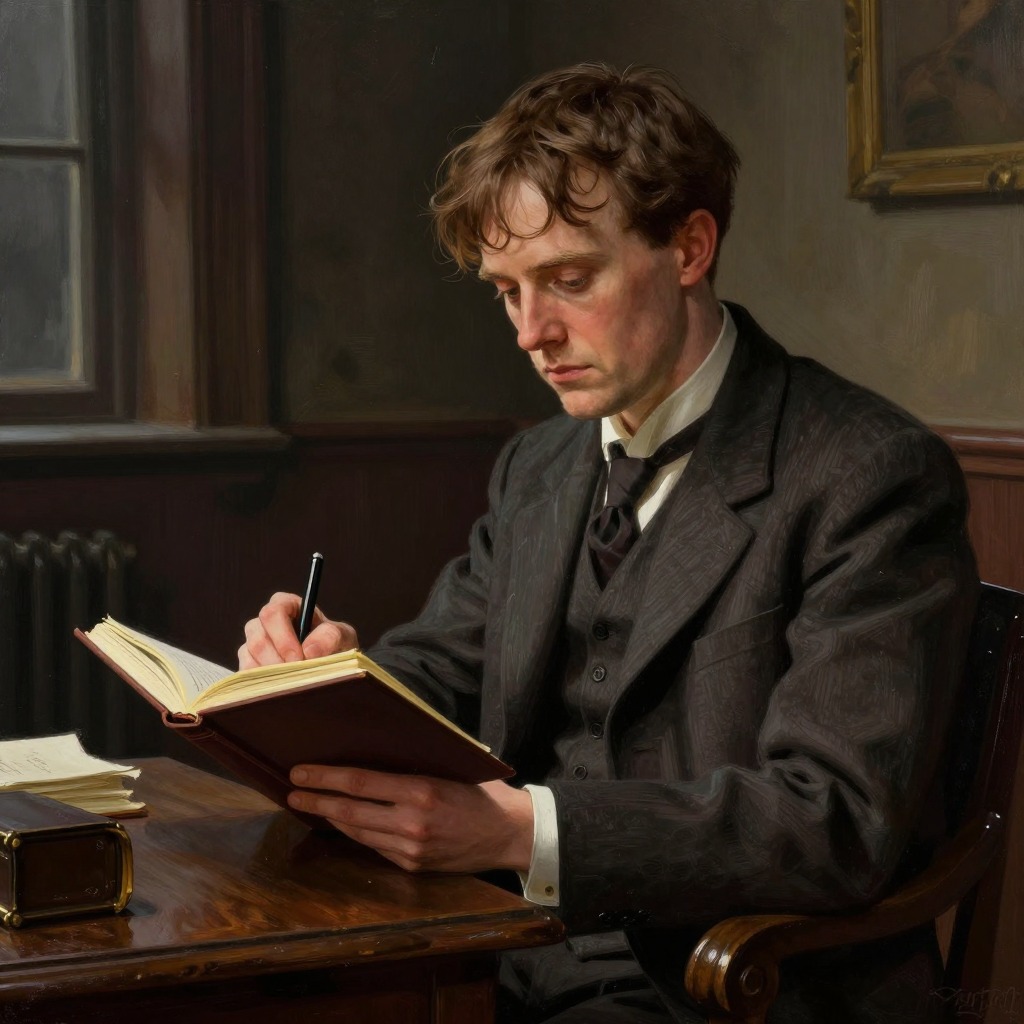
His first written words were the date, "April 4th, 1984.", set down in small clumsy letters after a tremor had gone through his bowels; to mark the paper was "the decisive act". A sense of complete helplessness descended on him at once, for he could not be certain that the year really was 1984, since it was no longer possible to pin down any date within a year or two. He wondered for whom he was writing — "for the future, for the unborn" — and the Newspeak word doublethink met him at the threshold of the project: either the future would resemble the present and would not listen, or it would be different and his predicament would be meaningless. For a long time the page stayed blank while the telescreen blared military music, his varicose ulcer itched unbearably above his ankle, and the gin he had gulped down made the world swim slightly.
The Diary as Record of Thoughtcrime
Once begun, the diary filled rapidly with forbidden material. In a stream of "sheer panic" Winston recorded the war film he had seen the night before, in which a refugee ship was bombed in the Mediterranean, a fat man was shot full of holes by a helicopter, and a middle-aged woman sheltered a three-year-old boy from the bullets until a twenty-kilo bomb smashed the boat to matchwood. The memory clarified, he realised, why he had decided to come home and begin the diary that day. It was also the morning of the Two Minutes Hate, when he momentarily caught O'Brien's eye and received what seemed an unmistakable message — "I am with you" — before O'Brien's face became inscrutable again. Later, writing almost automatically, Winston covered half a page with the large neat capitals "DOWN WITH BIG BROTHER" repeated over and over.
The diary became a running meditation on his own doom. "Thoughtcrime does not entail death: thoughtcrime IS death," he wrote, and before putting the book away he scrubbed the ink from his fingers with the gritty dark-brown soap that rasped the skin. In the days that followed it recorded his conviction that "if there is hope, it lies in the proles", his memory of the photograph of Jones, Aaronson and Rutherford, and his admission that "I understand HOW: I do not understand WHY." It set down the axiom that freedom is the freedom to say that two plus two make four, and it became, in his own phrase, like an interminable letter which no one would ever read, but which was addressed to O'Brien and took its colour from that fact.
Surveillance, Concealment, and Fate
Winston treated the diary as an object under surveillance. He put it away in a drawer and balanced an identifiable grain of whitish dust on the corner of the cover, where it would be shaken off if the book were moved, even though he knew that concealment was useless: the Thought Police would get him just the same. He foresaw that the diary would be reduced to ashes and himself to vapour, and that only the Thought Police would read what he had written before wiping it out of existence and out of memory. That prophecy was fulfilled in the Ministry of Love, where O'Brien quoted the diary back at him, asking whether he remembered writing that freedom is the freedom to say that two plus two make four, and reminding him that he had once written that it did not matter whether O'Brien was a friend or an enemy, since he was at least a person who could be talked to. The private record had been read all along.
Significance
Unlike the glass paperweight, which Winston loved because it was "a little chunk of history that they've forgotten to alter", the diary was a newly made object trying to re-enter history. It was written for the future and for the unborn, on the theory that by staying sane one carried on the human heritage even when no one would ever hear the truth uttered. Yet the act of writing also carried his doom, for the consequences of every act are included in the act itself. The diary is the antithesis of the Ministry of Truth's endlessly rewritten records: a document meant to be true once and never rectified, and its destruction is exactly what the Party's control of the past requires. Its brief existence is what allows Winston's heresy to be articulated at all — and its penetration by O'Brien is the novel's proof that, in Oceania, no private words finally escape.