Reality control
Nineteen Eighty-FourReality control is the central technique by which the Party of Oceania maintains its absolute dominion over the past, the present, and the minds of its subjects. In Oldspeak it is called 'reality control'; in Newspeak it is subsumed into the broader concept of doublethink. It is not merely the falsification of records but the systematic training of memory and belief so that the individual, and ultimately the entire society, internalises the Party's version of events as the only possible truth. The ultimate victory of the Party is not won when a dissident confesses under torture, but when he genuinely loves Big Brother and believes that two and two make five.
Definition and Origin
Winston Smith first encounters the idea of reality control when he reflects on the Party's claim that Oceania has never been in alliance with Eurasia, a fact he remembers from only four years earlier. The knowledge exists only in his own consciousness, which will soon be annihilated. 'Who controls the past,' runs the Party slogan, 'controls the future: who controls the present controls the past.' All that is needed, he realises, is 'an unending series of victories over your own memory'. The Newspeak term for this is doublethink. In Emmanuel Goldstein's forbidden book, The Theory and Practice of Oligarchical Collectivism, doublethink is defined as 'the power of holding two contradictory beliefs in one's mind simultaneously, and accepting both of them'. The book emphasises that the control of the past depends above all on the training of memory: written records must be made to agree with orthodoxy, and the act of tampering must itself be forgotten.
Mechanism of Operation
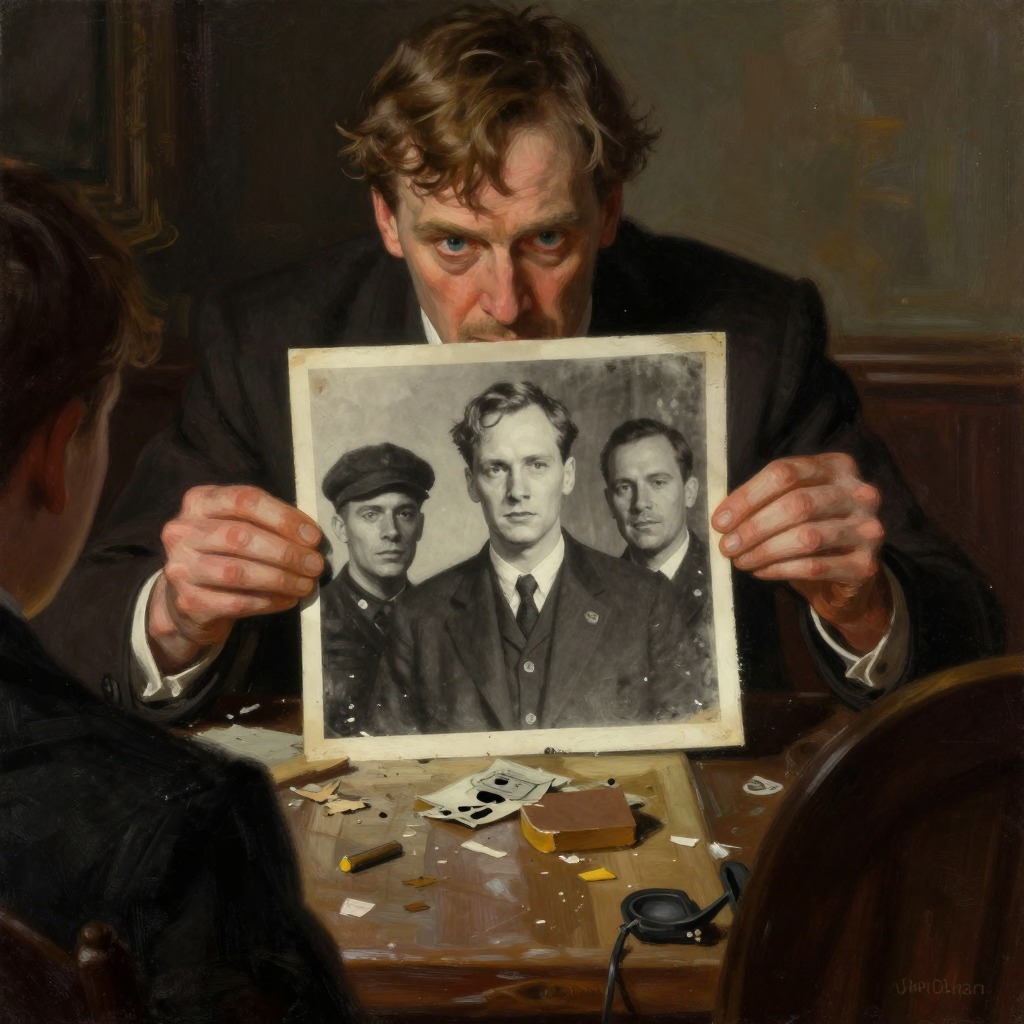
Reality control operates on two levels simultaneously. On the material level, the Ministry of Truth continuously rewrites newspapers, books, photographs, films and every other form of record, destroying the originals in the memory holes so that no contradictory evidence survives. On the psychological level, Party members are subjected from childhood to an elaborate mental discipline that includes crimestop (the instinctive halting of dangerous thoughts), blackwhite (the willingness to say that black is white when the Party demands it), and of course doublethink. The goal is to make the Party member 'unwilling and unable to think too deeply on any subject whatever'. A Party member lives under constant surveillance, his every expression and gesture scrutinised, yet there is no law: thoughts and actions that mean death are not formally forbidden because the Party demands not only correct opinions but correct instincts. Reality control is not a lie that can be exposed; it is a total re-engineering of what is allowed to be real.
Key Examples in the Narrative
Winston Smith's entire trajectory illustrates the application of reality control. His first act of rebellion—opening a diary and writing 'DOWN WITH BIG BROTHER'—is already a thoughtcrime, and he knows that 'thoughtcrime is death'. The decisive test comes when he is brought before O'Brien in the Ministry of Love. O'Brien holds up four fingers and demands that Winston say he sees five. Under escalating pain, Winston eventually screams 'Five! Five! Five!', but in his own mind he still sees four. Reality control is not complete until he genuinely believes what he says. Later, when he is alone in his cell, he writes 'TWO AND TWO MAKE FIVE' on his slate, and begins to train himself in crimestop, accepting that the Party's statements about the earth being flat or ice being heavier than water are true. The final triumph of reality control occurs when Winston, sitting in the Chestnut Tree Café, gazes up at the portrait of Big Brother and feels that 'the struggle was finished. He had won the victory over himself. He loved Big Brother.' The heretical thought has been extinguished at its source.
The Ultimate Purpose: Power over the Mind
O'Brien makes clear that reality control serves a deeper end than mere political stability. 'The Party seeks power entirely for its own sake,' he tells Winston. 'Not wealth or luxury or long life or happiness: only power, pure power.' And the essence of that power is the ability to reshape human beings. 'Power is in tearing human minds to pieces and putting them together again in new shapes of your own choosing.' The obedience of the body is not enough; the mind must be captured, the inner heart must be remade. This is why the Party does not simply kill its enemies but converts them, making them confess genuinely and love Big Brother before they die. Reality control is the instrument of this conversion; it turns the heretic into a living proof that the Party is infallible and that no alternative reality can exist. The systematic suppression of empirical science—the claim that the Party invented aeroplanes and even the steam engine—is part of the same project: if the laws of nature are whatever the Party decrees, then reality itself is a Party possession.
Significance
Reality control is the most radical form of tyranny imagined in modern literature. It goes beyond censorship, propaganda, or even terror; it attacks the very category of truth. By making the past alterable and memory unreliable, the Party destroys every standard by which its claims could be measured. Winston's hope that 'freedom is the freedom to say that two plus two make four' is defeated not by argument but by the brute force of reconstituted consciousness. The novel's appendix, 'The Principles of Newspeak', hints that the language designed to make thoughtcrime impossible may itself have been superseded by a later age, but within the story the triumph of reality control is complete: the last man, Winston Smith, ends his days loving the system that annihilated him. Reality control is thus the ultimate expression of the Party's slogan 'Ignorance is Strength', because a mind that cannot distinguish truth from falsehood is the strongest foundation for absolute power.