We are the dead
Nineteen Eighty-Four"We are the dead" is the novel's most concentrated expression of what it means to live under a power that claims total possession of mind and memory. Spoken by Winston Smith to Julia as a declaration of love and doom, it names the peculiar status of the thought-criminal who has already committed the essential crime that contains all others in itself and can only wait for the authorities to catch up. Yet in the book's own strange logic the phrase is also the most hopeful thing either lover can say, for it makes them the willing carriers of a future that belongs to the proles. The words return twice at the heart of the story — first in a ruined belfry, then in the room above Mr Charrington's shop just before the arrest — and each time they measure the distance between private loyalty and the State's power to decide who exists.
First Utterance in the Belfry
The phrase enters the story in the belfry of a ruined church, the second hiding-place that Julia has shown Winston. He is explaining why hope is impossible: "In this game that we're playing, we can't win." He tells her that from the moment of declaring war on the Party it was better to think of yourself as a corpse, and then he says "We are the dead." Julia's answer is characteristically prosaic: "We're not dead yet." Winston refines the thought: "Not physically. Six months, a year – five years, conceivably. I am afraid of death. You are young, so presumably you're more afraid of it than I am. Obviously we shall put it off as long as we can. But it makes very little difference. So long as human beings stay human, death and life are the same thing." The exchange fixes their temperaments — her good-humoured anarchism insists on staying alive, his fatalism holds that once you have declared war on the Party you are already annihilated, and only that recognition makes further action possible.
The Second Utterance and the Iron Echo
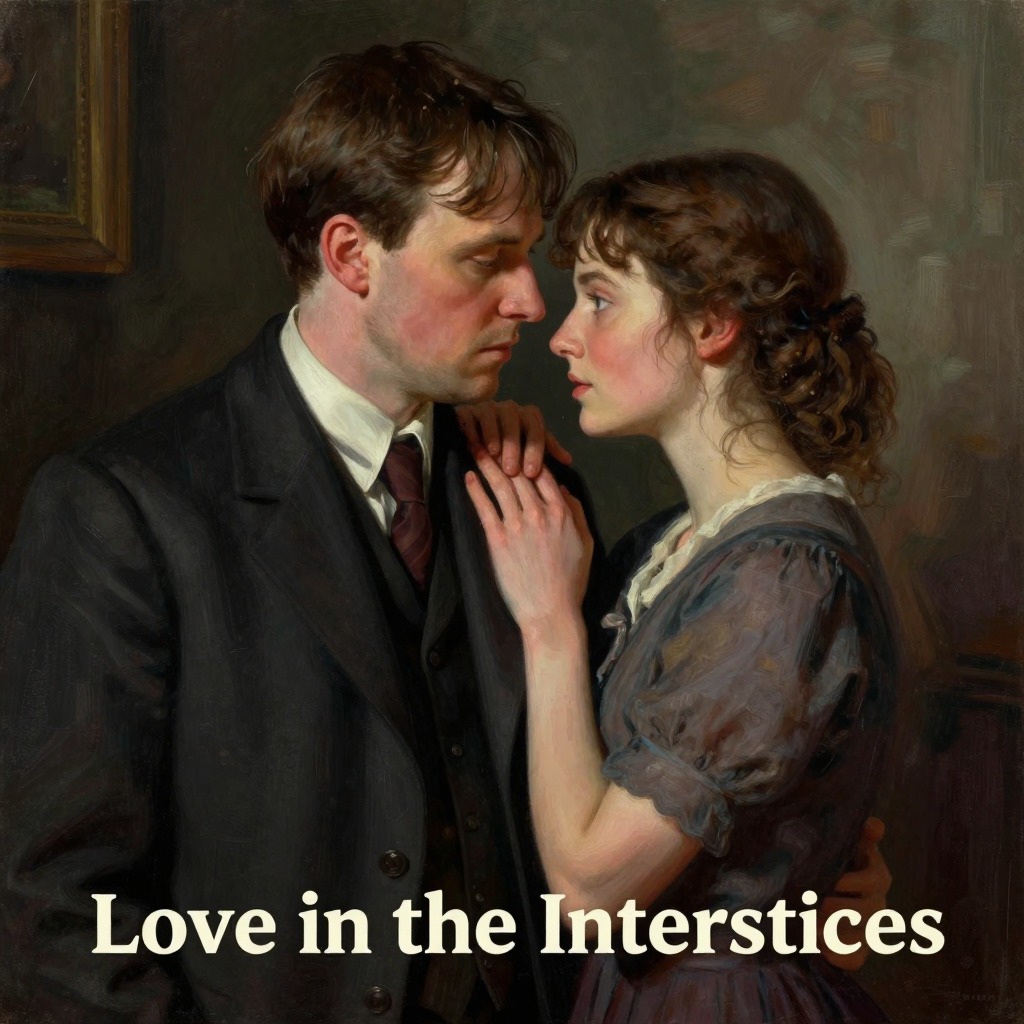
The words return at the climax of the lovers' life together, on an August evening in the room over Mr Charrington's shop. Winston watches a prole woman singing in the yard and has his near-mystical vision of the millions beneath the sky — "people who had never learned to think but who were storing up in their hearts and bellies and muscles the power that would one day overturn the world. If there was hope, it lay in the proles!" He reflects that "You were the dead; theirs was the future," and says "We are the dead"; Julia dutifully echoes it. The sentence is barely finished when an iron voice behind them answers, "You are the dead." The steel engraving of St Clement's Dane has fallen from the wall, uncovering the telescreen hidden behind it, and Mr Charrington, the supposed antiquarian, is revealed as a member of the Thought Police. Thomas Pynchon, in his introduction, singles out this courtyard moment as the novel's moment of maximum well-being, "the most hopeful thing he can think of to say to her" — an assessment the Thought Police are only too happy to echo a second later.
The Logic of Living Death
The phrase is the spoken form of the novel's central theorem about thoughtcrime. When Winston opens his diary, he knows that the act is not illegal — "nothing was illegal, since there were no longer any laws" — but that if detected it will be punished by death, or at least by twenty-five years in a forced-labour camp; and he reflects that the Thought Police will get him just the same, because he has committed the essential crime of thoughtcrime, and "thoughtcrime does not entail death: thoughtcrime IS death." The Party's power rests on the fact that a member lives from birth to death under the eye of the Thought Police, "inspected without warning and without knowing that he is being inspected," so that any eccentricity or nervous mannerism may be read as the symptom of an inner struggle; there is no law, only the wiping-out of persons who might commit a crime at some time in the future. To say "We are the dead" is to accept this condition in advance — to admit that one is already annihilated in the eyes of the Party, and so to be freed from the terror of waiting. The "we" binds Winston and Julia together in a space the Party cannot enter, the few cubic centimetres inside the skull that remain one's own.
Hope and the Future
The paradox of the phrase is that in the world of the novel it carries hope rather than despair. In the same courtyard scene Winston thinks: "You were the dead; theirs was the future. But you could share in that future if you kept alive the mind as they kept alive the body, and passed on the secret doctrine that two plus two make four." The dead are the doomed lovers who cannot expect to see the future; but by staying sane and by writing the diary "To the future or to the past" they carry the human heritage forward. The phrase inverts the official slogans "War is Peace, Freedom is Slavery, Ignorance is Strength": it is the one truth the State cannot absorb, because it admits the State's power to kill while denying its power over the inner heart. Julia's objection "We're not dead yet" and her later belief that "They can't get inside you" are the same impulse; the phrase answers that even if the Party can destroy them, it cannot make them stop loving. It is the lovers' countersign, and the State's iron echo — "You are the dead" — is the proof that the State can only announce what the lovers have already chosen.