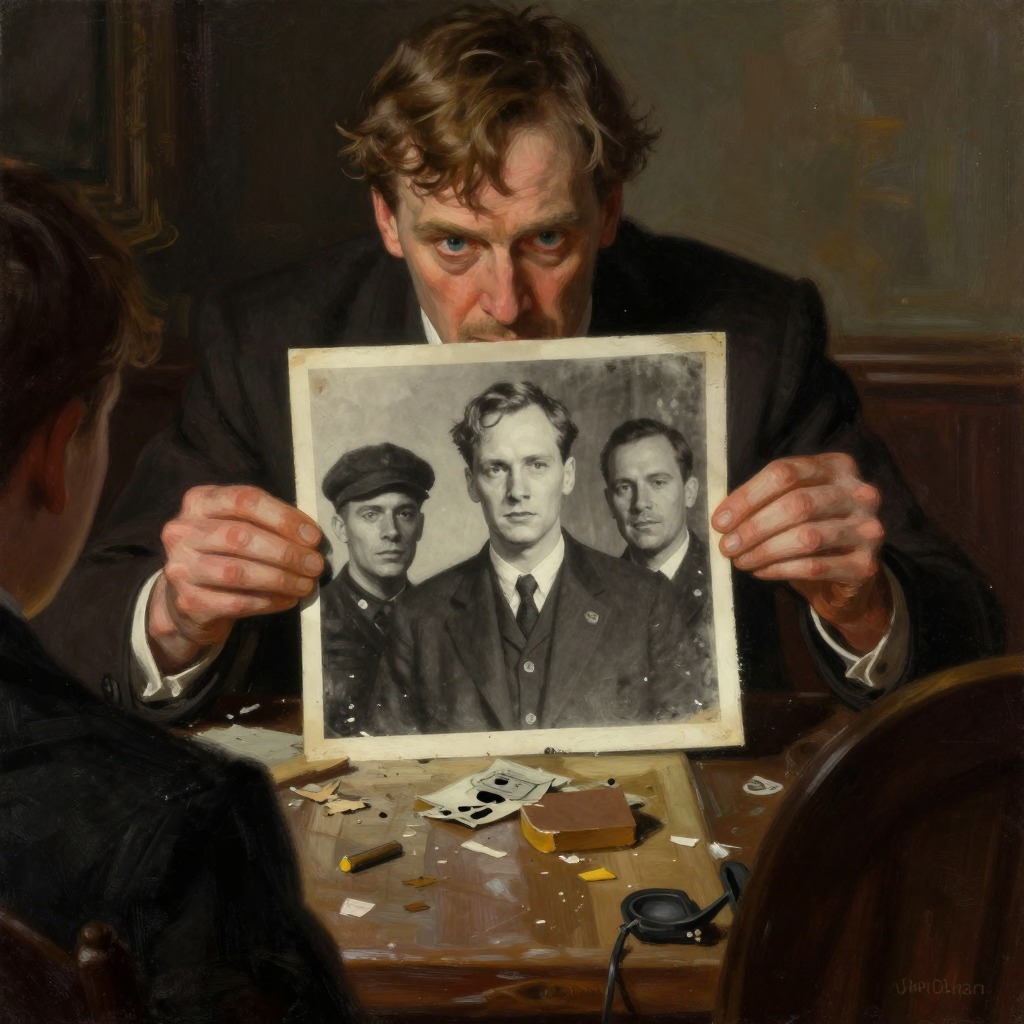
the telescreen
Nineteen Eighty-FourThe telescreen is the central technological apparatus of Oceania's totalitarian surveillance state. It is an oblong metal plaque that simultaneously receives and transmits sound and images, making it impossible for a Party member to be certain whether they are being watched at any given moment. This forced assumption of perpetual observation — described as an instinctive habit — underpins the Party's power over thought and behaviour, and is the material basis for the novel's themes of surveillance, doublethink, and the loss of privacy.
Design and Function
The telescreen is described as an oblong metal plaque like a dulled mirror, set into the wall of every room. It can be dimmed but never turned off entirely. It both receives and transmits simultaneously: any sound above a whisper is picked up, and any movement within its field of vision is seen. The lack of any way to know when one is being watched forces the inhabitant to live as if every sound and movement is under scrutiny. This design erases the distinction between private and public space, making the home a continuous extension of the Party's observation post.
Surveillance and Self-Discipline
The constant possibility of surveillance induces a permanent state of self-censorship. Winston Smith must maintain an expression of "quiet optimism" when facing the telescreen, even in his own flat. The Party enforces "facecrime" — a punishable offence of wearing an improper expression. The telescreen's gaze is internalised, creating a system where the subject polices his own conduct. This is the mechanism of doublethink in action: one must believe the lies broadcast while knowing they are lies, and the telescreen is the ever-present reminder that any deviation will be detected.
Propaganda and Information Control
Beyond surveillance, the telescreen is the Party's primary tool for disseminating propaganda. It broadcasts the Two Minutes Hate, with Emmanuel Goldstein's face and the Eurasian army, as well as speeches by Big Brother and announcements of imaginary victories. The same device that monitors also indoctrinates, merging coercion and persuasion. The telescreen's voice is ubiquitous, assigning military exercises, reporting false production statistics, and announcing ration cuts while simultaneously celebrating the "new happy life." The contradiction is swallowed by the audience through doublethink, as exemplified by the announcement that the chocolate ration had been raised to twenty grammes when only the day before it had been announced as reduced to that same amount.
Narrative and Symbolic Significance
In the novel, the telescreen is a constant presence, a reminder of the Party's omniscience. It is the "voice" that haunts Winston, the "eye" that follows him. It symbolises the inescapable power of the Party: no private space truly exists, and even the expectation of privacy is a dangerous illusion. The only place of relative safety described is the room above Mr Charrington's shop, which lacks a telescreen — but this sanctuary is revealed to be a trap when a telescreen is uncovered behind a picture. O'Brien's ability to turn off the telescreen in his own flat signals his Inner Party privilege, while the ordinary Party member can never escape its gaze. The telescreen thus embodies the theme of total control over both the individual's actions and inner life.