Yozo
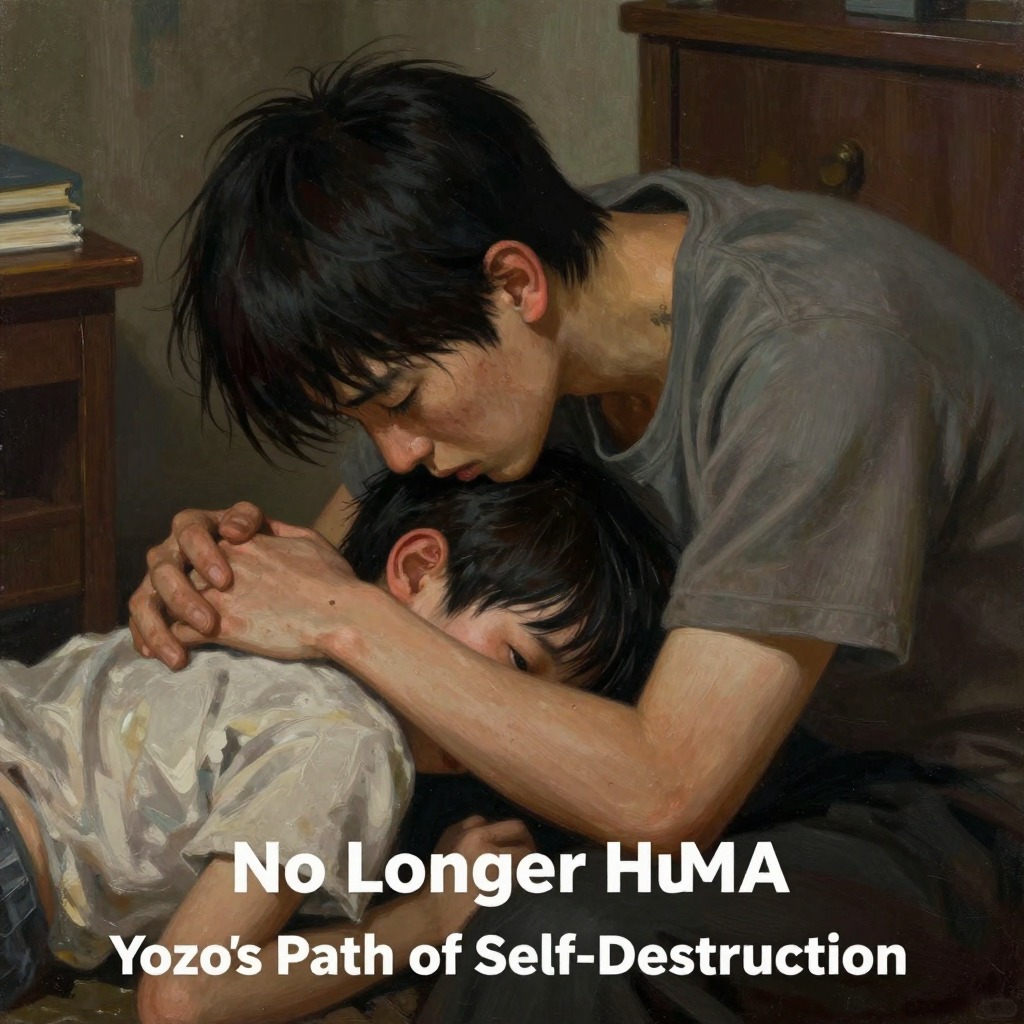
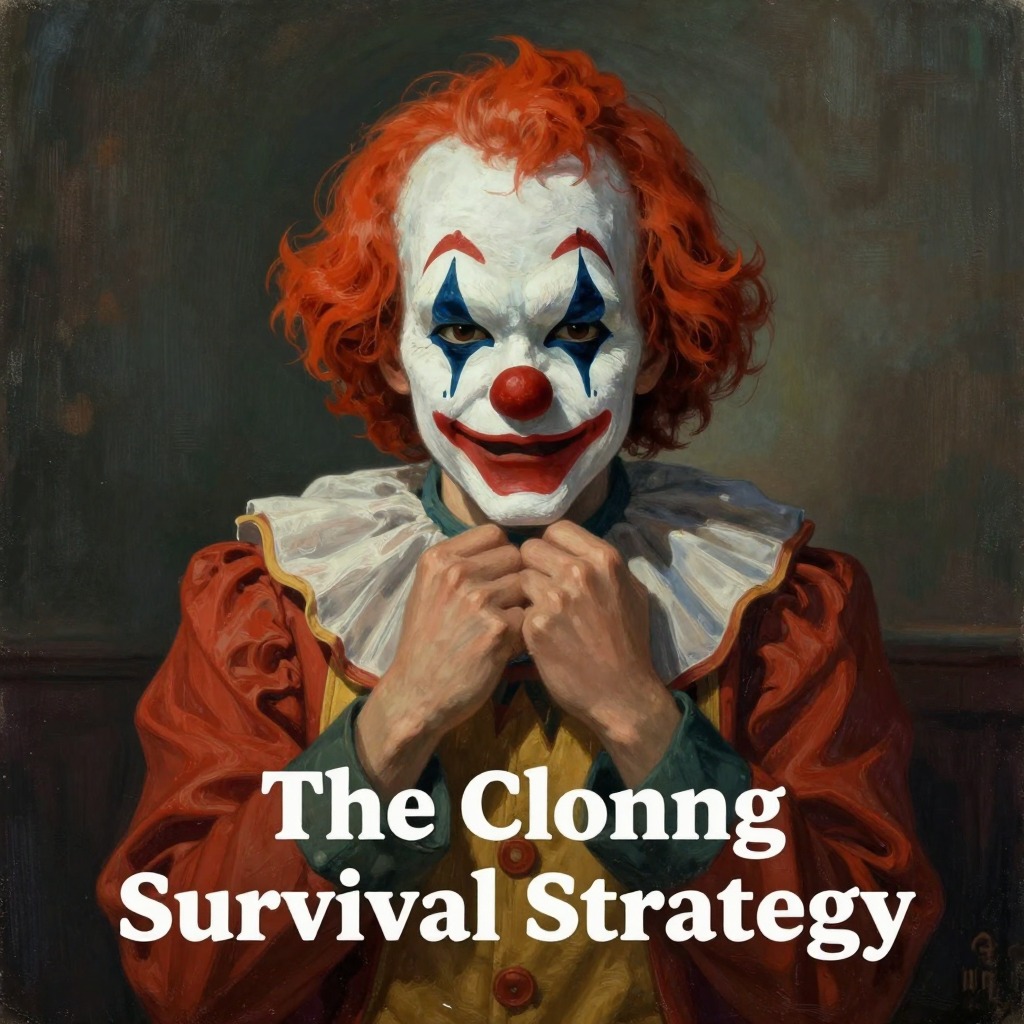
No Longer HumanYozo is the protagonist and first-person narrator of Osamu Dazai's novel No Longer Human, a man whose life is defined by a profound and crippling fear of other human beings, which he masks through a lifelong performance of clowning. His inability to understand or participate in the ordinary deceptions of social life leads him through a series of self-destructive relationships, addictions, and suicide attempts, culminating in his institutionalization and final self-identification as a being "disqualified as a human being." The novel, presented as his notebooks, is a harrowing chronicle of alienation, shame, and the collapse of the self.
Identity and the Origins of Clowning
Yozo was born into a wealthy, politically connected family in a village in the Northeast of Japan, the youngest of about ten members who ate their meals in gloomy silence. From childhood, he was haunted by an inability to grasp the most basic assumptions of human life, such as the necessity of eating to survive or the practical function of a station bridge, which he mistook for an elegant amusement. He describes his life as one of "much shame" and felt he was burdened with a pack of ten misfortunes. To conceal his terror and his sense of being entirely unlike everyone else, he invented a role: the clown. This was, he writes, "the last quest for love I was to direct at human beings." He perfected a mask of innocent optimism, telling absurd stories and performing physical antics to make his family and servants laugh, all while keeping his "solitary agonies locked in my breast." A key early incident, the Lion Mask Incident, reveals his desperate need to please: after failing to answer his father's question about a gift, he crept into the parlor at night and wrote "Lion Mask" in his father's notebook, a successful act of catering to his father's wishes that confirmed his strategy of self-effacing accommodation.
Life Trajectory: From School to the City
At a high school by the sea, Yozo's clowning continued to win him popularity, but his fragile facade was shattered when a classmate named Takeichi saw through his act, whispering, "You did it on purpose." This moment plunged Yozo into hellish anxiety. To win Takeichi over, he feigned friendship, even cleaning the pus from the boy's infected ears. Takeichi, in turn, gave Yozo two prophecies: that women would fall for him, and that he would become a great painter. The second prophecy was sparked when Takeichi showed Yozo a reproduction of a van Gogh self-portrait, calling it a "picture of a ghost." This revelation transformed Yozo's understanding of art; he began to paint "ghost pictures"—self-portraits that revealed the harrowing reality he hid from the world. He went up to Tokyo to attend college at his father's insistence, but he found communal life appalling and soon began skipping classes. In Tokyo, he met Masao Horiki, a city-bred art student who initiated him into drink, cigarettes, prostitutes, and left-wing thought. Yozo saw Horiki as a "genuine city good-for-nothing" and a useful guide, but their friendship was one of mutual contempt. Through Horiki, Yozo joined a secret Communist Reading Society, not out of political conviction but because he was drawn to its irrationality. He became a trusted comrade, performing dangerous errands, but the movement's demands soon exhausted him.
Key Actions and Relationships
Yozo's relationships with women form a central pattern of his life. He found a strange peace with prostitutes, who seemed to him like "imbeciles or lunatics" and in whose arms he could sleep soundly. This apprenticeship, however, gave him the atmosphere of a "lady-killer," which attracted other women. At his lodging house, the landlord's daughter showed him a desperate, transparent affection. A female comrade from the Reading Society forced herself on him. The most significant of these early relationships was with Tsuneko, a waitress from a Ginza café. She was the wife of a criminal, and with her, Yozo felt a rare, liberating happiness. After a night of humiliation orchestrated by Horiki, Yozo and Tsuneko agreed to die together. They threw themselves into the sea at Kamakura; Tsuneko died, but Yozo was saved. The incident made him a newspaper sensation and led to his expulsion from college. After the suicide attempt, Yozo was taken in by Flatfish, a family retainer, who treated him with contempt and kept him a virtual prisoner. Unable to bear the situation, Yozo ran away and became the kept man of Shizuko, a journalist. He lived with her and her daughter Shigeko, drawing cartoons for a children's magazine. Though he found a measure of domestic stability, his depression deepened, and he began drinking heavily again. He eventually left them, feeling he was an intruder on their happiness.
Marriage and the Decisive Incident
Yozo then married Yoshiko, a pale, trusting seventeen-year-old who worked in a tobacco shop. Her "immaculate trustfulness" seemed to him a pure, redeeming quality, and he briefly hoped he might "turn one of these days into a human being." He gave up drinking and devoted himself to his cartoon work. This fragile peace was destroyed when Horiki, who had reappeared in Yozo's life, discovered Yoshiko being violated by a shopkeeper. Horiki led Yozo to witness the scene. Yozo did not intervene; he felt not anger but an "overpowering fear," a wound that split his forehead. From that night, his hair turned prematurely grey. The incident did not destroy his love for Yoshiko but destroyed her trust in herself and in him. Yozo began drinking again, his health deteriorated, and he started coughing blood. He then became addicted to morphine, supplied by a crippled pharmacist woman with whom he also began an affair. His life spiraled into a hell of addiction, debt, and pornographic cartooning. A letter to his father confessing his circumstances went unanswered.
Institutionalization and Ending
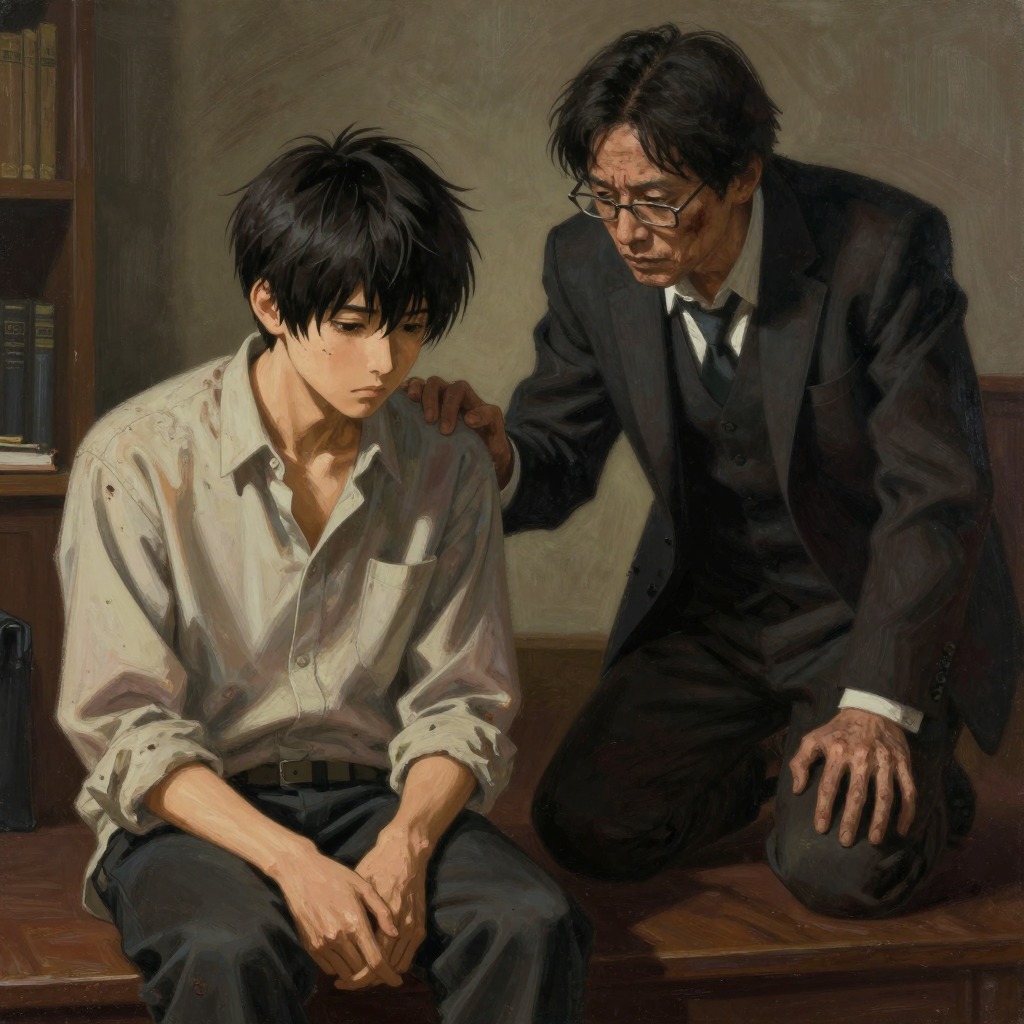
At the end of his resources, Yozo was tricked by Flatfish and Horiki into entering a hospital, which he soon realized was a mental institution. He was locked in a ward with only male lunatics and male nurses, a grotesque fulfillment of his delirious wish to go "somewhere where there aren't any women." He reflects, "I was no longer a criminal—I was a lunatic." He was released after three months, following his father's death, and was sent to live in a dilapidated house on a remote coast, looked after by an ugly old servant named Tetsu. The notebooks end with Yozo at twenty-seven, his hair much greyer, declaring, "Now I have neither happiness nor unhappiness. Everything passes." The epilogue, narrated by an unnamed acquaintance, reveals that the notebooks were sent to the Madam of the Kyobashi bar. The acquaintance, after reading them, is told by the madam that the Yozo she knew was "so easy-going and amusing" and, despite his drinking, "a good boy, an angel." This final, external judgment stands in stark contrast to Yozo's own self-portrait of a life of shame.
Narrative Role and Thematic Significance
Yozo functions as the sole, unreliable narrator of his own story, a man whose extreme self-awareness is matched only by his inability to act on his own behalf. His life is a case study in the themes of alienation, the performance of self, and the crushing weight of social expectation. His central question—"Is trustfulness a sin?"—remains unanswered, and his final state is one of passive resignation. The novel's power derives from the tension between Yozo's damning self-assessment and the epilogue's suggestion that he was, in fact, an angel, a figure of gentleness and love who was simply unable to survive in a world he could not comprehend.