
George and Lennie's Dream of the Farm
Of Mice and MenTraces the evolution of the shared dream of owning a small farm, which sustains hope and defines the relationship between George and Lennie throughout the novel.
increasing Bearing strength in each event
 decreasing
Bearing strength in each eventdecreasingThe Dream Is Born
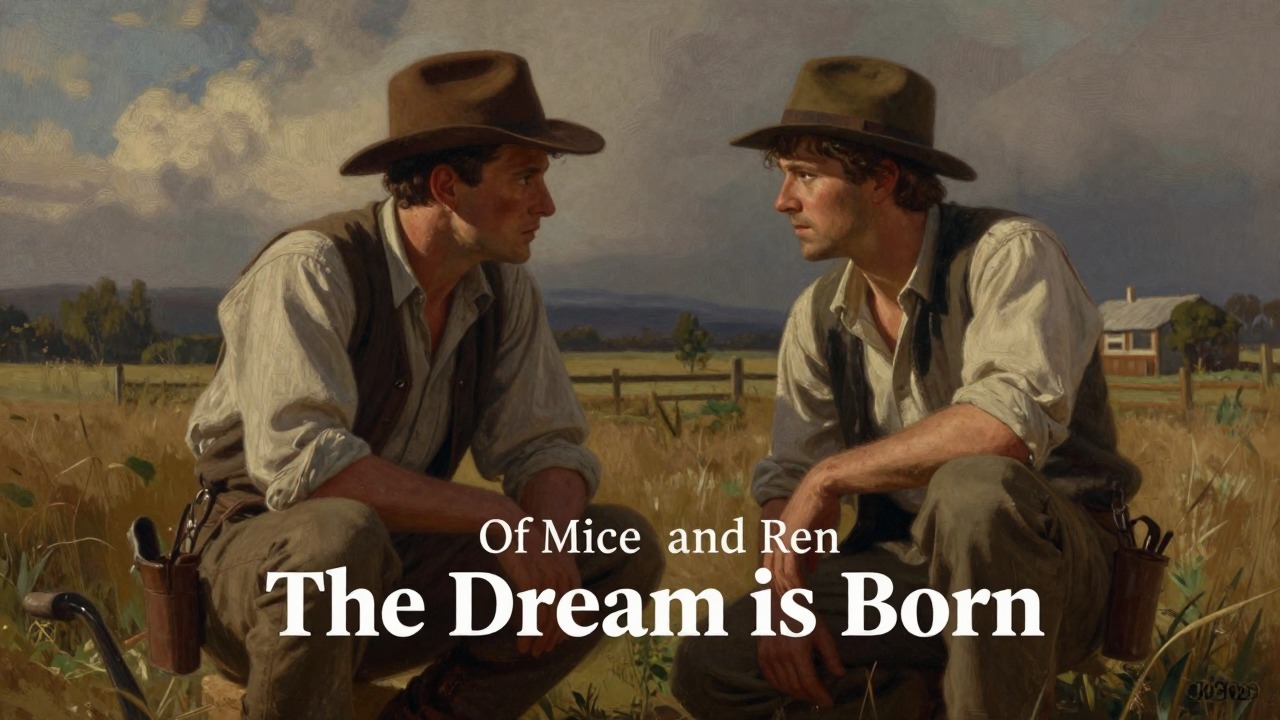
The Origin of the Dream
The Dream as Escape
Before the events of the novel, George Milton and Lennie Small have fabricated a fantasy of owning a small farm. This dream is born from the harsh reality of itinerant labor: the constant moving, the loneliness, and the precariousness of their lives. George recites the dream to Lennie as a comforting story, a way to quiet Lennie's anxieties and to give both of them a sense of purpose beyond the next paycheck.
The Dream's Components
The farm is a pastoral idyll: a few acres, a cow, a pig, chickens, and most importantly, rabbits for Lennie to tend. The dream is concrete and sensory—live off the fatta the lan'—and it represents control over their own lives. For Lennie, the rabbits are the center of the dream, a symbol of gentle responsibility. For George, the farm is a place where they can be independent and safe from the judgment of others.
The Dream as Bond
This shared fantasy becomes the emotional core of George and Lennie's relationship. It is a secret they hold together, a private world that no one else can enter. The dream is not just a goal; it is the language of their love and loyalty. George uses the dream to guide Lennie, and Lennie's trust in the dream mirrors his trust in George.
The Dream Recited to Candy
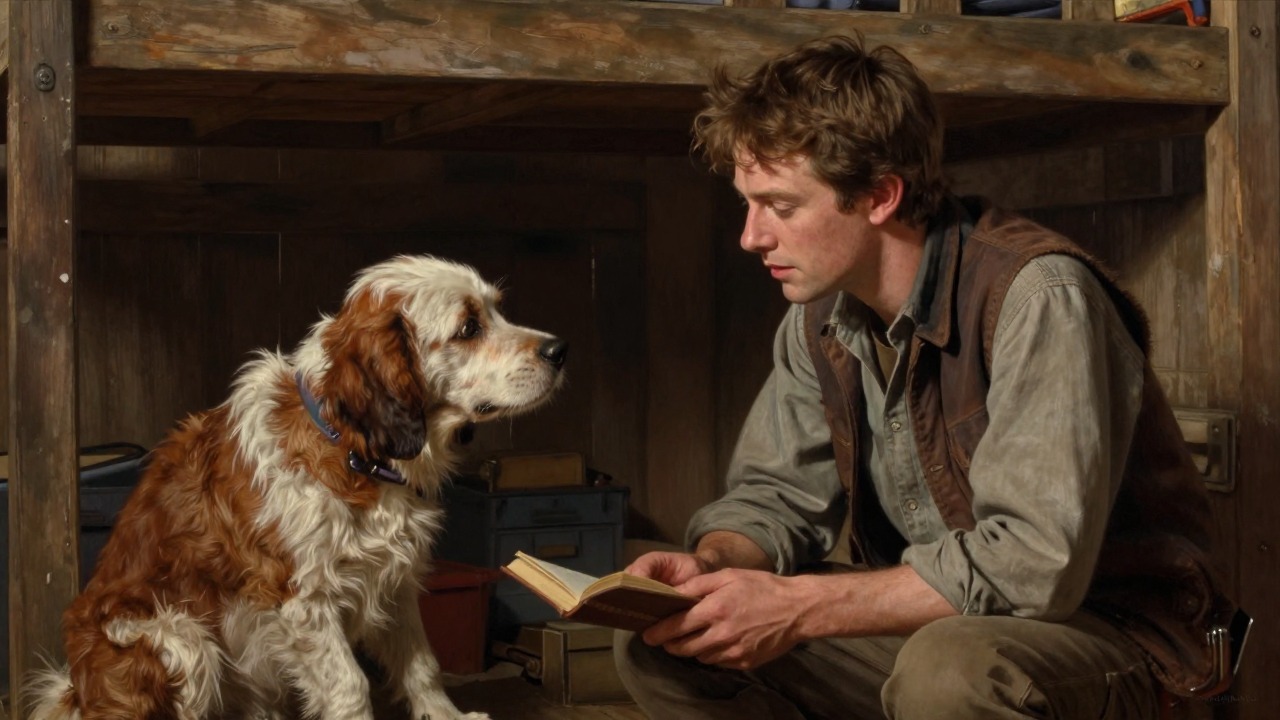
The Dream Shared with a Stranger
Candy's Eavesdropping
In the bunkhouse, after the first day of work, George and Lennie discuss their dream softly, expecting no one to hear. But Candy, the aging swamper, overhears. He is immediately drawn to the idea, not because he believes in it fully, but because it offers a sliver of hope in his own desolate life. Candy's dog was just shot, and he sees in the dream a possible future beyond the ranch.
The Dream Gains a Third Partner
Candy offers his life savings—three hundred and fifty dollars—to join the venture. George calculates that with Candy's contribution, they can buy the farm in a month. The dream suddenly becomes tangible, almost real. The narrative shifts from fantasy to plan. For a brief moment, the three men share a vision of a home, a place where they will belong.
The Emotional Weight of the Offer
Candy's offer is not just financial; it is an act of desperation and hope. He clings to the dream because he has nothing else. George warns him not to tell anyone, knowing that the dream is fragile and that others might mock or steal it. The sharing of the dream deepens the bond between the three men, creating a temporary community of hope.
The Dream Expands to Include Candy
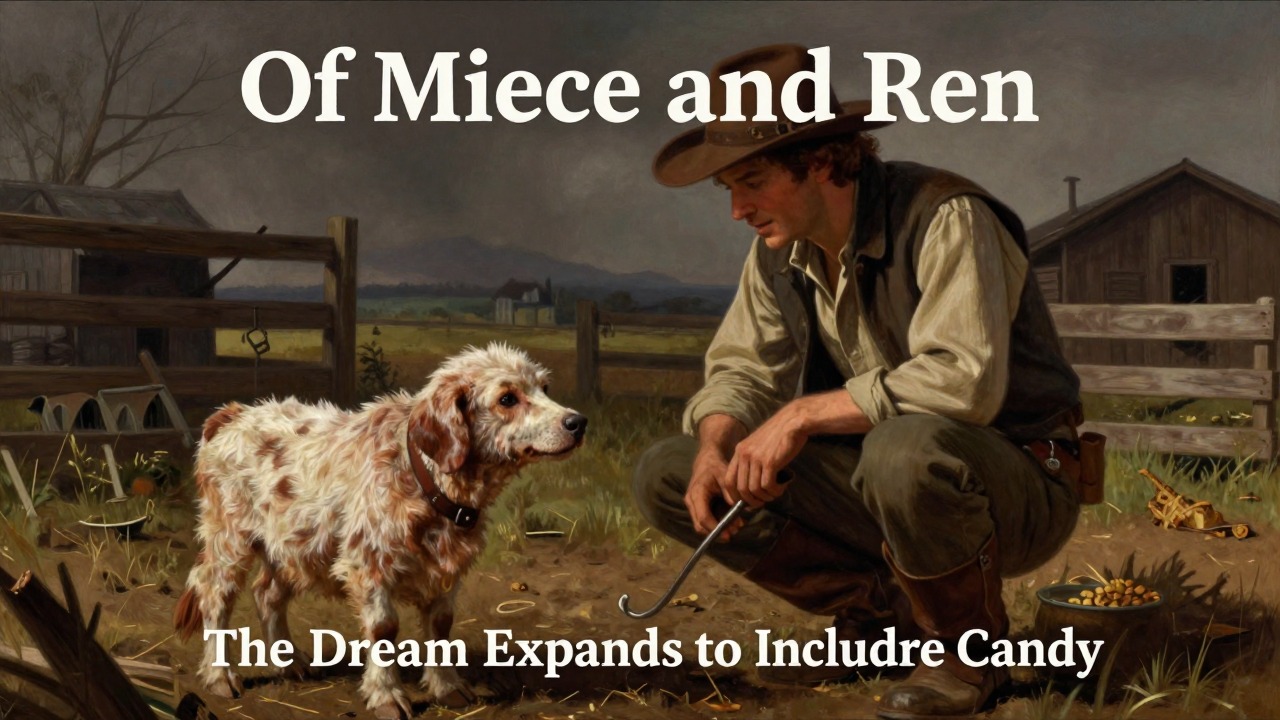
The Dream Becomes a Pact
The Plan Takes Shape
After Candy offers his savings, the dream moves from abstract longing to concrete planning. George realizes that the farm is within reach. He calculates the costs: the land, the livestock, the seed. For the first time, the dream has a timeline—a month. The men talk about the details: the cow, the pig, the chickens, the alfalfa, and the rabbits. Lennie is overjoyed; he can barely contain his excitement.
The Emotional Investment
For Candy, the dream is a lifeline. He imagines himself no longer a burden, but a contributor. He will cook and clean, and they will all live together. The dream erases the loneliness of his old age. For George, the dream is now a responsibility: he must protect it from the outside world. He knows that Curley and the ranch society are hostile to such hopes.
The Fragility of the Pact
The dream is now shared, but it is also exposed. The more people who know, the more vulnerable it becomes. George insists on secrecy, but the dream has already taken root in their hearts. The pact is a fragile bond, threatened by the unpredictable violence of the ranch and Lennie's own innocence.
The Dream Shared with Crooks
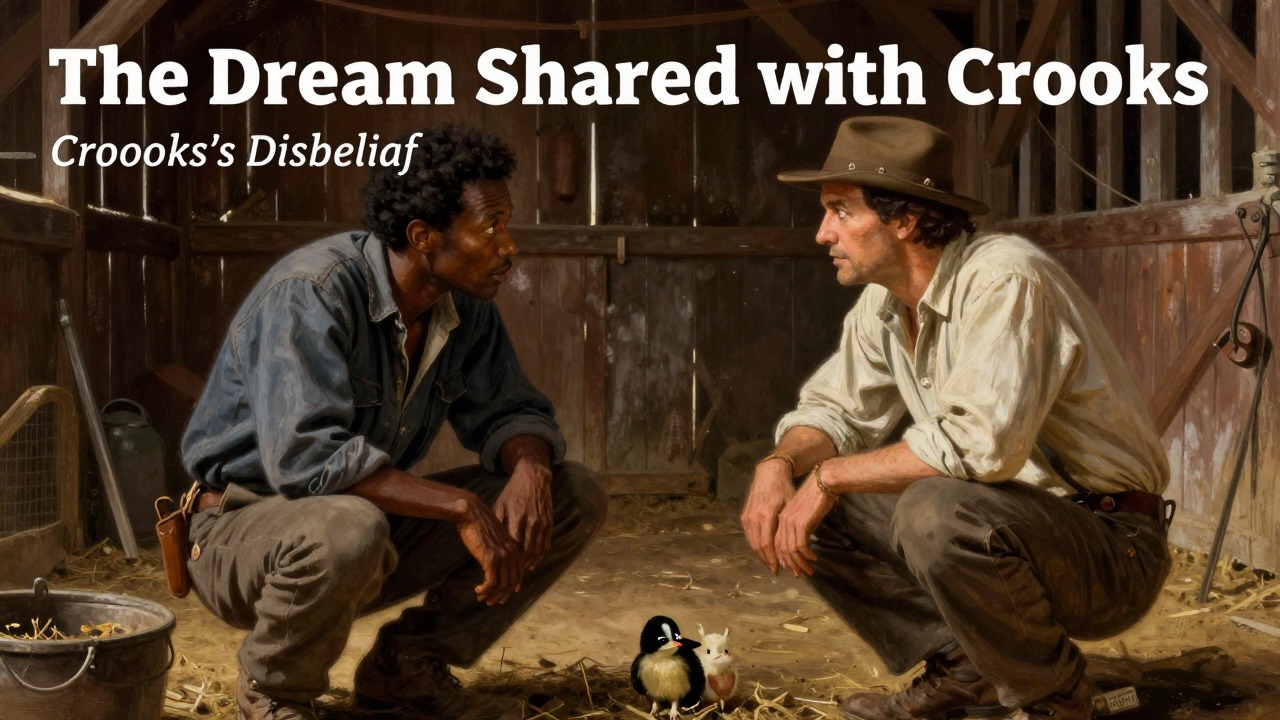
The Dream Crosses Racial Lines
Crooks's Disbelief
In the barn, Crooks, the black stable buck, listens as Lennie and Candy talk about the farm. Crooks is cynical; he has seen too many dreams crushed by the harsh realities of ranch life. He mocks them, but underneath his sarcasm is a deep longing for the same kind of hope. Crooks knows that a black man is not allowed to share in such dreams.
The Dream's Allure
Despite his skepticism, Crooks is drawn into the fantasy. He offers to work for nothing, just to be part of something. The dream momentarily breaks down the racial barrier. For a few minutes, Crooks is not the isolated outsider; he is a man with a future. The dream becomes a symbol of a world where men are judged by their character, not their color.
The Dream's Shattering
Curley's wife enters and threatens to have Crooks lynched, reminding him of his place. The dream evaporates. Crooks retreats into his bitterness, telling Candy to forget the whole thing. The episode shows that the dream, however powerful, cannot overcome the entrenched social hierarchies of the time. The shared hope is a fragile illusion, easily destroyed by fear and prejudice.
The Dream Shattered
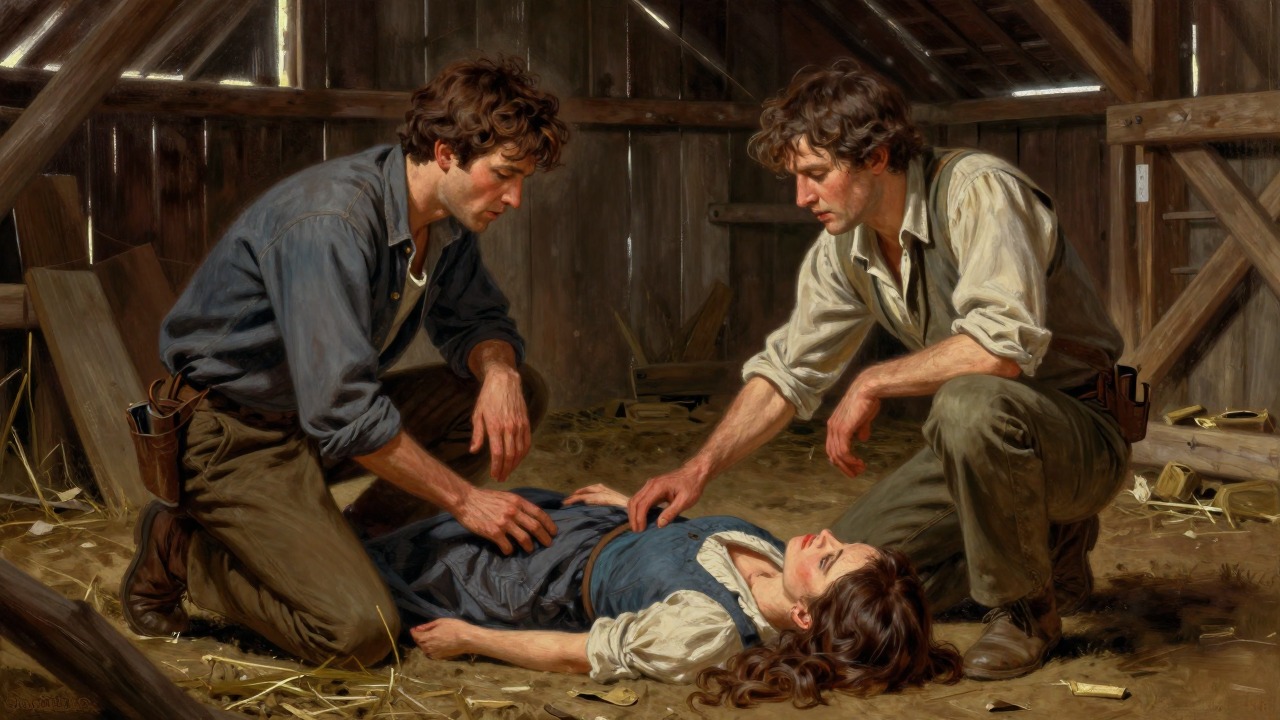
The Dream Dies in the Barn
The Discovery of the Body
When Lennie accidentally kills Curley's wife in the barn, the dream is shattered. The reality of the act overwhelms any possibility of escape. George knows that Lennie must be found and punished, and that the farm is now impossible. The dream that sustained them becomes a cruel joke.
Candy's Grief
Candy is the first to realize the dream is dead. He finds the body and knows that Lennie will be hunted down. He mourns not just for Curley's wife, but for the lost future. He tells George, "I ought to of shot that dog myself," linking the dream's death to the earlier killing of his dog. The dream is now a painful memory.
The Final Recitation as a Lie
In the final scene at the pool, George recites the dream one last time to comfort Lennie. But this recitation is a lie, a mercy. The dream is no longer a plan; it is a farewell. The words are the same, but the hope is gone. The dream has been transformed from a vision of the future into a final act of love.
The Dream Recited as a Lie
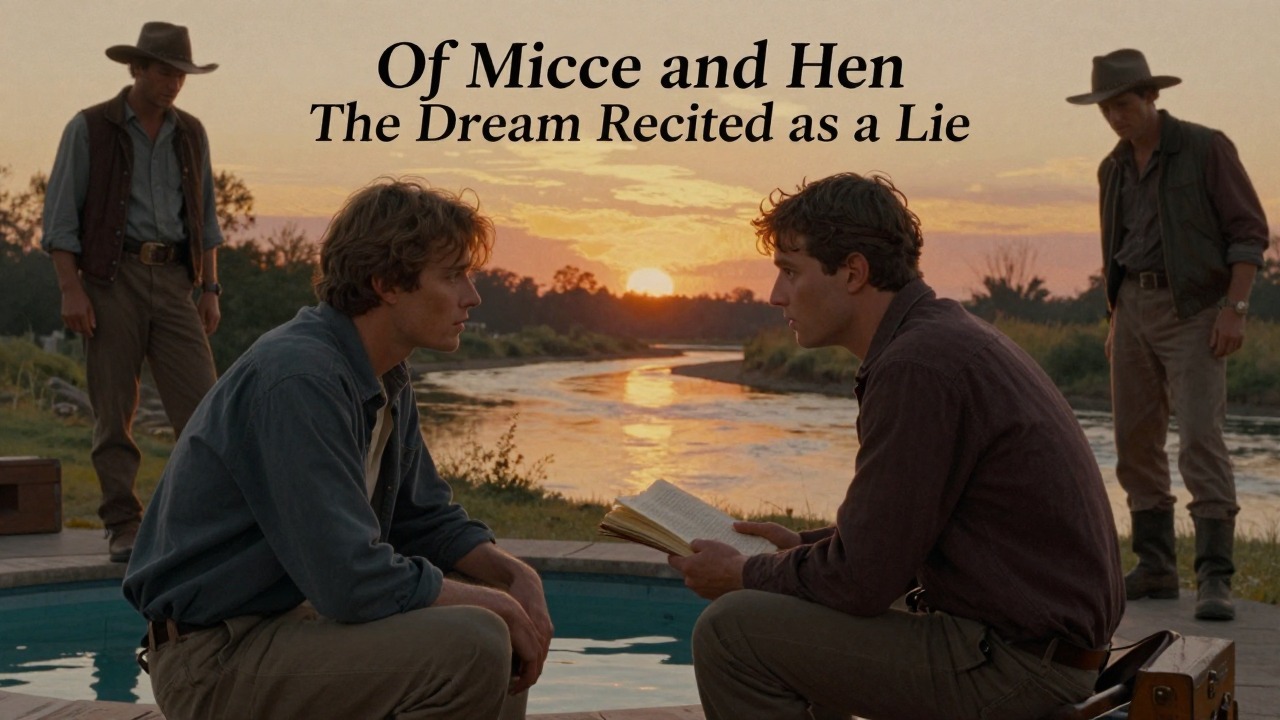
The Dream as a Final Comfort
The Setting by the Pool
By the Salinas River, as the sun sets and the sounds of the pursuing men grow closer, George recites the dream one last time. Lennie asks for the story, and George complies, knowing that this is the last time he will tell it. The dream is no longer a plan for the future; it is a lullaby for the dying.
The Words of the Dream
George describes the farm in detail: the cow, the pig, the chickens, and the rabbits. Lennie, facing the mountains, imagines he can see it. The dream is now a vision of paradise, but it is a paradise that will never be reached. The words are a ritual, a way to give Lennie peace before the inevitable.
The Dream as a Mercy Killing
As George raises Carlson's Luger, he continues to speak of the dream. The dream is the last thing Lennie hears before the gunshot. The dream is not a lie; it is a gift. It allows Lennie to die happy, believing in the future. The dream, in its final form, is an act of mercy, a sacrifice of hope for the sake of love.
Before the novel's events
The first night at the ranch
After Candy's offer, the second day
Later that Saturday night
After the discovery of Curley's wife's body
The final scene at the pool
